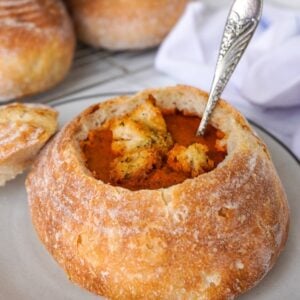
Sourdough Bread Bowls
INGREDIENTS
Sourdough Starter
- 20 g sourdough starter
- 100 g water
- 100 g bread flour
Main Dough
- 505 g warm water
- 190 g active sourdough starter (from above)
- 790 g bread flour
- 16 g sea salt
Equipment
- Proofing box (or a warm place in your house)
- 14"x20" cooking steel Use code SDGAL10 for 10% off
- Cast iron pan with lava rocks inside to create steam during open baking
- Rice flour for dusting bannetons and loaves after shaping
Instructions
Step 1: Feed Your Starter
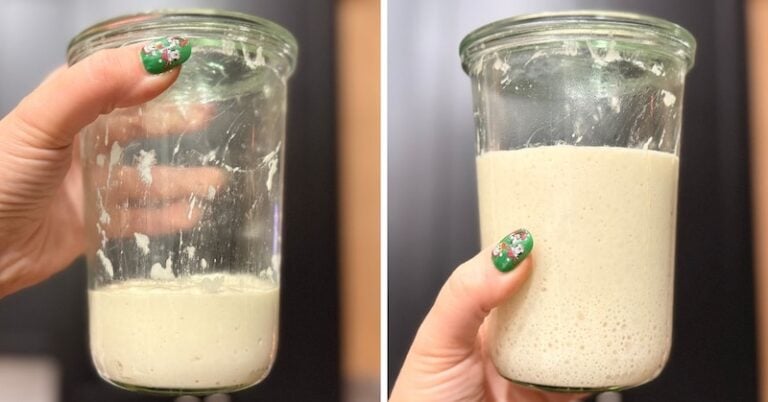
- The night before you plan to make your bread, combine 20 g sourdough starter, 100 g water, and 100 g bread flour in a jar. Note: This is a 1:5:5 feeding ratio and should peak in 10-12 hours. You'll have a little leftover so you can feed it and keep your starter going.
Step 2: Mix Your Dough
- Combine 505 g warm water, 190 g active sourdough starter, 790 g bread flour, and 16 g sea salt. Mix until a shaggy dough forms. To build some strength, remove the shaggy dough from the bowl and do slap and folds on the counter for 1-2 minutes. Put back in the bowl, place in a warm place or a proofing box to set 82°F (28°C) and cover for 30-60 minutes.Note: You can also mix the dough in a stand mixer. Mix on a medium-low speed with the dough hook for about 5 minutes.
- Tip: At this time, I would feed the leftover starter from my jar to keep it active and happy!
Step 3: Stretch and Folds/Coil Folds
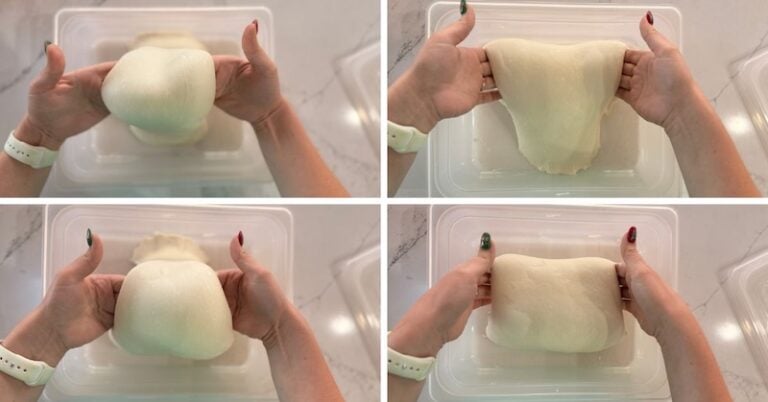
- Perform 4 sets of stretch and folds or coil folds, each set 30 minutes apart.
Step 4: Bulk Fermentation
- Let the dough finish the bulk fermentation. The dough should have risen in volume and will appear puffy and domed on top. It should jiggle like Jell-O when you gently nudge the bowl and feel slightly tacky but not overly sticky to the touch. When you look at the sides and bottom of the bowl, you should see tons of bubbles. When in doubt, let the dough ferment longer. Overproofed dough is tastier than underproofed dough.
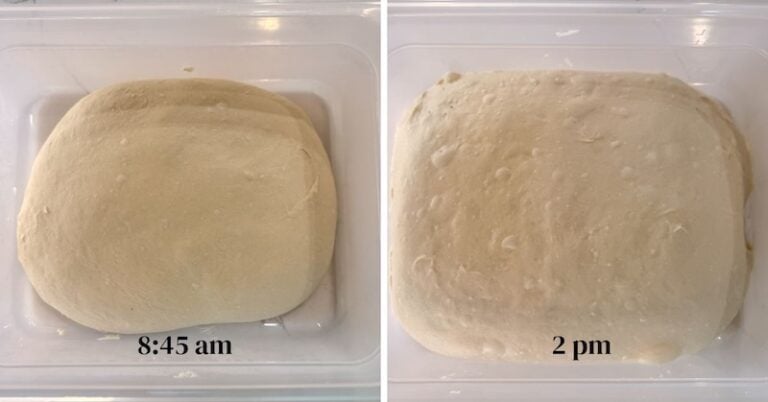
- If you've kept your dough in a warm spot (82°F/28°C), it should take about 4-6 hours (that timer starts when you mix the starter into your dough). If the dough has fallen in temperature and is a bit cooler, it will take longer. Watch for the visual cues!
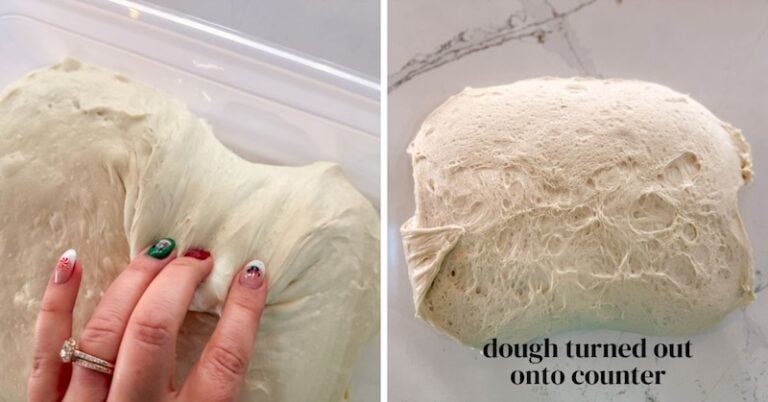
Step 5: Divide and Shape
- Using a bench scraper, divide the dough into five equal pieces, about 300g each. I like to weigh my dough ball and divide by 5 to be more precise! If you're experiencing any sticking, use a water mister to lightly moisten your surface and bench scraper.
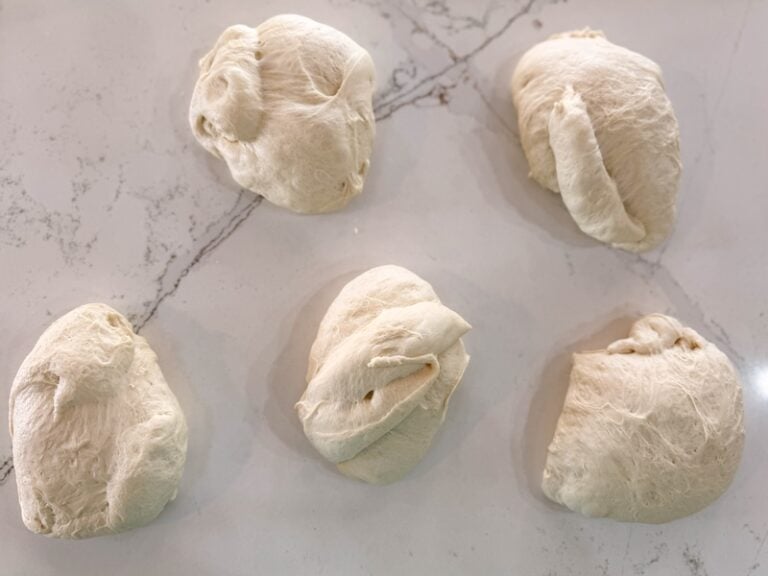
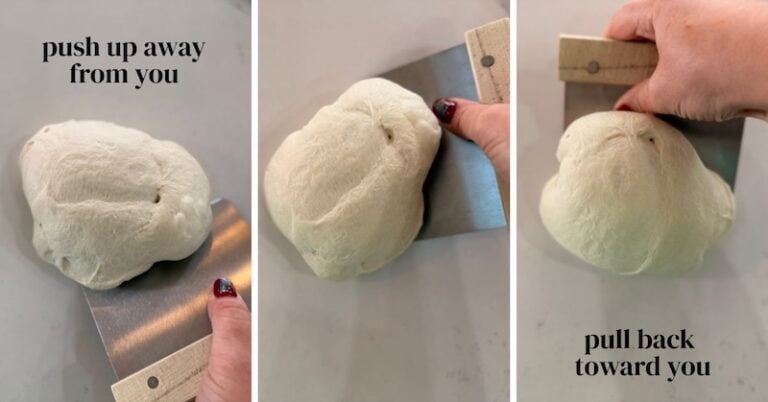
- Use your bench scraper to push the mass of dough up, around, and back toward you (like a candy cane motion). Continue doing this motion, gently, until you've coaxed the mass of dough into a round.
- Flip the dough ball upside down and place it seam-side up in a lightly floured mini banneton. Continue this process for all five bread bowls.
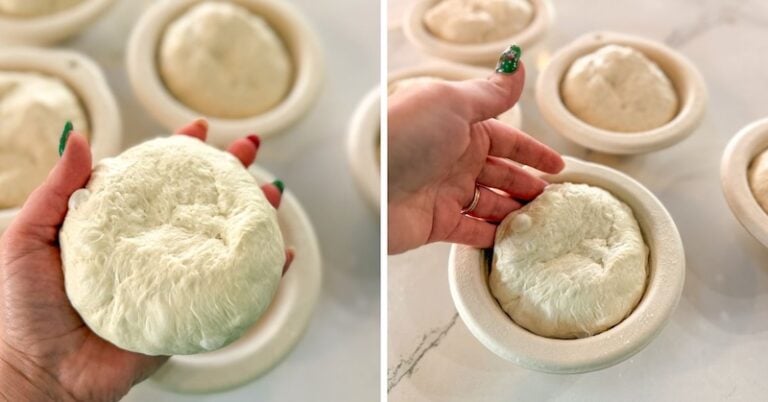
- After a 5-10 minute rest, pinch the seams and/or stitch the dough to increase surface tension. Dust the tops with rice flour.

Step 6: Second Proof (or Cold Retard)
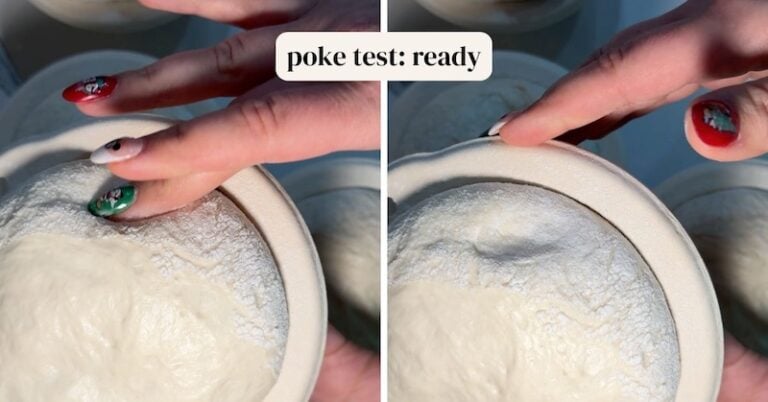
- If doing a same-day bake: cover and put in a warm spot (82°F/28°C) for about 3 hours, or until the dough has puffed up more and passes the poke test. When you poke the dough with a floured finger, it should remain indented and spring back ever so slightly (and slowly). If it springs back quickly and fully, it needs more time.If you prefer long-fermented loaves: cover and refrigerate until tomorrow. Ideal cold retard: 8-16 hours. Do not exceed 96 hours. No need to do the poke test at any point.
Step 7: Score and Bake
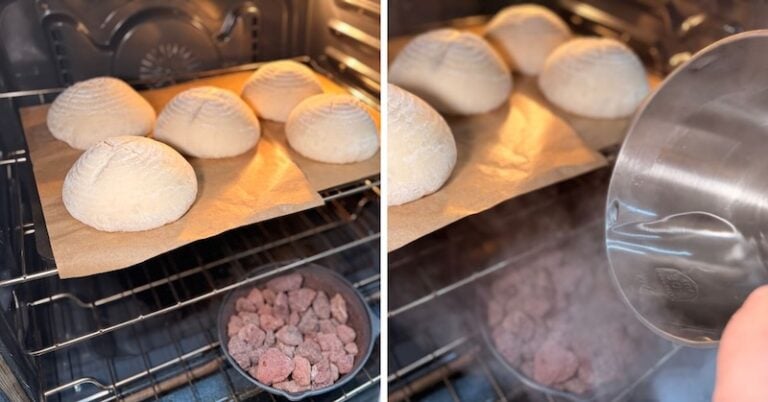
- When ready to bake, preheat oven to 450°F/230°C with Dutch oven(s) or a bread steel inside. If using a bread steel, we need steam – I like putting a small cast iron pan with lava rocks on the lowest rack in my oven.Note: if you did the cold retard, you do not need to bring your dough to room temperature before baking!
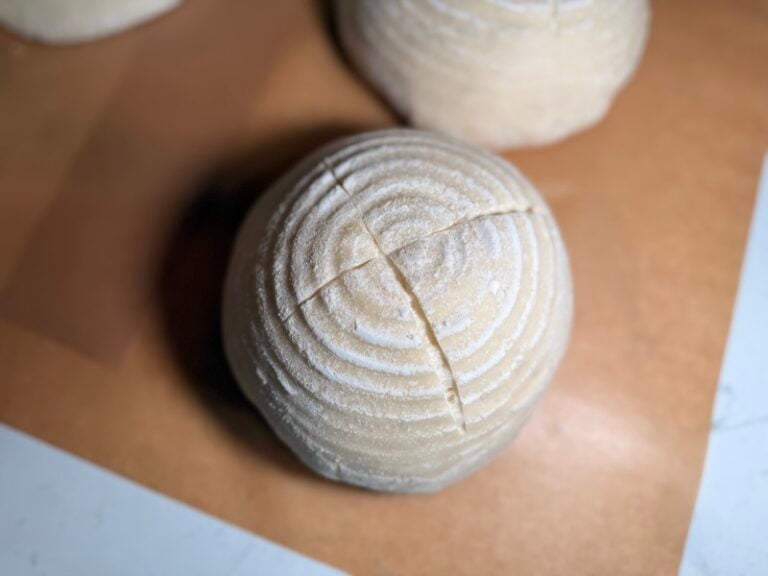
- Transfer the dough balls to parchment paper and score a shallow X shape on top.
- If using a Dutch oven: you will have to bake in batches. Depending on the size of your vessel, you may be able to fit two bread bowls in there at a time. Use discretion! Transfer dough to the Dutch oven. If open baking with a bread steel: I can fit all five of these loaves on my Cooking Steels 14"x20" bread steel. Using a bread peel, place dough on the hot steel. Pour hot water into the cast iron pan – be careful as steam will immediately rise up. Close oven as fast as possible. If desired, you can toss some ice cubes in your oven to assist with additional steam.
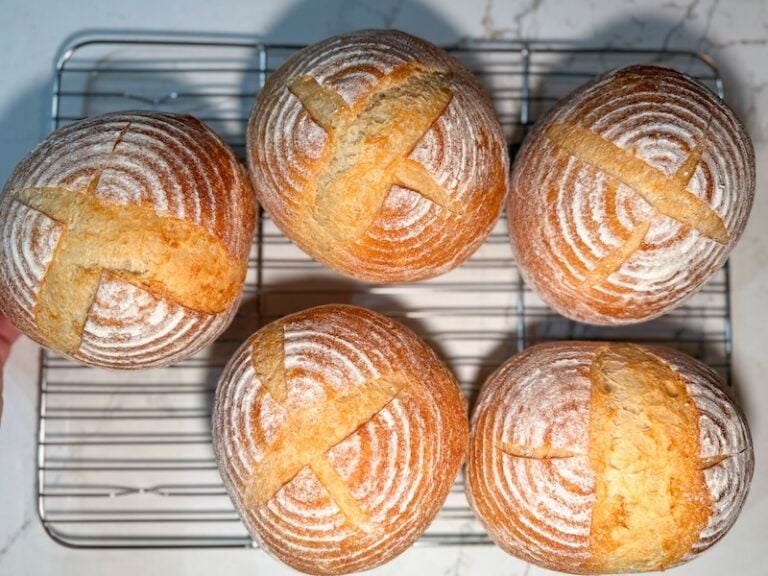
- If using a Dutch oven: Bake with lid on for 20 minutes. Then remove lid and bake for about 10 minutes more, or until golden brown and the internal temperature is 205-210°F (96-99°C). Repeat this process for the remaining bread bowls, letting the Dutch oven heat back up between bakes.If open baking with a bread steel: Bake for 20 minutes; then remove any remaining source of steam. Continue baking for 10-20 minutes, or until golden brown and the internal temperature is 205-210°F (96-99°C). My uncovered bake time takes longer when open baking, hence the extended timeframe.
- Cool on a wire rack for about an hour before slicing off the tops and scraping out the interior!
Notes
To make croutons with the bread interior: Tear bread into bite-sized pieces. Toss with olive oil, salt and pepper, and Italian seasoning or Herbs de Provence. Air fry at 400-425°F (200-220°C) for 4-5 minutes.
Bread flour options I love:
- Central Milling High Mountain (13.5% protein)
- Central Milling ABC (11.5% protein) – this is almost identical to Costco's All-Purpose flour
- Ballerina Farms Farm Flour (14% protein)
- King Arthur unbleached bread flour (12.7% protein)
- Bob's Red Mill Artisan Bread Flour
Nutrition Facts
Sourdough Bread Bowls
Amount per Serving
Calories
650
% Daily Value*
Fat
3
g
5
%
Saturated Fat
0.4
g
3
%
Polyunsaturated Fat
1
g
Monounsaturated Fat
0.3
g
Sodium
1244
mg
54
%
Potassium
180
mg
5
%
Carbohydrates
131
g
44
%
Fiber
4
g
17
%
Sugar
1
g
1
%
Protein
22
g
44
%
Vitamin A
4
IU
0
%
Calcium
28
mg
3
%
Iron
2
mg
11
%
* Percent Daily Values are based on a 2000 calorie diet.
