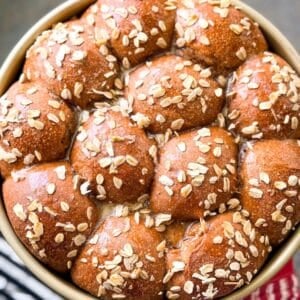
Sourdough Brown Bread Rolls
INGREDIENTS
Feed Your Starter
- 12 g sourdough starter
- 60 g water
- 60 g bread flour
Tangzhong
- 28 g bread flour
- 140 g milk whole, 2%, skim, oat, or nut milk
Main Dough
- 140 g water
- 120 g active sourdough starter prepared above
- all of the cooled tangzhong prepared above
- 60 g regular molasses do not use blackstrap
- 40 g brown sugar light or dark
- 30 g olive oil
- 10 g cocoa powder
- 350 g bread flour
- 125 g whole wheat flour
- 10 g sea salt
Optional Topping
- old-fashioned rolled oats to taste; optional
- 28 g (2 tbsp) unsalted butter melted; optional
Before You Begin

Bulk fermentation takes longer than typical dinner rolls. The total time above follows the Classic Timeline. See the Baker’s Timeline section in the post for timing by dough temperature and other schedules.Note: This recipe was developed and is written in metric (grams). Volume measurements (cups and spoons) were converted by hand but are untested — use at your own risk. For best results, use a kitchen scale.
Equipment
- 3/4 L Weck jar or other similar-sized glass jar; for feeding your starter
- Tovolo spatula for mixing your starter
- Microwave-safe bowl for the tangzhong
- Whisk for the tangzhong
- Large mixing bowl if mixing by hand
- Danish dough whisk if mixing by hand
- Stand mixer fitted with the dough hook; optional
- Bowl cover or plastic wrap; for Doe a Deer bowl covers; use code THATSOURDOUGHGAL for 15% off
- 9-inch round cake pan or 8×8-inch square pan, or 9×13-inch pan
- Parchment paper (optional); for lining the bottom of the baking pan
- Pastry brush or spray bottle (optional); helps the oats stick
- Bread bag (optional); use code THATSOURDOUGHGAL for 15% off
Instructions
Day 1: Feed Your Starter
- Feed your starter: About 10–12 hours before you plan to mix the dough, in a medium glass jar, stir together 12 g sourdough starter and 60 g water. Mix in 60 g bread flour until smooth. Loosely cover and let it ferment until it's active, bubbly, and well risen — usually about 10–12 hours at 68–75°F (20–24°C). This recipe uses 120 g, so you'll have 12 g left to maintain your starter.
Make the Tangzhong and Dough
- Make the tangzhong: Mix 28 g bread flour and 140 g milk in a microwave-safe bowl. Microwave in 30-second intervals, stirring between each, until it thickens and reaches 150°F (65°C). For me, it usually takes 2–3 rounds to finish. Cool to below 100°F (38°C) before adding it to the dough.

- Mix the dough: Whisk 10 g cocoa powder into 350 g bread flour and 125 g whole wheat flour, breaking up any clumps. Then combine 140 g water, 120 g active sourdough starter, all of the cooled tangzhong, 60 g regular molasses, 40 g brown sugar, 30 g olive oil, the flour-cocoa mixture, and 10 g sea salt in a large mixing bowl or stand mixer bowl. Knead until smooth — about 5 minutes by hand or 3–5 minutes on low speed in a stand mixer. If you want to skip the stretch and folds, mix in the stand mixer for about 10 minutes instead. (Bulk fermentation begins now.)
- Texture check: Compare your dough to the video below — if it's stiffer than mine, add water 1 tbsp at a time; if it's looser, add bread flour 1 tbsp at a time. Small adjustments are normal given all the variables in sourdough baking.
- Cover the bowl and let the dough rest for 1 hour.
- Dough strengthening: If you mixed for 10 minutes in a stand mixer, skip this step. Otherwise, perform a set of stretch and folds. Cover and rest 1 hour, then perform a second set. Cover and rest another hour, then optionally perform a set of coil folds. Cover and let the dough finish bulk fermentation undisturbed.
- Finish bulk fermentation: Bulk fermentation began when you first mixed the dough. This dough ferments slowly, so be patient. Based on tester results, bulk usually takes about 8–12 hours at 81–85°F (27–29.5°C), with some as early as 6–8 hours. At cooler temperatures, it usually takes 8–12 hours at 77–80°F (25–26.5°C), 10–14 hours at 74–76°F (23.5–24.5°C), 12–16 hours at 68–73°F (20–23°C), and 18–24 hours or longer below 68°F (20°C). Timing varies, so trust the visual cues over the clock.
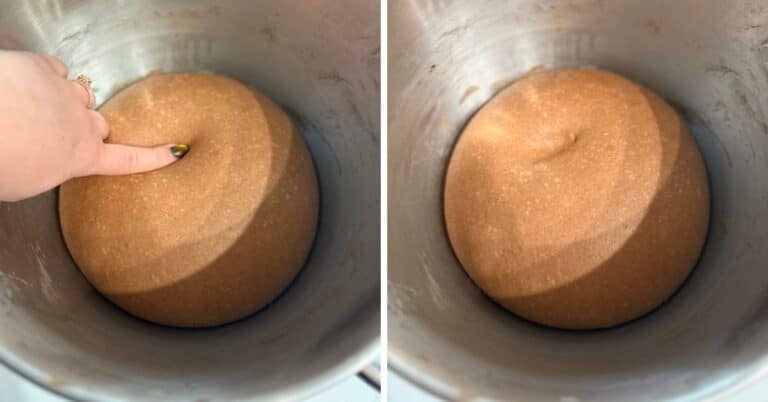
- Know when it’s ready: Bulk fermentation is done when the dough has increased in volume by about 75%. If you press a finger into the surface, the dough should feel aerated and springy, and your finger should leave an indentation. Watch the video below to see what my dough looked like at the end of bulk fermentation.
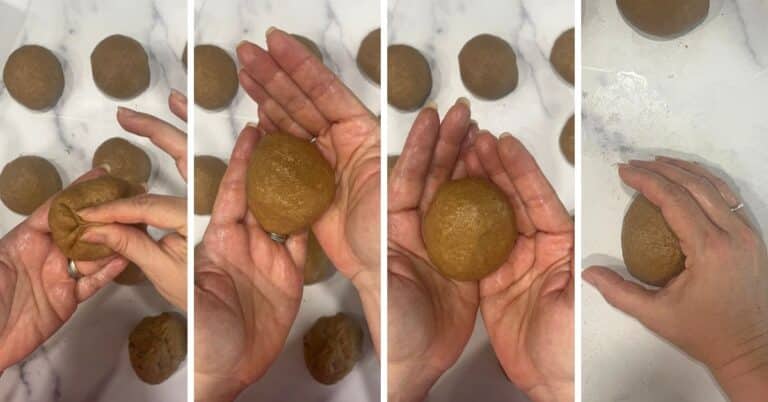
- Shaping: If your dough feels tacky, lightly flour your work surface. Turn out your dough and divide it into 12 equal pieces, about 85 g each. Shape the pieces into taut balls. Place the shaped balls into a well-greased 9-inch round cake pan (a parchment round on the bottom also helps prevent sticking) and cover with plastic wrap or a bowl cover. An 8×8-inch square pan or a 9×13-inch pan also works.
- Optional cold proof: Depending on timing and your preferences, refrigerate the covered pan of shaped rolls for up to 36 hours, then bring them out for the second proof. If they rise a lot in the fridge, the second proof may only take a couple of hours, so watch the rolls, not the clock.
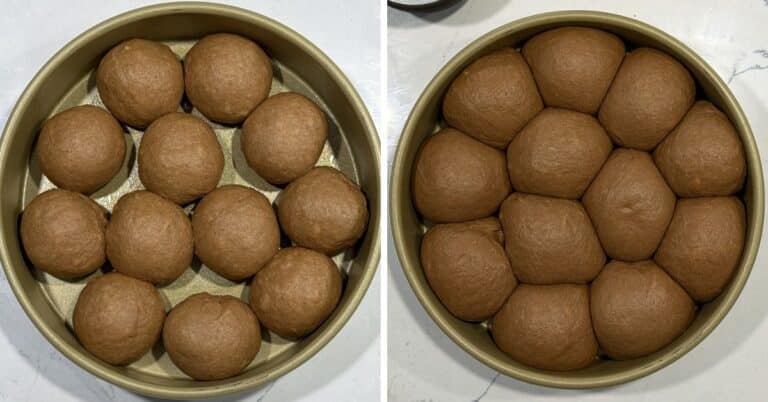
- Second proof: Let the rolls proof for 4–6 hours (possibly less if they rose significantly in the refrigerator), until they’ve risen by about 50% and look noticeably puffy. In a 9-inch round or 8×8-inch pan, they should press into each other. In a 9×13-inch pan, they may not. A warm spot speeds this up, and a cool spot slows it down.
- Preheat and add optional topping: Toward the end of the second proof, preheat the oven to 350°F (175°C) conventional. When the rolls are ready to bake, spritz or brush them with a light layer of water and sprinkle old-fashioned rolled oats on top, if desired.
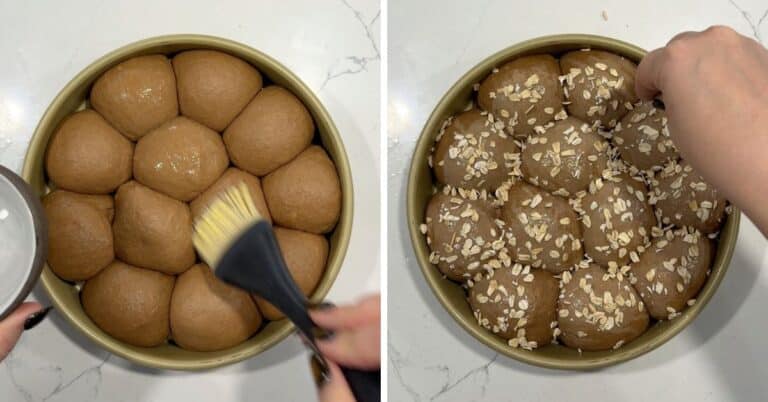
- Bake: Place the pan in the oven and bake for about 35–45 minutes, until the internal temperature reaches 200–205°F (93–96°C). In a 9×13-inch pan, start checking the temperature at about 25 minutes, since some testers found that their rolls baked faster in this pan.
- Butter: While the rolls finish baking, melt 28 g (2 tbsp) unsalted butter (optional). As soon as the rolls come out of the oven, pour the melted butter over them.
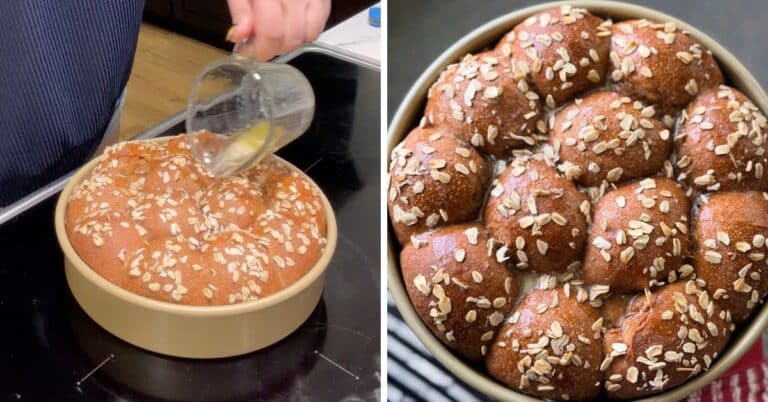
- Cool: Cool in the pan for about 10 minutes before enjoying.
- Storage: Once completely cooled, store in a bread bag or airtight container at room temperature for up to 5 days. For longer storage, freeze in a zip-top bag for up to 3 months.
Notes
Because this dough ferments so slowly, it’s easy to fit into your day. Visit the Baker's Timeline section in the post for 3 time-stamped options!
- If your kitchen is below 68°F (20°C) and your dough stays that cool, mix the dough in the morning, leave it on the counter, and shape it the following morning once bulk fermentation is complete.
- For a faster timeline, mix in the morning, let it ferment in a warm spot, and shape it later that day (see the bulk fermentation chart in the post for timing). Cover the pan and refrigerate the shaped rolls overnight, then take them out the next day and let them finish their second proof.
Nutrition Facts
Sourdough Brown Bread Rolls
Serving Size
1 roll
Amount per Serving
Calories
242
% Daily Value*
Fat
6
g
9
%
Saturated Fat
2
g
13
%
Trans Fat
0.1
g
Polyunsaturated Fat
1
g
Monounsaturated Fat
3
g
Cholesterol
6
mg
2
%
Sodium
346
mg
15
%
Potassium
183
mg
5
%
Carbohydrates
42
g
14
%
Fiber
2
g
8
%
Sugar
8
g
9
%
Protein
6
g
12
%
Vitamin A
79
IU
2
%
Calcium
38
mg
4
%
Iron
1
mg
6
%
* Percent Daily Values are based on a 2000 calorie diet.
