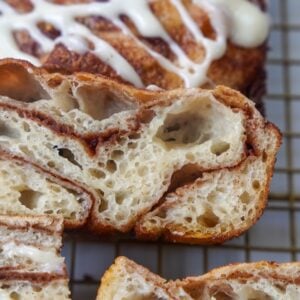
Cinnamon Roll Sourdough Focaccia
INGREDIENTS
Feed Your Starter
- 20 g sourdough starter
- 100 g water
- 100 g bread flour
Main Dough
- 390 g warm water
- 10 g sugar
- 200 g active sourdough starter that you made, from above
- 500 g bread flour
- 10 g sea salt
To Line the Pan
- 30 g unsalted butter (softened) amounts vary by pan, see step 8
Dry Cinnamon-Sugar Mixture
- 48 g sugar
- 24 g brown sugar
- 15 g bread flour
- 10 g ground cinnamon
Cinnamon Topping (Wet Mix)
- 30 g unsalted butter (melted)
- 50 g sugar
- 20 g brown sugar
- 10 g ground cinnamon
- 30 g water
Simple Vanilla Glaze (Option 1)
- 120 g powdered sugar
- 30 g heavy cream
- 5 g vanilla extract
- 1/2 tsp sea salt
Cream Cheese Drizzle (Option 2)
- 60 g softened cream cheese
- 85 g powdered sugar
- 15 g whole milk or heavy cream
- 5 g vanilla extract
- 1/2 tsp sea salt
Before You Begin

If you make a half batch, use a square 8" baking dish.Note: This recipe was developed and is written in metric (grams). Volume measurements (cups & spoons) are automatically converted and untested — use at your own risk. For best results, use a kitchen scale.
Equipment
- Large mixing bowl a 3–4 qt bowl is ideal
- Warming mat or proofing box or DIY option – see Recipe Notes
- Lloyd Pans 10x14-inch Detroit-Style Pizza Pan or a 9x13-inch USA Pan or a 12-inch cast-iron skillet
Instructions
- Feed your starter: Before bed, in a 3/4 or 1 L glass jar, mix together 20 g sourdough starter and 100 g water. Then, mix in 100 g bread flour until smooth. Loosely cover and let ferment on the counter overnight [10–12 hours at 68–75°F (20–24°C)].
- Mix the dough: In the morning, in a large mixing bowl, whisk together 390 g warm water, 10 g sugar, and 200 g active sourdough starter. Add 500 g bread flour and 10 g sea salt, and mix until no dry flour remains, using a Danish dough whisk or a wet bowl scraper. It will be really shaggy; that's normal. (Note: Bulk fermentation starts as soon as the ingredients are mixed.)
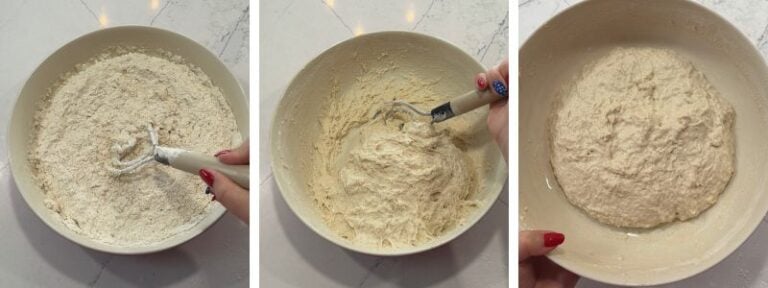
- Put it in a warm spot: Cover the bowl and place it somewhere warm, ideally around 80-85°F (26.5-29.5°C) – see Notes for proofing options. Let the dough rest for 30 minutes.
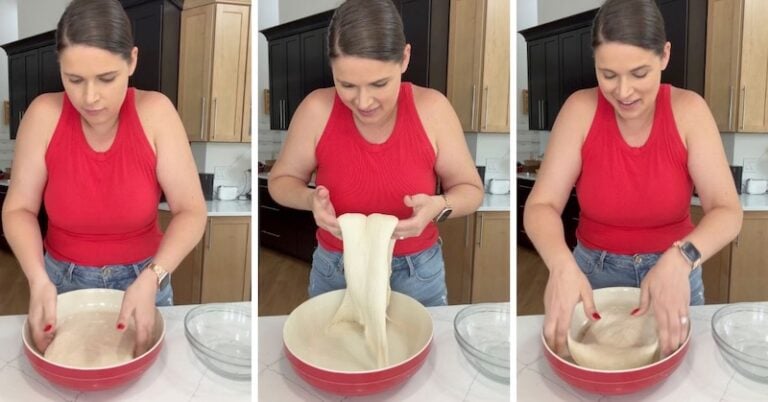
- Coil folds (about every hour): After the first rest, do a round of coil folds. Wet your hands and slide them under the center of the dough, lift, and let the ends fold under. Rotate the bowl 90° and repeat a few times, wetting your hands often. Cover, rest about an hour, then do another round.You can stop doing coil folds once the dough holds its shape after a 30-minute rest. If it's puddled back out, keep doing a round every hour or so until it holds. Most doughs are ready after 4-5 rounds.
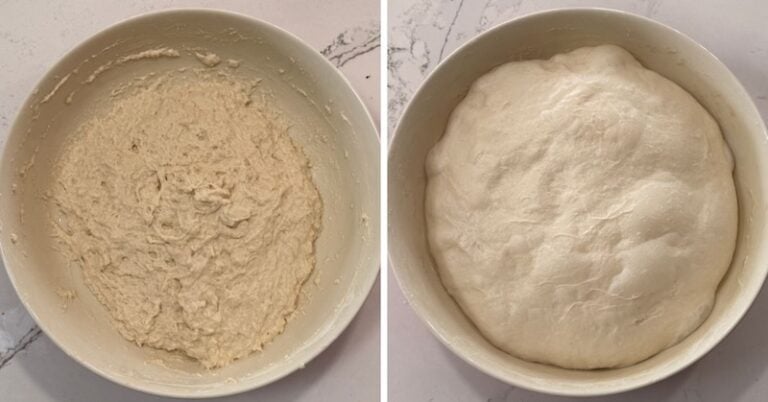
- Finish bulk fermentation: Remember, bulk started when we mixed the dough. It's ready for the pan once it's roughly doubled and covered in bubbles. Mine took 5.5–6 hours at about 80°F (26.5°C), but timing varies. Watch the dough, not the clock.
- Optional — overnight cold proof: Pop the dough in the fridge overnight to pause the process. When you're ready to continue, let it warm up on the counter for 1–2 hours, then move on to the next step.
- Layer in the dry cinnamon-sugar mixture: In a small mixing bowl, combine 48 g sugar, 24 g brown sugar, 15 g bread flour and 10 g ground cinnamon. Sprinkle half of the dry cinnamon-sugar mixture (about 48g) over the dough and do a single stretch-and-fold to layer it in. Sprinkle the remaining mixture on top and fold again.Don't worry about making this neat. It'll look messy, and the dough won't seal back to itself. That's what we want; those layers are what give you the marbled swirl.
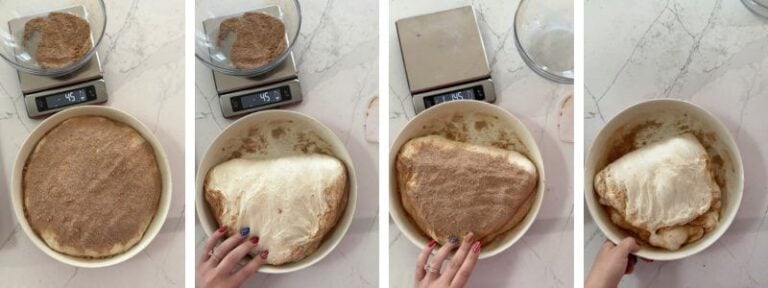
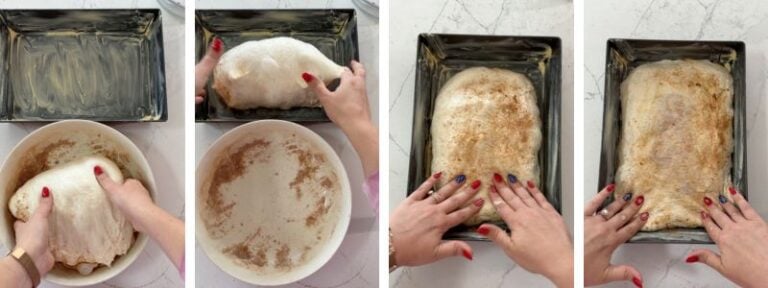
- Transfer the dough to the pan: As soon as the dry mix is folded in, prep your pan:• Lloyd Pans or 12-inch cast-iron: coat bottom and sides with 30 g unsalted butter (softened).• Nonstick USA Pan: coat with 10 g unsalted butter (softened).• Glass, ceramic, or other: spray with nonstick oil or coat with butter, line with parchment, then add 20 g unsalted butter (softened) on top of the parchment.Lay the dough over the butter and press to fill the pan. If it springs back, cover and rest 20 minutes, then stretch again. Cover and return to your warm spot for the final proof.
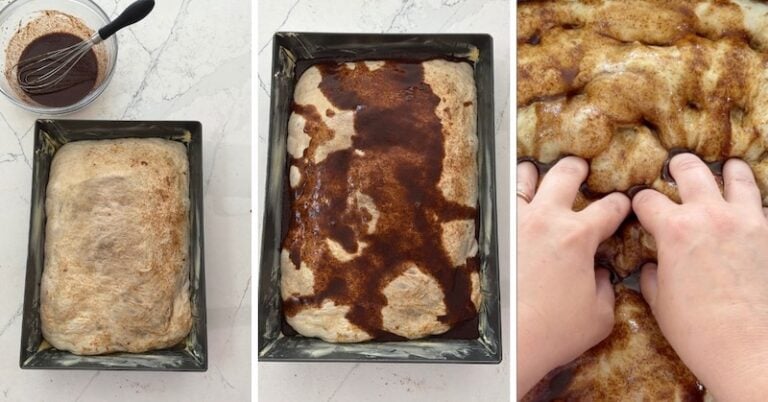
- Add the cinnamon topping (wet mix) and preheat: About 2–3 hours after transferring to the pan, or once the dough looks puffed up and around 50% larger, prepare the topping. In a medium mixing bowl, combine 30 g unsalted butter (melted), 50 g sugar, 20 g brown sugar, 10 g ground cinnamon, and 30 g water (yes, water!). Pour it evenly over the dough's surface, then dimple the entire surface deeply with your fingers, pressing all the way down to the pan. Return to your warm spot. Move your oven rack to the lower third and preheat to 400°F (205°C) on conventional bake.
- Bake: Once the oven is preheated, place the focaccia on the lower third rack and bake about 30 minutes, rotating halfway through. Pull it when the top is deep golden brown and the interior is 205–210°F (96–99°C).
- Make the vanilla glaze or cream cheese drizzle (pick one): Simple Vanilla Glaze (Option 1): In a medium mixing bowl, whisk together 120 g powdered sugar, 30 g heavy cream, 5 g vanilla extract, and 1/2 tsp sea salt. To make it thinner, add additional heavy cream. To make it thicker, add additional powdered sugar.Cream Cheese Drizzle (Option 2): In a medium mixing bowl, whisk together 60 g softened cream cheese, 85 g powdered sugar, 15 g whole milk, 5 g vanilla extract, and 1/2 tsp sea salt. To make it thinner, add additional whole milk. To make it thicker, add additional powdered sugar.
- Cool, then add the glaze or drizzle: Let the focaccia cool in the pan for 5 minutes, then transfer to a cooling rack and let it cool for at least 1 hour — this allows the interior to finish setting for cleaner slices. Once it's cooled, add the glaze or drizzle and slice.
Video
Notes
Bread flour: Use a high-protein bread flour for best results. I tested this recipe with Central Milling High Mountain (13.5% protein). Other great options include Ballerina Farm high protein farm flour (14%), King Arthur bread flour (12.7%), or Bob's Red Mill bread flour (12.5–13.5%). If you're working with a lower-protein flour like Kirkland's All-Purpose from Costco (11.5%), you'll likely need to add about 15–25g more flour, or 1 tbsp vital wheat gluten, to compensate.
Keep your tools wet: Keep a small bowl of water nearby throughout the folding process. Wet hands and a wet bowl scraper prevent sticking without adding extra flour.
Best on day 1: Focaccia is definitely the best the day it's baked. If you don't plan to eat it within 2–3 days, slice it and freeze it as desired. It reheats beautifully.
Proofing mat and box options:
- Cozy Bread Original Proofing Mat — Use code THATSOURDOUGHGAL for 10% off
- Brod & Taylor Folding Proofer
- Giyudot Folding Bread Proofing Box
- DIY — Your oven with the light on
- DIY — Your microwave with a cup of boiling water inside
Nutrition Facts
Cinnamon Roll Sourdough Focaccia
Serving Size
1 slice (recipe makes 12 slices)
Amount per Serving
Calories
322
% Daily Value*
Fat
6
g
9
%
Saturated Fat
3
g
19
%
Trans Fat
0.2
g
Polyunsaturated Fat
1
g
Monounsaturated Fat
1
g
Cholesterol
14
mg
5
%
Sodium
441
mg
19
%
Potassium
68
mg
2
%
Carbohydrates
61
g
20
%
Fiber
2
g
8
%
Sugar
23
g
26
%
Protein
6
g
12
%
Vitamin A
168
IU
3
%
Vitamin C
0.1
mg
0
%
Calcium
31
mg
3
%
Iron
1
mg
6
%
* Percent Daily Values are based on a 2000 calorie diet.
