Overnight Cinnamon Raisin Swirl Sourdough Bagels
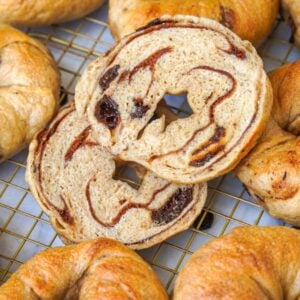
INGREDIENTS
Feed Your Starter
- 15 g sourdough starter
- 75 g water
- 75 g bread flour or all-purpose flour
Raisin Soak
- 140 g raisins
- 15 g vanilla extract
- 20 g water
Main Dough
- 410 g water
- 150 g active sourdough starter that you made, from above
- 30 g sugar
- 825 g bread flour
- 26 g non-diastatic malt powder make sure it's NON-diastatic (optional; see Notes)
- 16 g sea salt
- 1/2 tsp ground cinnamon
- soaked raisins do not strain
Cinnamon Sugar Mixture
- 90 g sugar
- 15 g bread flour
- 15 g cinnamon
For the Boiling Water
- 2 tbsp brown sugar or molasses or honey
- 1 tbsp baking soda
Before You Begin

Timeline: Feed your starter in the morning. Mix your bagel dough before bed. Shape the bagels in the morning. Boil them later in the day. If your home is warmer than 75°F (24°C), see the Recipe Notes at the end.Photo Note: Recipe makes 12 bagels, but photos show a half batch of 6 — click 0.5x to scale down if preferred.Metric Note: This recipe was developed and is written in metric (grams). Volume measurements (cups & spoons) are automatically converted and untested — use at your own risk. For best results, use a kitchen scale.
Equipment
- Stand mixer with dough hook
- Half sheet pan or two quarter sheet trays
- Half sheet pan cover A fantastic alternative to plastic wrap!
- Parchment squares Dollar Tree has really cheap ones, too!
- Large pot for boiling
- Bread bag use code THATSOURDOUGHGAL for 15% off
Instructions
Day 1: Morning
- Feed your starter: In the morning, in a medium glass jar, stir together 15 g sourdough starter and 75 g water. Mix in 75 g bread flour until smooth. Loosely cover and let ferment all day, 10–12 hours at 68–75°F (20–24°C). If your starter is already active and bubbly, you can skip this step.
Day 1: Evening
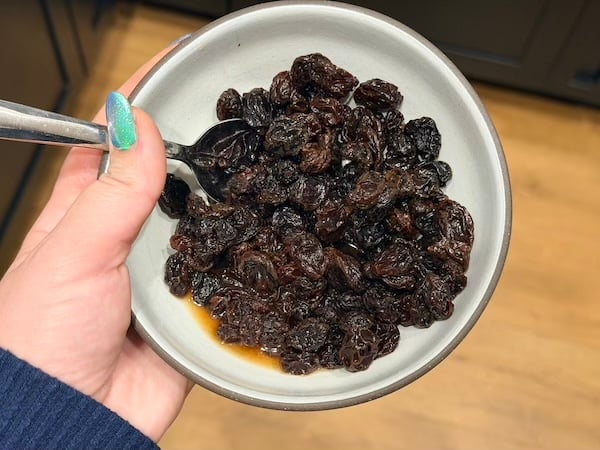
- Soak your raisins: To hydrate the raisins and help prevent wet spots around them later, 15 minutes before you’re ready to mix the dough, combine 140 g raisins, 15 g vanilla extract, and 20 g water in a small dish.
- Mix the dough: In a stand mixer fitted with the dough hook, combine 410 g water, 150 g active sourdough starter, 30 g sugar, 825 g bread flour, 26 g non-diastatic malt powder, 16 g sea salt, and 1/2 tsp ground cinnamon. Knead on low speed (speed 1) for about 1 minute, or until the dough just starts to come together. Then, add in the soaked raisins (including the soaking liquid). Continue mixing for about 1–2 minutes more, just until the raisins are evenly distributed. Stop before the dough hook has a chance to shred them.
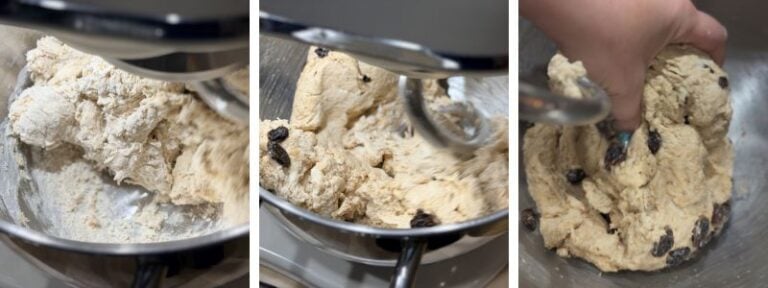
- The dough should be stiff but pliable and slightly tacky – think Play-Doh. If your dough is sticky, add flour in 1 tbsp increments. If it is so stiff that it's not pliable, add water in 1 tbsp increments.
- Dump the dough on your counter and finish kneading by hand for 3–4 minutes, or until the dough feels smooth. Put the dough in a medium-sized bowl and cover for 30 minutes.
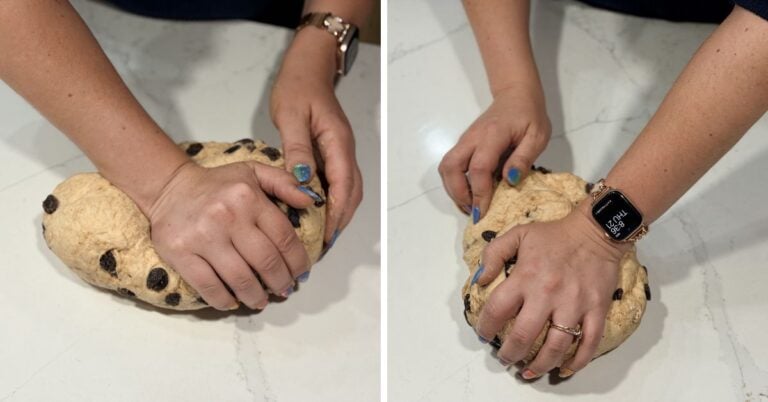
- Optional: After the 30-minute rest, knead the dough again for 2–3 minutes.
- Bulk ferment: Cover and let bulk ferment on the counter overnight for 8–12 hours at 68–75°F (20–24°C), or 12–14+ hours if your kitchen is cooler). The dough should about double in size.
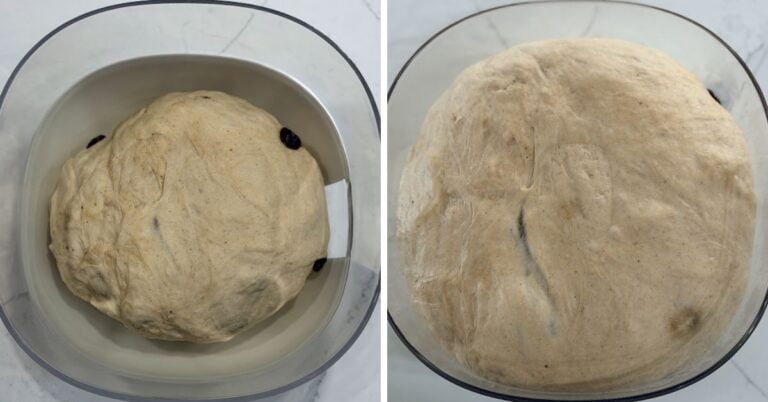
Day 2: Morning
- Make the cinnamon sugar mixture: The next morning, combine 90 g sugar, 15 g bread flour, and 15 g cinnamon in a small dish.
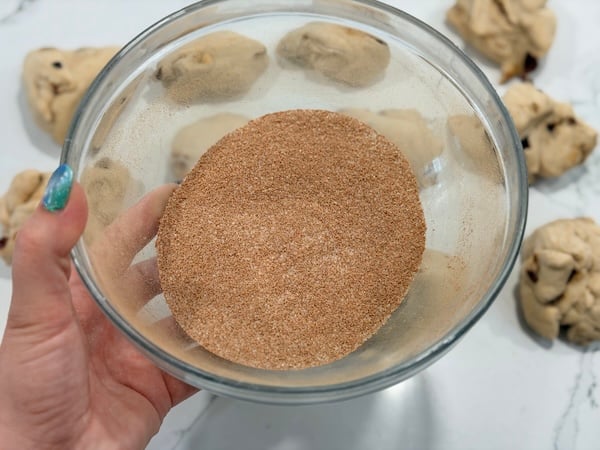
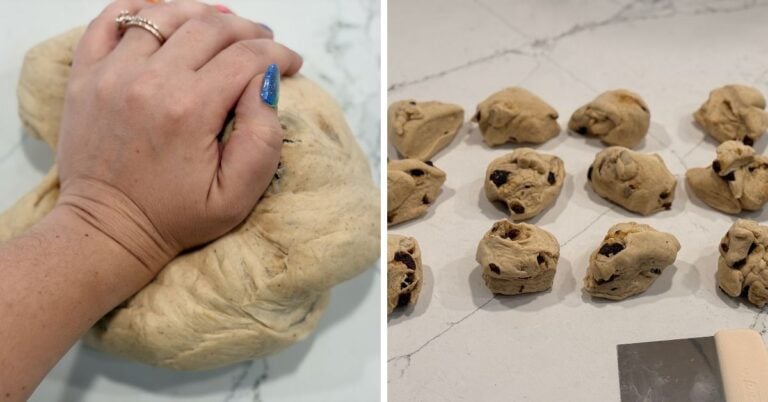
- Divide: Punch down the dough, give it a quick knead, and divide it into 12 equal pieces (about 135g each).
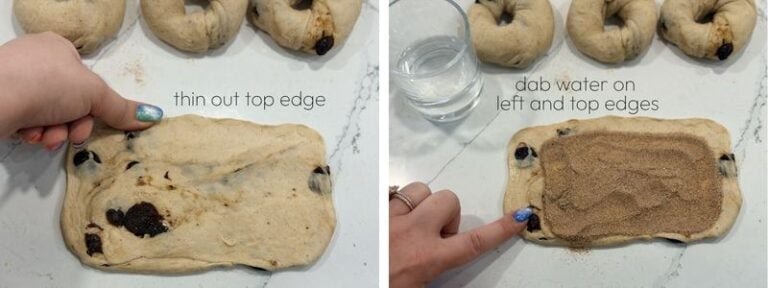
- Flatten and fill: Starting with your first dough ball, use a rolling pin to roll it into a small rectangle, about 8 inches long by 4 inches wide. Thin the top edge with your thumb. Sprinkle 10g of the cinnamon sugar mixture (a scant tablespoon) over the rectangle, leaving a 1" gap on the left side and a smaller gap along the top edge and along the right side. Wet your finger and dab along the left side and top edge (to help the dough adhere to itself).
- Roll: Roll up your rectangle, pinching the side seams closed as you roll. Pinch the seam along the log closed.
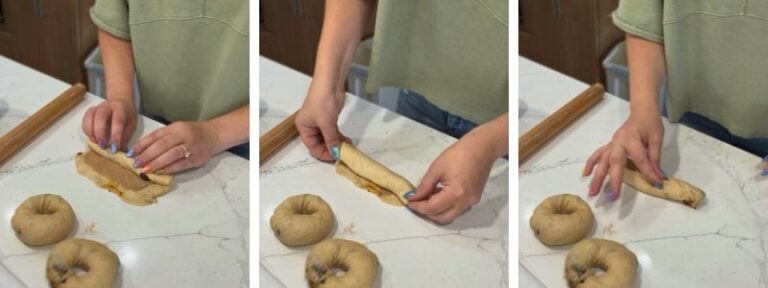
- Twist: Using your thumb, press the left side of the log down to flatten and widen it. Twist the dough log (like a pretzel twist) and bring the right side around to rest on top of your flattened dough end.
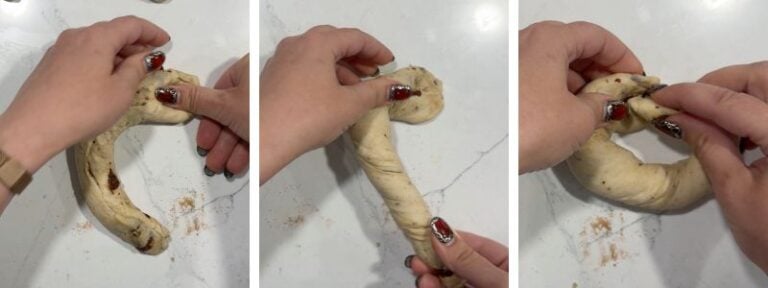
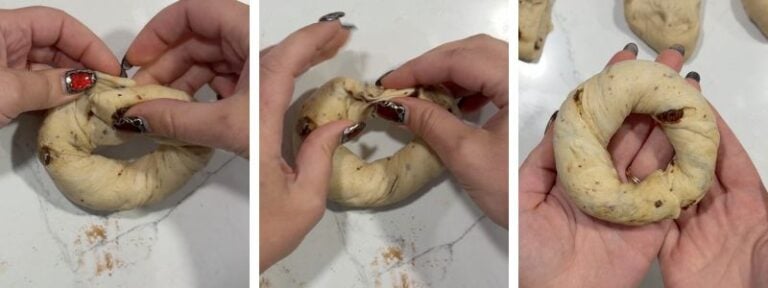
- Wrap and seal: Wrap that flattened dough around the end of the twisted log and pinch the dough around it to seal. Repeat this shaping process with the remaining pieces.
- Second proof: Cover the sheet tray with plastic wrap or a sheet tray cover and let rise on the counter for 6–8 hours at 68–75°F (20–24°C) until visibly puffed and about 50% increased in size. This takes a little longer than my plain bagel recipe, as a heads up. A warm spot or proofing box will speed this up if desired.
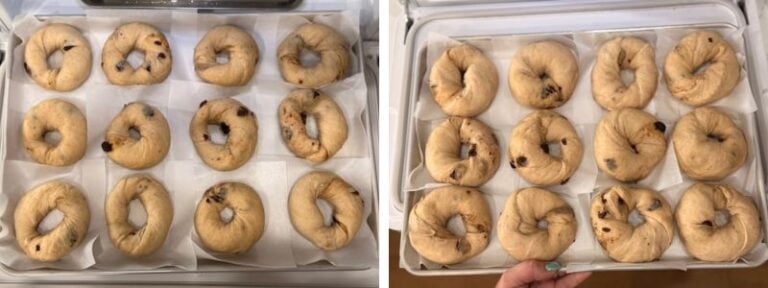
- Optional cold proof: Refrigerate shaped bagels for 8–36 hours for tangier flavor/easier digestion. When ready, bring them back out and finish the second proof before boiling.
Day 2: When Ready to Bake (Afternoon/Evening)
- Boil: Preheat the oven to 450°F (230°C) conventional or 425°F (220°C) convection and bring a large pot of water to a boil. Add 2 tbsp brown sugar and 1 tbsp baking soda to the boiling water.
- If any of the bagels have opened up during the second proof (as in, they look like a crescent roll), stitch them back together with a toothpick. The toothpick can be removed after boiling.
- Working in batches of 3 or 4, slide bagels (on parchment squares) into the water. Important: If your bagels sink, they're not ready. Put back on sheet tray and continue proofing.Slide each bagel into the water using its parchment square — the parchment will peel off in the water. To prevent burnt bottoms, throw away the used parchment squares and line your sheet tray with a fresh sheet of parchment or Silpat. Boil 30 seconds per side, then transfer back to the sheet tray with a slotted spoon.Note: When you drop the bagels in, the water will adjust from a rolling boil to a simmer. This is normal. You do not need to wait for the water to return to a rolling boil to start the 30-second-per-side timer.
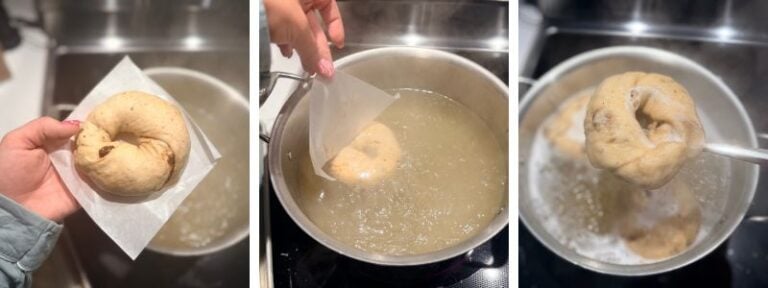
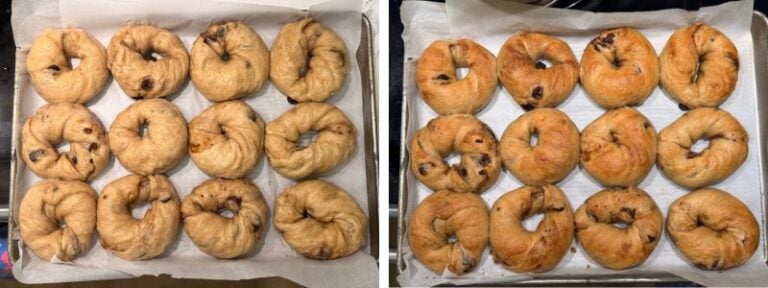
- Bake: Bake the bagels for 10–18 minutes, or until the tops are golden brown and the interior temperature reaches 205–210°F (96–99°C). Transfer bagels to a wire rack and let cool for at least 1 hour before slicing.
- Serving: These are best served warm, sliced and toasted with a generous schmear of whipped cream cheese. A pinch of cinnamon stirred into your cream cheese takes it over the top and echoes the swirl inside.
- Storage: Store in a bread bag on the counter for 2–3 days, or up to 5 days if you used non-diastatic malt powder. To freeze, slice them in half, place parchment between the halves, and freeze in a zip-top bag for up to 3 months. Toast directly from frozen — no need to thaw.
Video
Notes
Bread flour: Bread flour works best for bagels – its higher protein content gives them a nice chewiness. I’ve tested this recipe with King Arthur unbleached bread flour (12.7% protein) and Central Milling High Mountain bread flour (13.5% protein). If you use a lower-protein flour, such as Costco’s all-purpose flour (11.5% protein), add 1 tbsp of vital wheat gluten to help it perform like a higher-protein flour, or decrease the water in the dough slightly.
Non-diastatic malt powder: Keeps bagels soft for up to 5 days. Don't have it? You have a few options:
- Use diastatic malt powder instead: Toast at 325°F (160°C) for 5 minutes to deactivate the enzymes, then sift after cooling to remove any lumps. Once toasted, use it just like non-diastatic.
- Use diastatic malt powder, untoasted: Mix your dough in the morning instead of overnight so you can monitor fermentation – the active enzymes will speed it up.
- Omit it entirely: Your bagels will just stale a bit faster.
Nutrition Facts
Overnight Cinnamon Raisin Swirl Sourdough Bagels
Serving Size
1 bagel
Amount per Serving
Calories
370
% Daily Value*
Fat
2
g
3
%
Saturated Fat
0.3
g
2
%
Polyunsaturated Fat
1
g
Monounsaturated Fat
0.2
g
Cholesterol
1
mg
0
%
Sodium
533
mg
23
%
Potassium
196
mg
6
%
Carbohydrates
78
g
26
%
Fiber
3
g
13
%
Sugar
12
g
13
%
Protein
10
g
20
%
Vitamin A
9
IU
0
%
Vitamin C
1
mg
1
%
Calcium
32
mg
3
%
Iron
1
mg
6
%
* Percent Daily Values are based on a 2000 calorie diet.
