Sourdough Bierocks (Runzas)

INGREDIENTS
Feed Your Starter
- 14 g sourdough starter
- 70 g water
- 70 g bread flour
Main Dough
- 185 g whole milk
- 50 g sugar
- 150 g active sourdough starter that you made, from above
- 28 g unsalted butter (softened)
- 1 egg
- 425 g all-purpose flour
- 10 g salt
Filling
- 2 tsp olive oil
- 1 lb 80/20 ground beef
- 1 white onion (diced)
- 4 cloves garlic (minced) optional
- 1 tsp umami seasoning optional
- 40 g unsalted butter
- 450 g shredded cabbage approx. 5 cups
- 2 tsp Worcestershire sauce or soy sauce or fish sauce
- 1 1/4 tsp salt or to taste
- 1/2 tsp black pepper or to taste
Egg Wash
- 1 egg
- 1 tsp whole milk or heavy cream
Before You Begin

This recipe card features a same-day fermentation timeline. However, you can flip it and proof this dough overnight. Visit the Baker's Timeline section for sample schedules.Note: This recipe was developed and is written in metric (grams). Volume measurements (cups & spoons) are automatically converted and untested — use at your own risk. For best results, use a kitchen scale.
Equipment
- Stand mixer with dough hook
- Large skillet
- Parchment paper or Silpat
- Half sheet pan or two quarter sheet trays
- Half sheet pan cover A fantastic alternative to plastic wrap!
Instructions
- Feed your starter: The night before, combine 14 g sourdough starter and 70 g water. Then, add 70 g bread flour and stir until smooth. Cover loosely to ferment overnight (10-12 hours). If you already have 150 g active starter ready to go, you can skip this step.
- Mix the dough: In the morning, in a large mixing bowl (or a stand mixer), mix together 185 g whole milk, 50 g sugar, 150 g active sourdough starter, 28 g unsalted butter (softened), 1 egg, 425 g all-purpose flour, and 10 g salt. Knead until a soft, smooth dough forms, which takes about 10-15 minutes by hand or 7-12 minutes in a stand mixer on a low speed (typically Speed 1 or 2). Your finished dough should be tacky but not stick to your hand or your surface.
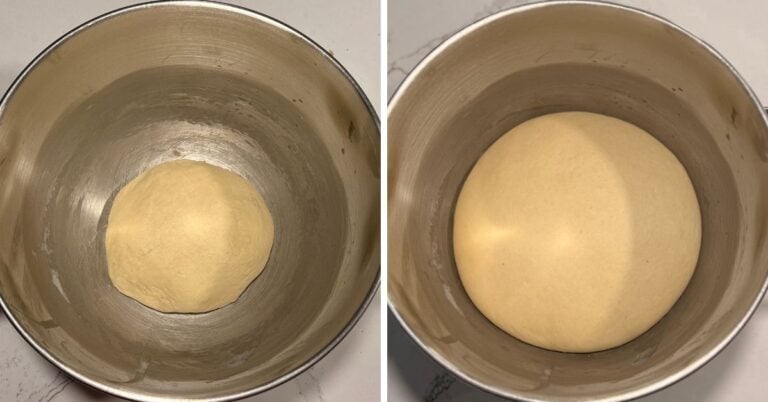
- Bulk fermentation: Place dough ball in a greased bowl, turning to coat the dough. Cover and let rise until doubled in size. For a guideline, this takes about 7-8 hours at 80°F (26.5°C) or 10-12 hours at 73°F (23°C).
- Optional cold proof: For deeper sourdough flavor and a longer, slower fermentation, refrigerate the risen dough for 12–36 hours. It does not need to return to room temperature before shaping.
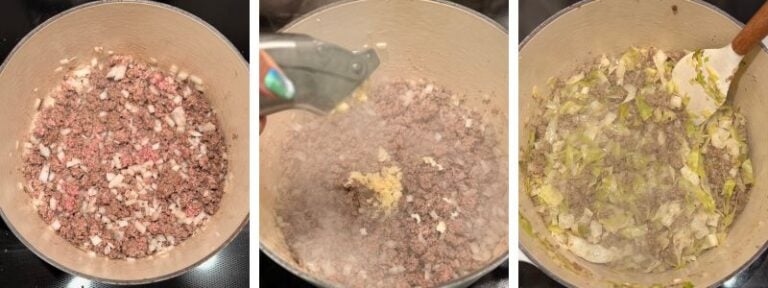
- Prepare the filling: While the dough is rising, make the filling. Heat 2 tsp olive oil in a large skillet. Brown 1 lb 80/20 ground beef with 1 white onion (diced) over medium heat until mostly cooked, about 5-7 minutes. Drain excess fat if needed. Add 4 cloves garlic (minced) and 1 tsp umami seasoning. Cook 1 minute more, or until fragrant. Add 40 g unsalted butter, 450 g shredded cabbage, and 2 tsp Worcestershire sauce. Cook about 10 minutes more, or until cabbage is tender. Season with 1 1/4 tsp salt and 1/2 tsp black pepper (or to taste); remove from the heat to cool.
- Depending on your timing, you can refrigerate the filling until your dough is ready. Just make sure to bring it to room temperature before using — cold filling may cause a dense, gummy line in the interior.
- Shape the dough: Line a half sheet tray with parchment paper or a Silpat. Turn the dough out onto your work surface, and give it a quick knead. Divide into 12 pieces, about 70g each. For the following steps, you shouldn't need bench flour, but if your dough is really sticky, do a light dusting to help.

- Form each piece into a ball by pinching the bottom seam closed, then rolling it against the counter under your palm until smooth. Consider covering the dough balls as you work so they don't dry out.

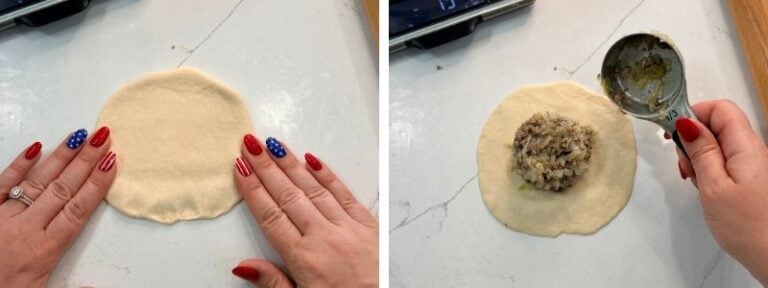
- Working one dough ball at a time, flatten it into a 5" circle. Press down the outer edge so it's a little thinner than the center. Spoon 1/3 cup (75-80g) of the filling into the center.
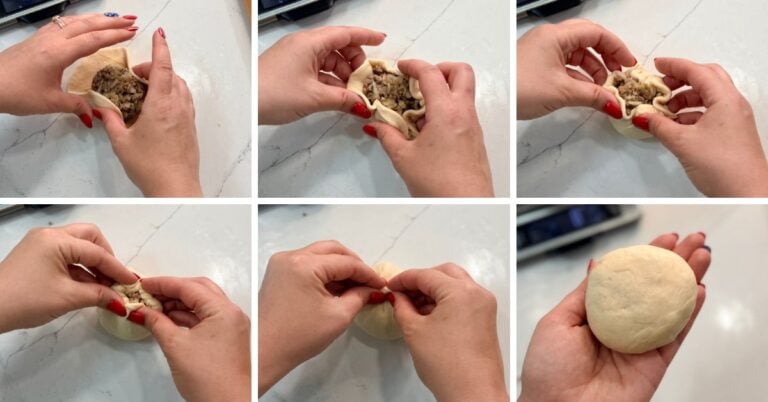
- Gather the edges of the dough up and around the filling, pinching them together at the top to seal. Place seam-side down on your prepared pan. Repeat with the remaining dough and filling.
- Second proof: Cover and let rise in a warm spot for up to 2 hours (no longer for food safety reasons), ideally at 80-85°F (26.5-30°C). You may not notice much visual change, but this proofing time helps create much softer rolls.
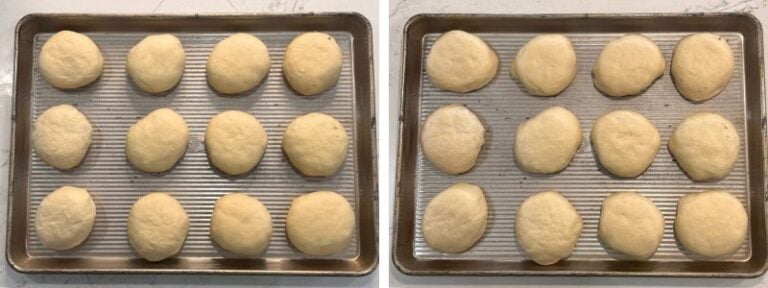
- Preheat oven and make egg wash: Toward the end of the second rise, preheat your oven to 375°F (190°C). In a small bowl, whisk together 1 egg with 1 tsp whole milk or heavy cream.
- Brush the bierocks with the egg wash. Consider poking the tops with a toothpick to prevent large air pockets in the rolls. Bake for 30-40 minutes, rotating the pan halfway through. They're done when the tops are golden brown. Let cool on a wire rack.

- Store in the fridge for up to 5 days or the freezer for up to 6 months.
Video
Notes
Freezer storage: These rolls freeze really well – wrap individually in plastic wrap and put in a freezer-safe zip-top bag. To thaw, take one out of the freezer and let it rest on the counter. By lunchtime, it'll be thawed. Warm in the microwave in 30-second intervals until heated through.
Nutrition Facts
Sourdough Bierocks (Runzas)
Serving Size
1 bierock
Amount per Serving
Calories
341
% Daily Value*
Fat
14
g
22
%
Saturated Fat
7
g
44
%
Trans Fat
1
g
Polyunsaturated Fat
1
g
Monounsaturated Fat
5
g
Cholesterol
55
mg
18
%
Sodium
642
mg
28
%
Potassium
272
mg
8
%
Carbohydrates
40
g
13
%
Fiber
2
g
8
%
Sugar
7
g
8
%
Protein
13
g
26
%
Vitamin A
231
IU
5
%
Vitamin C
15
mg
18
%
Calcium
56
mg
6
%
Iron
3
mg
17
%
* Percent Daily Values are based on a 2000 calorie diet.
