Sourdough Hawaiian Hot Dog Buns

INGREDIENTS
Sweet Stiff Sourdough Starter
- 40 g water
- 20 g sourdough starter
- 20 g sugar or honey
- 80 g bread flour
Tangzhong
- 18 g bread flour
- 88 g whole milk
Main Dough
- all of the tangzhong
- 85 g cold whole milk See Notes for substitutions
- 1 cold egg
- 1 cold egg yolk
- 50 g sugar
- 11 g milk powder optional, but adds softness
- 270 g bread flour 12.7–13.5% protein
- all of the sweet stiff starter
- 7 g sea salt
- 56 g (4 tbsp) unsalted butter I recommend European-style
Before Baking
- 1 tbsp heavy cream
Before You Begin

This recipe includes instructions for hand mixing or using a stand mixer. It was developed and is written in metric (grams). Volume measurements (cups and spoons) are automatically converted and haven't been tested — use them at your own risk. For best results, use a kitchen scale.
Equipment
- Large mixing bowl or stand mixer fitted with the dough hook
- Danish dough whisk if mixing by hand
- Bowl cover 15% off with code THATSOURDOUGHGAL
- USA Pan hot dog bun pan or baking sheet
Instructions
Make the Sweet Stiff Starter (Evening Before)
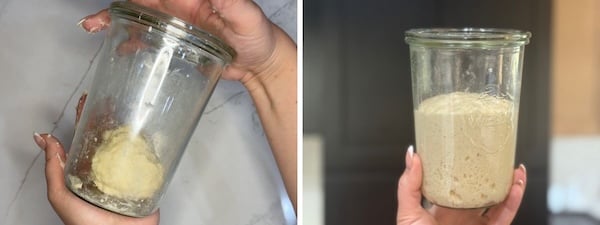
- Make the sweet stiff starter: In the early evening, mix 40 g water, 20 g sourdough starter, 20 g sugar, and 80 g bread flour in a glass jar. Remove the mixture from the jar and knead until the ingredients are fully incorporated, then return it to the jar. Cover loosely and let ferment in a warm place until morning. See Notes for timing and tips.
Prepare Dough (The Next Morning)
- Set out butter: In the morning, set out 56 g (4 tbsp) unsalted butter to soften.
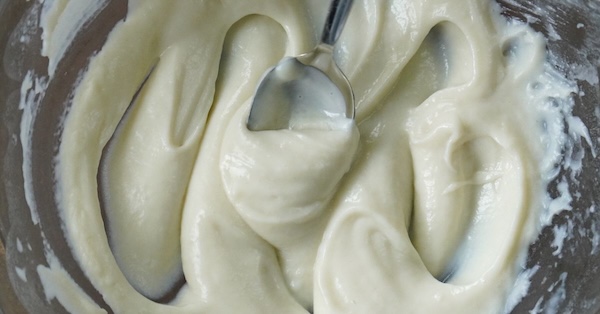
- Make tangzhong: In a glass mixing bowl, whisk together 18 g bread flour and 88 g whole milk. Microwave in 20-second intervals until it thickens and reaches 150°F (65°C), about 2–3 rounds total. See Notes for stovetop instructions.
- Mix the dough: • If mixing by hand: To your bowl with all of the tangzhong, whisk in 85 g cold whole milk first to cool the mixture. Then add 1 cold egg, 1 cold egg yolk, 50 g sugar, and 11 g milk powder, whisking constantly so the eggs don't scramble. Then, add 270 g bread flour, all of the sweet stiff starter, and 7 g sea salt. Use a Danish dough whisk or your hands to incorporate all of the ingredients. • If using a stand mixer: Transfer all of the tangzhong to the bowl of a stand mixer fitted with the dough hook. Add 85 g cold whole milk first and mix briefly to cool the tangzhong. Then add 1 cold egg, 1 cold egg yolk, 50 g sugar, and 11 g milk powder. Mix on low speed until incorporated (help it along with a spatula or whisk if needed). Then, add 270 g bread flour, all of the sweet stiff starter, and 7 g sea salt. Knead on low speed for about 10 minutes. This dough will not pull away from the sides of the bowl.
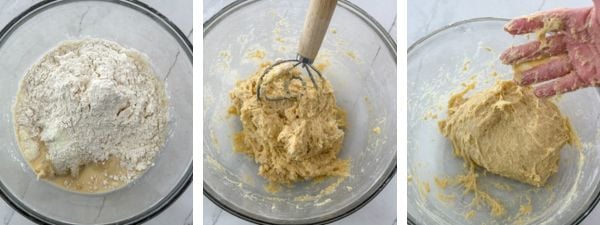
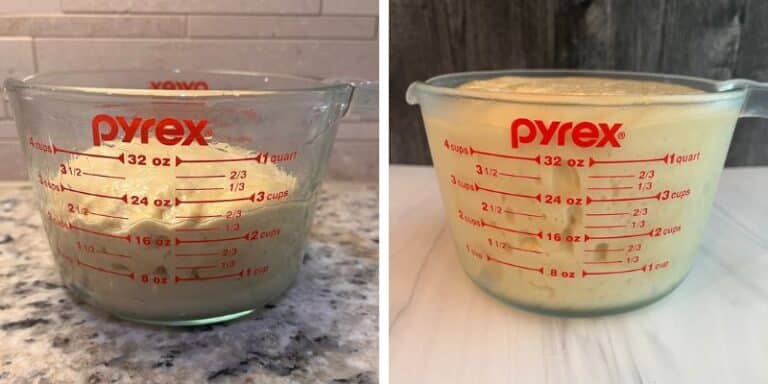
- Texture check: The dough will be sticky and shaggy. But let's make sure it's not too sticky — compare your dough to mine and add flour in 1 tbsp increments until the consistency matches. If your dough is stiffer, add milk in 1 tbsp increments. Then, cover the bowl and let rest for 30 minutes.
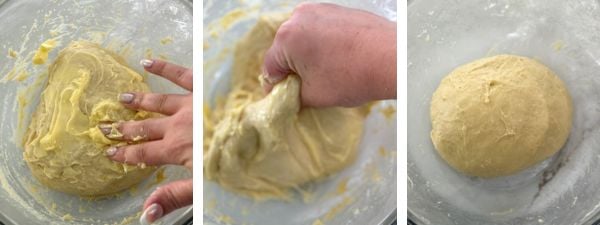
- Add the butter: • If mixing by hand: Spread 56 g (4 tbsp) unsalted butter (softened) on top of the dough. Pinch and squeeze it into the dough (think lobster claws) until it's mostly incorporated. Switch to slap-and-folds on your counter until the dough smooths out. This process takes 4–5 minutes. Cover and let rest for 30 minutes. • If using a stand mixer: Add half of the softened butter (28 g / 2 tbsp) to the bowl and mix on low speed until combined. Add the remaining (28 g / 2 tbsp) butter and mix until fully incorporated and the dough smooths out. Optionally, transfer dough to a greased glass bowl (makes it easier to dump out later). Cover and let rest for 30 minutes.
- First rise: Place your bowl in a warm spot (75–80°F/24–27°C is ideal) for 3–5 hours, or until the dough has relaxed, puffed up slightly, and is showing signs of fermentation. There should be small bubbles around the sides and under the surface of the dough.
Shape the Buns (Mid-Day)
- Long fermentation option: You can refrigerate the unshaped dough after the first rise, or shape the buns and refrigerate the pan overnight. If you refrigerate the dough unshaped, shape the buns the next morning. Either way, let the shaped buns finish rising at room temperature before baking. See the Baker's Timeline section in the full blog post for more information.
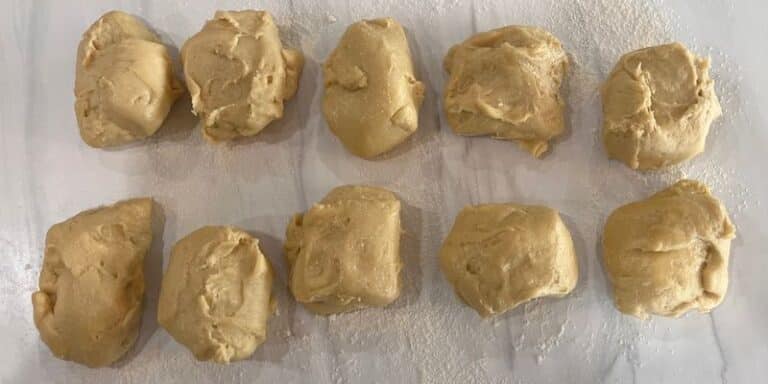
- Divide: Dust your work surface with bench flour. Dump out the dough and weigh it. Divide the total weight by 10 (it should be about 80 g per bun). Divide the dough into 10 equal pieces.Note: if you're struggling with stickiness, use bench flour to help. You can also refrigerate the dough for 15–20 minutes — cold dough is easier to handle.
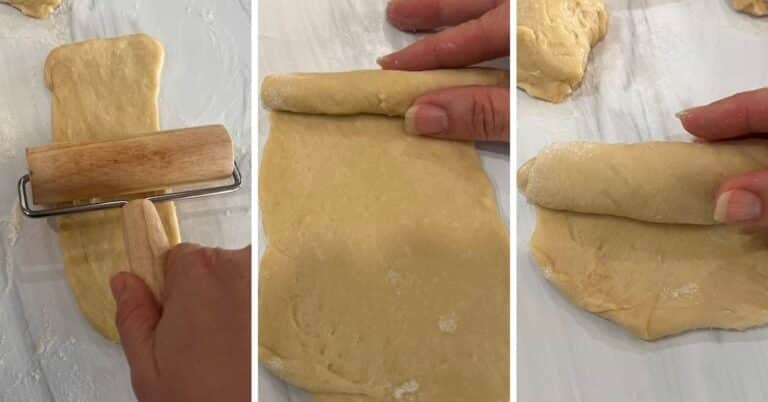
- Shape: Roll each piece into a rectangle with a rolling pin, using bench flour to prevent sticking. Thin the bottom edge with your thumb, then roll the dough from the top toward you.
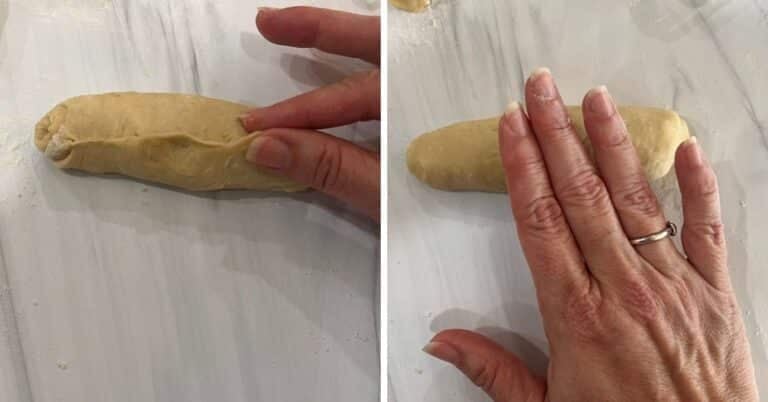
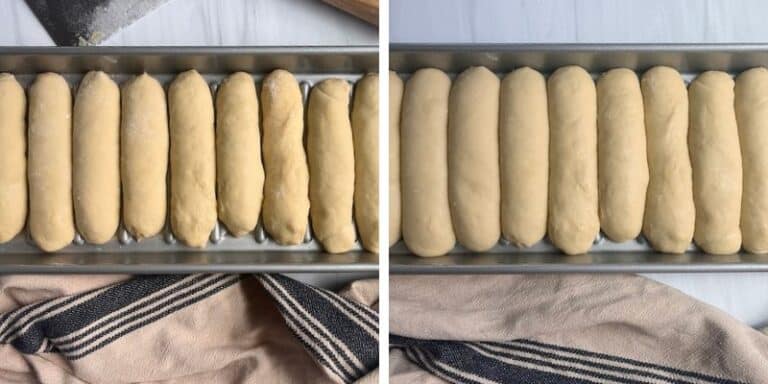
- Seal: Pinch the sides and center seam closed. Using your palms, gently roll the bun until it’s an even thickness and about 6 inches long. Place seam-side down in your baking pan.
- Second rise: Cover with plastic wrap and let rise until the buns have puffed up and are crowding into each other. If you poke the dough with a floured finger, it'll leave an indentation. In a 77°F (25°C) environment, this took 6 hours, but your timing may vary.
Bake the Buns
- Bake: If you're baking the buns the same day, preheat the oven once they're nearly finished with the second rise. If you did the optional cold proof, let the buns finish rising at room temperature before you preheat.Preheat the oven to 400°F (205°C), conventional — not convection.Brush the tops of the buns with 1 tbsp heavy cream and bake for 12 minutes. Lower the oven to 350°F (175°C) and bake for another 5–15 minutes, rotating the pan partway through, until the tops are golden brown and the internal temperature reads about 195°F (90°C).Optional: broil for about 2 minutes at the end for a deeper color. Watch them the whole time — broilers vary, and these go from golden to too dark fast.
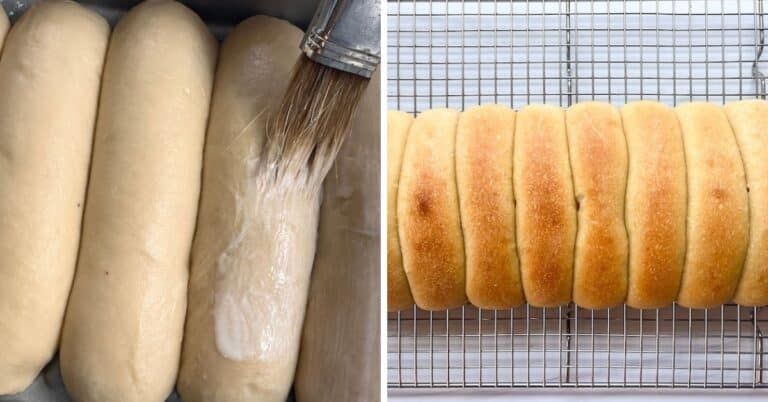
- Let the buns cool in the pan for about 10 minutes, then turn them out onto a cooling rack. Enjoy warm!
Notes
Butter: European-style butter produces the best results. If you use standard American-style butter, which has a lower fat content, add a little extra flour (about a tablespoon) to compensate.
Milk substitution: You can substitute an unsweetened, unflavored non-dairy milk for the whole milk. Testers had success with almond and cashew milk.
Sweet stiff starter: It takes 10–16 hours to peak (less time if your home is warm, more time if your home is cool), so I suggest feeding your starter before or around dinnertime. It’s better to use a starter just past peak than one that’s still rising. Before using your sweet stiff starter in this recipe, ensure it has tripled in size, smells sweet and yeasty, and has tons of bubbles all around the jar and on the surface. If it isn’t there yet, put it in a warm place and give it a few more hours. Then, start the recipe.
Tangzhong: You can make the tangzhong up to 2 days in advance; store it in the refrigerator. You can also make the tangzhong on the stovetop if you prefer. Heat over medium heat until the mixture reaches about 150°F (65°C) and is as thick as pudding.
Nutrition Facts
Sourdough Hawaiian Hot Dog Buns
Serving Size
1 bun
Amount per Serving
Calories
233
% Daily Value*
Fat
7
g
11
%
Saturated Fat
4
g
25
%
Trans Fat
0.2
g
Polyunsaturated Fat
1
g
Monounsaturated Fat
2
g
Cholesterol
53
mg
18
%
Sodium
291
mg
13
%
Potassium
88
mg
3
%
Carbohydrates
35
g
12
%
Fiber
1
g
4
%
Sugar
8
g
9
%
Protein
6
g
12
%
Vitamin A
251
IU
5
%
Vitamin C
0.1
mg
0
%
Calcium
44
mg
4
%
Iron
0.5
mg
3
%
* Percent Daily Values are based on a 2000 calorie diet.
