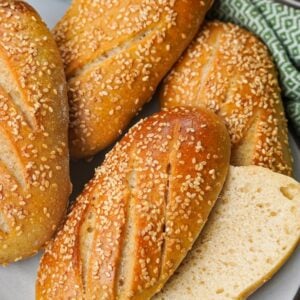
Sourdough Hoagie Rolls
INGREDIENTS
Feed Your Starter
- 14 g sourdough starter healthy; ideally, fed in the last 24 hours
- 70 g water
- 70 g bread flour
Main Dough
- 275 g water
- 150 g active sourdough starter from above
- 18 g honey or sugar
- 30 g extra virgin olive oil or avocado oil
- 425 g bread flour
- 75 g whole wheat flour
- 12 g sea salt
For Finishing
- cornmeal or semolina optional; for dusting the pan
- 1 egg beaten with a splash of water
- sesame seeds optional; for topping
Before You Begin

This recipe card features a same-day fermentation timeline. However, you can flip it and proof this dough overnight. Visit the Baker's Timeline section for sample schedules.Note: This recipe was developed and is written in metric (grams). Volume measurements (cups & spoons) are automatically converted and untested — use at your own risk. For best results, use a kitchen scale.
Equipment
- Stand mixer with the dough hook (or you can knead by hand)
- 14" x 20" cooking steel Use code SDGAL10 for 10% off; you could also use a pizza stone or a second sheet pan
Instructions
- Feed your starter: The night before, combine 14 g sourdough starter, 70 g water, and 70 g bread flour and stir until smooth. Cover loosely to ferment overnight (10–12 hours). If you already have 150 g active sourdough starter ready to go, you can skip this step.
- Mix the dough: In the morning, in a large mixing bowl (or a stand mixer), mix together 275 g water, 150 g active sourdough starter, 18 g honey or sugar, 30 g extra virgin olive oil or avocado oil, 425 g bread flour, 75 g whole wheat flour, and 12 g sea salt. Knead until a soft, smooth dough forms, which takes about 10–15 minutes by hand or 7–12 minutes in a stand mixer on a low speed (typically Speed 1 or 2). Your finished dough should be tacky but not stick to your hand or work surface.
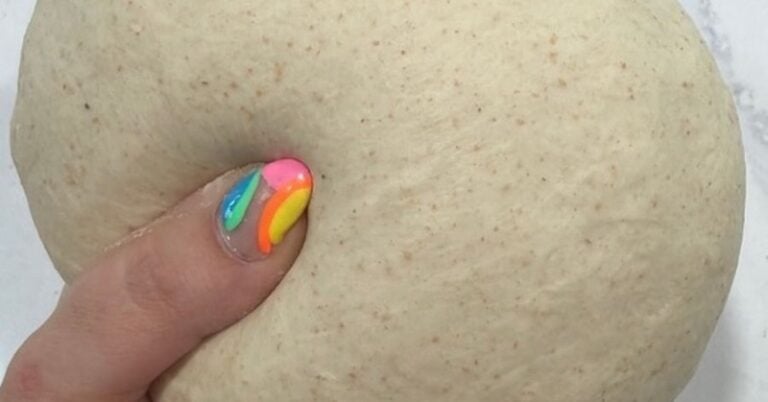
- Bulk fermentation: Place the dough in a greased bowl, turning to coat the dough. Cover and let rise until doubled in size. For a guideline, this takes about 6–7 hours at 77–80°F (25–26.5°C) or 8–10 hours at 71–73°F (21.5–22.5°C). This is a stiff dough, so don't wait for the bubbly, jiggly cues you'd look for in an artisan bread dough — watch for volume instead.
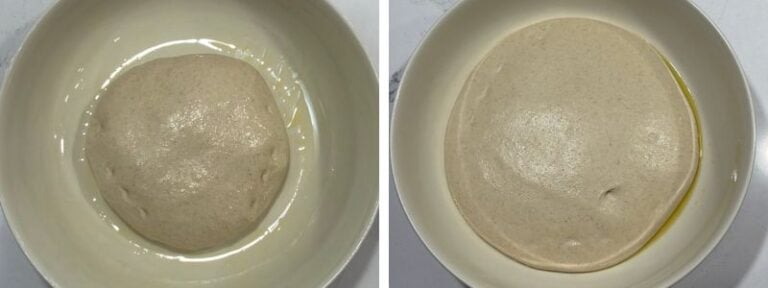
- Optional — overnight cold proof: Pop the risen dough in the fridge overnight to pause the process. Any time the following day, move on to dividing and shaping. If you find cold dough harder to shape, you can let the dough come up to room temperature before proceeding.
- Divide and shape: Line a half sheet tray with parchment paper and dust generously with cornmeal or semolina. Turn dough out onto a clean surface and divide into 8 equal pieces, about 120–125 g each.
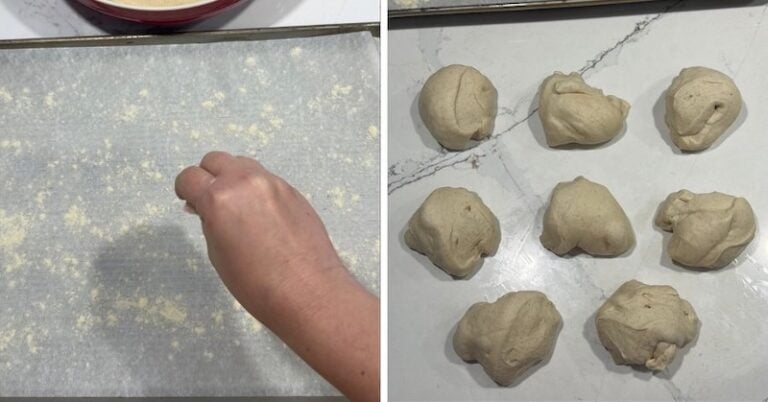
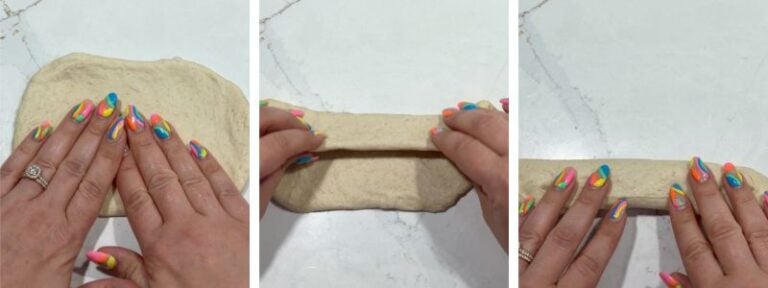
- Working one piece at a time, pat the dough into a rough rectangle, about 8 inches wide and 4.5 inches tall. Starting at the top edge, fold the top third of the dough down toward you and press gently to seal. Fold it down once more over the remaining third and press to seal, forming a long, narrow strip.
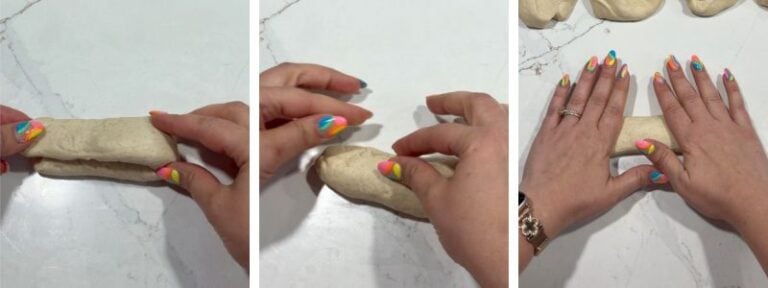
- Fold the strip in half, bringing the right end over to meet the left, and pinch the seams closed. Use the palms of your hands to press and roll the log into a 6-inch hoagie roll. Place seam-side down on the prepared sheet tray. Repeat with remaining rolls.
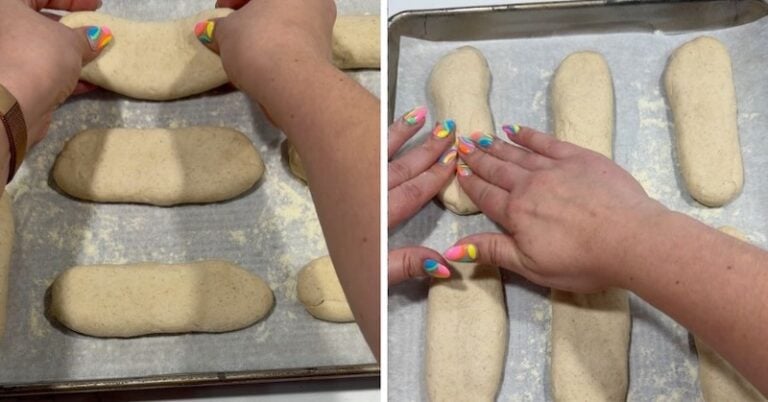
- Leave space between the rolls so they don't touch as they proof. Gently press each roll to widen it slightly.
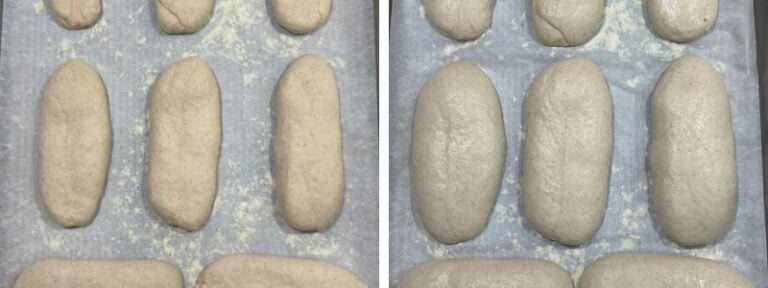
- Second proof: Cover with oiled plastic wrap, a sheet tray cover, or an inverted container — anything that won’t stick to the dough. Let the rolls rise until puffed and the dough springs back very slowly when poked — about 3 hours at 77–80°F (25–26.5°C). Watch the dough rather than the clock.
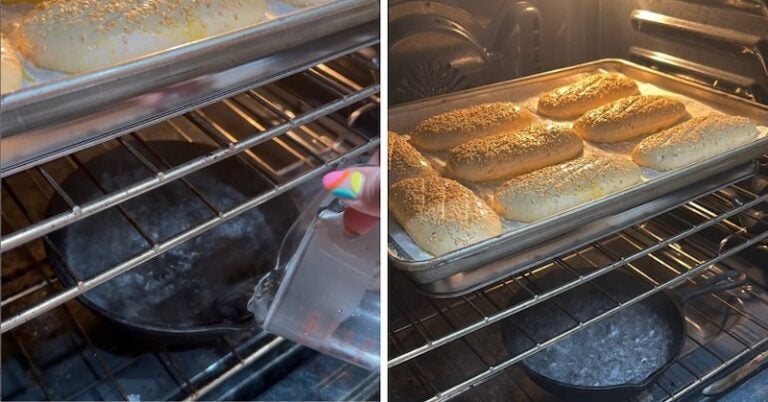
- Preheat: About 45 minutes before baking, preheat oven to 450°F (230°C) conventional or 425°F (220°C) convection with your cooking steel, stone, or an empty sheet pan inside. Place a small cast iron pan on the lowest rack to use for steam. Give the oven an extra 10–15 minutes after it beeps so everything inside is fully heated.
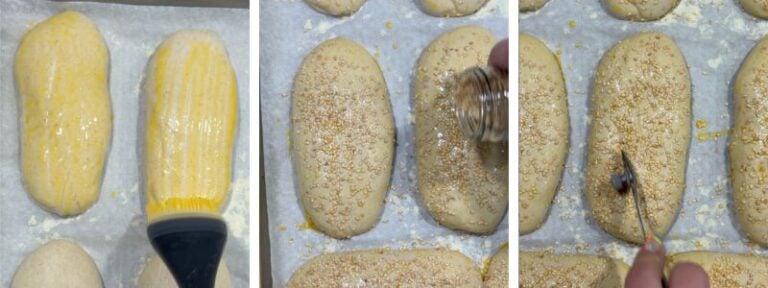
- Egg wash, seed, and score: Beat 1 egg with a splash of water and brush each roll with the egg wash. Optionally, sprinkle sesame seeds or another topping over the entire surface. Score each roll with 3 diagonal slashes using a bread lame or sharp knife, going deeper than you think you need to.
- Bake: Place the sheet tray of rolls directly on your preheated steel, stone, or sheet pan. Pour about 1 cup of hot water into the cast iron pan — steam will rise immediately, so close the oven quickly. Bake 15 minutes, then remove the steam source and bake an additional 5–10 minutes. If you’re using the inverted-pan method instead of a steam pan, remove the top pan at the same 15-minute mark. Rolls are done when they're deep golden brown and the internal temperature reaches 200–210°F (93–99°C).
- Cool: Let rolls cool on a wire rack for at least 30 minutes before slicing.
Notes
Prefer longer rolls? Divide into 6 pieces (about 160–165 g each) and shape into 8-inch rolls instead.
Nutrition Facts
Sourdough Hoagie Rolls
Serving Size
1 roll
Amount per Serving
Calories
302
% Daily Value*
Fat
6
g
9
%
Saturated Fat
1
g
6
%
Polyunsaturated Fat
1
g
Monounsaturated Fat
3
g
Sodium
583
mg
25
%
Potassium
102
mg
3
%
Carbohydrates
54
g
18
%
Fiber
3
g
13
%
Sugar
2
g
2
%
Protein
9
g
18
%
Vitamin A
2
IU
0
%
Vitamin C
0.01
mg
0
%
Calcium
24
mg
2
%
Iron
1
mg
6
%
* Percent Daily Values are based on a 2000 calorie diet.
