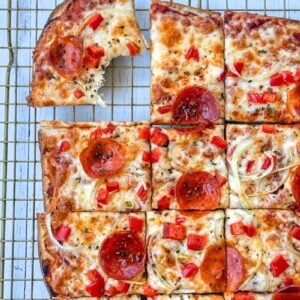
Thin-Crust Sourdough Pizza
INGREDIENTS
Feed Your Starter
- 7 g active sourdough starter healthy; ideally fed within the last 24 hours
- 35 g water
- 35 g bread flour
Pizza Dough
- 190 g water
- 70 g active starter that you made, from above
- 14 g olive oil plus extra, for coating the dough balls
- 11 g sugar
- 396 g 00 pizza flour can sub for other flour but see Notes
- 9 g salt
- Semolina as needed, to prevent sticking; can sub cornmeal
Toppings
- 360 g pizza sauce
- 30 g parmesan cheese
- 12 oz shredded mozzarella
- Other toppings, like pepperoni, sausage, bell pepper, mushroom, olives, pepperoncini, etc.
Before You Begin

Stand mixer and hand mixing instructions included.
Equipment
- Stand mixer optional – hand mixing instructions also included
- Rectangular dish or container for proofing
- Baking steel or pizza stone; an inverted sheet tray can work but is not the best
- Pizza dough docker or a fork
- Pizza peel or other flat tool you can use to transfer pizza
- Rocking pizza cutter or pizza wheel
Instructions
- Feed your starter: Before bed, mix 35 g water, 7 g active sourdough starter, and 35 g bread flour (a 1:5:5 feeding ratio). Cover loosely and let sit at room temperature overnight.
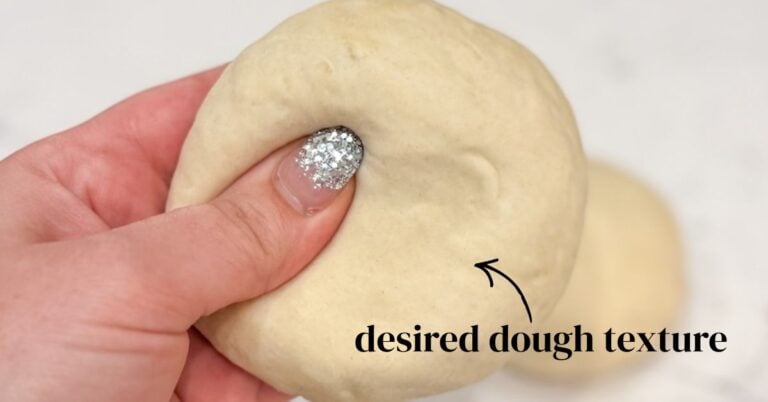
- Mix your dough: In the morning, combine 190 g water, 70 g active starter, 14 g olive oil, 11 g sugar, 396 g 00 pizza flour, and 9 g salt in your stand mixer fitted with the dough hook. Mix on a low speed (Speed 1-2 for most mixers) for 5-7 minutes until you have a stiff, smooth dough similar to bagel dough (or Play-Doh). If your mixer struggles, stop and let it rest for 10-20 minutes, then resume mixing.Mixing by hand? Combine all ingredients with a Danish dough whisk, then knead by hand until it forms a stiff, shaggy mass. Cover and rest 30 minutes, then knead 2-3 more minutes.
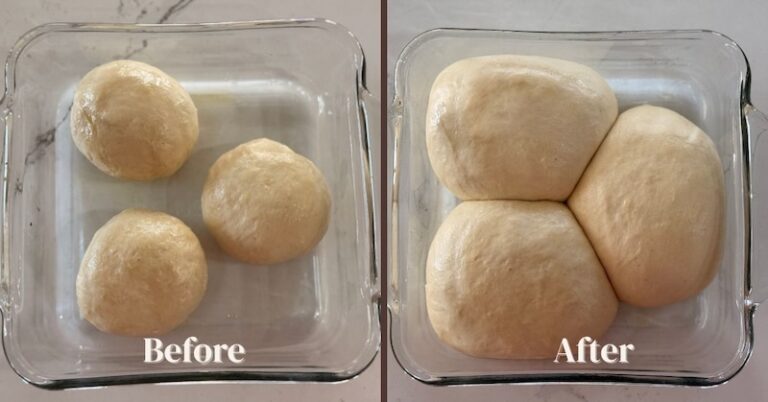
- Shape into balls: Divide dough into three equal pieces (about 230g each). Shape into taut balls and place in a rectangular baking dish. Coat with olive oil and cover the baking dish with a lid, bowl cover, or plastic wrap.
- Bulk fermentation: Let ferment at room temperature for about 10 hours (~72°F/22°C) until the dough balls have visibly puffed up and show bubbles under the surface. They should feel slightly aerated when pressed. Don't stress about perfection here – this is way more forgiving than bread dough!
- Note: You can roll out the crusts now (as written), or you can transfer the dough to the fridge and roll the crusts right before baking.
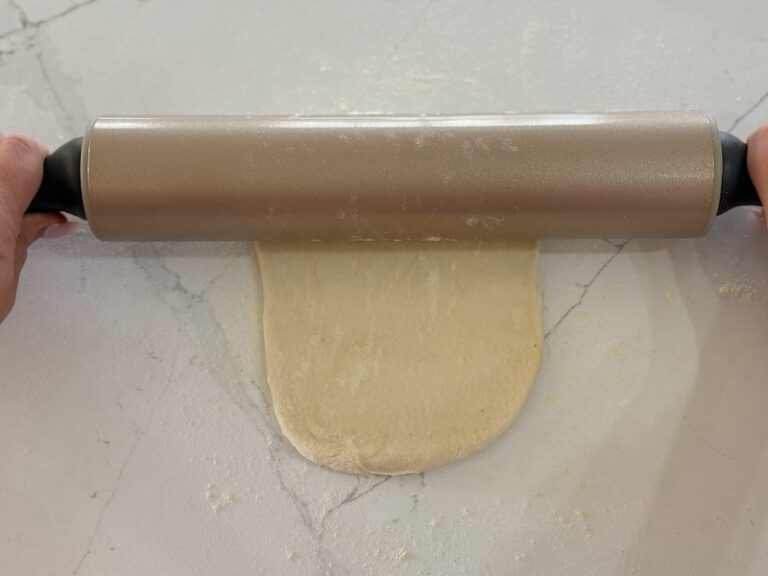
- Roll out the crusts: Dust your work surface with Semolina (or cornmeal). Place one dough ball on top, sprinkle with more semolina, and roll into a thin 12" circle. Make sure both sides are dusted to prevent sticking. Note: you can also hand-stretch the dough if you prefer. See Recipe Notes.
- Dock the crust: dock the entire surface well with a pizza docker or fork.
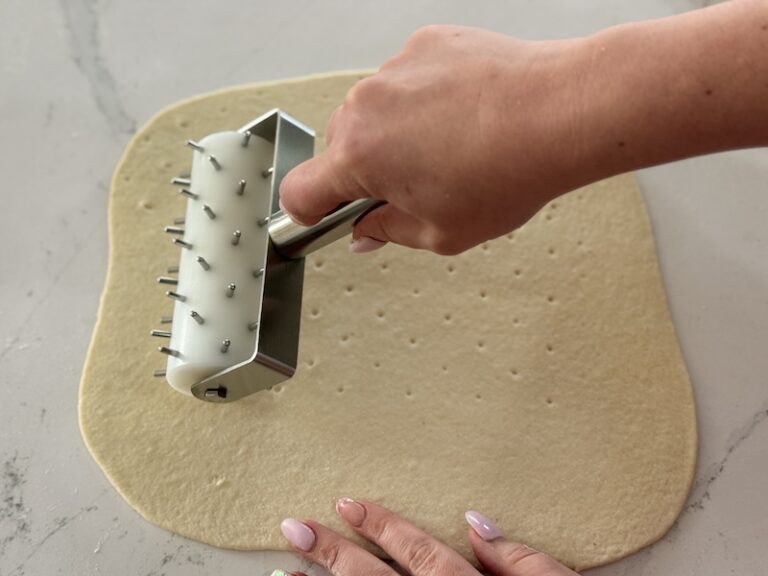
- Place on a parchment-lined baking sheet, sprinkling more semolina (or cornmeal) to prevent sticky areas, if needed. Repeat with the second and third dough balls, stacking them with parchment in between.
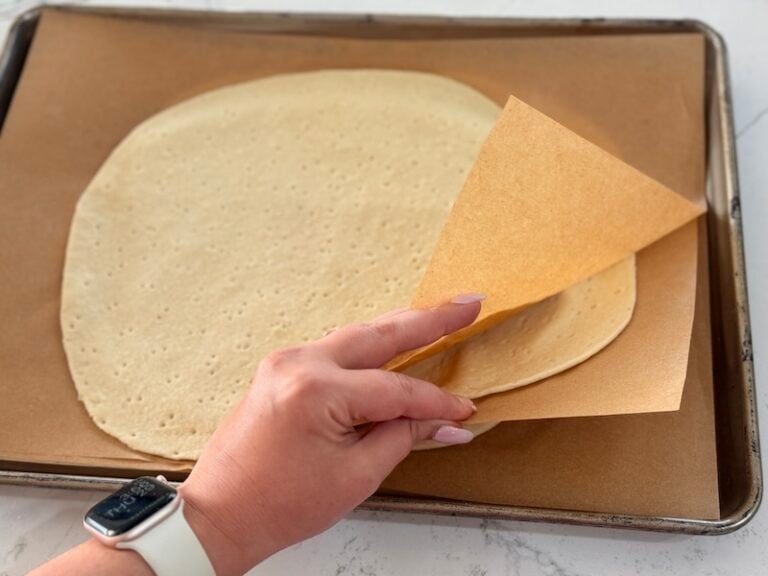
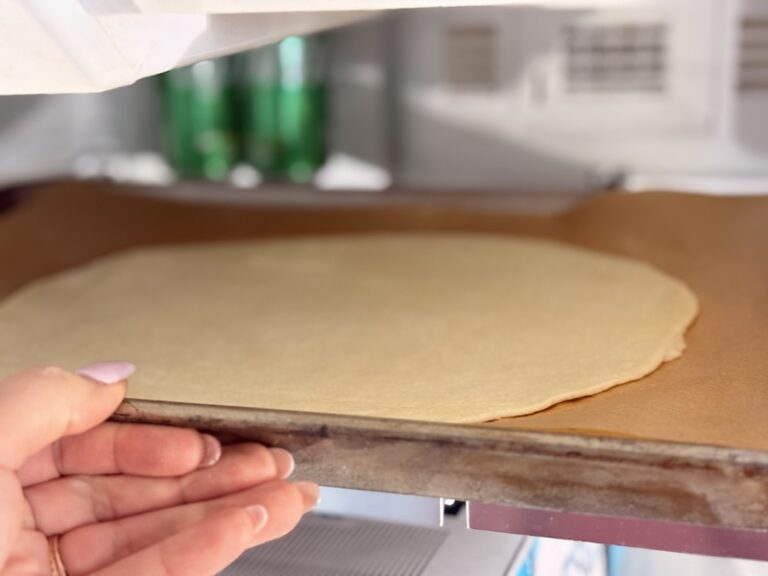
- Refrigerate: Transfer the stacked crusts to the fridge, uncovered, and let rest until the following evening. This dries out the exterior, resulting in a much crispier crust. If you can, rotate them on occasion so the other crusts have a chance to dry out.
- Bake (the next evening): Place a pizza stone or baking steel on the middle rack and preheat your oven to 500°F (260°C) convection for at least 40 minutes (or until the stone reaches close to 500°F/260°C, if using an infrared thermometer). Bring your pizza crusts (+ sauce, cheese, and toppings) out of the fridge so they warm up slightly. Cold ingredients can lead to a gummy interior.
- Sprinkle semolina (or cornmeal) on a pizza peel. Flip one crust onto the peel and peel off the parchment. Shake the peel gently to ensure nothing is sticking.
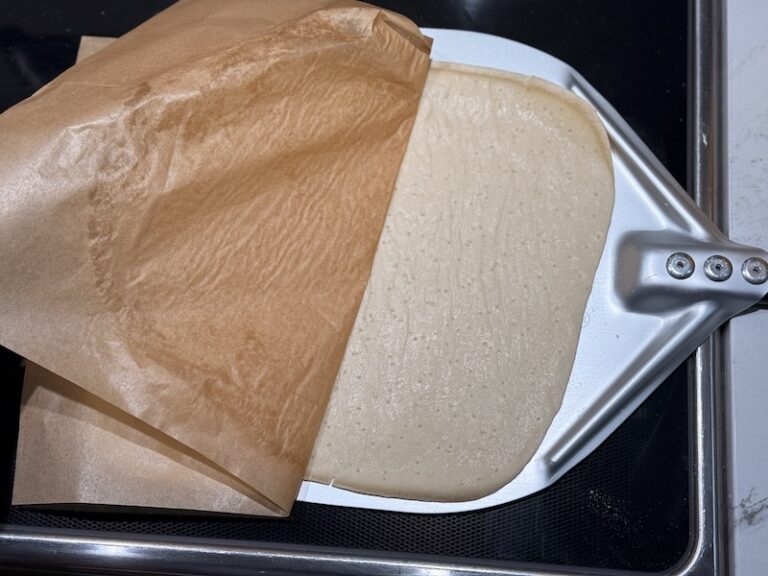
- Slide onto the hot stone and par-bake for 2-3 minutes, or until bubbles start forming across the surface and the underside has brown spots.
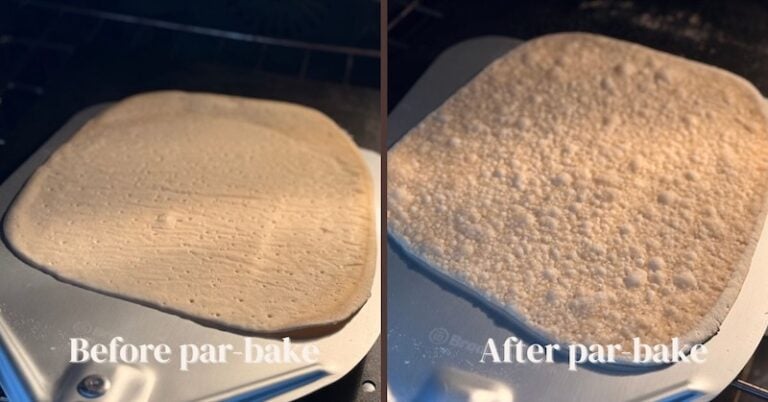
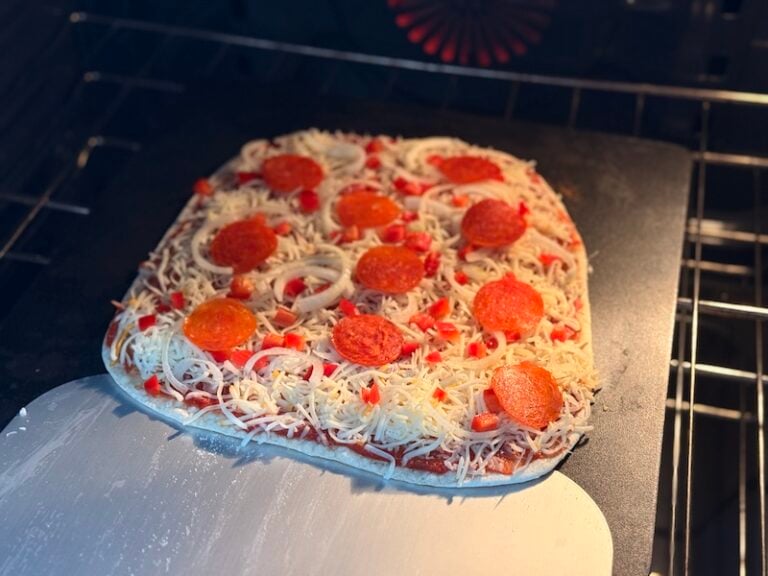
- Remove from the oven. Add your sauce, parmesan cheese, mozzarella cheese, and other desired toppings. Note: some recipe testers liked brushing olive oil on the par-baked crust prior to adding the sauce and toppings.
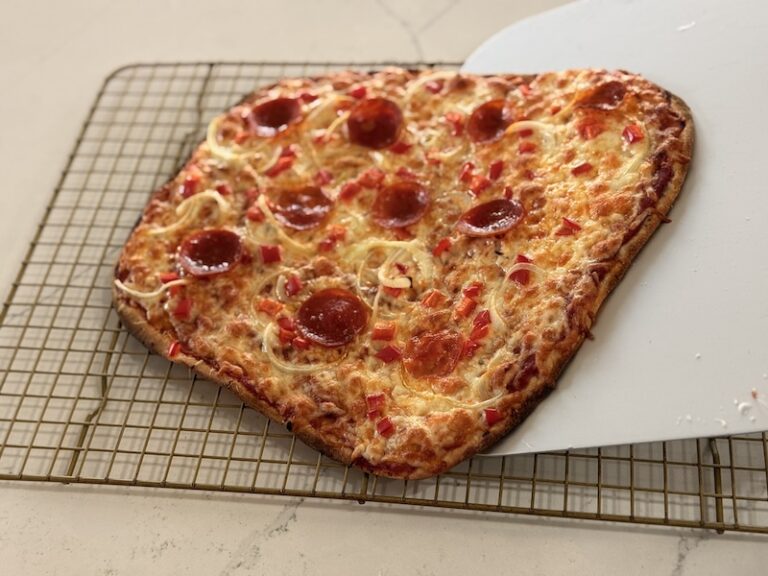
- Return to the oven and bake 5-8 minutes more, or until the cheese is golden brown and bubbly. Transfer to a cooling rack and let rest 5 minutes before slicing.
- Repeat: Let the pizza stone/steel heat back up for about 10 minutes between each pizza. Tip: turn off your oven and re-preheat to 500°F (260°C) to kick it back into gear. Repeat the baking process for the other two pizzas. Enjoy!
Video
Notes
00 flour: The best 00 flour I tried is Tony Gemignani “California Artisan” Type 00 Pizza Flour, but I believe it's only sold by Central Milling, and shipping can be pricey. King Arthur 00 flour also works great, and a lot of recipe testers loved Caputo's 00 flour.
Semolina: I use Caputo Semola flour; other popular options include King Arthur Semolina and Bob's Red Mill Semolina.
Hand-stretching the crusts: This video from Epicurious is a good visual reference for hand-stretching pizza crust. The only slight difference is our dough is stiffer, and we are not concerned with preserving any bubbles in the dough. But the general method is the same.
00 pizza flour vs bread or AP flour: if you sub for bread flour, reduce the flour by 20g to start. Bread flour can absorb more water than 00 pizza flour. You can add a little more flour during mixing if needed. All-purpose flour substitutes just fine with no adjustments needed.
Ingredients for a single 12" thin-crust pizza: 63g water, 24g starter, 5g olive oil, 4g sugar, 132g 00 pizza flour, and 3g salt.
Topping quantities: We like 120g of pizza sauce, 10g of parmesan, and 120g of shredded mozzarella per 12" pizza. Obviously, adjust to taste, but I wanted to provide a guideline for shopping purposes.
Budget baking steel: this cast-iron pizza pan from Lodge (about $40) works great – it was my favorite budget-friendly option I tested. My results weren't as crispy when I used a baking stone.
Nutrition Facts
Thin-Crust Sourdough Pizza
Serving Size
1 pizza crust
Amount per Serving
Calories
578
% Daily Value*
Fat
6
g
9
%
Saturated Fat
1
g
6
%
Polyunsaturated Fat
1
g
Monounsaturated Fat
4
g
Sodium
1166
mg
51
%
Potassium
153
mg
4
%
Carbohydrates
113
g
38
%
Fiber
4
g
17
%
Sugar
4
g
4
%
Protein
15
g
30
%
Vitamin A
3
IU
0
%
Calcium
22
mg
2
%
Iron
6
mg
33
%
* Percent Daily Values are based on a 2000 calorie diet.
