
Why Freezing Your Sourdough Bread Makes It Healthier (Really!)
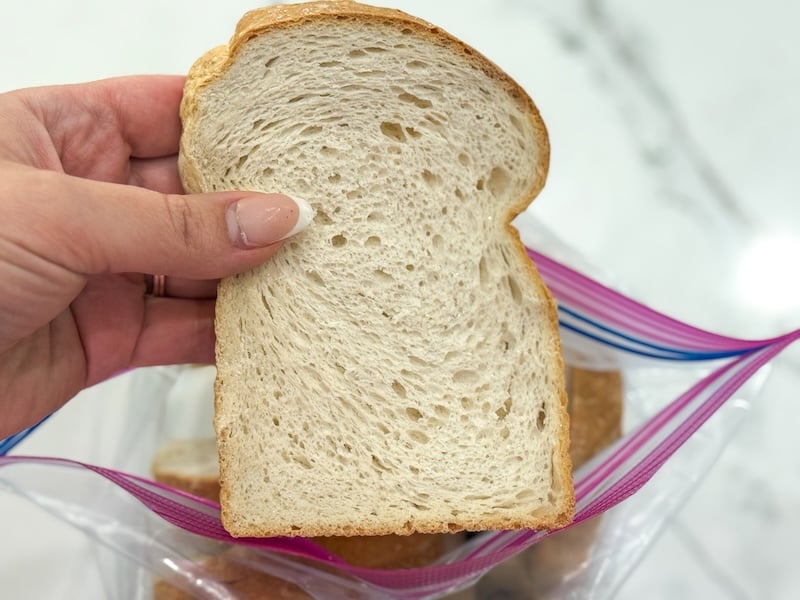
Freezing sliced sourdough bread is super convenient. You always have homemade bread ready to eat, and there’s no concern about staling or mold.
But did you know there are also health benefits to eating sourdough bread that has been previously frozen?! This sounded crazy to me at first, but there’s a ton of research to back up the claim.
Let’s break it down.
What Freezing Does to Bread Starch (The Simple Science)
When bread bakes, the starches inside gelatinize (they swell up with moisture and become easy to digest). That’s why a fresh slice of bread (especially white bread) can spike your blood sugar so fast — your body breaks it down into sugar almost instantly.
But once bread cools down (and even more so when it’s frozen), those starches start to tighten back up and reorganize themselves.
The science term for this is retrogradation, but really, it just means the starch is reshaping into something tougher for your body to digest.
That new form is called resistant starch. The name says it all. It resists digestion in your small intestine. Instead of instantly turning into sugar, resistant starch makes its way to your large intestine, where it feeds your beneficial gut bacteria.
That’s a good thing. Instead of hitting your bloodstream as sugar right away, it makes its way to your large intestine, where it acts more like a fiber.
The result?
- Lower blood sugar spikes: Bread that’s been cooled (especially frozen and then toasted) causes a smaller rise in blood glucose than the same bread eaten fresh.
- You stay full longer: You don’t get that quick sugar rush and crash. The energy is released more slowly. And similar to adding some extra fiber to your diet, you feel fuller for longer.
- Feeds your gut microbiome: Resistant starch travels to your colon where it becomes food for your gut’s good bacteria. As those microbes digest the resistant starch, they produce beneficial compounds (like certain short-chain fatty acids) that help keep your colon and gut healthy.
And when you toast that frozen slice, the effect is even stronger.

Does Freezing and Toasting Bread Really Make it Healthier?
Yep. One study actually tested the impact of freezing and toasting on the glycaemic response of white bread with homemade bread under four conditions: fresh, toasted, frozen-then-thawed, and frozen-thawed-then-toasted.
All three methods reduced the glycemic area under the curve.
Here’s what they found:
- Toasting alone lowered the blood sugar spike compared to fresh bread.
- Freezing + thawing alone also lowered it.
- But freezing + thawing + toasting had the biggest effect — cutting the blood sugar spike by about 39% compared to fresh bread (here’s the study that stat comes from, but you can’t view the whole thing without paying).
So the science is pretty clear: each step helps, but if you freeze and then toast, you’ll see the biggest difference.
Why Sourdough Bread Is Even Better
- More resistant starch to begin with. Sourdough naturally has a bit more resistant starch and slower-digesting carbs compared to yeast breads — freezing just adds to that benefit.
- Slower sugar release. The natural acids (like lactic and acetic acid) that give sourdough its tang also lower the bread’s pH. That slows down how quickly carbs are absorbed into your bloodstream, which equals a gentler rise in blood sugar and steadier energy.
- Easier on digestion. The fermentation process helps break down certain hard-to-digest sugars in wheat (the ones that can make you feel bloated).
- More nutrients available. Fermentation lowers phytic acid (the thing that blocks your body from absorbing minerals), so you actually get more out of the iron, zinc, and magnesium in your flour.
So sourdough already comes with some health perks thanks to fermentation, and when you freeze sourdough bread, you’re basically stacking benefits.
If you want a refresher on why sourdough is easier on your belly in the first place, I’ve got a whole post on probiotics in sourdough bread.
Not All Bread Is Created Equal
Before you run and toss every loaf in your freezer, here’s an important caveat: the freeze-and-toast hack works best with homemade or bakery-style bread.
The same big study that found the 39% drop in blood sugar spike for frozen-and-toasted bread also tested a standard store-bought white bread, and the results weren’t nearly as exciting.
Freezing and toasting commercial bread didn’t make a real difference. A frozen-and-toasted slice of factory white bread acted about the same in the body as a plain toasted slice that hadn’t been frozen.
Why? The science isn’t completely settled here, but all those extra additives — sugars, fats, preservatives — are probably to blame.
Those additives are put in there to keep bread soft and shelf-stable, but they also seem to block the starch from re-crystallizing into resistant starch in the freezer.
How to Freeze Sourdough Bread (for Maximum Health Benefits)
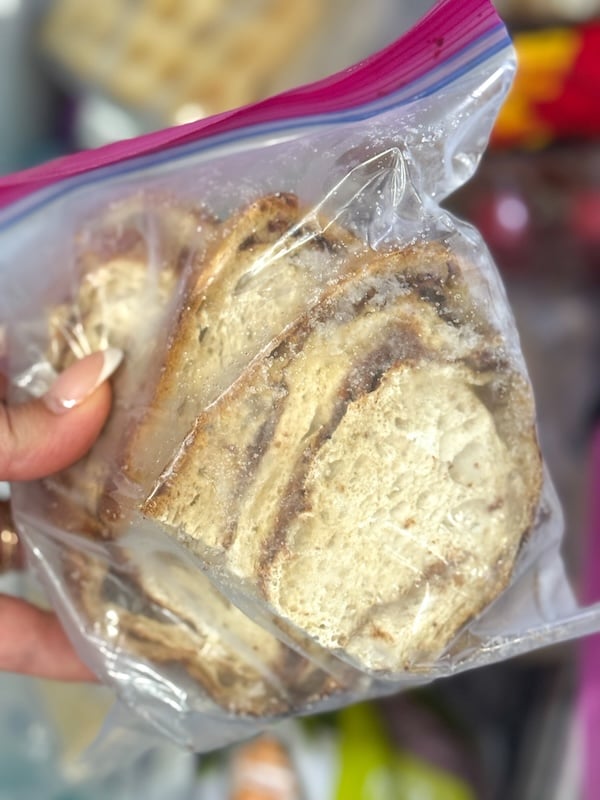
- Slice before freezing so you can grab just one piece at a time.
- Seal it up in a freezer bag or airtight container.
- Wait at least three days. That’s when the resistant starch really forms.
- Thaw before toasting. The freeze–thaw cycle is what triggers retrogradation.
- Toast and enjoy. Flavor-wise, it’s just as good — sometimes even better.

FAQs
Most of the research I’ve seen looks at how probiotics handle the heat of baking rather than freezing. But my best guess is that freezing baked sourdough bread doesn’t completely knock them out. If microbes can survive when you freeze your starter, chances are at least some of them stick around in baked sourdough, too.
Three days is the sweet spot researchers used to see the resistant starch benefits, but if you need toast tomorrow morning, go for it — you’ll still get some benefit.
Freezing alone does help lower the blood sugar spike compared to eating fresh bread. But if you want the biggest benefit, freezing and toasting is the combo that makes the biggest difference.
Freezing sourdough bread will not change the taste or texture unless you leave it in there for a very long time. If you slice and store it well, frozen sourdough toasts up just as good as fresh with a crisp crust and full flavor. For the best taste, eat it within 1–3 months of freezing.
Conclusion
Freezing your sourdough bread fights food waste, keeps sourdough ready to go, and makes it a little healthier, too.
It won’t replace good habits or a balanced diet, but hey, I’ll take every easy win I can get.
Further reading:




I love sourdough bread I feel like I am eating something with good texture and the taste is great! Thanks to Rebecka, I make it all the time, and it is amazing how many people want sourdough bread. I do freeze my bread, doesn’t hurt it and I believe it’s better!
It’s just the best, isn’t it?! Being able to freeze it has been so helpful!
Wow! This is such interesting and useful information. The Covid lockdown and fear of not being able to find baker’s yeast started me on my sourdough journey. The wonderful flavor and health benefits turned me into a life long sourdough baker. I don’t bake as often as I would like because eating bread contributes to my hypoglycemia. Being able to eat frozen-thawed-toasted (delicious!) sourdough bread with a lower blood-sugar spike might completely resolve this issue for me. Thanks for this and all the wonderful information you share with us.
You’re so welcome!!! Hoping this helps too!
Thanks for doing this research and compiling all this information. A massive 39% is a HUGE difference. I’m amazed that number is so big.
Thanks for sharing your research! Just more to love about sourdough. I have had great success following your recipes, recomendations and tips. You are my sourdough guru!
Aww thanks!! I’m honored!
I wish the gluten-sensitives and celiacs amongst us would stop believing that this does something to kill the gluten. Starch is not protein
I’m making bread for Thanksgiving and am traveling 4 days before. Can I freeze my bread whole, thaw and refresh in oven? Have you tried this?
I haven’t tried it but I’ve seen a lot of sourdough influencers do this. They run the bread under water and then refresh in a 350F oven for about 15 minutes.
Yours is the first I’ve read on benefits of freezing bread. I freeze the dough before baking. I do this in place of the final proofing, after shaping the bread. When its time i take a loaf from the freezer thaw, and proof then bake. What are your thoughts on the health benefits?
I don’t have any studies on that to comment!
I have frozen bread slices for years. If it starts to be a little “stale” take a spray bottle and spray some water on it. Just like magic it seems like it was baked earlier in the day. I learned this from one of the greatest chefs out there, Jacques Pepin.
Thanks for sharing!
Does this work with the same day Copy Cat Wonder loaf also?
Yes!