
How to Prevent Burnt Bottoms on Sourdough Bread (10 Simple Fixes)
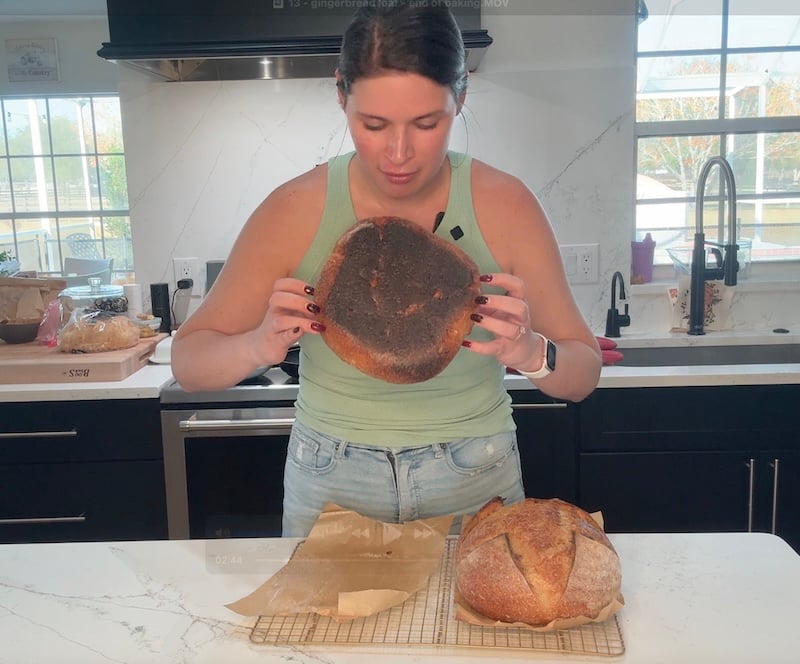
I’ve been baking and testing a lot of sweet loaves lately. ’Tis the season for all the cinnamon sugar, chocolate, and gingerbread flavors. But with that sweetness has come one consistent headache for me: burnt bottoms.
So I asked the baking community for their best tips, and y’all delivered.
Over 200 bakers responded with their go-to solutions, and the advice ranged from genius to “why didn’t I think of that?!” I analyzed every single comment and compiled the top 10 tips into this handy bar chart:

Don’t worry – we’ll break down each of these tips in detail.
And before you judge the state of my oven, please look at the bottom of yours before you roast me in the comments. 😂
Disclaimer: The products I have linked on this page are affiliate links – if you choose to purchase after clicking one of my links, I may earn a small commission, which helps fund this website, recipe development, and monthly giveaways. I sincerely appreciate your support.
Why Sourdough Bottoms Burn
There are three primary reasons sourdough bottoms burn:
- Your dough has added sugar
- Your dough is overfermented
- Your oven is running hotter than it says
Let’s break these down!
Sweet Doughs Burn Faster
A quick note on why this happens in the first place – especially with doughs that have sweeteners in them like honey, sugar, brown sugar, maple syrup, or molasses.
On Food and Cooking (p. 546) explains that doughs with added sugar “bind up water molecules and interrupt the gluten-water network,” and because sugar “begins browning early in the baking,” these loaves are usually baked at lower temperatures to avoid too much darkening.
In a Dutch oven, the bottom of your loaf gets hit with the strongest heat first. And when you combine that with ingredients like sugar, chocolate, or syrups, all of which brown faster than flour, the base can darken before the rest of the loaf is fully baked through.
It is SO frustrating to know the bottom of your loaf is burnt, but the internal temperature isn’t even close to 205°F (96°C) yet. Can you tell I’ve been there, done that? 😂
Overfermented Loaves Darken Faster
Another thing to keep in mind is that overproofed dough can burn more easily, too.
Tartine Bread (p. 75) shares that when fermentation goes too long, residual sugars in the dough concentrate and caramelize more quickly in the oven, causing the crust to color faster than you might expect.
This is also why underfermented loaves fail to brown properly – they often end up pale and sad, no matter how long you bake them.
Inaccurate Oven Temperatures
If all else fails and you’re left scratching your head, check your oven temperature with an oven thermometer.
Many home ovens run hotter than the temperature you set, and if your oven is overshooting by 25–50°F (or more), it can cause burnt bottoms no matter how many tricks you try.
I’ve seen bakers realize their ovens were heating up nearly 100°F (38°C) more than the temperature they set!
A quick temperature check can often solve a sourdough burnt bottom on its own. If not, there’s definitely a tip here that will help.
What to Try When Your Sourdough Loaves Burn on the Bottom
Let’s break down your top 10 tips for preventing burnt bottoms.
Tip #1: Place a sheet tray on the lower rack
About 35% of bakers suggested putting a sheet tray on the rack beneath your Dutch oven – the most popular tip by far!
Place a half sheet tray (these from USA Pan are my favorite) on the rack below your Dutch oven to deflect some of that direct bottom heat. It keeps the underside from scorching.
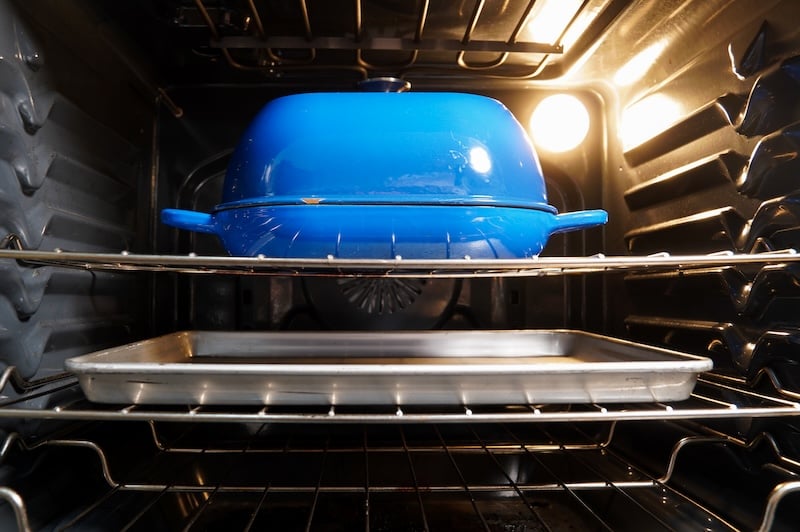
“The cookie sheet should be on a separate rack, but as close to directly under the Dutch oven. Don’t put the D.O. sitting directly in the sheet pan. My crust is the same color all the way around.” – Mauvette Bailey
Another similar option is putting a cast-iron pan beneath your Dutch oven:
“I place a large cast iron pan in the rack below my Dutch oven. It helps distribute the heat more evenly in the oven and disperses some of the direct bottom heat. Haven’t had a burnt bottom since. And it’s great because I can spruce up the seasoning on my cast iron at the same time I bake!” – Samantha Lovegood
Tip #2: Use a trivet or rack inside your Dutch oven
About 25% of bakers recommended placing a small metal trivet or rack inside your Dutch oven to lift the dough slightly off the hot base.
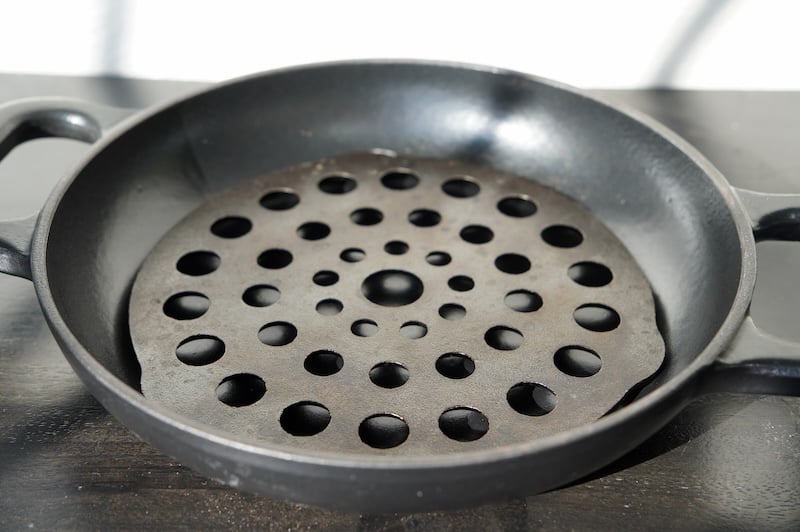
This creates a buffer so the bottom doesn’t burn. You can even improvise with canning jar rings if you don’t have a trivet.
When I asked for your advice on Facebook, six people specifically mentioned using their Instant Pot trivet inside their Dutch oven.
If you don’t have an Instant Pot, the Lodge 8″ meat rack trivet was mentioned several times (that’s what I purchased and is pictured above). Another commenter mentioned using four rings from canning jars as a cheap alternative.
Note: Don’t pair this method with another one – I once used the trivet and had a bread steel on the lower rack of my oven – it deflected so much heat that the bottom of my loaf had raw dough sections while the top burnt. Oopsie…
One baker summed it up perfectly: “The trivet changed everything for me. No more burnt bottoms, and I don’t have to babysit my oven anymore!”
Tip #3: Add a layer of uncooked rice at the bottom
About 12% of the community uses this trick – adding a thin layer of uncooked rice to the bottom of your Dutch oven, then placing your parchment on top.
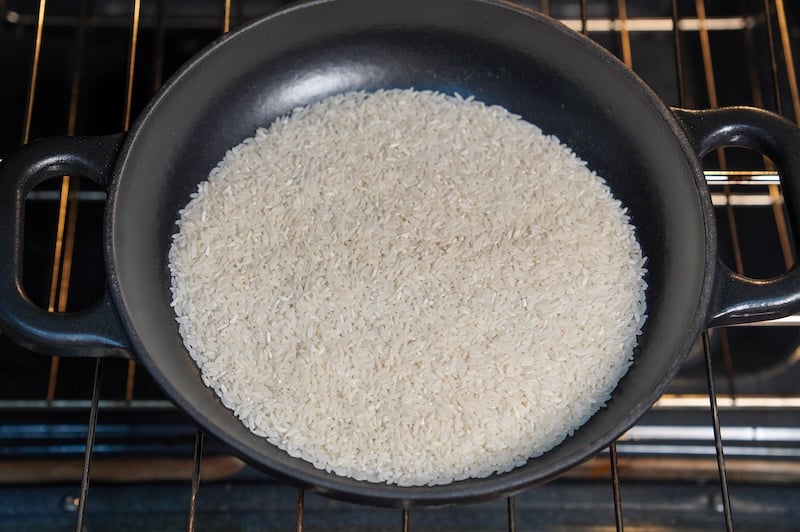
The rice acts as a natural heat buffer and helps prevent the crust from over-browning.
Note: I also received a lot of DMs from readers sharing that the rice burned and couldn’t be reused. So while this trick works for some bakers, it may not be the most reliable option for everyone.
Alternative “materials” to try:
- Ceramic pie weights
- Coarse sea salt
- Dry beans
Tip #4: Lower your baking temperature
Around 10% of bakers mentioned temperature as their fix.
If you’re finding that your loaves keep burning, a simple remedy to try is lowering your oven temperature by around 25°F on your next go.
“Sweet loaves bake better at lower temperatures than lean loaves. Lean dough can handle high temps because it doesn’t have sugar so expect the big rises. Enriched loaves bake lower to avoid the burned crusts. 350-375 for sweet loaves, over 400 for lean ones.” – Just Mill It
Plain sourdough loaves without any added sugar do great at high temps (450°F and up) without burning. But if you have inclusions in there – especially sweeteners – consider lowering it slightly and see if that resolves the burning.
Tip #5: Use multiple layers of parchment paper
About 8% of bakers double or triple up their parchment to create a buffer between the dough and the hot surface.
I generally use a layer of parchment under my dough every time I bake, but adding multiple layers can help deflect a bit more heat.
Tip #6: Remove the bread from the Dutch oven early
Once the crust has set and the loaf can hold its shape (usually 20-25 minutes into baking), lift it out of the Dutch oven and set it directly on the oven rack.

It’ll finish baking evenly without sitting on intense heat. A lot of bakers always do this for the uncovered portion of the bake, so if you haven’t experimented with it, it’s worth trying!
Tip #7: Bake with a pizza stone or baking steel on a lower rack
A stone or steel below your Dutch oven absorbs and disperses heat, and can reduce hotspots that cause burnt bottoms.
The one photographed here is from Brod & Taylor – I use it for homemade pizza, and it’s also fantastic for baking bread (in combination with Brod & Taylor’s bread dome).

Note: Another quick reminder that this deflects a lot of heat, so don’t pair it with any other methods mentioned here, or your loaf’s bottom may not fully cook!
Tip #8: Try crumpled aluminum foil under your parchment paper
Crumple a sheet of foil, then flatten it slightly and place it right below your parchment paper in your Dutch oven. (You don’t want the foil touching the dough, so ensure it’s below parchment or a bread sling.)
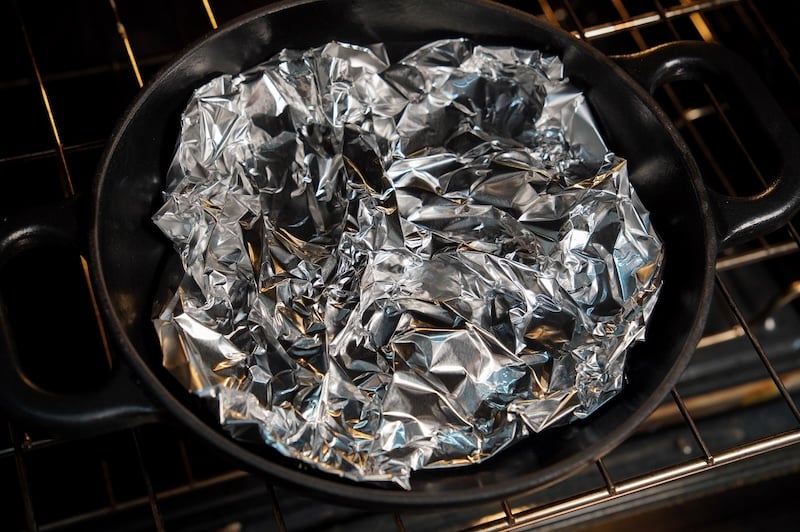
That little bit of uneven spacing helps break up the direct heat and keeps the bottom of your loaf from darkening.
Tip #9: Add 1–2 ice cubes under your parchment
After you place your dough in your Dutch oven, lift up the edge of your parchment paper or bread sling and drop 1–2 ice cubes into the pot.

I personally haven’t noticed ice cubes preventing a burnt bottom – this is typically used to achieve blistering on the exterior of the loaf. But many bakers swear by it, so I wanted to make sure it was here!
Tip #10: Adjust rack placement or oven setup
If the bottoms of your loaves always bake too dark, try moving your oven rack one level higher so the Dutch oven isn’t sitting right next to the heat source.
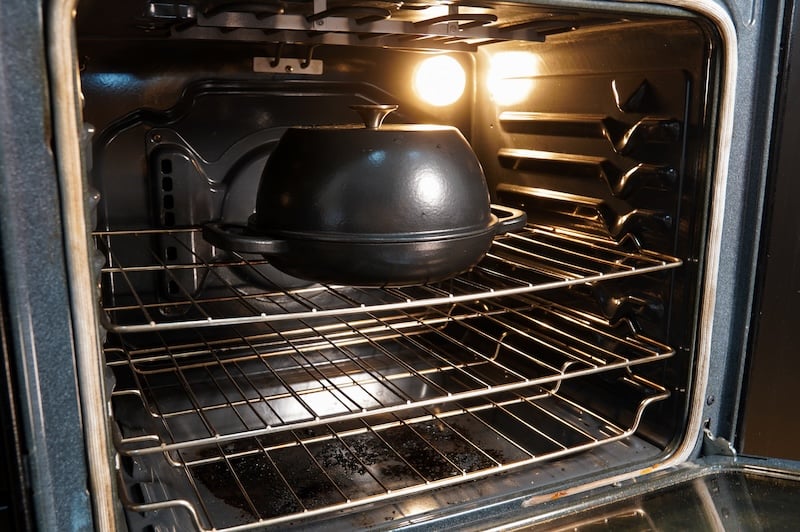

Sometimes the simplest adjustments make all the difference.
Conclusion
Burnt bottoms happen to the best of us, but a few simple tweaks really can make a huge difference.
One of my favorite comments came from Patricia Mihalko, who wrote:
“Can I just say I love that you reached out to your group for help! It shows you are one hell of a person to accept the fact that you do not have all the answers. I love your posts and blogs and learn so much from this community!”
That’s exactly what this is about – we’re all learning together, one burnt bottom at a time. 😂
If you have another trick that’s worked in your kitchen, let me know in the comments. I love hearing what this community comes up with!!
Other sourdough tips:




I dislike the thick crust on the bottoms of my sourdough bread that is baked in a Dutch oven.
So I started using two tin pie plates with dry rice between them. The dough is on parchment paper, on the plates, spritz with water, scored, and covered with an aluminum bowl to retain moisture until the last 15 minutes of baking. The bottom crust is thin and has a nice chew. I have not tied it with sweet doughs.
Love that! Thanks for sharing with us!
When I make your chocolate chip loaf and the tomato basil bread, I put a a layer of rice in the bottom of my Dutch oven, then I take a large piece of foil, folded in half and put that down then I put my bread on the parchment. I have found that it takes longer to bake, but the bottoms very rarely burn now. This works for me.
Thank you for this post. I have been trying different method: when the bottom isn’t burnt, sometimes the bottom is uncooked. I’m frustrated. How long would you suggest to baking sweet loaves at lower temperature?
It depends! All of my bread recipes have times/temps that have been tested based on the composition of that particular dough.
I saw a post on Instagram, sorry don’t remember who so I can not give credit, that said to leave the bottom uncovered during the second rise to dry it. I guess the extra moisture leads to a burnt bottom.
Thanks for sharing!
I did the meat rack in the Dutch Oven and the bottom was and the raw’ish side. So the next time I baked I removed the rack at the same time I removed the lid. Turned out better, I would rather have I light crust bottom than a burnt one.
I used white rice base. It was a disaster. Must bottom no crust.
Turned the loaf over and baked about 15 to save the loaf.
The top was a bit dark from turning the loaf upside down.