
Breville Stand Mixer: A Sourdough Baker’s Honest Review
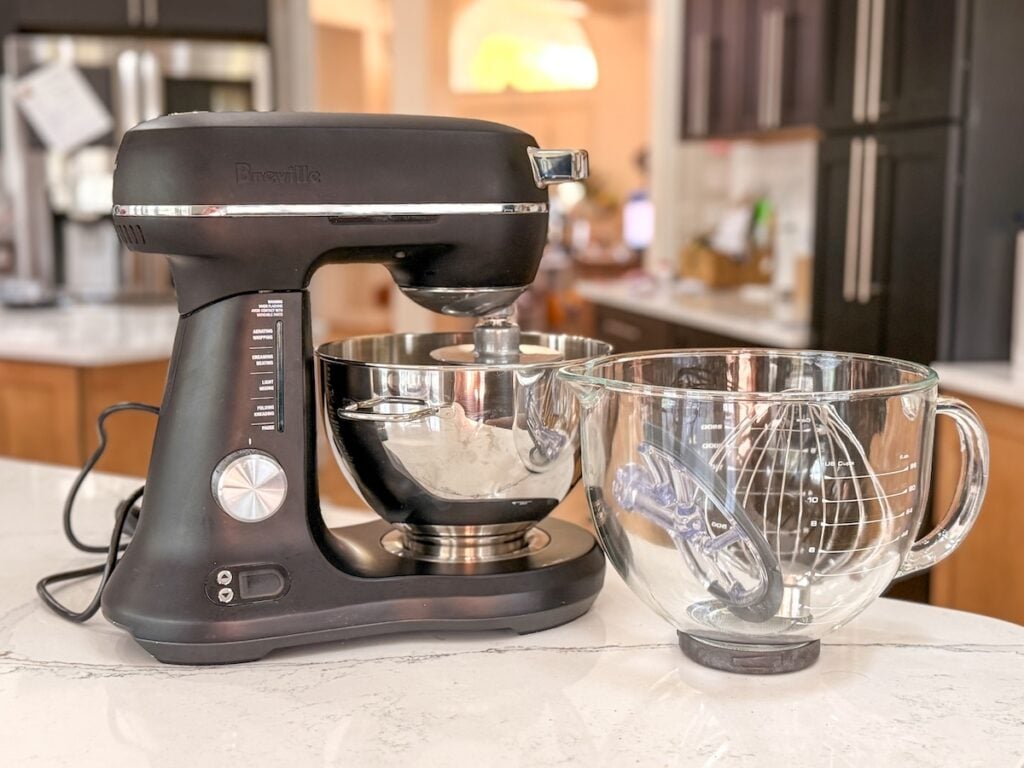
If you’re a baker who does a little bit of everything — bread, cookies, muffins, cakes, etc. — the Breville Bakery Chef™ is worth a serious look. It’s a beautiful stand mixer with many thoughtful features, and that scraper beater is top-tier.
However, if you’re primarily a bread baker who makes 2–3 loaves at a time or works with stiffer doughs like bagels or pasta, this isn’t the mixer I’d recommend. Let’s get into it.
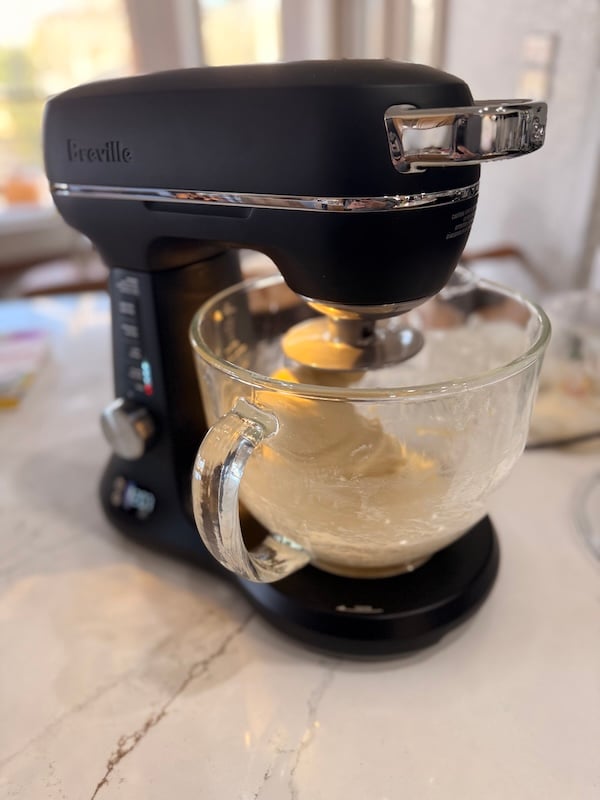
Disclosure: Breville sent me this mixer at no cost so I could test it for this review. This post is not sponsored, and Breville did not pay me or require a positive review. All thoughts and opinions are my own. If you make a purchase after clicking one of my links, I may earn a commission, which helps fund this website, recipe development, and monthly giveaways. I sincerely appreciate your support.
First Impressions of the Breville Bakery Chef™ Stand Mixer
While searching for the best stand mixers for sourdough, I came across Breville. When I saw Bon Appétit had rated it the best stand mixer overall, I knew I wanted to test it myself. I reached out to Breville, and they sent me one at no cost to test for this review.
I unboxed it on December 1, 2025, and my first impressions were fantastic. It feels like a premium machine right out of the box.
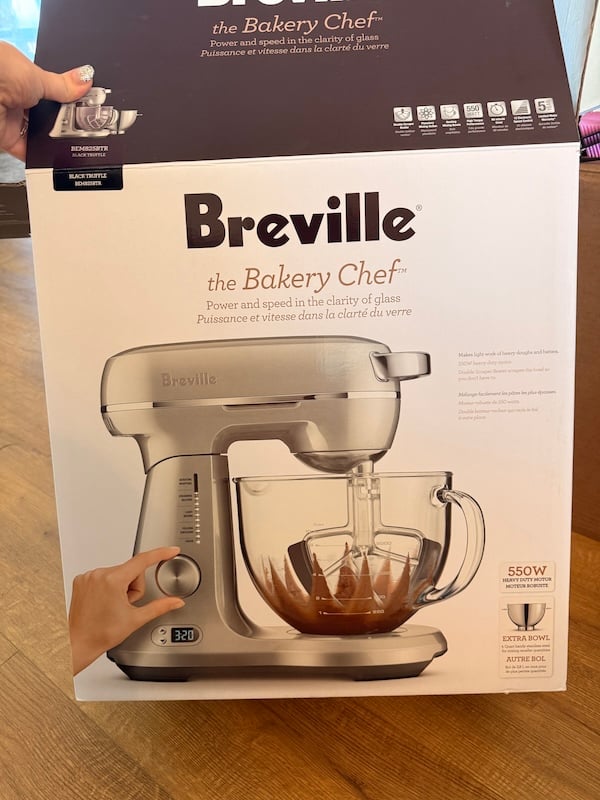
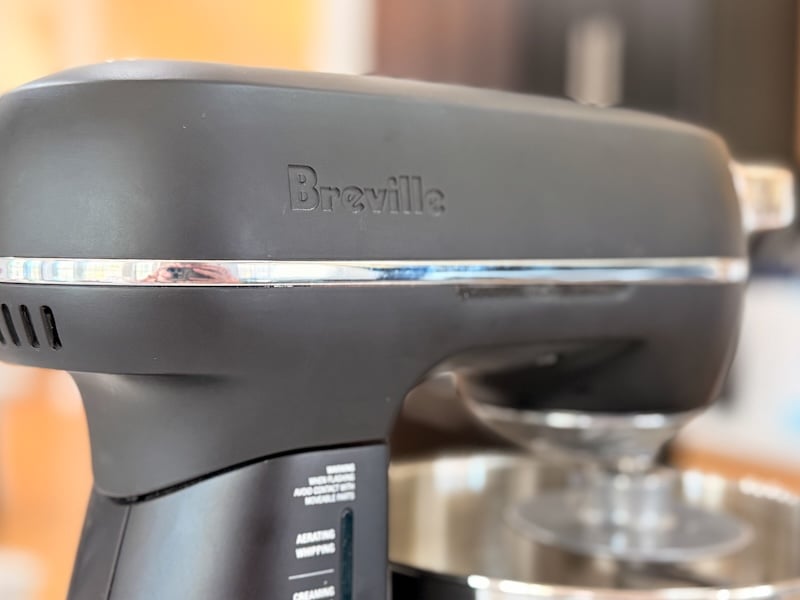
The die-cast metal body gives it a substantial feel, and I love the soft matte finish. The speed dial is one of my favorite design touches. Instead of the usual “Speed 1, Speed 2, Speed 3” setup, it has labeled sections that light up as you rotate through them.
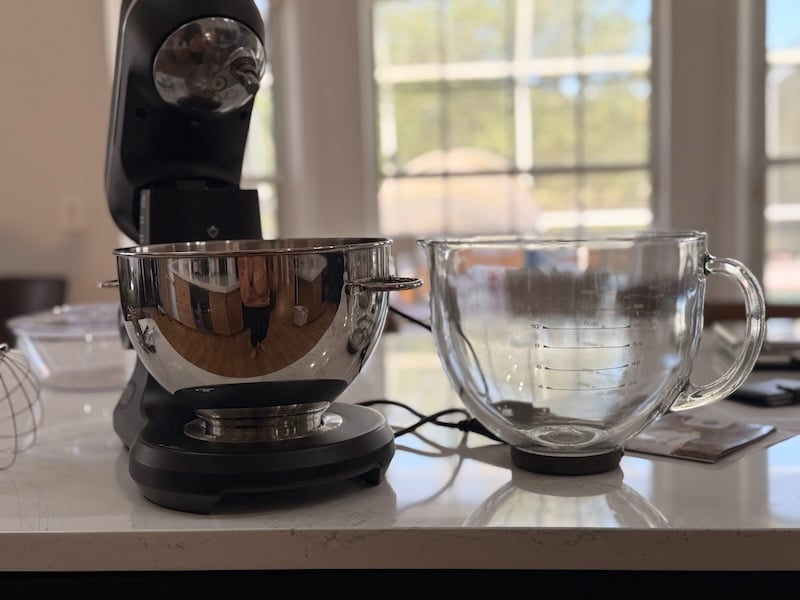
The two-bowl setup is also a nice surprise — a 5-quart borosilicate glass bowl and a 4-quart stainless steel bowl both come in the box. The smaller bowl is nice for single batches, and I love that the thick, sturdy glass bowl has a handle.
The mixer itself isn’t bulky, which is part of its appeal. Multi-loaf bakers may see the smaller size as a limitation, but it feels like a great fit for single-loaf bakers. Many larger premium mixers have a minimum capacity that can’t accommodate single or half batches (such as the Ooni).
Breville Bakery Chef™ Specs & Features
| Feature | Breville Bakery Chef™ |
|---|---|
| Price (retail) | $449.95 |
| Motor | 550 watts |
| Bowl Capacity | 5 qt glass & 4 qt stainless steel |
| Speeds | 12 |
| Mixer Type | Tilt-head |
| Load Sensing Technology | Yes |
| Built-in Timer | Yes (count up or count down) |
| Pause Button | Yes |
| Bowl Light | Yes |
| Cooling Fan | No |
| Add-on Attachments | None beyond what’s included |
| Warranty | 1 year & 5-year motor |
| Weight | 22.35 lbs |
How the Breville Handles Dough
The Breville Bakery Chef™ does pretty well with single batches of medium- to high-hydration recipes like focaccia, soft enriched doughs like hamburger buns or cinnamon rolls, and standard artisan loaves.
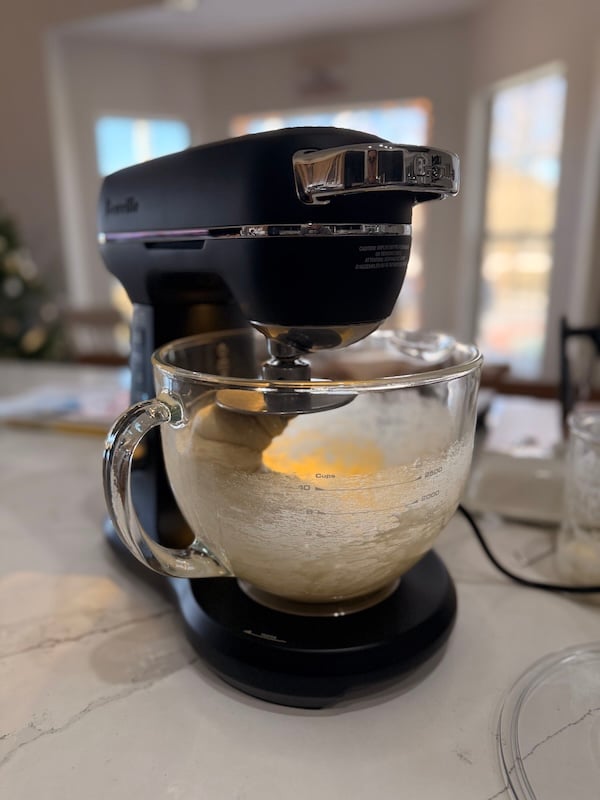
That said, double batches put a real strain on the motor, and stiffer doughs like bagel or pasta dough might make you cringe.
When I mixed my Wonder Bread copycat dough in the Breville, which is a lower-hydration bread dough, I noticed the tilt head rocking and could hear the motor working harder than I’d like.
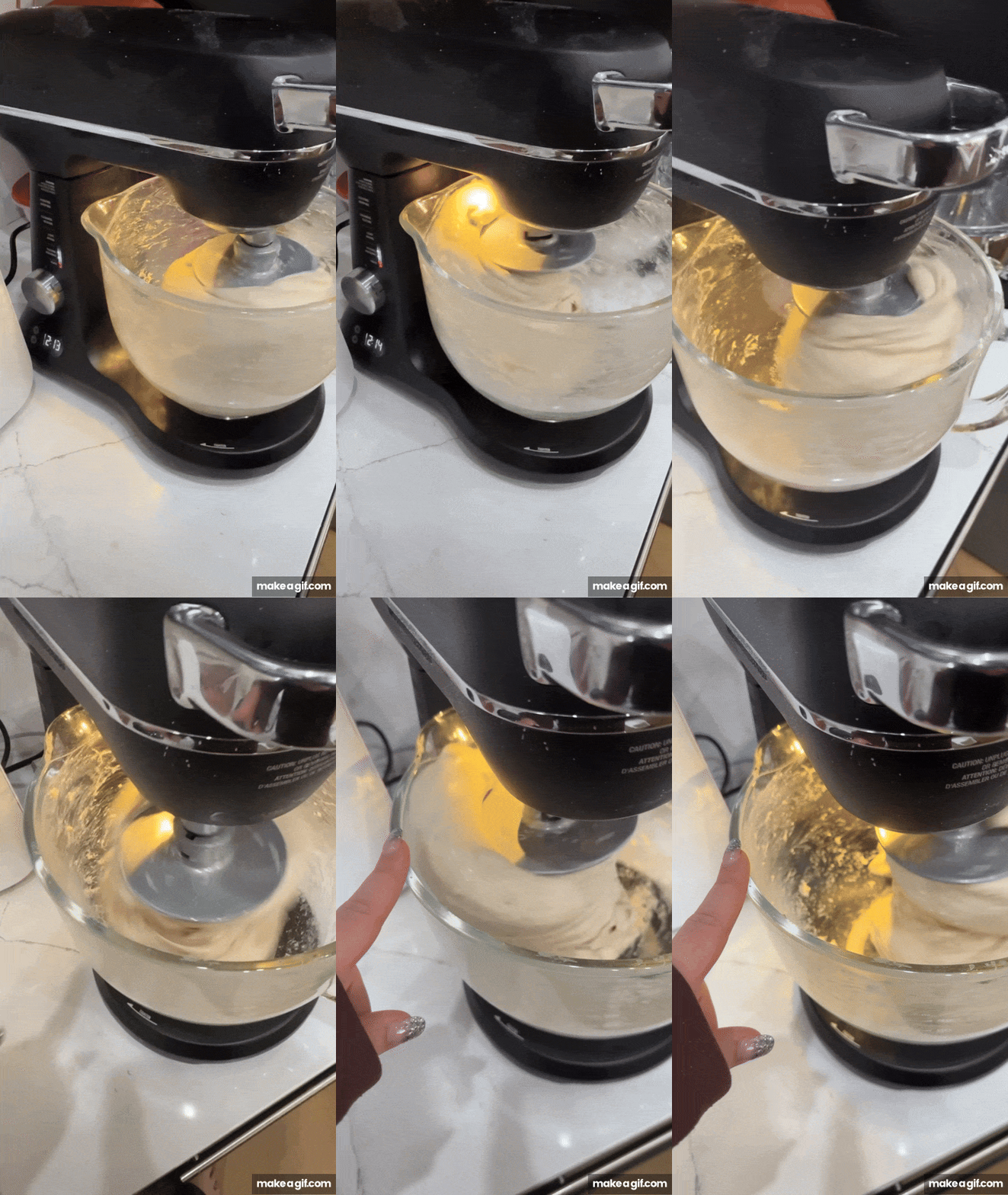
Bagel dough was worse — the machine just didn’t feel stable with that kind of dough, even at the recommended speeds. It reminded me of my KitchenAid tilt-head experience — not exactly confidence-inspiring for bread doughs.
If you usually bake in small batches, I can see you enjoying this machine with a few reservations. But if you mix multiple batches of dough at a time, this isn’t the mixer I’d recommend.
I never understood speed limitations for doughs before, but I sure do now. For the Breville mixer, the speed limit for kneading dough with a dough hook is Speed 1 to 3. But even at Speed 1, thicker doughs struggle and the motor whines.
My takeaway: the Breville Bakery Chef™ is a good everyday baking mixer, but it is not my first choice for serious bread dough.
Pros & Cons of the Breville Bakery Chef™
Pros
- Exceptional scraper beater
- Glass bowl makes it easy to monitor mixing
- Includes two bowls
- Solid, stable construction for everyday mixing
- Intuitive speed dial with light-up indicators
- Built-in timer with count-up, count-down, and pause mode
- Load-sensing technology adjusts power automatically
- Die-cast metal body
- Beautiful design overall
- Reputable brand
Cons
- Limited capacity for larger bread batches
- Tilt head rocks with stiffer, lower-hydration doughs
- Motor sounds strained with stiffer doughs
- No attachment hub
- Less dough power than some similarly priced mixers
- Mixer powers down after 5 minutes of inactivity, which resets the timer — a minor but annoying quirk if you’re mid-process
The Pros: 10 Features I Love
1) The Scraper Beater Is Exceptional
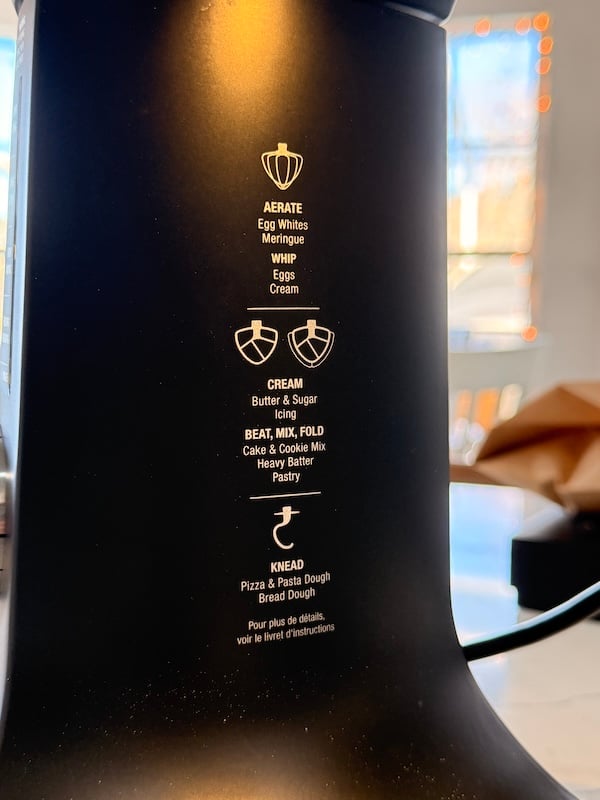
This is the standout feature of the Breville for me. The scraper beater gets all the way around the bowl — I’m talking about a thorough scrape every time.
If you’ve ever had to stop your mixer three times to manually scrape down the sides of your bowl, you’ll understand how satisfying this is.
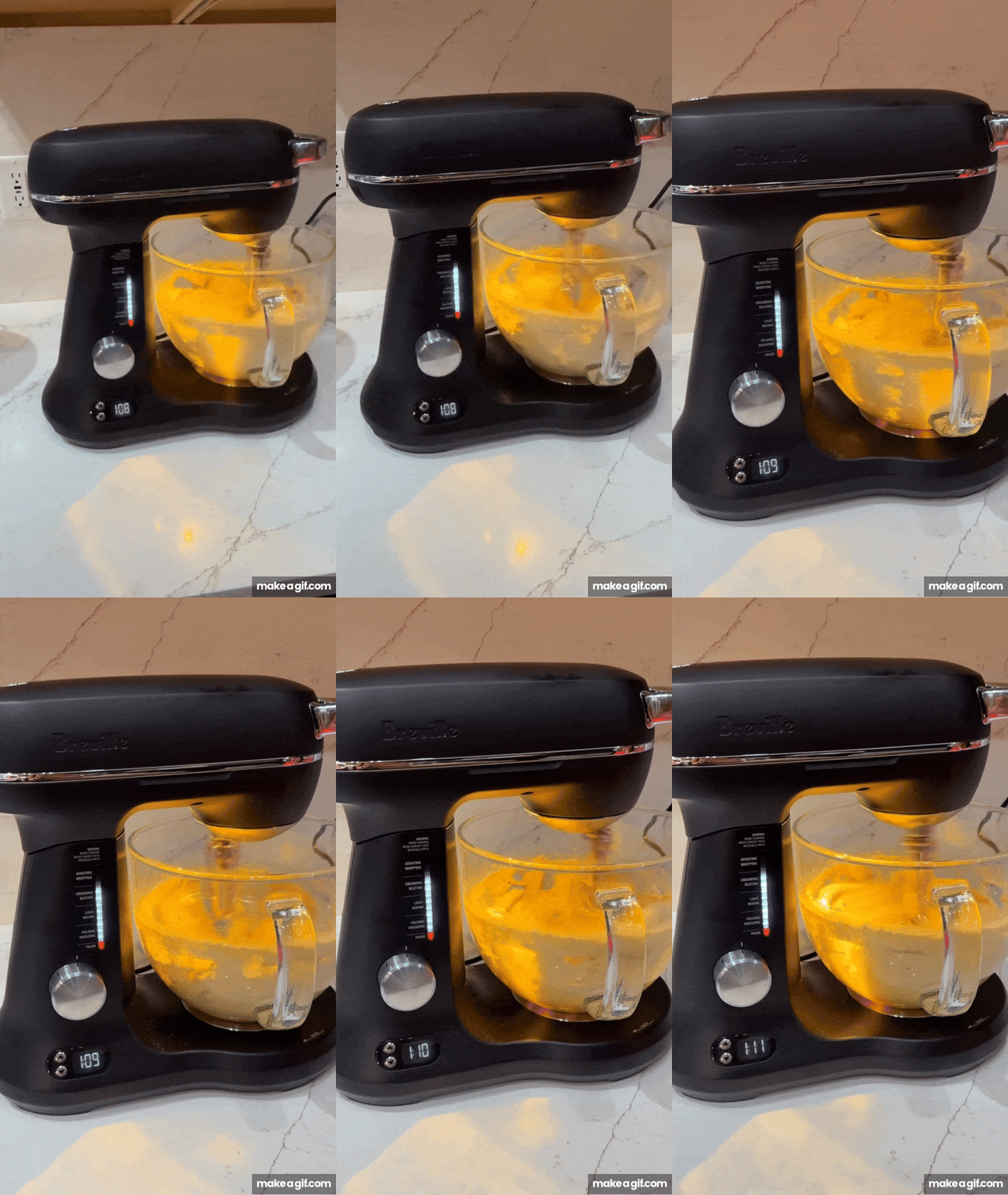
For cookies, cakes, muffins, and other batter-based recipes, this attachment alone gives the Breville a real advantage over many mixers I’ve tested. It’s one of the best paddle attachments I’ve used.
Most home bakers want a mixer that can do it all, but when I’m making muffins, I grab the Breville every time.
2) The Glass Bowl — A Surprisingly Big Deal
The 5-quart glass bowl is one of my favorite parts of this mixer! I love being able to warm milk or melt butter directly in the bowl before mixing.* For enriched doughs that call for either of those ingredients, that’s a truly useful feature!
*Note: Breville’s manual states that no part of the appliance should be placed in the microwave. The bowl is borosilicate glass, and many bakers have reported doing this without issue, but do so at your own discretion.
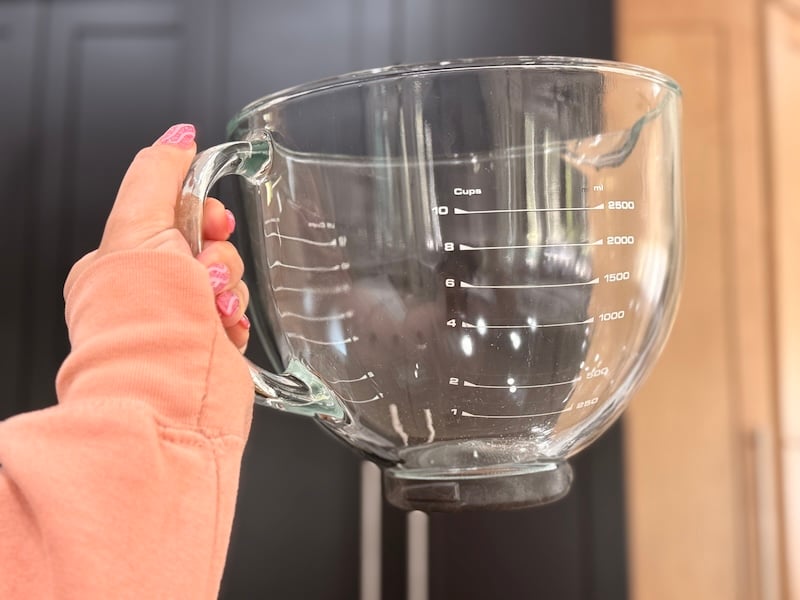
Being able to see color and texture changes happening in real time — without stopping the mixer — is also really helpful, especially when you’re whipping cream, making batter, or watching dough come together.
If you’ve ever owned a KitchenAid tilt-head mixer with a glass bowl, you know exactly what I’m talking about.
3) Two Bowls Included
The Breville Bakery Chef™ also comes with a 4-quart stainless steel bowl, which is a nice bonus. The smaller bowl is genuinely useful for smaller batches — it’s easier to maneuver and fits in the dishwasher more comfortably than a larger bowl would.
For bakers who make one loaf at a time, this is a huge perk.
4) Solid and Stable Construction
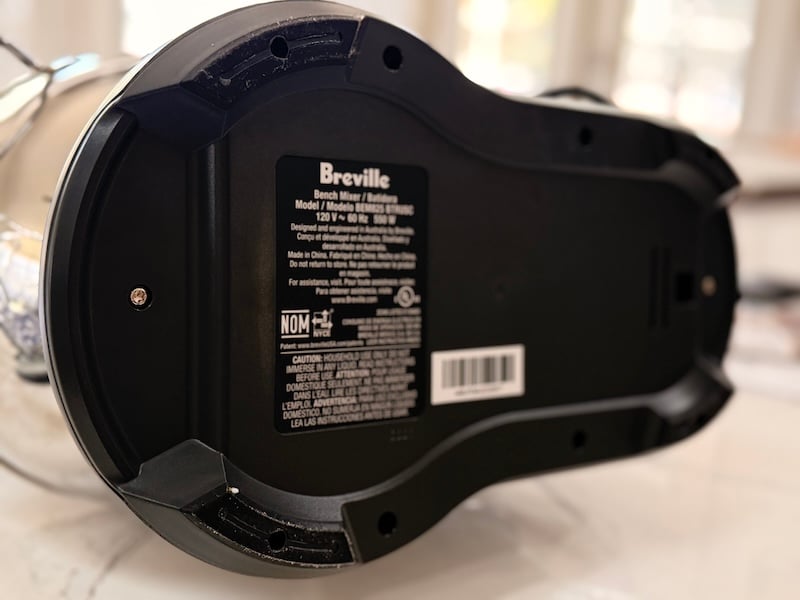
The Breville stays put on the counter during normal use. For everyday tasks — mixing batters, making cookie doughs, whipping cream — it feels solid and stable.
It doesn’t have suction cups on the bottom, but it doesn’t need them. For everyday mixing, the sturdiness and weight help keep it secure.
5) Speed dial with Light-Up indicators
Instead of relying only on numbered speed settings, the Breville uses a 12-speed control dial with an illuminated indicator band labeled for common mixing tasks.
- Kneading | Folding
- Light Mixing
- Beating | Creaming
- Whipping | Aerating
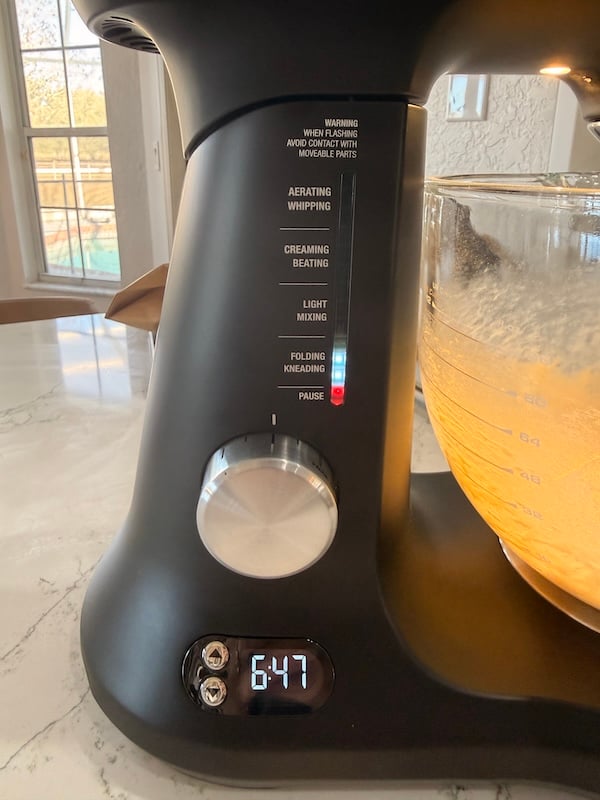
It’s more intuitive than memorizing what “Speed 4” means for a specific task, and it honestly just looks great on the counter. It might seem silly, but I appreciate it every time I use this mixer.
To pause mixing, you rotate the speed control dial to PAUSE.
6) LCD Timer With Count-Up, Count-Down, and Pause mode
The built-in timer is thoughtfully designed. You can let it count up from zero for tracking kneading or mixing time, or set it to count down when a recipe calls for a specific mixing window.
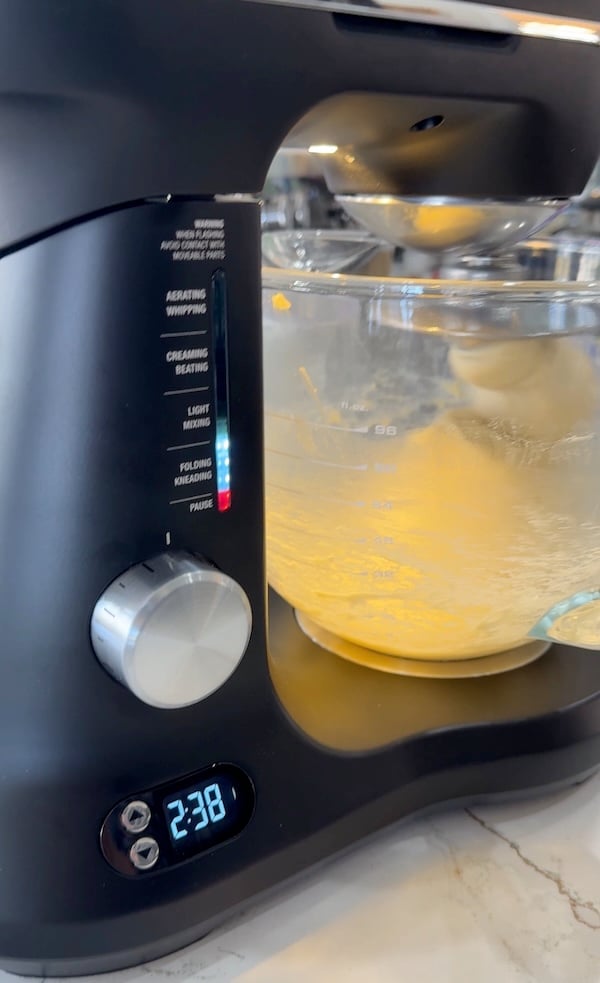
When you move the speed control dial to PAUSE, the mixer stops and holds the current time on the LCD, so you can add ingredients or stop and check on your dough without losing your place.
7) BOWL LIGHT
The bowl light is another small feature I really appreciate.
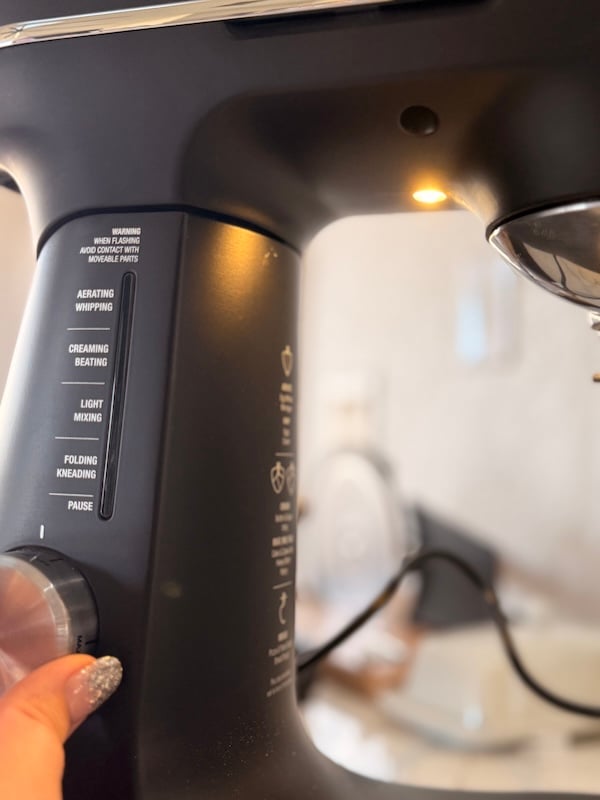
When the mixer is running, it illuminates the inside of the bowl so you can see what’s happening without stopping the mixer.
Even better, the light stays on when you pause the mixer, so you can more easily check your dough or batter while the bowl is still in place. It’s a small detail, but it makes the Breville feel more thoughtfully designed.
8) Load Sensing Technology and motor protection
The Breville Bakery Chef automatically detects heavier doughs or batters and adjusts power to help maintain the selected speed. It also has two overload protection modes that shut the motor off if it stalls or gets too hot from excessive loads.
I actually never noticed this until I started researching the machine more for this review — so, I have no observations to report other than these are listed features.
9) Retracting Cord
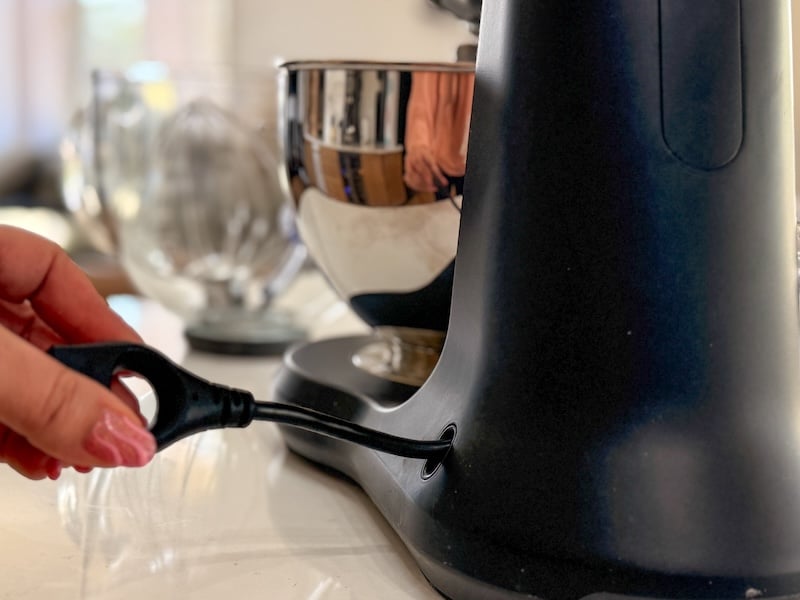
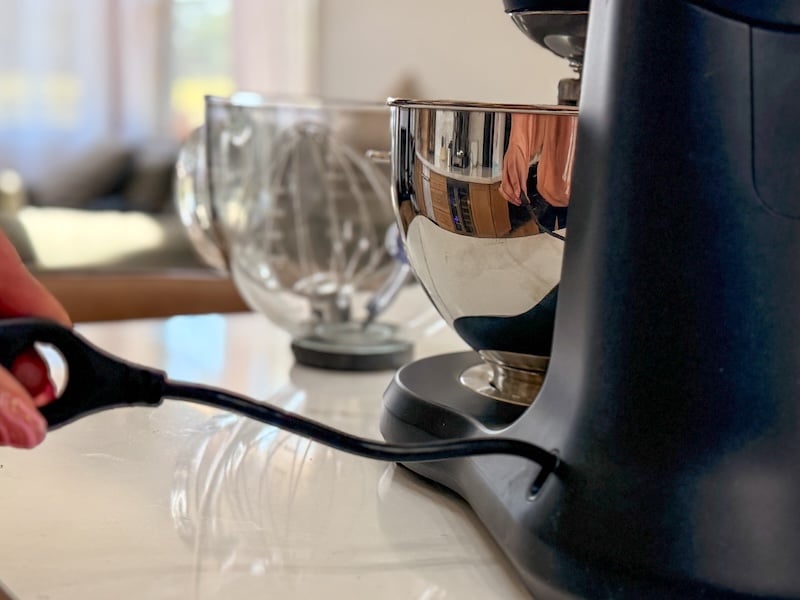
You can push in the cord for storage, which is nice! It’s not a super smooth function as you have to fight it a little bit to truly get it in there, but it exists.
10) Brand Reputation
There’s something to be said about brand reputation. When I first shared that I was testing this mixer, several bakers said they hadn’t tried the Bakery Chef™, but they were intrigued because of the brand.
I got comments like these:
“I don’t have this machine but have owned a Breville espresso machine that I loved. I think they carry top tier products!” —Ron N Lynda G.
“I have several of their other appliances and love the quality and I find them aesthetically pleasing as well. Can’t wait for your review on this one.” —Theresa Edwards
“I have other Breville products and they are really top notch.” —Geri N.
Like others in the community, I’ve had good experiences with Breville appliances, including an espresso machine that has been fantastic. I had high expectations going into this test — but I still wanted to see for myself how this mixer performed.
The Cons: 5 Things I Don’t Like
1) The Bowl Is limited for larger bread batches
The 5-quart borosilicate glass bowl is the primary bowl, and for bread dough, I think it’s best suited for single batches. It can handle some double batches, but a double batch of a lower-hydration dough, like sandwich bread dough, is pushing it.
If you regularly make double or triple batches, this will probably frustrate you.
That said, for a single-batch baker who also makes a lot of cookies, cakes, and batters, the bowl size is actually fine — dare I say, ideal.
The smaller 4-quart stainless bowl that comes in the box is a plus for those tasks, too.
2) The tilt Head Rocks with Stiffer Doughs
When I pushed the Breville with a stiffer, lower-hydration dough — like my Wonder Bread copycat dough — the tilt head rocked noticeably, and I could hear the motor straining.
This is a common limitation of tilt-head mixers in general, and it’s not unique to the Breville. But at this price point, especially in a review for bread bakers, it’s worth noting.
If you make bagels, pasta, or lower-hydration sandwich bread often, I just can’t see you loving this machine for those tasks.
3) The Motor feels Limited with Heavier Doughs
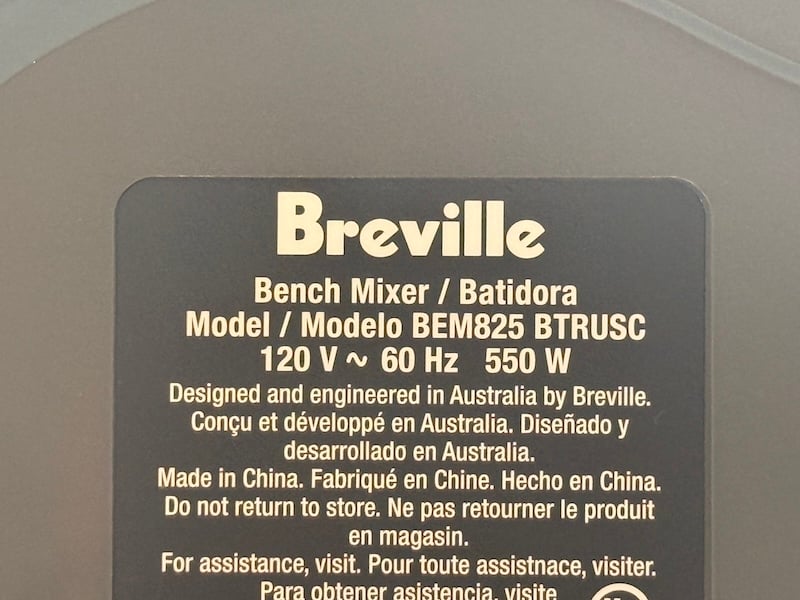
The Breville’s 550-watt motor is lower on paper than similarly priced mixers, including the Zacme (800 watt) and the Kenwood Chef Titanium (800 watt) models I tested.
Wattage is not the only thing that determines how well a mixer handles dough, but in my testing, the Breville felt less confident with heaver, lower-hydration doughs.
Read my full Zacme review: Is the Zacme Stand Mixer Worth It? A Sourdough Baker’s Honest Review
4) No Attachment Hub
Unlike the Zacme (which offers a pasta roller, meat grinder, and slicer/shredder), the Breville doesn’t have a hub for additional attachments. What comes in the box is what you get.
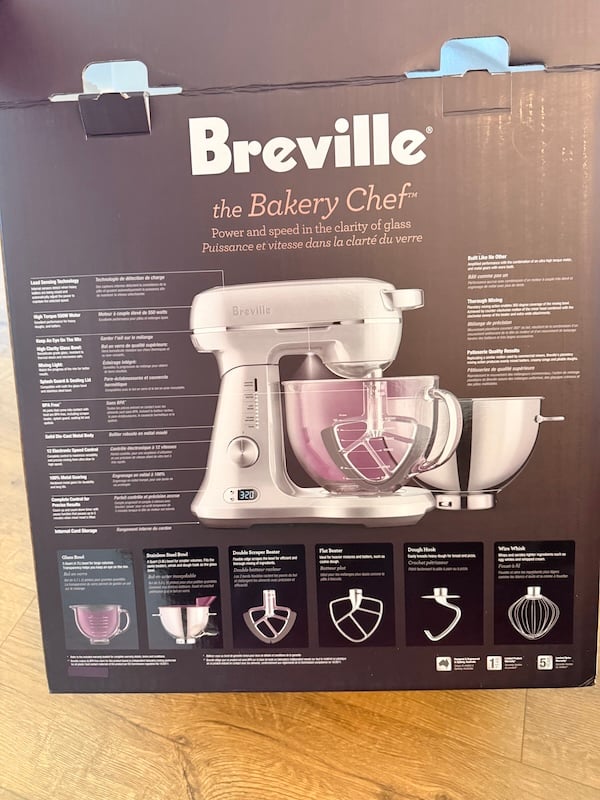
To be fair, what comes in the box is useful: a scraper beater, standard flat beater, dough hook, wire whisk, splash guard, pouring shield, and spatula.
But if you want a mixer that can double as a pasta maker, grinder, slicer, or other kitchen tool, this isn’t that machine.
5) The Tilt Release Button is AWKWARD
This might be a little nitpicky, but that’s what you came for, right?!
If you have long fingernails, you may not love the tilt release button on top. You have to press straight down on a small circular button, and if your finger placement is even a little off, it feels like you’re about to rip your nail off.
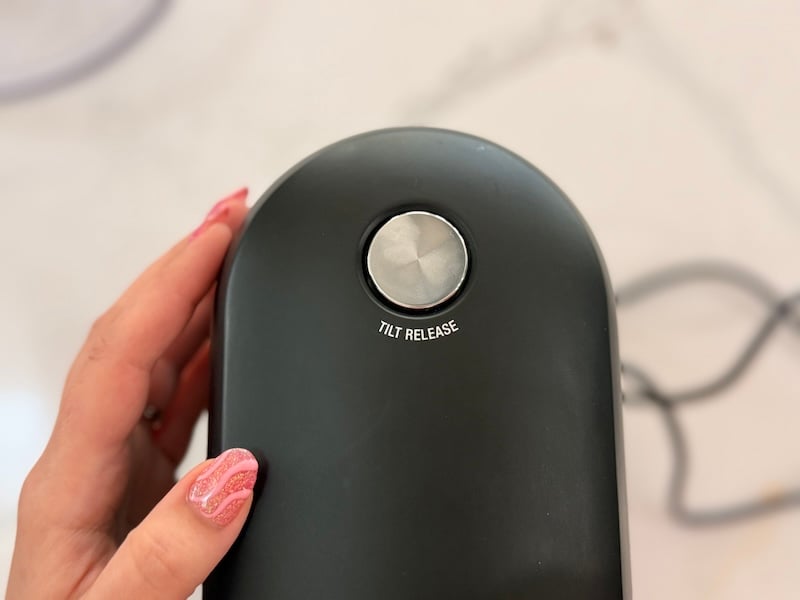
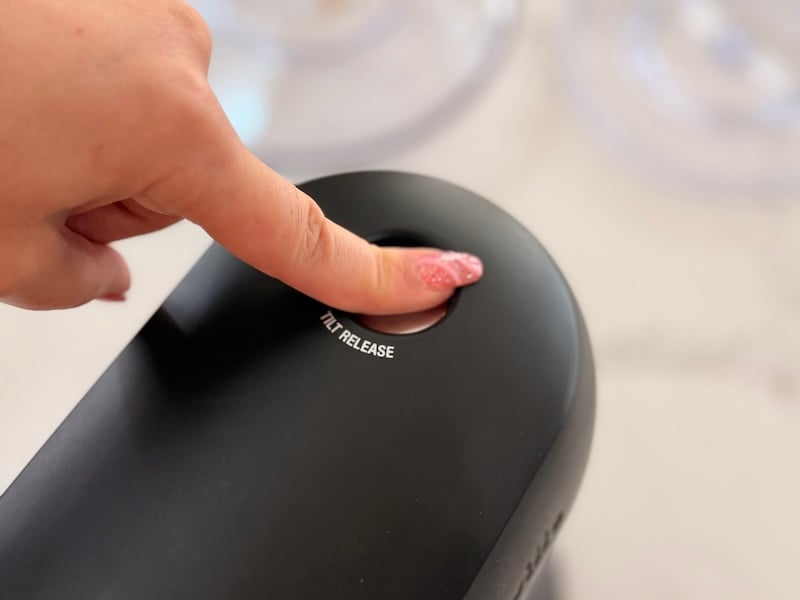
I cannot tell you how many times I’ve done this, and yes, it hurts. I wish either the button were larger or there was a different way to raise and lower the tilt head.
How the Breville Compares to Similar Mixers
With a retail price of around $450, I feel like the Breville is most comparable to the Zacme, which retails around $485, KitchenAid tilt-head models ($350–$500), and the Kenwood Chef Titanium.
Now, the Kenwood is a bit of a wildcard comparison — it’s a British brand with limited U.S. retail distribution, so most American bakers would need to source it online (Amazon being the most reliable option).
I bought mine used from Amazon for around $250, though pricing can vary quite a bit. However, I was specifically asked about Breville versus Kenwood, so I wanted to make a point of including that here.
Breville vs. Zacme

Breville vs. Zacme is, in my opinion, the most relevant comparison for most readers. They’re similarly priced tilt-head mixers aimed at the same demographic.
The short version: for dough, the Zacme overwhelmingly wins. For everything else, the Breville has a slight edge.
The Breville’s scraper beater, glass bowl, and intuitive speed dial make it a more enjoyable machine for batters, cookies, cakes, and whipping tasks. If you spend as much time on non-bread baking as you do on bread, the Breville is very strong.
But for bread dough — especially stiffer doughs or larger batches — the Zacme’s 800W motor, larger bowl, and quieter, more stable performance under load give it a very clear edge.
One more practical note: the Zacme goes on sale regularly for around $385, which would make it less expensive than the Breville at full retail. And the Zacme has an add-on attachment hub; the Breville doesn’t.
| Breville | Zacme | |
|---|---|---|
| Dough performance | ⭐⭐⭐ | ⭐⭐⭐⭐⭐ |
| Whipping/beating | ⭐⭐⭐⭐⭐ | ⭐⭐⭐⭐ |
| Bowl size | 5 qt glass + 4 qt stainless | 8.4 qt stainless |
| Motor | 550W | 800W |
| Noise level | Moderate | Whisper quiet |
| Add-on attachments | None | Pasta roller, meat grinder, slicer |
| Price (retail) | $449.95 | ~$485 |
| Price (on sale) | N/A | ~$385 |
Breville vs. KitchenAid
The Breville tilt-head is quite similar to KitchenAid tilt-head mixers like the Artisan Series 5 (retails around $499.99), which I used for years before upgrading to the KitchenAid bowl-lift model.
On paper, the most obvious difference is that Breville’s motor is 550W, while KitchenAid tilt-heads range from 250 to 325W.
And I feel that power difference, especially when kneading dough.
My honest take: the Breville outperforms the tilt-head KitchenAid and has more nice features, such as that light-up speed dial and pause functionality.
However, the KitchenAid wins, hands down, when it comes to attachments. I absolutely love their pasta attachments, ice cream maker, and citrus juicer. They’re all well-made, and there’s a whole library of options, including a slicer/shredder, meat grinder, and even a flour mill.
Neither excels with doughs, though, so if you’re looking for a stand mixer that kneads well, I’d probably shift gears and take a good look at the Zacme.
Breville vs. Kenwood Chef Titanium
The Kenwood Chef Titanium is an 800W, 7-quart machine — on paper, it looks like it should outperform the Breville for breadmaking. In my experience, it didn’t.
I was actually surprised when I used my Kenwood for the first time. So many had suggested it to me, so my hopes were quite high. But it feels cheap in comparison and is not stable during mixing.
The Breville’s solid construction and stability on the counter gave it a huge edge here.
If you’re deciding between these two, I’d choose the Breville every time.
How the Breville Fits Into My Full Mixer Lineup
Now, let’s zoom out and consider the Breville mixer compared to all of the stand mixers I own, which is a lot. These comparisons aren’t really apples-to-apples.
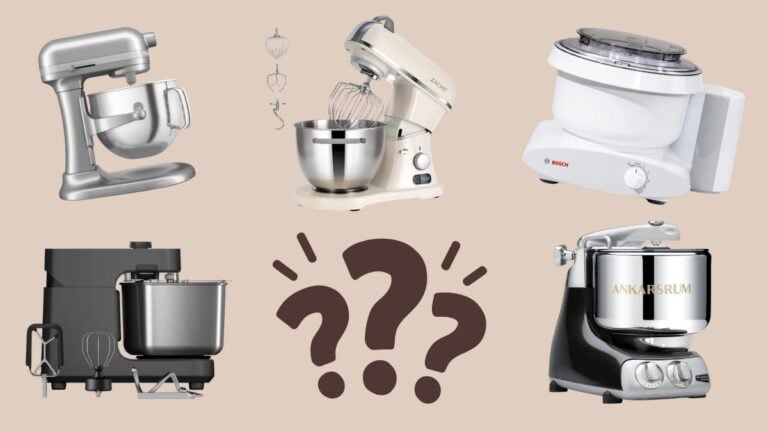
The Breville isn’t competing with an Ankarsrum or an Ooni — they’re different machines at different price points built for different bakers. But I get asked about all of these, so here’s my honest take on where the Breville fits in my kitchen.
Read a full review of the pricier mixers I have here: Ooni vs Bosch vs KitchenAid vs Ankarsrum: Best Stand Mixer for Sourdough
Breville vs Under $200 Options
First, I own 10 budget stand mixers under $200, and the Breville blows all of those out of the water. So, we can get that one out of the way.
Even considering value for money, I’d recommend the Breville over all of those budget mixers, every time.
Breville vs. Nutrimill Artiste
For all-around baking — cookies, cakes, batters, whipping — I’d reach for the Breville. The tilt-head design makes those tasks more intuitive, and the paddle and whisk attachments are noticeably better.
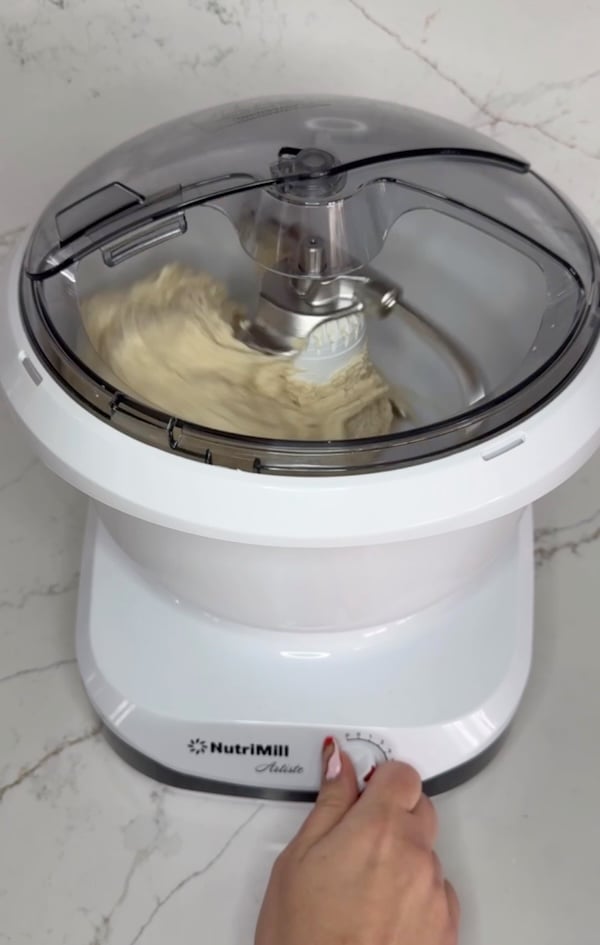
But for dough, the Artiste (retails at $299, use code TSG20 for $20 off) has a real edge. The motor feels stronger, the machine handles dough more confidently, and it’s significantly more affordable. It’s not as pretty, and the motor volume fluctuates while it runs — but if bread dough is your priority, the Artiste is a solid choice.
Breville vs. Bosch Universal Plus
These two are built for completely different bakers. The Bosch Universal Plus (retails at $499, use code TSG20 for $20 off) is a larger machine designed for high-volume baking — multiple batches, bigger loaves, serious bread production.
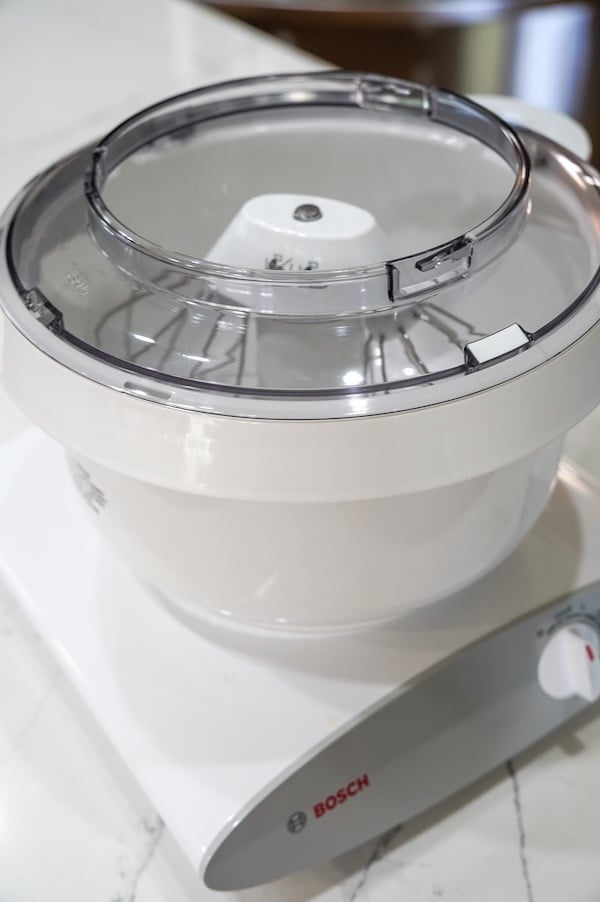
In my opinion, the Breville is built for the casual home baker who typically makes one batch at a time. If that’s you, the Breville is the better fit.
If you’re regularly doubling recipes or baking for a crowd, the Universal Plus makes far more sense.
Breville vs. Ooni Halo Pro
The Ooni Halo Pro (retails at $799) is WAY better at dough… It’s night and day, and it should be for the price difference.
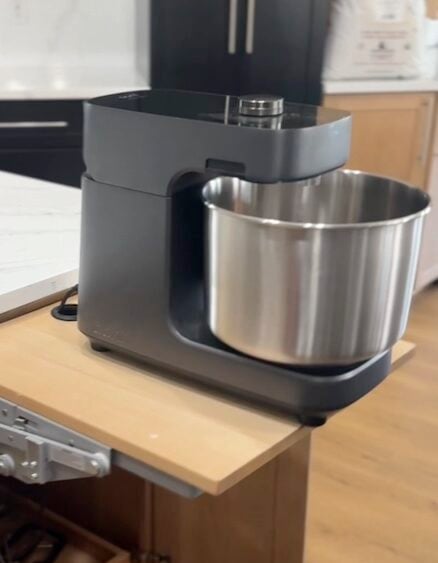
It also handles larger batches more comfortably, and it’s clearly designed for a more serious bread baker. But it’s twice the price of the Breville, and outside of dough, the Breville actually wins for me.
I’d pull it out every single time over the Ooni for the whisk and paddle. If you bake a variety of things and bread is just one of them, the Breville makes a lot of sense. If bread is your whole thing and budget isn’t a concern, the Ooni is worth the investment.
Breville vs. Ankarsrum
The Ankarsrum (retails at $799.95) is a tank — an incredibly capable machine. But it comes with a real learning curve. The design is unlike anything else on this list, and it takes time to truly master it.
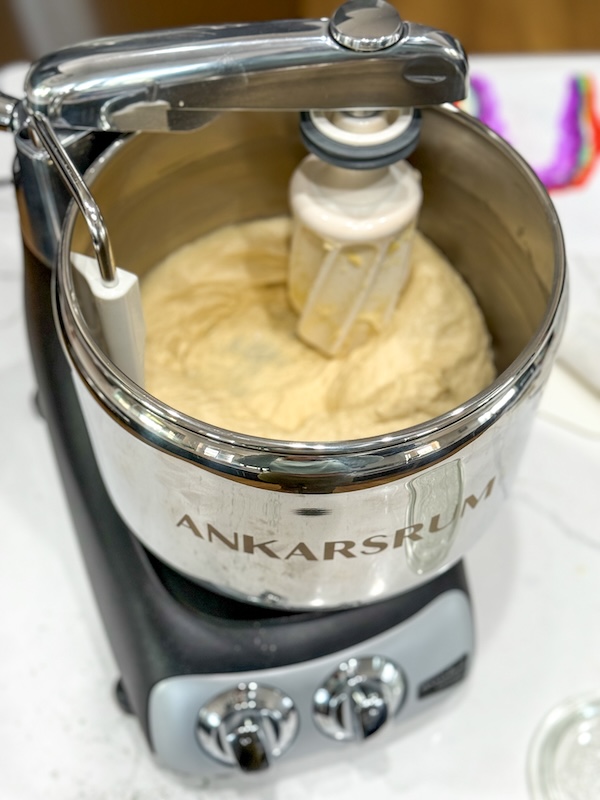
The Breville, by contrast, is immediately intuitive. You unbox it, and you know exactly how to use it. If you want a capable machine without the homework, the Breville wins on user experience.
But if you want to invest in a mixer that can do everything, accommodate much larger batches, won’t struggle with ANYTHING, and will last for generations, the Ankarsrum is the obvious choice.
Pricing
The Breville Bakery Chef™ retails for $449.95. I’ve never seen it go on sale but will update this if that changes.
You can find it on Breville’s website.
Who Should Buy the Breville?
This mixer is a great fit if you:
- Bake a wide variety of things — not just bread, but cakes, cookies, muffins, batters, whipped cream, energy balls
- Make single or half batches rather than doubling or tripling recipes
- Value design and want a beautiful, intuitive machine on your counter
- Want a step up from a tilt-head KitchenAid with more thoughtful features
You might want to look elsewhere if you:
- Primarily make bread dough, especially stiffer or lower-hydration doughs
- Regularly make double or triple batches of anything
- Want the most powerful motor for your dollar (consider the Zacme or Bosch Universal Plus)
- Want add-on attachments like a pasta roller or meat grinder
What the Community Says
Here’s what a few bakers in our community had to say:
I love my Breville mixer. Mine is about 10 years old and still going strong. I use it for all my lightweight baking – cakes, cookies, muffins. —Caroline R.
“I love my Breville. I can mix 2 loaves of sourdough at a time.” —Rebekah S.
“I have had a Breville for about 4 years. It replaced a 20-year-old KitchenAid that died. I like it and have had no issues. It handles heavy dough and thick cookie dough better than my KitchenAid.” —Marie K.
“I love all my Breville products.” —Roseanne D.
FAQs
Yes, Breville’s stand mixer comes in Olive Tapenade, Damson Blue, Sea Salt (white), and Black Truffle.
Breville’s website and manuals don’t list a flour capacity beyond the bowl size, but in my experience, a double batch is about the limit – and honestly, a single batch performs better. If I had to give a number, I’d cap it at around 1,000 grams of flour, which is enough for two artisan loaves.
Yes, Breville’s dough hook gets to the bottom of the bowl — I’ve never had unmixed ingredients sitting there. One quirk worth mentioning: during initial kneading, the mixer sometimes separates the dough into one large mass and one smaller one. Just stop the machine, squeeze them back together, and you’re good to go.
For bread dough, the Zacme wins. For everything else, the Breville has a slight edge.
The Zacme’s 800W motor, larger 8.4 qt bowl, and quieter, more stable performance make it the better choice for stiff doughs and larger batches. The Breville’s scraper beater, glass bowl, and intuitive speed dial make it a more enjoyable machine for batters, cookies, cakes, and whipping tasks.
The Zacme also has an add-on attachment hub (pasta roller, meat grinder, slicer) — the Breville doesn’t. And the Zacme goes on sale regularly for around $385, which undercuts the Breville’s $449.95 retail price.
If you bake mostly bread, go Zacme. If you split your time between bread and other baking, the Breville holds its own.
The Breville doesn’t really excel with bagel dough, but it can manage it. Do smaller batches — I find a half-batch is best (about 6 bagels’ worth), and keep it on the lowest speed. The larger the batch gets, the more rocking you’ll notice around the tilt head.
My Final Verdict
The Breville Bakery Chef™ is a well-built, beautifully designed machine with some genuinely standout features — especially that scraper beater and the glass bowl. If you’re a baker who splits time between bread and everything else, it earns its place on the counter.
But for sourdough bakers who prioritize dough performance — especially with stiffer doughs or large batches — the Breville’s 550W motor and 5-quart bowl aren’t ideal. It’s not the right tool for that job.
More product reviews for sourdough bakers:




The one thing that stood out to me in your wonderful and informative review was your comment about the button on the tilt head being difficult to operate with long nails. I feel you, girl! As the owner of long nails for 20+ years, I have a tiny bit of advice. Use your knuckle to press the button. I hope it works in this instance!
Thank you for all your hard work! 💕
Good idea, thanks Latisha!!
I live in Australia & have owned my Breville for about 6 years – long before I got into sourdough bread making. I have tried to make bread a couple of times with the mixer but have still not mastered the technique using the mixer. I always feel more comfortable using my hands. That said, I will probably have to master the mixer, as my hands are becoming arthritic & I have a lot of tenderness in my thumb & forefinger. I don’t want to give up making sourdough so I’ll have to master the mixer.