
Best Stand Mixer for Sourdough: Ooni, Bosch, KitchenAid, Ankarsrum, or Zacme?
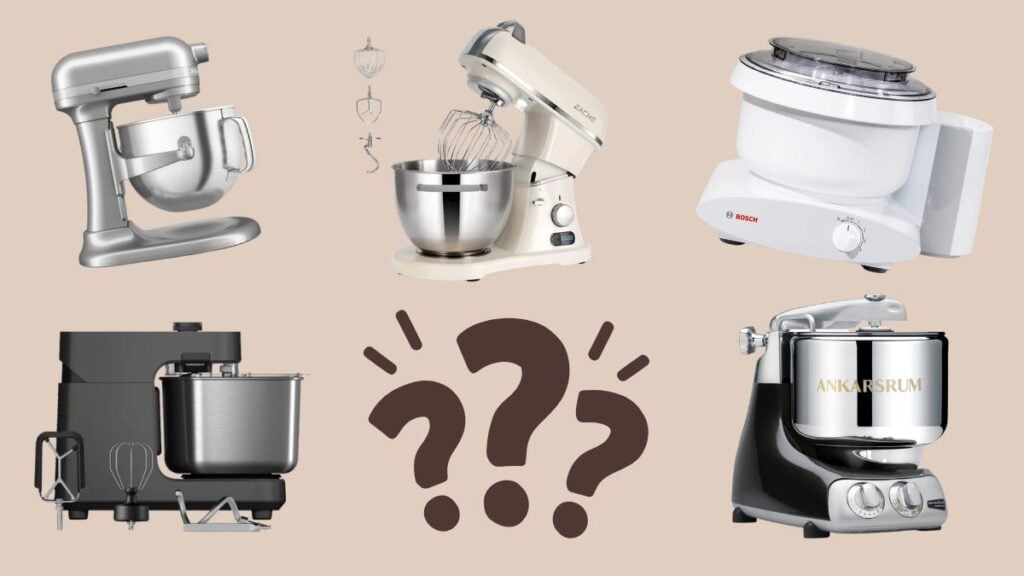
A high-quality stand mixer is a big investment, so we can’t be spending $500-$800 to find out we don’t actually like the darn thing!
I’m here to share my brutally honest opinions about the Ooni Halo Pro, Bosch Universal Plus, KitchenAid Bowl-Lift, Ankarsrum, and Zacme stand mixers.
Update 7/29/2026: When I originally wrote this post, I hadn’t tested the Zacme stand mixer yet. After baking with it for about 6 months, the Zacme has become my top recommendation to most sourdough bakers. I’ve updated this article, so look for the Zacme update label throughout.
But this article isn’t just about my opinion. Oh, no.
You’ll see thoughtful contributions from serious talent in the sourdough world – including legendary baker and author Daniel Leader (@danmakesbread), queen of the open crumb Adelina Roberts (@breadstalker), and many more incredible bakers and educators you’ll recognize from social media. Feedback from my followers is also sprinkled throughout.
This is not just a simple review. This is an in-depth buying guide. If you read this article in full, you will know which stand mixer is right for you. That is my promise.
FTC Disclaimer: This review post is not sponsored by any company. All thoughts and opinions are my own. The Bosch, Ooni, Ankarsrum, and Zacme stand mixers were sent to me by the brands or distributors at no cost. If you make a purchase after clicking one of my links, I may earn a commission, which helps fund this website, recipe development, and monthly giveaways. I sincerely appreciate your support.
Best Stand Mixers for Sourdough Bread Baking
The only stand mixer out of these five that I’d totally rule out is the KitchenAid Bowl-Lift. It consistently did the worst at all of my tests, and it has the longest con list of the bunch. It’s not even the cheapest, either!
However, the Ooni, Zacme, Ankarsrum, and Bosch all have their place, and I’d recommend each one for different bakers depending on their needs.
Zacme Update: The Zacme has become the stand mixer I recommend most often to home sourdough bakers. I still recommend the Ooni, Bosch, and Ankarsrum in specific situations, but for most people, the Zacme simply checks the most boxes.
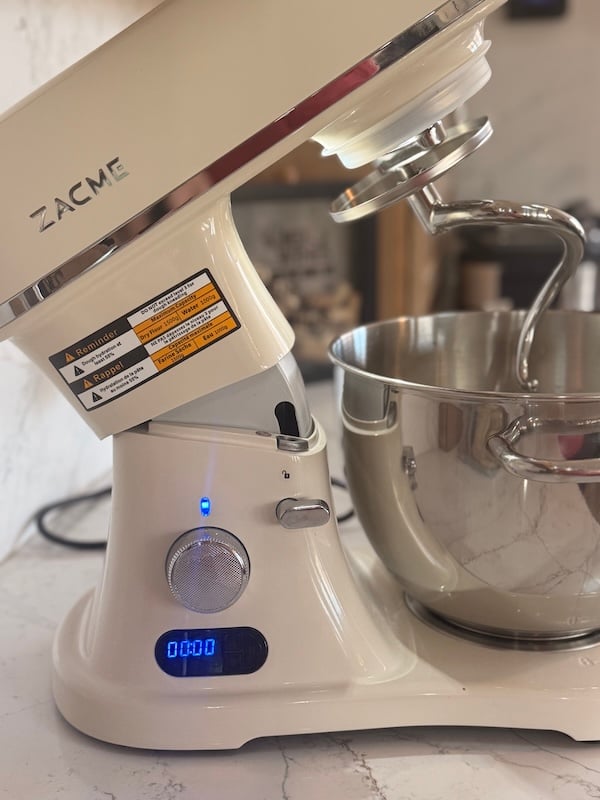
Best stand mixer for most home sourdough bakers: Zacme Stand Mixer ($499.99)
The Zacme handles all dough types while being whisper-quiet. Considering the performance you get for the price, it’s a no-brainer for most home sourdough bakers. It often goes on flash sale for about $385 — you just can’t beat the price for the quality.
A deep dive is now available: Is the Zacme Stand Mixer Worth It? A Sourdough Baker’s Honest Review
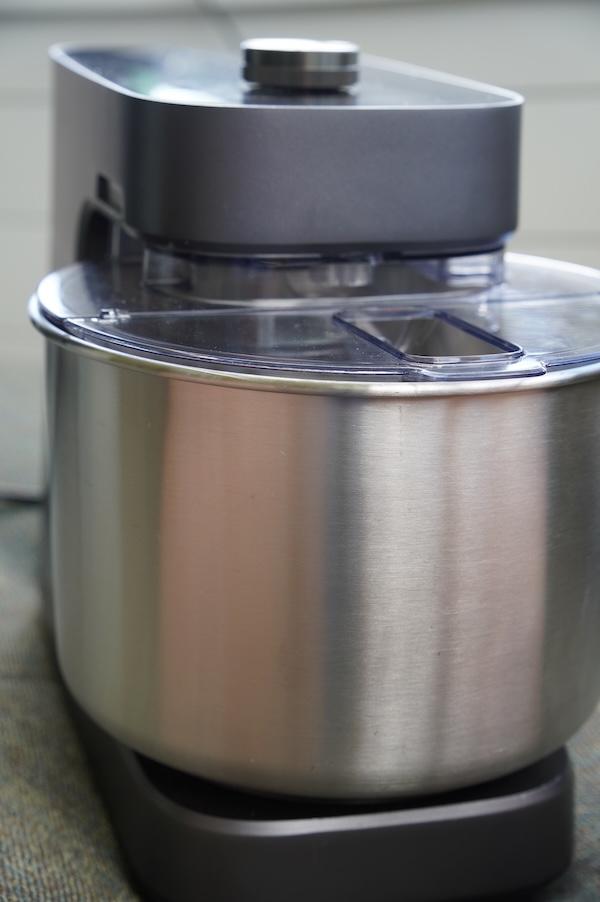
Best stand mixer for dough-focused bakers: Ooni Halo Pro Spiral Mixer ($799)
The Ooni spiral mixer is an absolute gem for any kind of dough. Bread, pasta, pizza, bagels, you name it – the Ooni will mix and strengthen it in record time. Its design is clearly made to mix doughs as effectively as a commercial machine. I truly feel it has brought the power and effectiveness of huge commercial stand mixers to my kitchen. It can do other things if you switch from the dough hook to the whisk or beater attachment, but it shines with dough.
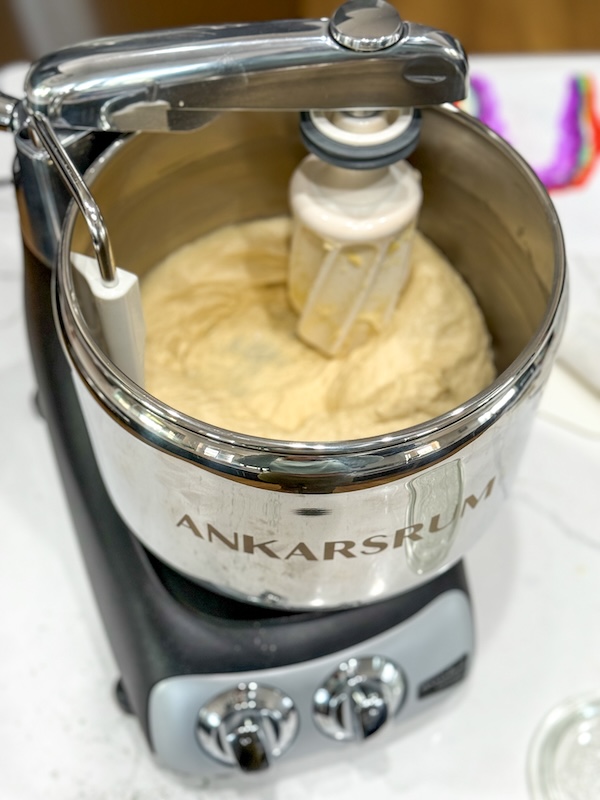
Best stand mixer for versatile bakers: Ankarsrum ($799.95)
If you’re all over the place with what you make, the Ankarsrum can do it all. It may not be the best of the bunch at mixing bread dough (in my humble opinion), but it excels where others don’t. Its versatile design also accommodates a huge selection of attachments you can purchase to get even more out of your machine. This is a powerhouse that I’d consider a Jack of All Trades, though it comes with a learning curve.
Military discount offered
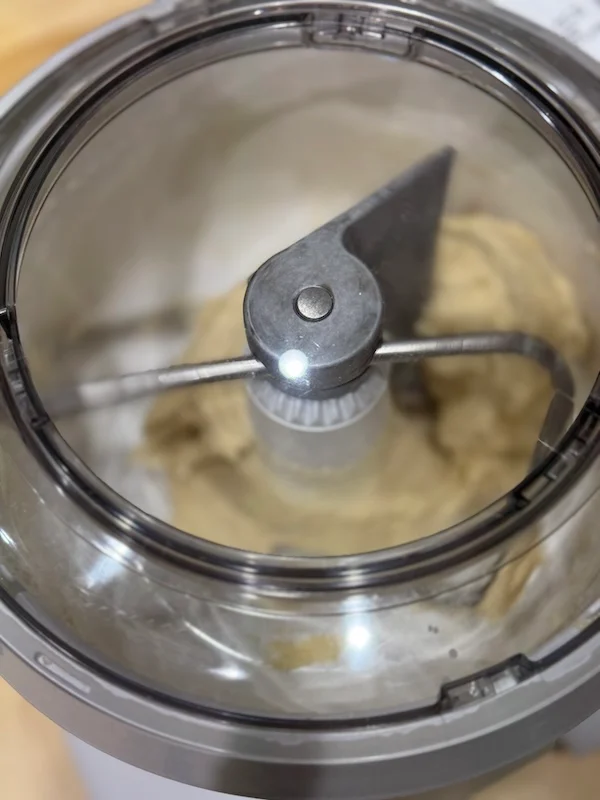
Best stand mixer for biggest batches: Bosch Universal Plus ($499)
The Bosch Universal Plus has the largest bowl and can thus hold the most dough at a time. There’s a reason you see microbakers all over the internet using the Bosch to mix their big batches of dough. Its design is not my favorite, and I have a few complaints, but there’s no denying the power of this motor and how quickly it can bring dough together. The whisk attachment is also fantastic.
Get $20 off with code TSG20
Related, but not in this particular list: Breville Stand Mixer: A Sourdough Baker’s Honest Review
Do You Really Need a Stand Mixer for Sourdough?
A stand mixer isn’t required for making sourdough recipes, but it can make certain ones a lot easier on the arms.
A mixer excels with:
- Big batches of dough
- Mixing dough to a full windowpane
- Adding inclusions
- Incorporating delayed ingredients (such as butter with enriched doughs or salt after a fermentolyse)
I was recently recipe testing cinnamon raisin sandwich bread, and I added vanilla-soaked raisins after a 30-minute rest.
By hand, incorporating the wet raisins into the dough can be a little frustrating. The dough gets ropey and stringy, and you have to squeeze the liquid in for a while before it fully incorporates.

But with a stand mixer? Just dump them in, start the machine, and about 2 minutes later, that work is done.

Similarly, mixing big batches of dough or getting that dough to reach a full windowpane upfront (a sign of super-strong dough) is a major arm workout.

Yeah, a machine is definitely nice. BUT! You can make any sourdough recipe with or without a stand mixer, so please don’t feel discouraged or left out if you don’t have one or can’t afford one right now.
Note: There are sourdough bloggers out there who do everything by hand (like Healing Slice), so truly, I assure you: you don’t need a stand mixer to succeed!
Stand Mixer Comparison Chart: Specs
Let’s take a look at how these high-end stand mixers compare “on paper” before getting into some of the tests I did and the pros and cons.
| Price | Weight Capacity | Dough Capacity | Attachments | Speeds | Bowl Material | Amps | Weight | |
|---|---|---|---|---|---|---|---|---|
| KitchenAid Bowl-Lift* | $649.99 | 7 Quart | 8.5 Lbs | ✅ 10+ | 11 | Stainless Steel | 4.17 | 29.2 lbs |
| Bosch Universal Plus | $499 | 6.5 Quart | ✅ 14 Lbs | ✅ 15 | 4 | ⚠️ Plastic** | ✅ 6.67 | ✅ 12.75 lbs |
| Bosch With Bottom-Drive Bowl | $748 | 6.5 Quart | 10 Lbs | ✅ 15 | 4 | Stainless Steel | ✅ 6.67 | 14 lbs |
| Ooni Halo Pro | $799.99 | 7.3 Quart | 11 Lbs | ⚠️ 3 | ✅ 20 | Stainless Steel | 5.4 | ⚠️ 32 lbs |
| Ankarsrum | $799.95 | 7.4 Quart | 11 Lbs | ✅ 10+ | Adjustable knob (45-130 RPM) | Stainless Steel | 5 | 18.96 lbs |
| Zacme | ✅ $499.99 (regularly on sale for $385) | ✅ 8.4 Quart | 6.6 lbs | 6 | 11 | Stainless Steel | ✅ 6.67 | ⚠️ 33 lbs |
*Important disclaimer: I own the KitchenAid® 6 Quart Bowl-Lift Stand Mixer with a 575W motor, which KitchenAid no longer manufactures. Their current comparable model is the 7 Quart Bowl-Lift, but it only has a 500W motor — a downgrade from my version. Keep this in mind when reading my review, as the newer model may perform slightly differently.
**You can upgrade to a stainless steel bowl with the center column for $100 more
Stand Mixer Comparison Chart: Performance
Here’s also a bird’s-eye view of performance, including the warranty information for each product.
In sum, Ankarsrum has the best warranty, the Zacme is the quietest, and the Zacme is the only one that didn’t warm the dough. Oh, and the KitchenAid is terrible at strengthening your dough in a reasonable amount of time.
A note on noise levels: I downloaded a decibel app on my phone and ran each machine at the lowest and highest speeds. The decibels you see listed in this chart reflect that test.
| Warranty | Noise Level | Temp Change After 3 Mins * | Temp Change After 13 Mins * | Time to Windowpane | |
|---|---|---|---|---|---|
| KitchenAid Bowl-Lift | ⚠️ 1-year, limited | 74-84 dB | +1°F (80→81) | +2°F (80→82) | ⚠️ 20-30+ minutes |
| Bosch Universal Plus | 3-year for motor + transmission; 1-year for parts + accessories | 80-90 dB | +3°F (80→83) | +6°F (80→86) | 7-12 minutes |
| Ooni Halo Pro | 1-year standard, but can extend to 5 years if you register online within 60 days of purchase | 67-84 dB | +2°F (80→82) | ⚠️ +9°F (80→89) | 7-12 minutes |
| Ankarsrum | ✅ 7-year, limited | 73-89 dB | +1°F (80→81) | ✅ +1°F (80→81) | 8-15 minutes |
| Zacme | 2-year, limited | ✅ 55-71 dB | -1°F (85→84)** | ✅ -2°F (84→82)** | 12-18 minutes |
**For the Zacme: this test was done at a separate time from the others, so the starting temperature was a bit warmer. I did the temperature test twice and got the same results both times; the dough decreased in temperature. I am very perplexed and will continue testing, but as it stands, the Zacme certainly does not heat up your dough.
A note on warranties: It doesn’t look like any of these machines offer a warranty against regular wear and tear, like scratches or dents. They all seem to cover manufacturer defects and failures. But Ankarsrum is clearly the most confident in the longevity of their product.
Stand Mixer Tests
I’ve been using these stand mixers for a while now, so I’ve noticed how they operate and compare.
However, testing side-by-side really highlights each machine’s strengths (and weaknesses). It also challenged some opinions I’d formed over the months.
Whipped Cream
TL;DR: Ankarsrum and Zacme reached stiff peaks fastest in my tests, with Bosch close behind. Ankarsrum and Bosch use dual-whisk attachments, while Zacme’s broad whisk reaches across much of the bowl. Ooni came in fourth, followed closely by KitchenAid. All five reached stiff peaks in a reasonable amount of time.
For each test, I added 2 cups of heavy cream, 1/4 cup of sugar, and 1 teaspoon of vanilla extract to the mixer bowl and used the whisk attachment.
Note: I tested the Ankarsrum, Bosch, Ooni, and KitchenAid during the same session. I later tested the Zacme using the same ingredient quantities and method. Because the Zacme was tested separately, its result is useful but not a perfectly controlled head-to-head comparison.
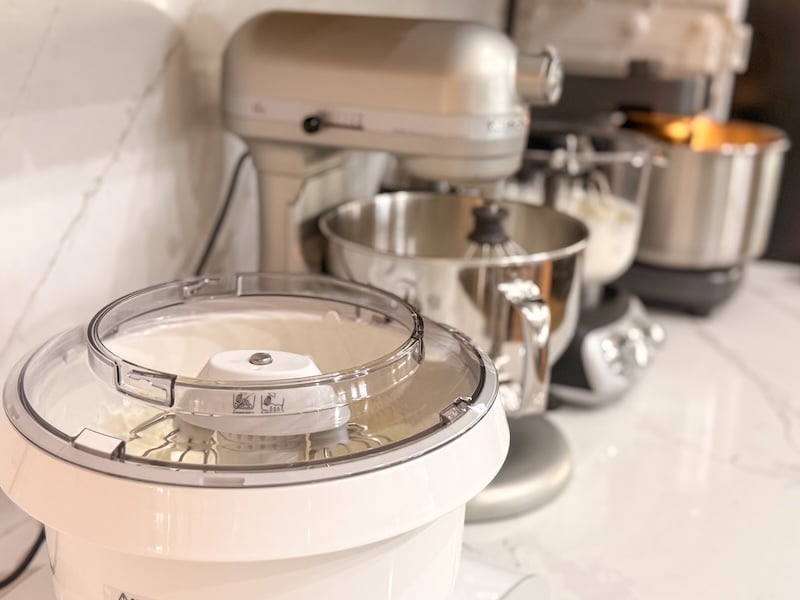
For the Ankarsrum, this meant getting out an entirely new bowl.
I then set each mixer to medium-high speed and whipped until we reached stiff peaks.
The Ankarsrum got there first – its narrower bowl design with two beaters ensures the mixture is whisked continuously, with no “dead” spots. It’s very efficient.
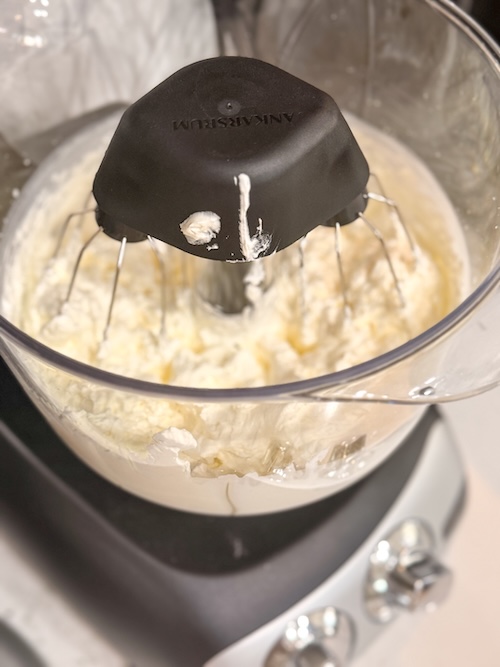
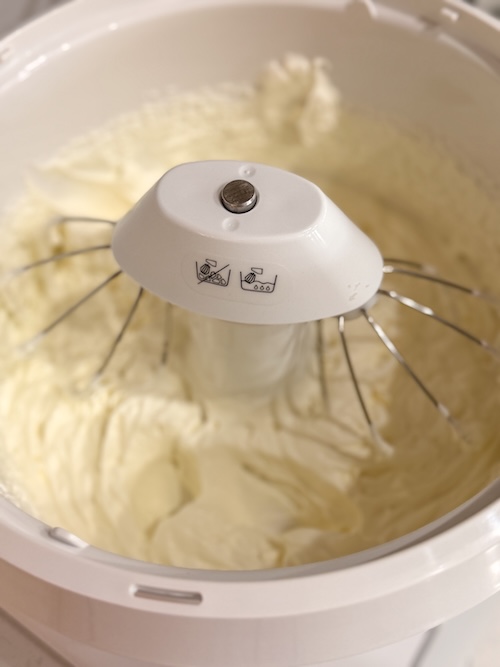
The Bosch followed very closely. It also has the double-whisk setup, though its bowl is slightly wider, which explains why it took a little longer to reach stiff peaks.
Next was the Ooni, which did surprise me – I thought it’d be dead last. It’s a single beater design, so we already know it’ll take longer than the Ankarsrum and the Bosch. However, the bowl spins as the beater does, which helped.
That said, it’s clear the Ooni isn’t designed to be a whisking machine. Half of the entire mixture is waiting to be whisked at any given time as it makes its revolution around and back.
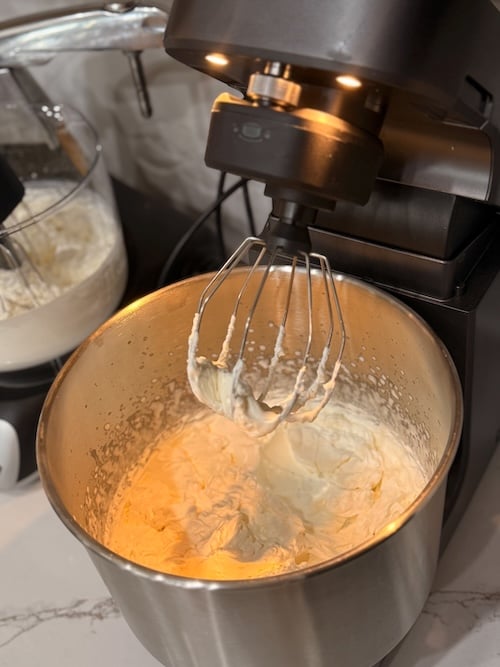
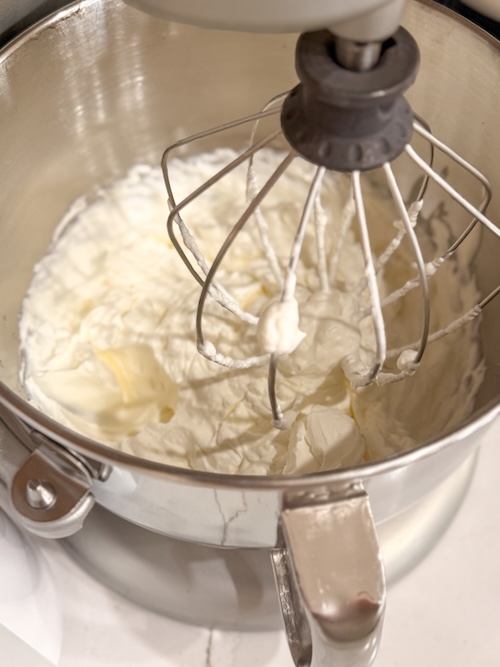
In last place was the KitchenAid. I honestly thought it’d do a little better than the Ooni, thanks to the slightly narrower bowl design and larger whisk. But alas, it did not.
Zacme Update: I later repeated the test with the Zacme using the same ingredient quantities and method. The cream reached stiff peaks in about one and a half minutes. After reviewing footage from the original test, I found that the Zacme’s time was roughly in line with the Ankarsrum’s — and perhaps a smidge faster.
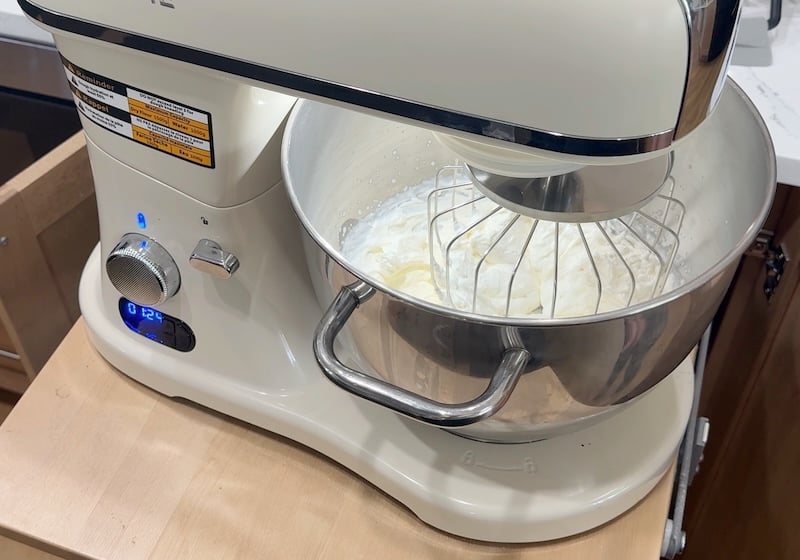
Even though it was tested separately, the Zacme delivered an impressive result!
None of these machines are bad at the job. Some just took longer.
Cookie Dough
TL;DR: All of these stand mixers handle cookie dough with ease.
I got a ton of requests to make cookie dough in each mixer to see how they do — specifically, the Ooni.
I didn’t do these side-by-side because, frankly, I cannot be trusted with five batches of cookies in my house (and have you seen the price of butter?!).
I’m only kidding.
The bottom line is I’ve made cookie dough in all of these machines. They’re all great! Zero complaints.
If you want to make cookie dough in any of these, you simply can’t go wrong.
Classic Sourdough Bread
TL;DR: Zacme Update: The biggest surprise was the Zacme — in two separate tests, the dough’s measured temperature decreased rather than increased. Bosch incorporated the ingredients fastest and left the cleanest bowl, with Zacme close behind in both categories. Ankarsrum barely heated the dough; Ooni heated it the most. Bosch, Ankarsrum, and Ooni reached a nice windowpane in about 12 minutes, and the Zacme in 12–18 minutes. The KitchenAid couldn’t incorporate ingredients without help, left the most dough bits on the sides, and took 38+ minutes to barely reach a weak windowpane.
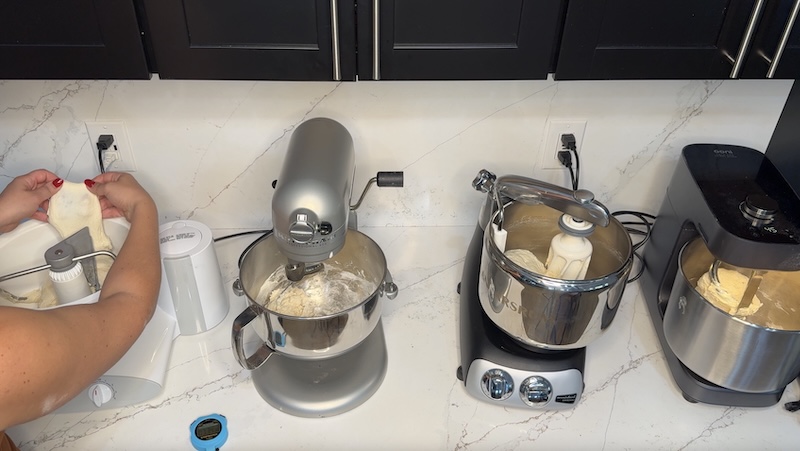
For my final side-by-side test of the original four mixers, I made a classic artisan sourdough bread dough at about 68% hydration.
For each dough, I used 540g flour, 360g water, 44g starter, and 10g salt. I used less starter than usual because I only had enough on hand to prepare the four doughs for the original comparison.
Zacme update: I later repeated the test with the Zacme using the same dough formula and method. I also repeated the temperature test because the initial result surprised me.
This was the most in-depth test I did, because I wanted to answer several questions:
- How long does it take each machine to incorporate all of the ingredients initially?
- Does the machine leave bits of dough on the sides of the bowl?
- How much does each machine affect the dough’s temperature?
- How long does it take to reach a windowpane?
I had my guesses based on my past experience with each machine, and some of them were wrong! I’m so, so glad I did this test.
Here’s what I found.
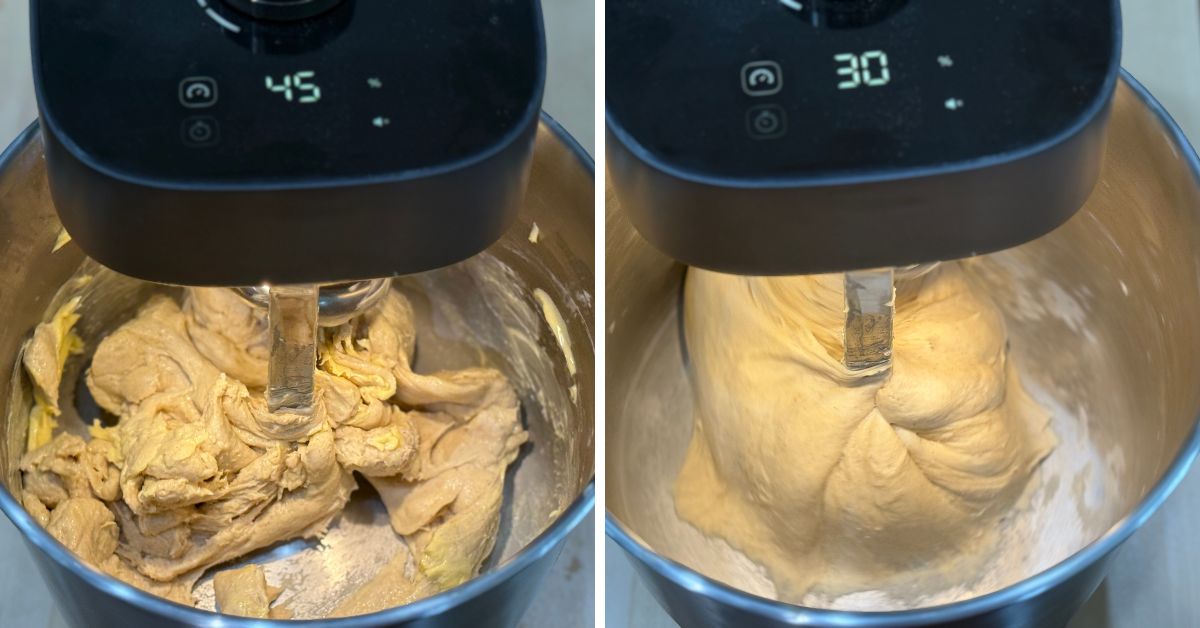
- The Bosch incorporated all of the ingredients the fastest – it was slapping around a dough ball within the first minute. Zacme update: The Zacme was close behind, forming a dough ball in about 1 1/2 minutes on speed 1. The KitchenAid never incorporated all of the ingredients on its own – at the 5-minute mark, I helped it with a spatula.
- The Bosch did the best at cleaning up all of the dough bits around the bowl. It was entirely clean after mixing. The Ankarsrum was almost as effective, followed closely by the Ooni. Zacme update: the Zacme also performed well, leaving only a small ring of dough around the center of the bowl. The KitchenAid came in last, with a much larger ring around the center of the entire bowl, where ingredients never got mixed in.
- The Ooni heated up the dough the most. The Ankarsrum hardly heated up the dough at all, no matter how long it mixed. Zacme update: Consider me perplexed — the dough’s measured temperature actually decreased in the Zacme. I thought the first result might be an error, but I got the same result when I repeated the test.
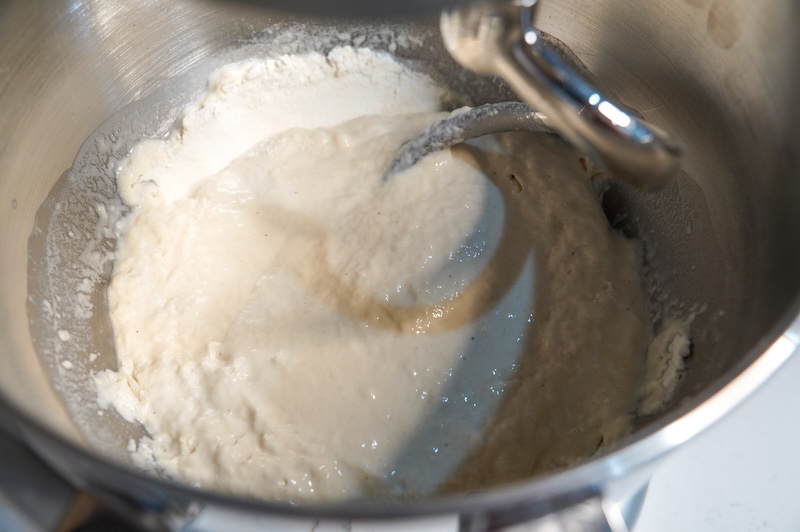
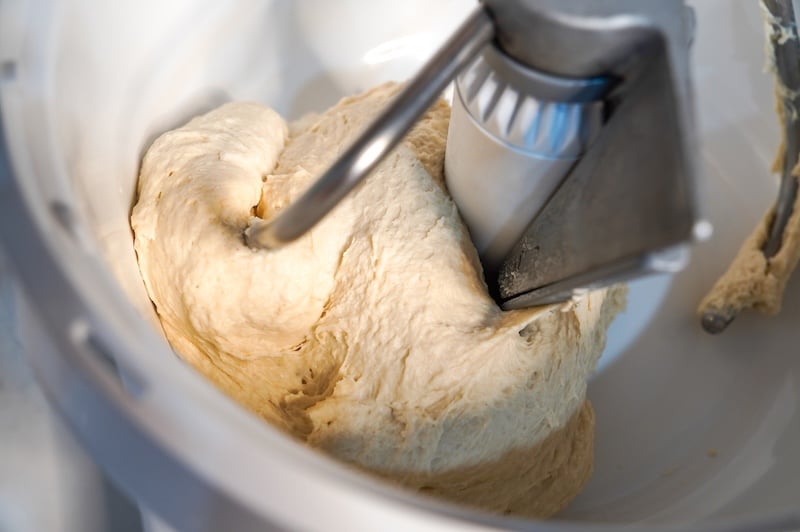
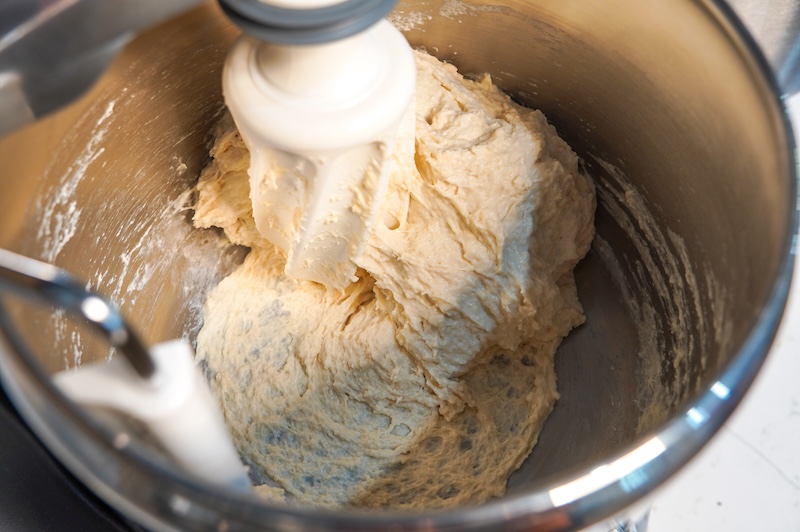
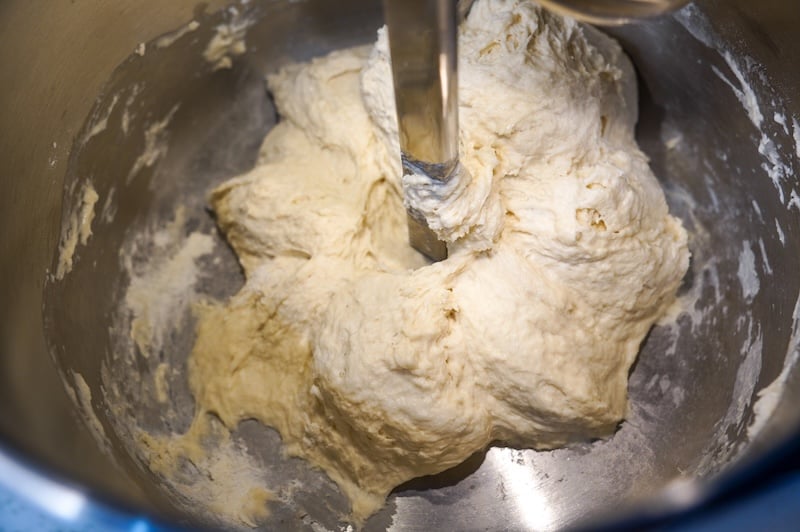
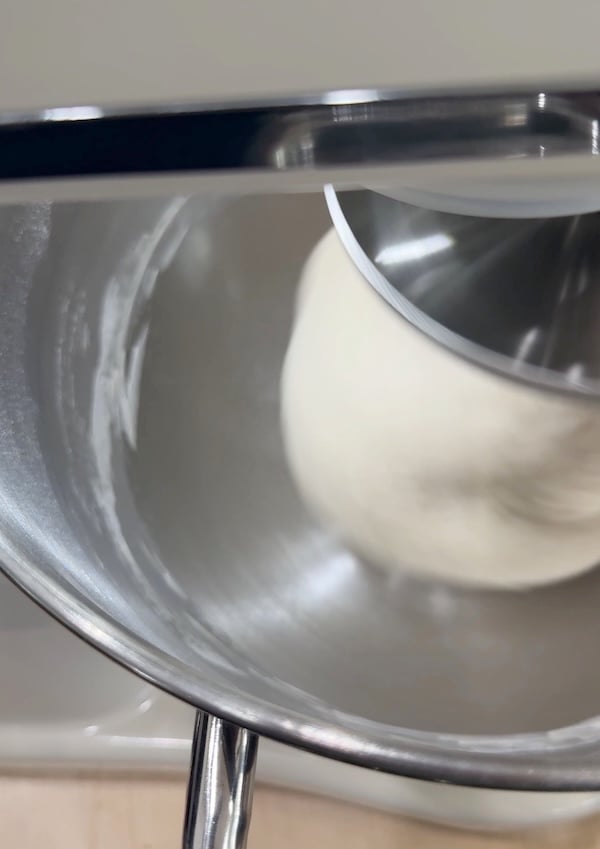
Note: The Bosch used to overheat my dough the most, to the point where it would affect the texture and consistency. I’ve found that simply not using the center piece of the lid resolves this problem. It allows the dough to breathe.
- The Ooni, Bosch, and Ankarsrum all achieved a nice windowpane within 12 minutes. Surprisingly, they weren’t too far apart. The Zacme was about 12 minutes to a weak windowpane and 18 minutes to a strong one. The KitchenAid, on the other hand? By the 38-minute mark, we barely had a weak windowpane. And that statement may be generous.

- The Ankarsrum required some adjustment mid-mix that the Ooni and Bosch did not. Specifically, a chunk of dough often got stuck behind the white scraper. Also, I needed to adjust the positioning of the dough roller after the dough came together into a cohesive ball.
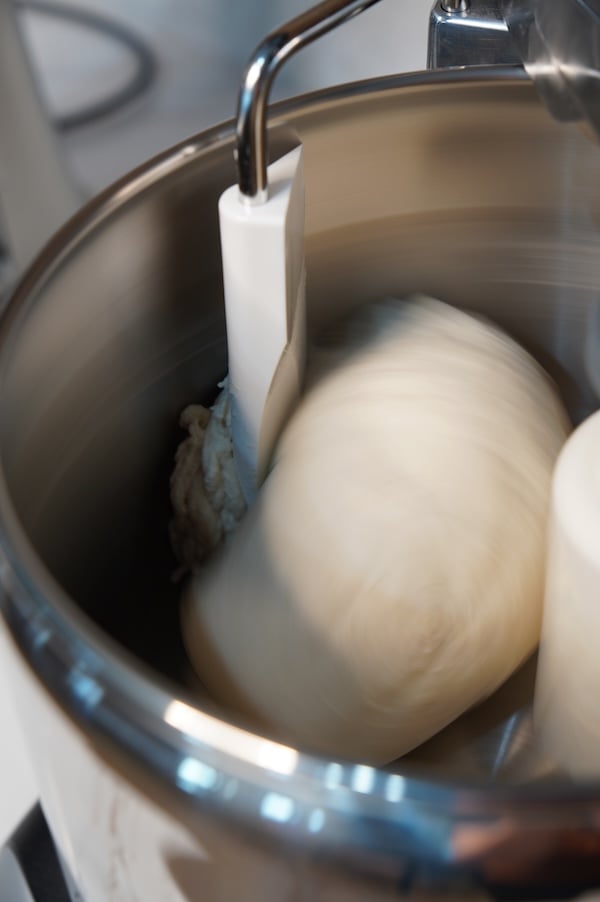
Honestly, the Bosch did a lot better than I remember. The Ankarsrum did, too. The Ooni showed some drawbacks that I hadn’t noticed prior to this test.
KitchenAid Bowl-Lift Stand Mixer Review
I’ve had my KitchenAid since 2018, so I’m well-versed in its great features and painfully familiar with its major drawbacks.
I have the 6-Quart Bowl-Lift Stand Mixer, with a 575W motor, which KitchenAid no longer manufactures. Their current comparable model is the 7 Quart Bowl-Lift, but it only has a 500W motor—a downgrade from my version.
But despite my exact machine having a 575W motor, it’s not that impressive. It may be beautiful, and it’s really good for most baking needs, but for doughs… especially stiffer ones? Forget about it. I can only imagine the newer model with a lower-wattage motor is even less impressive.
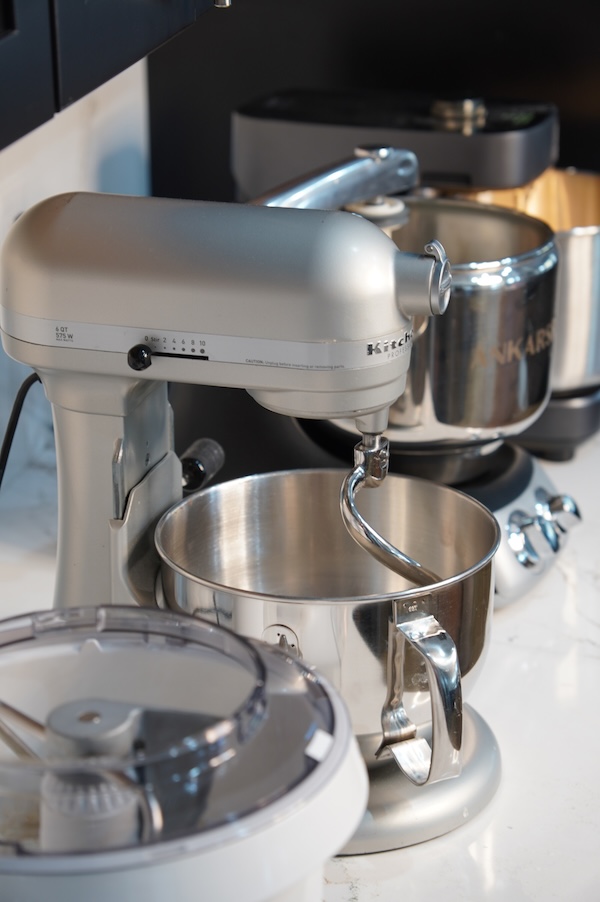
From what I’ve gathered, these machines used to be better-built, especially prior to the 1986 acquisition by Whirlpool. But lately, the quality has declined significantly.
There are plastic parts where there used to be metal and increasingly lower-quality electronic components. All of this has started tarnishing the reputation of what used to be a bulletproof mixer.
You’ll often hear of people having their KitchenAid for 30+ years, yet those who purchased recently report theirs dying in a matter of 3-5 years. Durability is a huge concern for new purchases. If you find a vintage one at a garage sale, snatch it up!
KitchenAid Bowl-Lift Pros
- Aesthetically, I think it’s one of the prettier stand mixers
- Lots of great attachments (the pasta set is one of my favorites!)
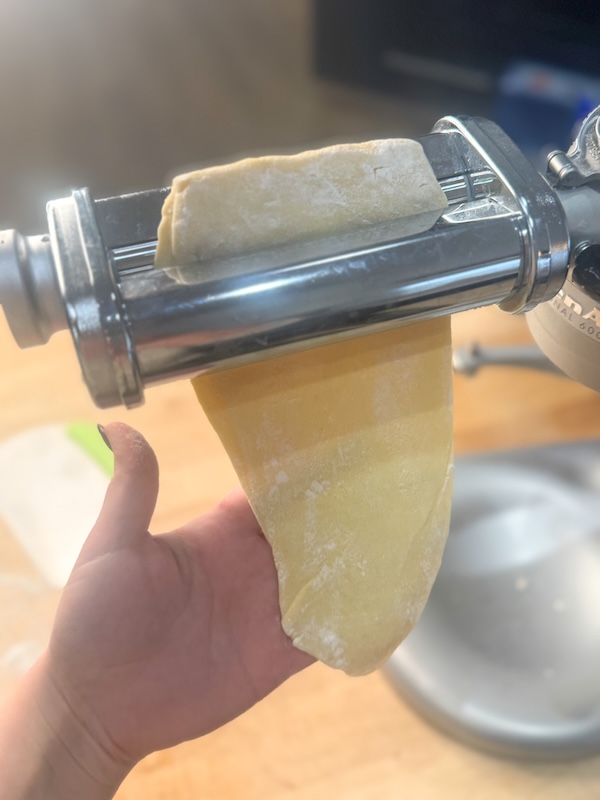
- The bowl is perfect for mixing and proofing, so one less bowl to clean
- Handles “lighter” bread doughs, cookies, whipped cream, and frosting with ease
- One of the fastest to assemble and disassemble
- Does not overheat the dough much
- Easy to clean (except for a few nooks and crannies, but the bowl and attachments are a breeze)
- This is the machine (at least the brand) that most bakers have, making it easier to compare mixing times and results with others.
- Often on sale on Amazon – I routinely see it listed for $100 less than the KitchenAid site, and it’s always part of Prime Day and holiday deals.
KitchenAid Bowl-Lift Cons
- The dough hook is not effective at initially mixing your dough ingredients together. With other machines, you turn it on and walk away – within a few minutes, you have a dough ball. With the KitchenAid? I find I have to come in and help it along.
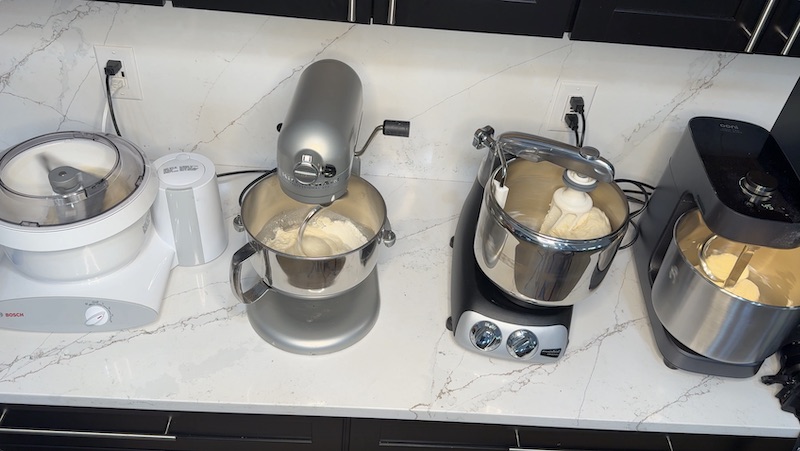
- Very ineffective at strengthening dough – it routinely takes 20-30+ minutes to achieve a windowpane with one test taking 38+ minutes and still never really reaching that strong windowpane. The other machines in this review can do that in less than 15 minutes.
- The machine tends to “walk” off the counter at higher speeds, so KitchenAid recommends keeping doughs at speed 2—much slower than what the other mixers can handle.
- Anything beyond speed 3 with lower hydration doughs? The machine struggles, stalls out, and can even start smoking. Keeping it at speed 2 solves this, but most bakers don’t know that’s what KitchenAid recommends—which is exactly why burned-out motors are so common.
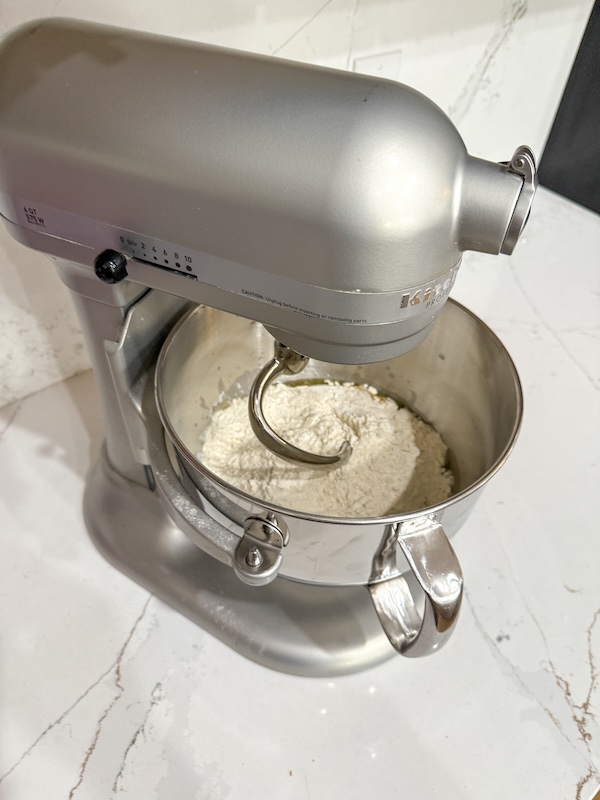
- Can’t fit as many loaves as other mixers
- Dough often climbs up the machine while it’s mixing, wrapping around the top of the dough hook and getting stuck in crevices
- It can be dangerous, especially around kids – if they get their hands anywhere in the bowl area, the machine would probably break their fingers.
- Some of the attachments that come with the machine are not dishwasher-safe and thus end up oxidizing and forming a grayish residue if you don’t hand-wash and towel-dry immediately. You have to purchase alternate attachments if you don’t want this problem.
Other Bakers’ Feedback on KitchenAid Mixers
The KitchenAid situation is a little complicated… vintage models are built like tanks, while newer ones struggle and break down more often.
“I have a Kitchenaid that was my mother-in-law’s, so it’s probably about 30 to 35 years old. It works well and develops gluten on low speed. Takes a while (20-25 minutes), but doesn’t overheat. Might be built better than the newer models.” –Jan Knight Delancey
However, the quality decline in recent models is now officially recognized by organizations like America’s Test Kitchen:
“America’s Test Kitchen recently downgraded the KitchenAid mixer, because newer models are not handling the dough function well (overheating, must only run it at a very low speed for a couple of minutes at a time, etc). I’m glad I have an old model that was built better (1990s). They now recommend the Ankarsrum.” –Michelle Oss-Payne
The overheating problem seems to be a major issue with newer models.
“I finally upgraded my old Farberware to a KA. I can’t afford anything more fancy and I’m bummed because it took almost an hour to get a window pane this week simply because the KA gets so hot that I have to let it rest for like 10 mins to run it for 3 mins. Really annoying and disappointing.” –Kerri Hygh
Another baker had a similar struggle:
“My KA was struggling with the Wonder Copycat dough! Nearly walked off the counter several times. It heated up so much with the first 20 min run at medium speed! We survived it, but I (or my daughter helping) had to babysit it the whole time. And it was more like the weak windowpane when I called it.” –Michelle Rohrbacher
And this kind of frustration was echoed across many, many comments I read on my stand mixer update posts:
“Kitchenaid is ABSOLUTE GARBAGE NOW!!! Old ones were amazing now they are just junk.” –Becky Ethington
Some bakers have found success with the higher-end models, though:
“I upgraded my KA from the old ‘Classic’ tilt head (250 watt) to the Pro 600 (590 watt – Costco Version) and what a difference! No struggles at all!” –Cindy Franklin Stephenson
Not everyone has issues with lighter batches, though:
“I have a 6 quart KitchenAid, not the lift. I can do two loaves easily with no stress on my mixer. And I’ve been doing this every couple of days now for quite a while.” –Cindi Sullivan
The attachment dilemma is real for many KitchenAid owners (and me!!):
“I feel kind of married to my KitchenAid because I’ve invested in all the add on attachments for pasta, ice cream, grinding/milling, slicing, etc. However, every time I make a double batch of bagels I cringe thinking that’ll be the day I burn out my motor. I definitely don’t have room for multiple large mixers so I would want to know which one is the best for handling it all.” –Lisa Beyerstein Sadler
And to quickly point Lisa in the right direction, I’d suggest the Ankarsrum. You can jump ahead to that section to learn more about it.
KitchenAid Bowl-Lift Final Thoughts
For the price, I’d expect this machine to be a bit tougher, and it just isn’t. But even despite its flaws, I often find myself favoring it for its simplicity. It’s fast to assemble and easy to clean.

Let me be blunt: if you’re primarily a bread baker, the KitchenAid Bowl-Lift is not worth the money. It takes forever to barely develop a windowpane, while the others do it in less than 15 minutes. If you already own one, it’s fine for lighter tasks.
How to make a KitchenAid work for you: I find the best way to mix dough in a KitchenAid is mixing in stages. Instead of developing the dough for 15 minutes straight, mix for a few minutes, cover the bowl for 20 minutes or so, and come back to mix again. Repeat until you achieve the desired strength.
You may also find that, at some point, switching to stretch and folds is helpful. At the very least, your stand mixer can incorporate the ingredients initially, and you can strengthen it further by hand.
But if you’re shopping for a new mixer? Skip it.
Bosch Universal Plus Stand Mixer Review
The Bosch stand mixer has been all over my social media feed, and some of my favorite sourdough accounts swear by it. I’d been eyeing this machine for a while and was so grateful when the brand offered to send me one to try.
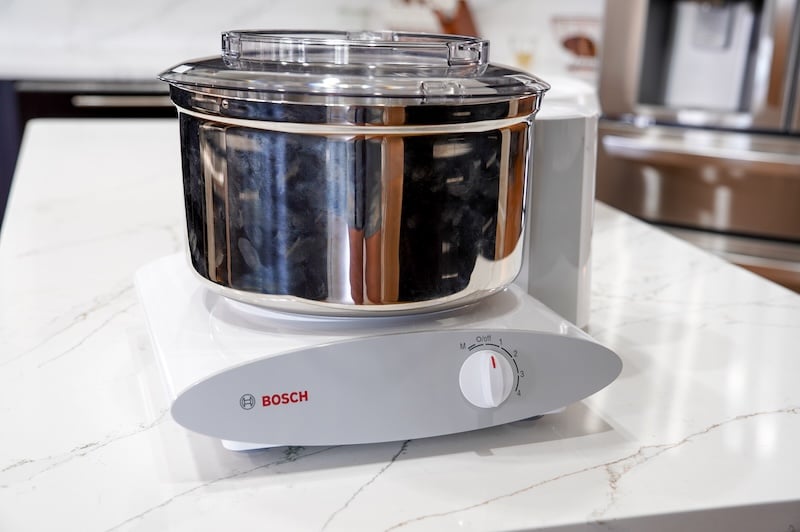
While the machine is incredibly powerful, which is a considerable step up from my KitchenAid, it has its own quirks.
Here’s my main issue with it: When I thought about getting out this stand mixer, it felt like a big project. I hadn’t experienced that feeling with my KitchenAid, ever. In fact, I often couldn’t wait to use that thing to give my arms a break!
But with the Bosch, several times, I decided to just hand mix because I thought it’d be faster and easier. Not what you want from an expensive machine!
Here’s a video of my Bosch stand mixer unboxing:

Bosch Universal Plus Pros
- Most affordable price at ~$500, and there are often seasonal discounts and promo codes (mine is TSG20)
- Extremely powerful motor – doesn’t stall out, heat up, smoke, or dance off the counter with stiff doughs

- Durable/lasts generations (feedback I’ve gotten from many other bakers)
- Lots of attachment options
- The whisk attachment is top tier – we get this machine out every time we make some kind of dip, such as pimento cheese dip. It’s just so fast and effective, and the bowl is large enough that it can contain a big batch without it flying everywhere.
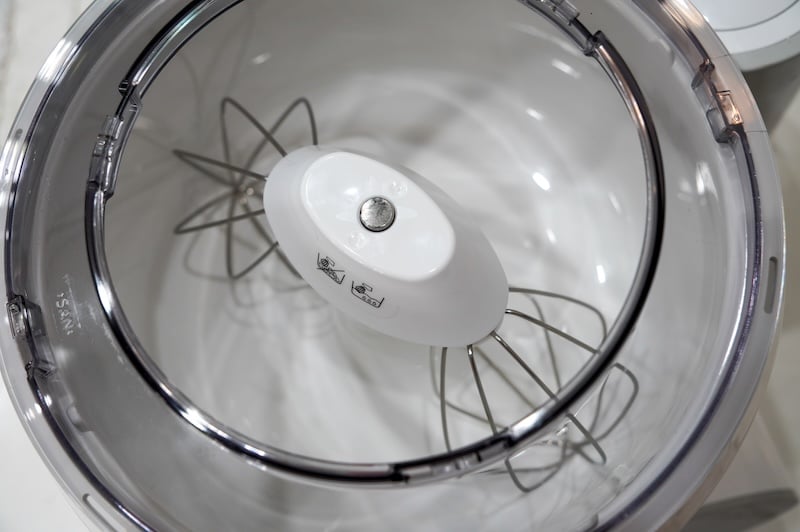
- Fits more dough than any other machine in this review – I’ve seen bakers fit up to 6 loaves by getting creative (check out Maria from Leaf & Loaf Co), though I’d say 4 would be most comfortable. The brand says it can fit up to 14 pounds.
- It whips the dough around so well that it rarely leaves any dough bits clinging to the side of the bowl
- The cord can be pushed in or pulled out for tidy storage
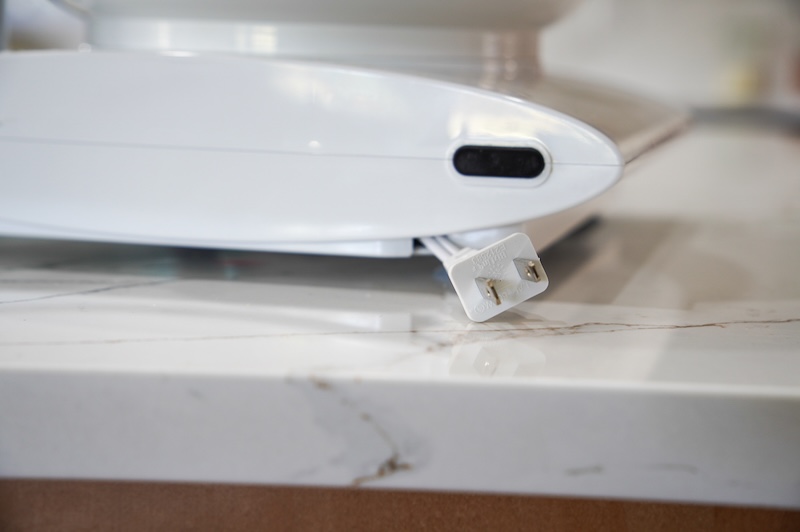
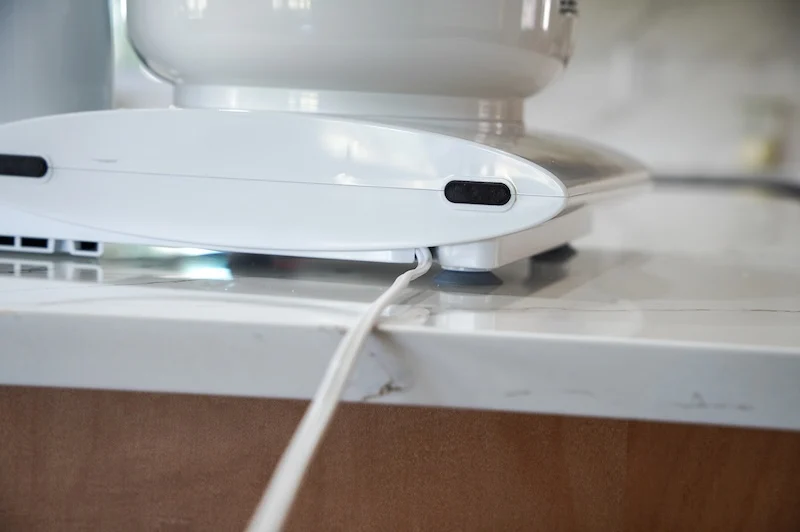
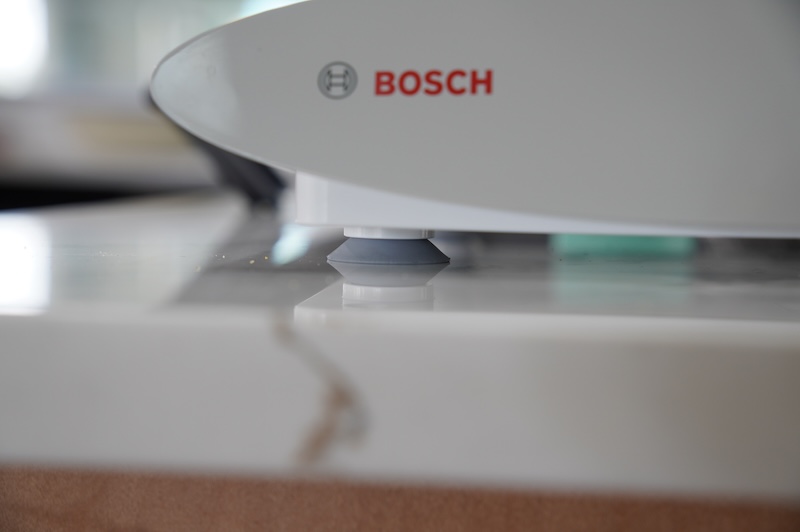
- The machine is super lightweight, making it ideal for those who need to store it away and bring it out often – the suction cups on the bottom prevent the machine from moving around.
- It incorporates all of your ingredients the fastest out of all the stand mixers in this review – even its lowest speed (speed 1) is pretty fast, which could be viewed as a con by some…
Bosch Universal Plus Cons
- The lowest speed (speed 1) is pretty fast – faster than the lowest speed on all of my other mixers. That has its benefits, but it also has limitations, such as not allowing you to mix the dough gently when needed.
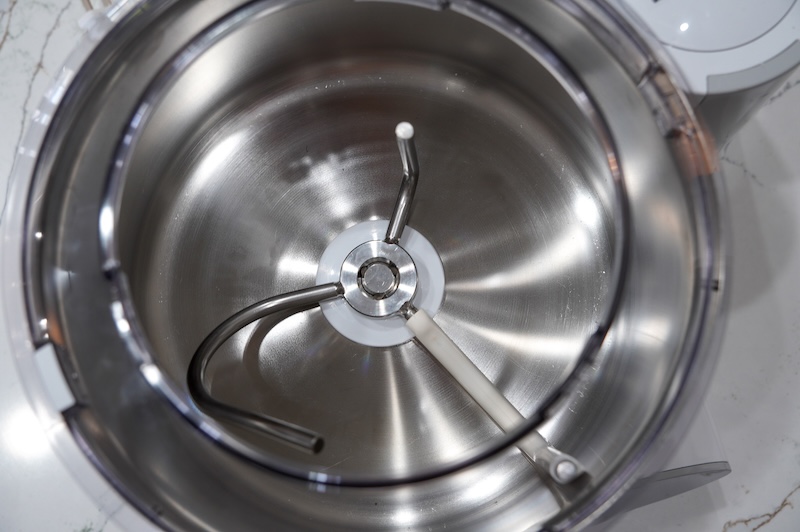
- Difficult/awkward to get the dough out of the bowl, thanks to the center column
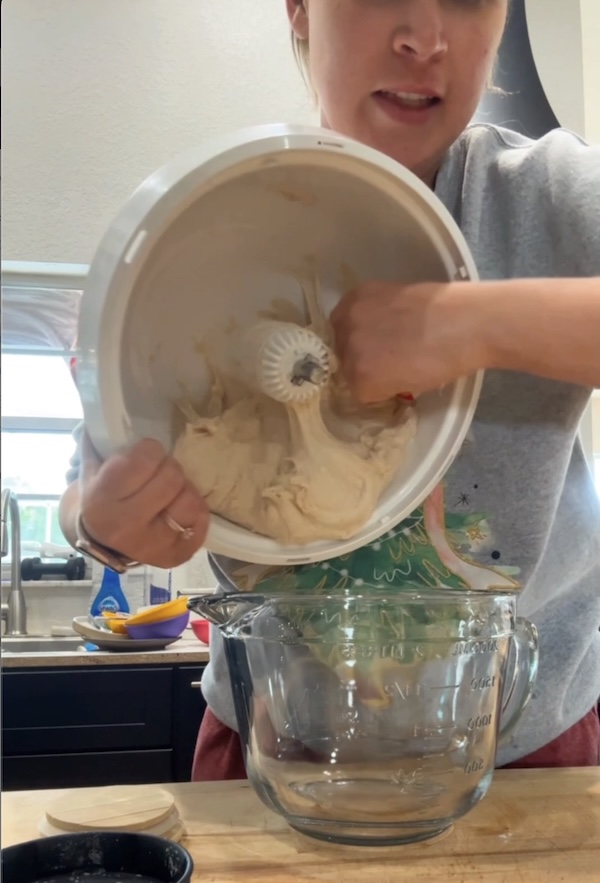
- Heats up dough quite a bit, but I found that removing the center lid resolves this issue (it allows the dough to breathe and helps any generated steam or heat dissipate quickly)
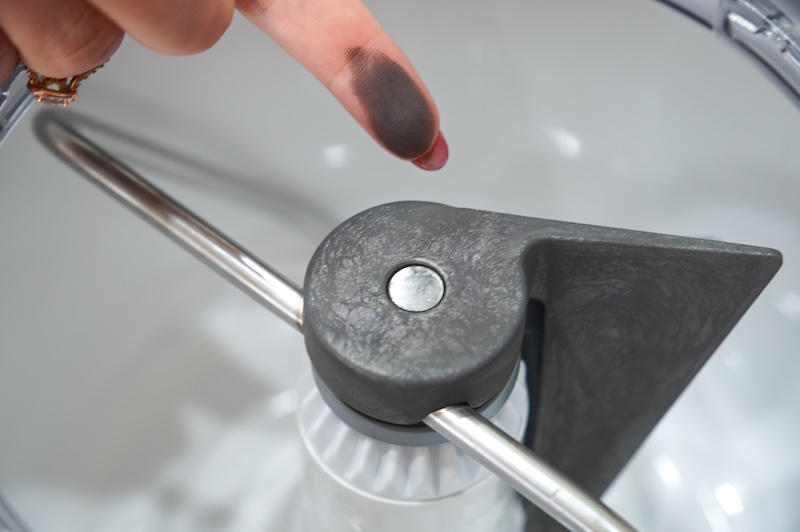
- The dough hook it comes with isn’t dishwasher safe (the metal part at the top oxidizes and forms a grayish residue if you do not hand-wash and towel-dry immediately)
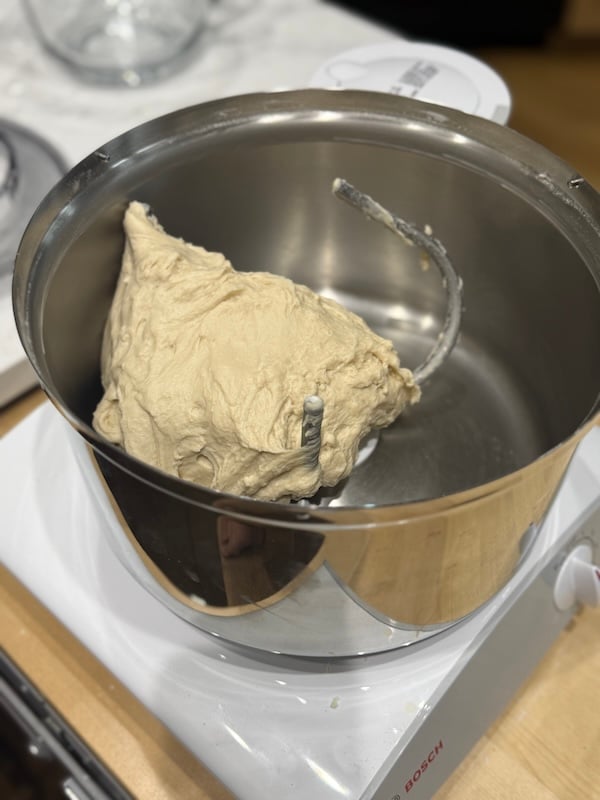
- Not ideal to proof in because of the donut in the center, so you’ll have to transfer the dough to a second bowl
- The con about this bowl being the largest of this bunch is it takes up half of the bottom rack on my dishwasher – you can hand wash it, of course (you probably should), but you’ll rarely find me doing so
- I bought the stainless steel bottom drive bowl to try (an extra $250) and didn’t love it – it doesn’t feel secure since it doesn’t lock in, and getting the dough hook locked in place is a struggle, especially if you already put dough ingredients in and it comes off (what a mess)
- The bowl it comes with is plastic – I don’t mind, but a lot of people hate that and want stainless steel instead, which is an upgrade ($100 upgrade for the stainless steel center column or $250 for the stainless steel bottom drive version)
Other Bakers’ Feedback on the Bosch Universal Plus
The Bosch is a machine that people either love or hate.
Many bakers who switched from KitchenAid never looked back:
“I have been team Kitchen Aid for many years…….easily 20+. Went to a friend’s house and she used a Bosch. She let me try it and I was hooked!” –Dru Prater
Baker Michelle Claflin says it’s “a workhorse that mixes circles around KA.”
The durability is definitely a stand-out feature. So many bakers told me their Bosch machines are 30+ years old and still running strong:
“My Bosh mixer is a grand total of 48 years old and still going strong. I used it with the dough hook yesterday to make 4 loaves of whole wheat bread.” –Deborah Heilingbrunner
For high-volume bakers, the capacity is a game-changer:
“I have three KitchenAids, but I do quadruple batches of sugar cookie dough in my Bosch. I can have dough for eight to 10 dozen ready in about 10 minutes. My KitchenAids can’t handle that.” –Stefanie Olsen Nordberg
Professional bakers agree – Ulla Clayborne says that she “ran [her] bakery business on this machine, working every week about 60h.”
The perceived noise level also gets praise:
“The Bosch is so much quieter than the Kitchen Aid.” —Angela Vierstra
However, some had serious issues. The plastic components are a common complaint:
“The plastic beaters snap off in your cookie dough. Be careful with this. Loved mine until I lost plastic pieces in my food.” –Susanne Center
Another issue that came up a few times: overworking the dough.
“I’ve had experience with the Bosch overworking the dough so I have to be careful with that (one time my loaves came out like pancakes!).” –Michelle Shabot-Maleh
A few bakers experienced premature failures, like Bradley White, who said his Bosch went out within a week. Another baker reported they tossed their Bosch after 6 months because it stopped working.
To be fair: Bosch has a 3-year warranty for motor and transmission and a 1-year warranty for parts and accessories.
The mixing performance also divided users. While most praise its power, Jenny Hughes-Rowe shares a different experience:
“I hate my Bosch mixer. My bread dough does okay, but it bogs down. For mixing cakes or cookie dough, it makes a horrible scraping noise. The company will not respond to messages.”
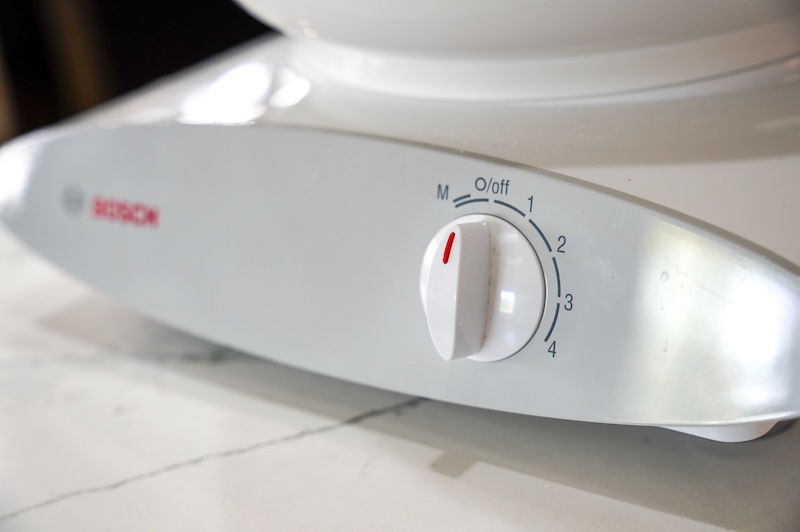
Bosch Universal Plus Final Thoughts
When I first got the Bosch, I assumed it would solve all my KitchenAid frustrations and become my new go-to mixer. And honestly? It didn’t quite live up to that expectation – at least not for the way I bake.
But here’s the thing: there’s a reason microbakers all over the internet swear by this machine. It’s the most affordable of the premium mixers, has the largest bowl capacity, and that motor is genuinely powerful.
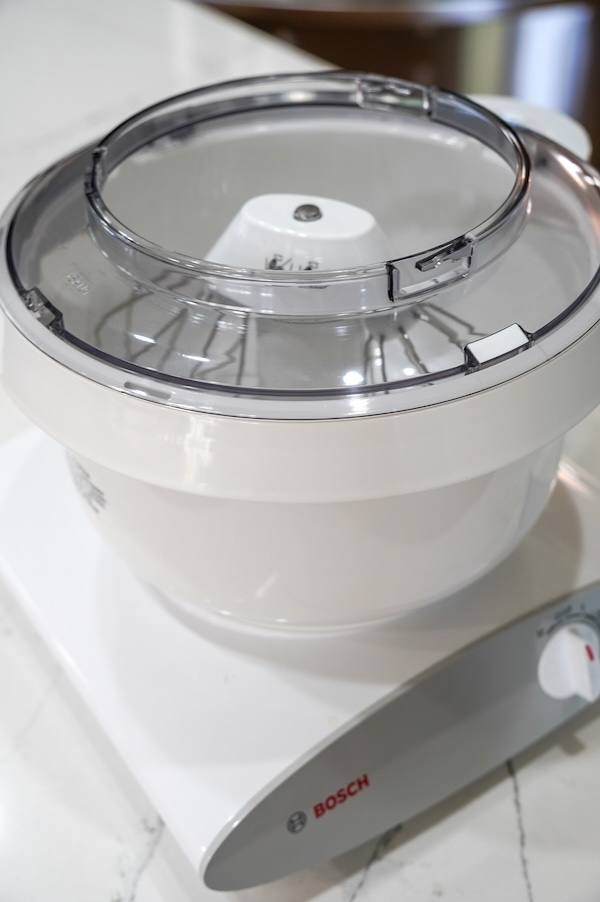
It brings dough together faster than anything else I tested, and the whisk attachment is phenomenal.
The design quirks I mentioned—the center post, the plastic bowl, the dough heating unless you take off the center lid—are real frustrations. But if you’re mixing multiple batches of enriched doughs, sandwich breads, or anything that benefits from quick, powerful mixing, the Bosch makes a lot of sense.
It’s just not my personal favorite for the doughs I tend to make most often.
Ooni Halo Pro Stand Mixer Review
The Ooni Halo Pro stand mixer is in a league of its own. Oh my gosh.
Unlike the other two mixers, the more I use it, the more I love it.
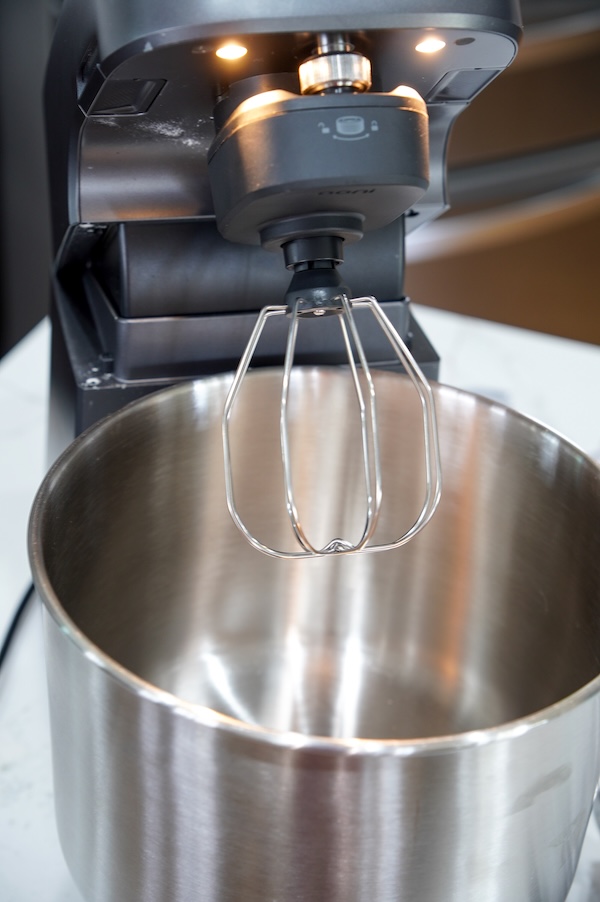
In fact, I find myself wanting to use it for recipes that I traditionally hand-mix. It’s incredibly easy to use, and it genuinely saves me time and effort, even when considering the setup and cleanup.
THAT’S what I want from a stand mixer.
Here’s a video of the unboxing:

Ooni Halo Pro Pros
- Extremely strong motor that doesn’t slow, stall, or smoke when mixing stiff doughs.
Zacme update: The Zacme actually has a higher wattage than the Ooni Halo Pro — 800W compared with 650W. However, wattage alone doesn’t tell the whole story. Based on my experience using both mixers, I’d still give the Ooni a slight edge in overall mixing performance.
- Timer feature that stops the machine when it hits 00:00
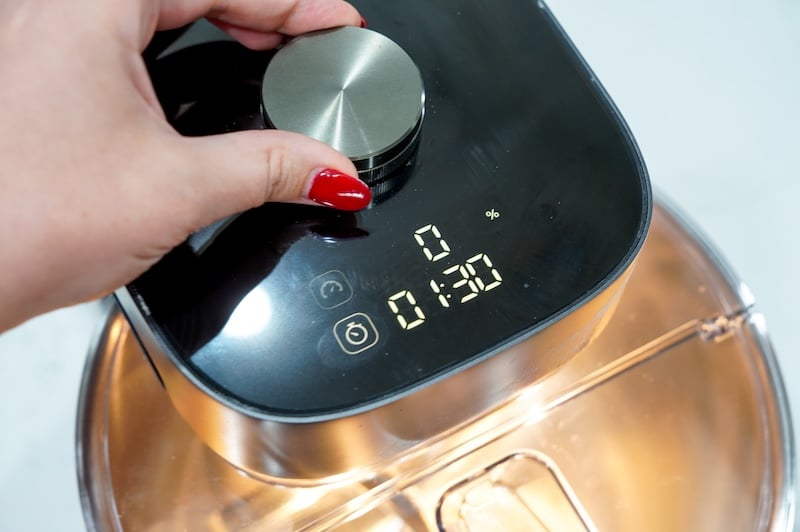
- 20 speeds for ultimate control (you can also switch the speed reading from % to RPMs – I prefer the % reading, but there is another option!)
- Light in the stand mixer bowl for better visibility
- Dough hook is positioned in a way that doesn’t put small, wandering hands at risk of immediately being hurt (NOT saying your kids should put their hands in this while it’s on – just saying it’s safer than the KitchenAid)
- The center pole helps with gluten development and stops the dough from riding up the machine – this is a feature typically found in huge commercial mixers, but we get it in a home version, which is just incredible
- So much attention to detail with this machine – for example, there are two levers on each side to lift the top, but you only need to engage one, which leaves your other hand free
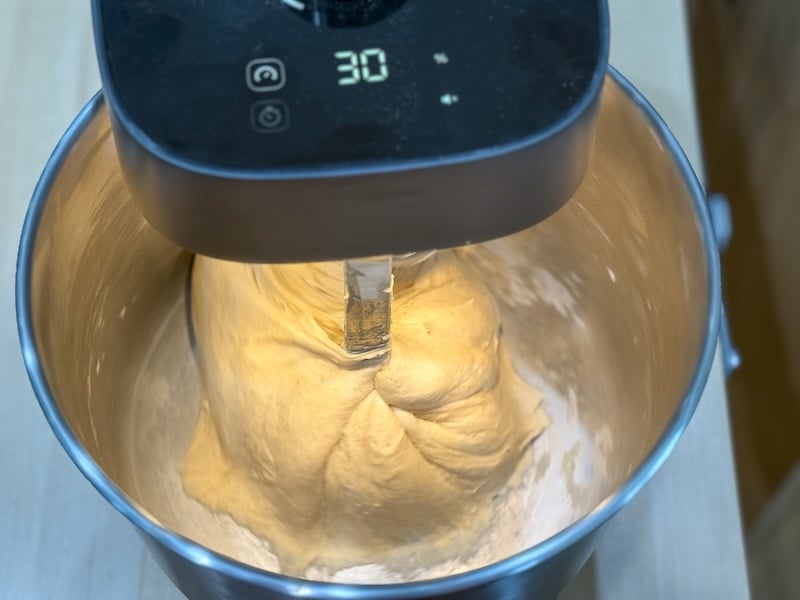
- Heavy machine, which ensures it doesn’t move or “walk” across the counter during mixing
- Fan automatically turns on to cool down the motor when it gets too hot
- Achieves a windowpane in record time (usually 7-12 minutes)
- Ooni offers 15% off for military members, veterans, students, and other eligible professions like healthcare workers, emergency services, and teachers. Must provide proof in the form of an ID badge, Blue Light card, employment contract, or student ID.
Ooni Halo Pro Cons
- Only 3 attachments – not an extremely versatile machine, but it’s also brand new to the market (I wonder if Ooni will create more attachments over time?)
- With small batches of dough, the dough does tend to walk up the dough hook over time, but it doesn’t get stuck in any crevices, making it less of a pain compared to the KitchenAid.
- A pricey machine, though it is the same price as the Bosch if you get the bottom-drive bowl as well as the Ankarsrum
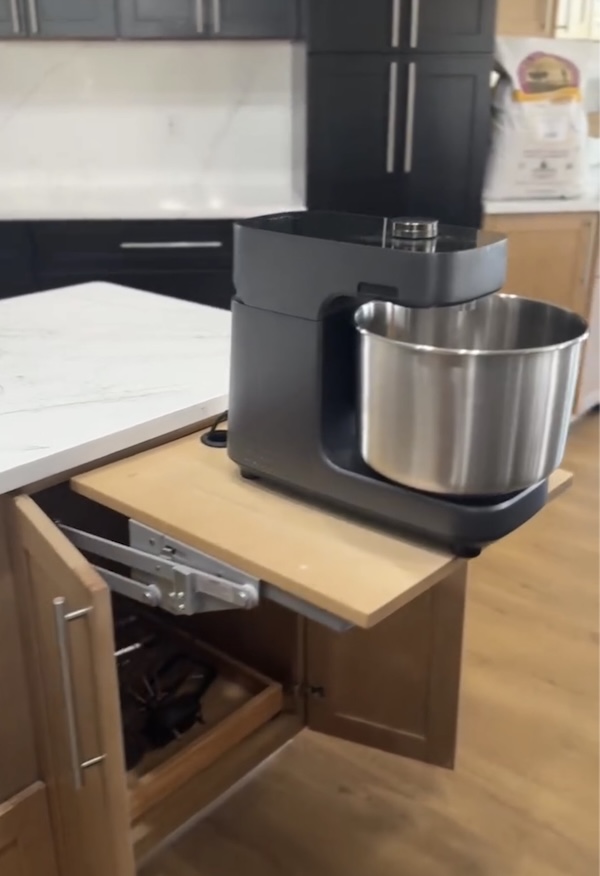
- One of the heaviest machines, which makes getting it out more of a pain – this isn’t a dealbreaker for me because I invested in a stand mixer cabinet in my kitchen, so I never have to manually lift it. But before I had that? I wouldn’t love how heavy this is.
Other Bakers’ Thoughts on the Ooni Halo Pro
The Ooni has very quickly gained some superfans, especially among bakers who struggled with their previous mixers.
“I have KA and Ooni, between those two, Ooni every time! I constantly struggled making bagels and cinnamon rolls with the KA, and it was so time-consuming. Now it’s just a breeze and no frustration!” –Deborah Ruby
The unique design—with a stationary center pole and rotating bowl—catches people’s attention:
“I’m obsessed with the videos of you using the Ooni. Something about that stationary bar with the beater working around it looks like it makes it mix so well.” –Jennifer Henderson Turner
Even established sourdough experts are endorsing it.
“Maurizio Leo recently posted about using the Ooni vs KA and he highly recommended the Ooni.” –Carla Semola.
For microbakers making large batches, the Ooni is a game-changer:
“I absolutely LOVE it for my sourdough bread products!! Efficient machine. Uses less time than the Ank for larger batches 4-5 x’s the recipes. The dough is much nicer in feel and baked product. BUT – I am keeping the Ank for my pastries and cakes. So, in final – for me – I love both my Ank and my Ooni equally – but for different uses.” –Kathryn Campbell, microbakery owner
However, the Ooni is brand new to the market, so we don’t have any long-term durability feedback. One YouTube reviewer mentioned her Ooni started making noise after 60 days, though the company replaced it under warranty with great customer service.
The biggest hesitation for most bakers? The price tag and limited attachments compared to more versatile mixers, like the others in this review.

Ooni Halo Pro Final Thoughts
The Ooni stand mixer is just so dang effective. It performs really well without any of those annoying quirks:
- No need to stand there and watch, because it has a timer AND the machine is so sturdy that it doesn’t move during mixing.
- No need to panic if a little one wants to watch – they could even stick their hand in the machine and it won’t immediately rip off their hand.
- No need to dump dough into a separate bowl for fermentation – it can stay right in this one.
- No need to hand-wash anything – it’s all dishwasher safe.
- No need to even turn the light on because the machine has one that points directly at the dough!
While I do miss some of my KitchenAid attachments (especially the pasta ones), the Ooni Halo Pro has quickly become my stand mixer of choice as a baker who focuses on doughs.
It has taken its seat in our stand mixer cabinet, and I don’t see it going anywhere anytime soon.
Ankarsrum Original Stand Mixer Review
The Ankarsrum has been on my wishlist for a long time, so when Pleasant Hill Grain offered to send me one, I was so stoked! I’ve been putting it to the test, and while I do want more time with the mixer, I’m loving it so far.
It has a lot of the same great features that the Ooni has, but it’s definitely unique and has some important considerations.
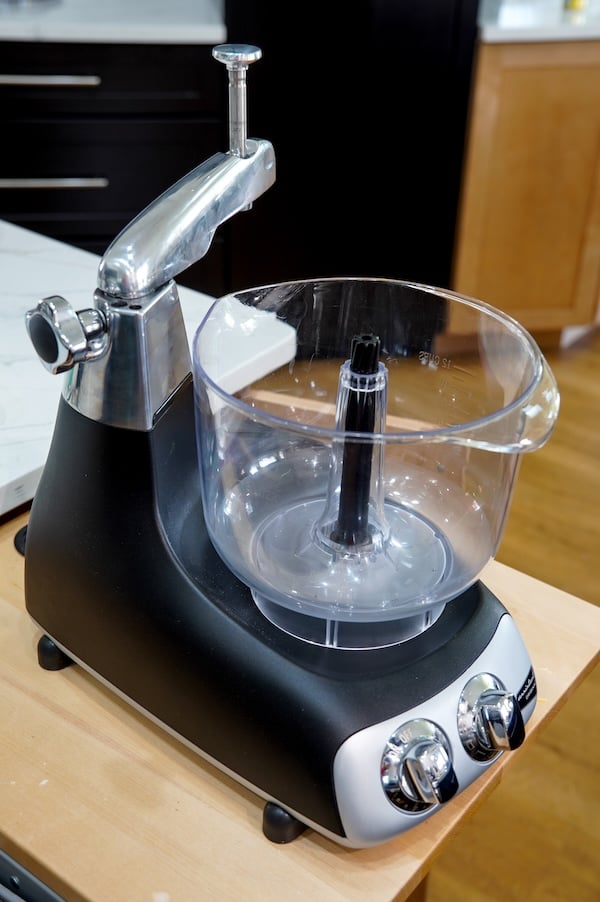
Ankarsrum Pros
- Extremely established and respected brand name – produced and assembled by hand in Sweden since 1940
- Best warranty of all the machines in this review (7 years!!)
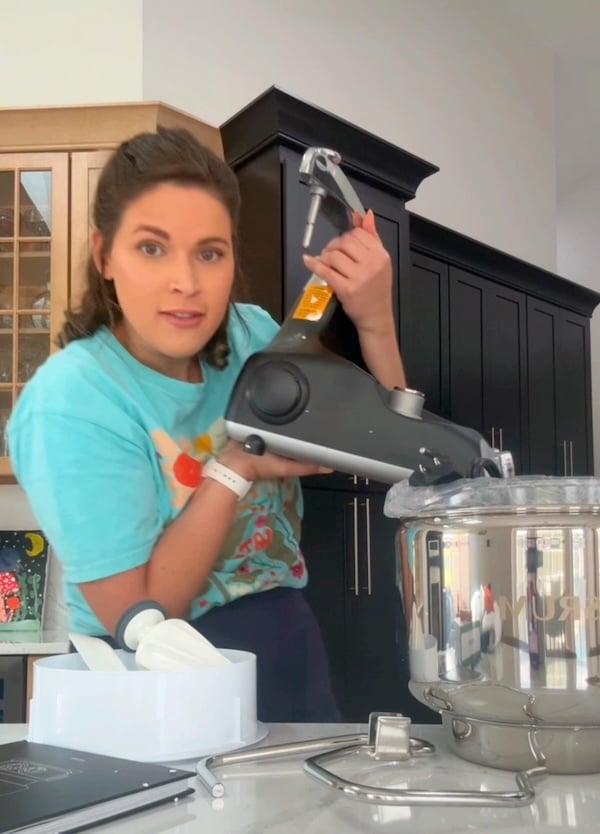
- Tons of attachment options, from pasta extruders to a blender
- Dough doesn’t overheat during mixing – it kept the dough the coolest of all the machines here, which is super exciting. You can essentially mix your dough for as long as you want without overworking it (thanks to the gentle dough roller) and without overheating it.
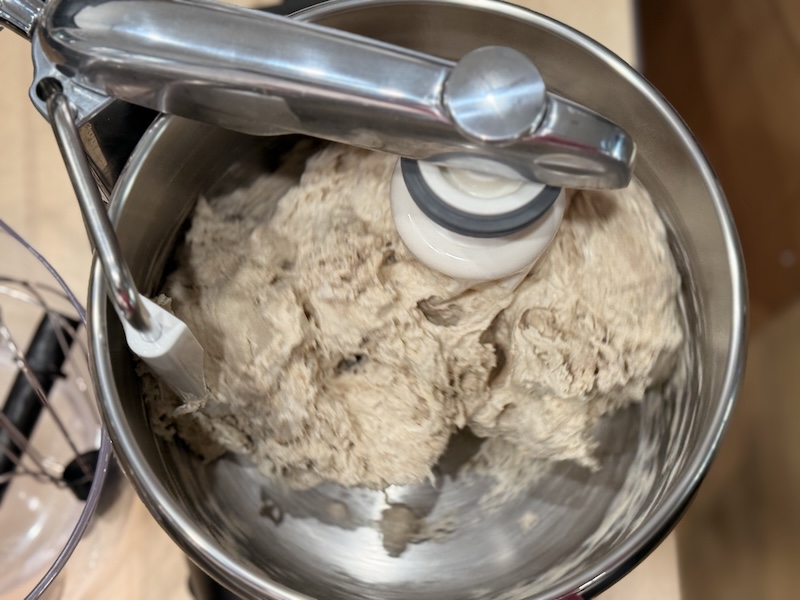
- Super unique dough roller option, which is very gentle on the dough and is meant to mimic hand-kneading – it does have a dough hook option as well
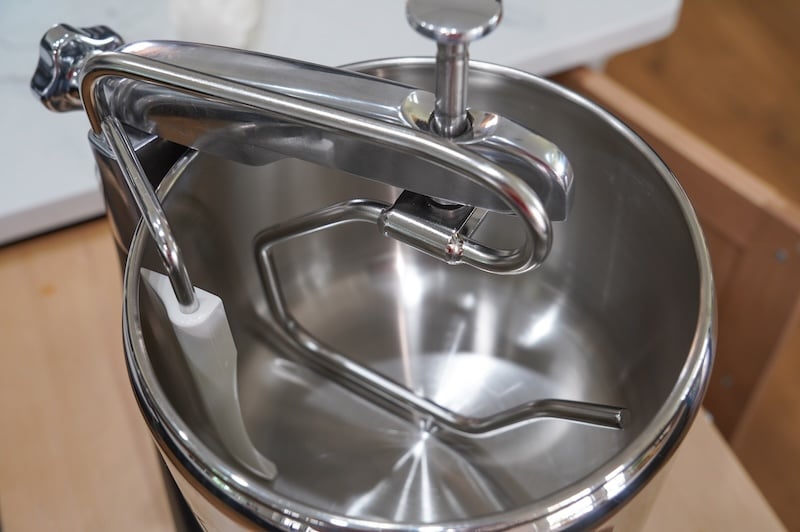
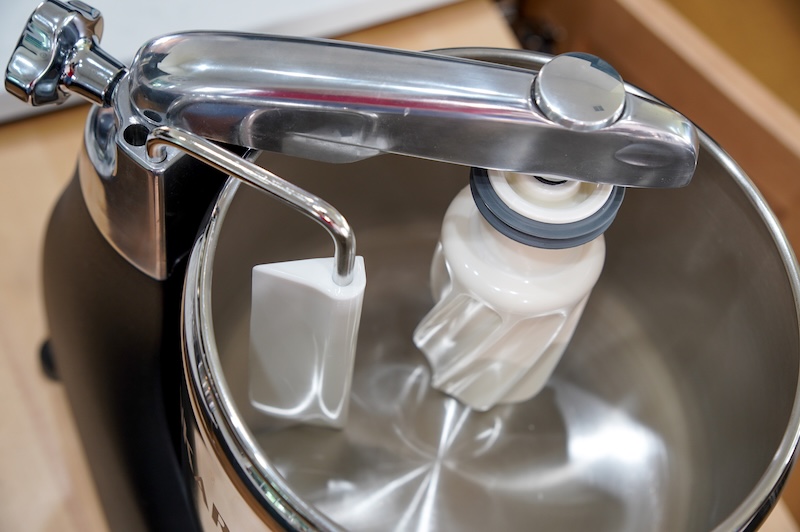
- Beautiful machine – this could be stored on your counter and look great; not an eyesore
- Easy to assemble and disassemble (once you get the hang of it)
- Parts are dishwasher-safe
- Stand mixer bowl comes with a lid, which is awesome for proofing the dough in that same bowl
- Save 5% on the Ankarsrum mixer if you’re a military or first responder personnel
Ankarsrum Cons
- I often find I have to “help” the machine during the mixing, adjusting the arm placement or moving the scraping handle to pick up pieces of dough that aren’t getting mixed in
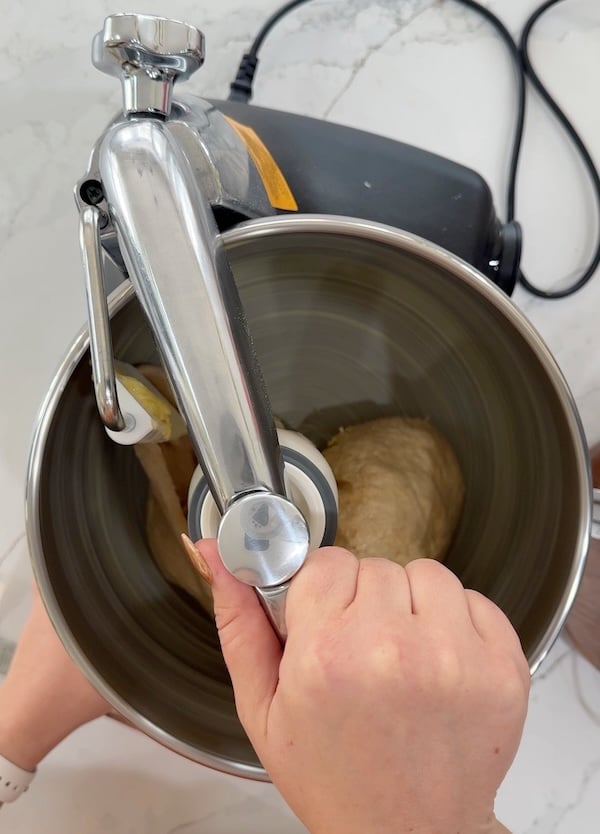
- Learning where the arm should be placed for proper kneading is a bit of a learning curve – it’s not hard to use this machine, but to master it and use it as intended? It does take some research and effort.
Tip from Ankarsrum: “When using the dough roller, remember not to lock the arm straight away but to leave the dough roller to rotate along the inner edge of the bowl. Only when the dough becomes so firm that it climbs up the inside of the bowl should you lock the roller 2-4 cm away from the edge of the bowl.”
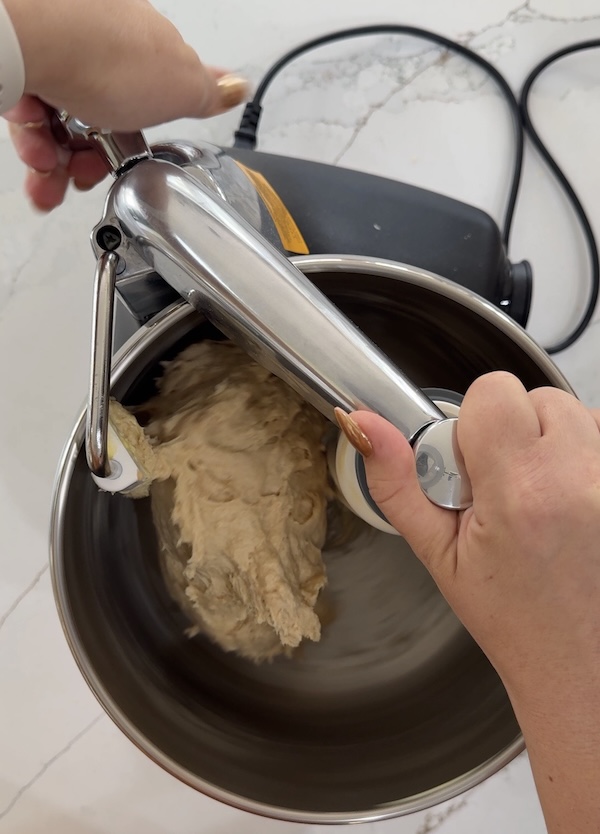
- With the dough roller, it takes a little longer for the dough to reach a windowpane than with the Ooni or Bosch, though not too much.
- Not the biggest fan of the dials for speed and setting a timer – it’s not easy to tell exactly where I’ve set it compared to something like the Ooni, which is clear as day
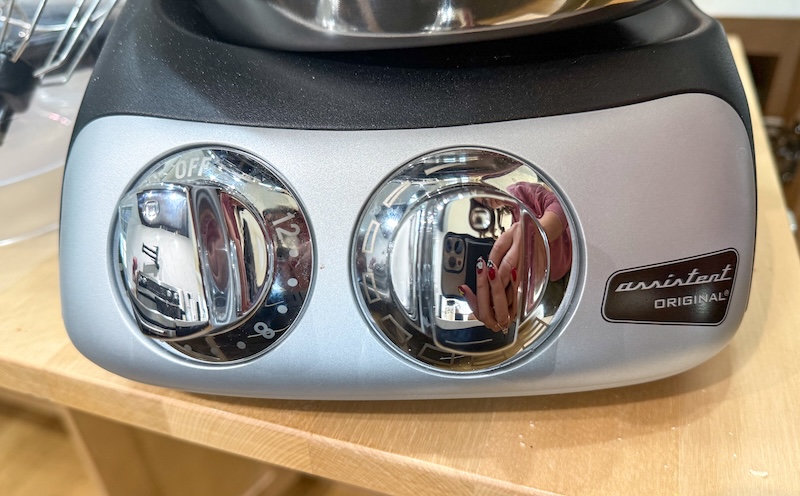
- Expensive machine, though it’s basically the same price as the Bosch with the bottom drive bowl or the Ooni
- No promotions or discounts – I asked and was told no (for very valid reasons, though – zero hard feelings from me on this)
- The attachments are expensive, too, so even though this machine is very versatile, you’re going to pay for it.
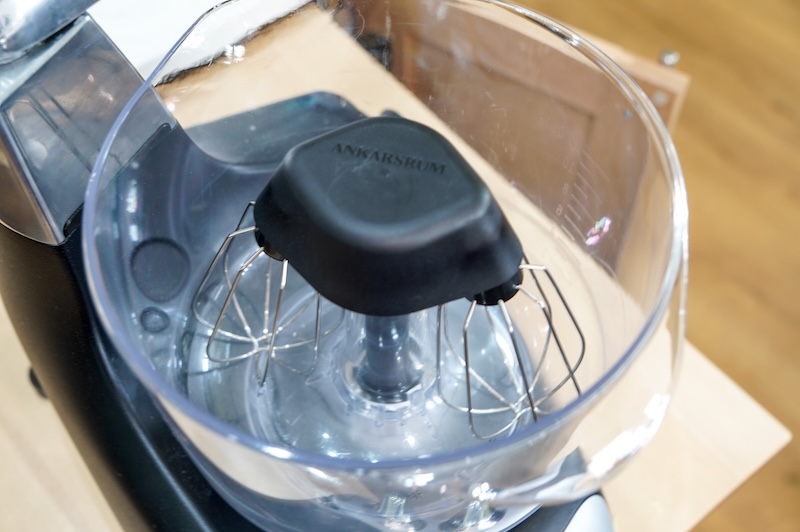
- If you want to use the whisk or beater attachments, you have to get out an entirely different bowl (not a big deal, but it is more to store)
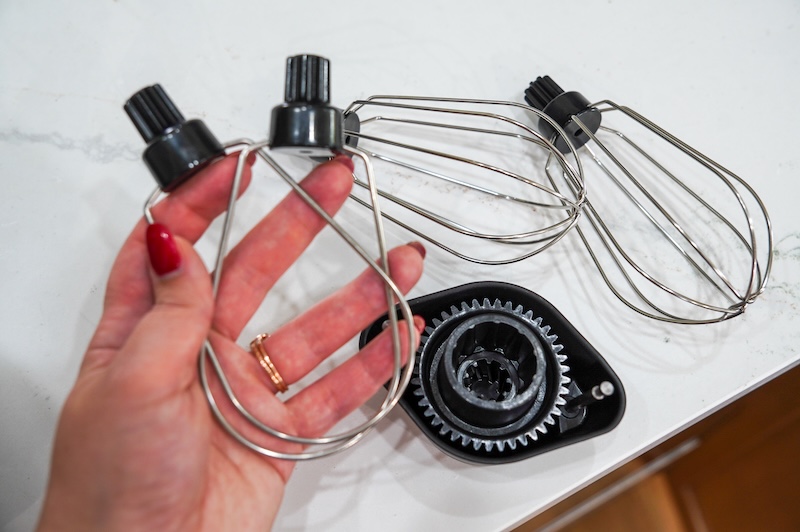
Other Bakers’ Thoughts on the Ankarsrum
The Ankarsrum has a devoted following, with many bakers praising its legendary durability and gentle dough handling.
“I have had my original version of the ‘Ank’ for 30 years – mine is the Electrolux Assistent. Same machine. Still is the workhorse of my kitchen. My 100% wheat bread comes out light and airy, with the most delicate crumb, because of the kneading power and design of the arm and roller. This Swedish beast is the absolute best, and will outlive all of us!” –Linda Langley
Many bakers switched from KitchenAid after theirs died or struggled with bread dough:
“I’ve had my Ank for almost 5 years now and absolutely love it! I actually loved my KitchenAid too, but couldn’t afford to replace it every couple of years. The Ank can handle everything from whipped cream to bagels. It never hesitates or strains with stiff doughs or large batches. That thing is a tank, and I definitely expect it to outlive me!” –Rebecca Purvis
The versatility is impressive, especially with all the attachments available:
“Using my Ankarsrum and the grater attachment to shred 150g of cheddar in seconds for the Guinness cheddar bread. Ankarsrum is great for literally everything (cookies, cakes, buttercream, meringues, bread dough) and the accessories are so good. The moment I started making more bread and going into sourdough, the kitchen aid was really terrible. The Ankarsrum really is a powerhouse. It can whip up egg whites to stiff peaks in 3 minutes!!!” –Yuning Quek
It handles both small and large quantities well:
“My Ank will mix very small amounts as well as very large amounts. My KA Pro was too large to whip a couple of eggs. They just spun around the bowl.” –Cheryl Bieker Frey
The temperature control is a standout feature, especially for sourdough bakers:
“I am always amazed when I am able to get to a windowpane without having the dough get warm or tough.” –Nancee Ariagno
Real-world capacity feedback:
“I love my Ankarsrum especially for bread. I do find that making 4 loaves is about how far I want to push it. I tried 5 one time and it was definitely harder.” –Cheryl Clark
Important usage tip: There’s some confusion about whether to use the roller or the hook for sourdough.
“When I purchased my Ank, I actually called their customer service number because I was having issues producing the amount of dough they said could be done. Interestingly enough, they told me that for sourdough specifically, I should be using the dough ‘hook’ and scraper, NOT the roller and scraper. I’ve made dozens of doughs now doing just that and it is a delight. Also, make sure you add liquids first.” –Jessica Flesch Evans
Dough roller vs. hook clarification: Ankarsrum recommends using the dough roller for small batches (like single loaves), high-hydration doughs, recipes with lots of butter, and gluten-free baking, as it mimics traditional hand kneading. (The dough roller is a “fist” that kneads the dough, and the dough knife is the “hand” that folds it during kneading.) The dough hook, on the other hand, is better suited for larger batches when making multiple loaves at once, as it kneads by pulling the dough rather than pressing it.
However, the learning curve is real and frequently mentioned.
“I love my Ankarsrum. There was a learning curve from 50 years of KA use, but I don’t regret the purchase.” –Tiffany Van Hoosan
Some bakers found the hands-on nature frustrating:
“I have the Ank. I do love the attachments but hate that I have to stand over it to make sure the dough is scraped off the sides of the bowl. It takes a super long time to get a windowpane. I would love to get an Ooni.” –Julie Ramsey Rowe
A few other bakers were ultimately disappointed:
“I exchanged the KA with the Ank and hate it. Wish I could sell it and get the Ooni.” –Andrea Little-Gustafson
“I’ve had my Anksarum for at least 10 years. I like it, but can’t say I like it more than my big Kitchen Aid.” —Sally Spencer Neckvatal
Ankarsrum Final Thoughts
Honestly, on paper, I think the Ankarsrum is probably the winner for its quality, durability, versatility, and effectiveness.
BUT in real life, I find myself reaching for other mixers, mainly because I don’t want to stand there and help the machine by making adjustments while it’s mixing.
I want to start the machine and walk away to do dishes, laundry, answer emails, whatever! With the Ankarsrum, I have not yet found a way to do that.
This is simply my personal experience. There are many bakers who love the Ankarsrum and would not trade it for the world. I do think it’s a great machine, and I’m excited to keep using it and cementing my opinions.
At the end of the day, it just has quirks that leave me reaching for others. But I cannot overstate how fantastic this machine is, and I have no hesitation in highly recommending it.

Why I Recommend Pleasant Hill Grain Over Buying Direct
If you’re ready to purchase an Ankarsrum, I would buy it from Pleasant Hill Grain rather than directly from the manufacturer. (The 5% military or first responder personnel also works there!)
Here’s why: Ankarsrum excels at what they do best—manufacturing exceptional mixers. But Pleasant Hill Grain specializes in customer service, and that’s where they truly shine.
Pleasant Hill Grain has a team of 11 highly trained people (compared to Ankarsrum’s single service rep) who actually use the products they sell. They’re also deeply invested in building long-term customer relationships since they carry hundreds of kitchen products—not just mixers.
This means they’ll go above and beyond to help you, often exceeding what the manufacturer would do directly. They want you as a lifelong customer, and it shows in their 20,000+ overwhelmingly positive reviews.
When you’re investing in an $800 mixer, having that level of support matters.
Zacme Stand Mixer Review
Enough bakers recommended the Zacme that I had to give it a try. And after about six months of consistent use, it’s still the stand mixer I reach for and recommend most often.
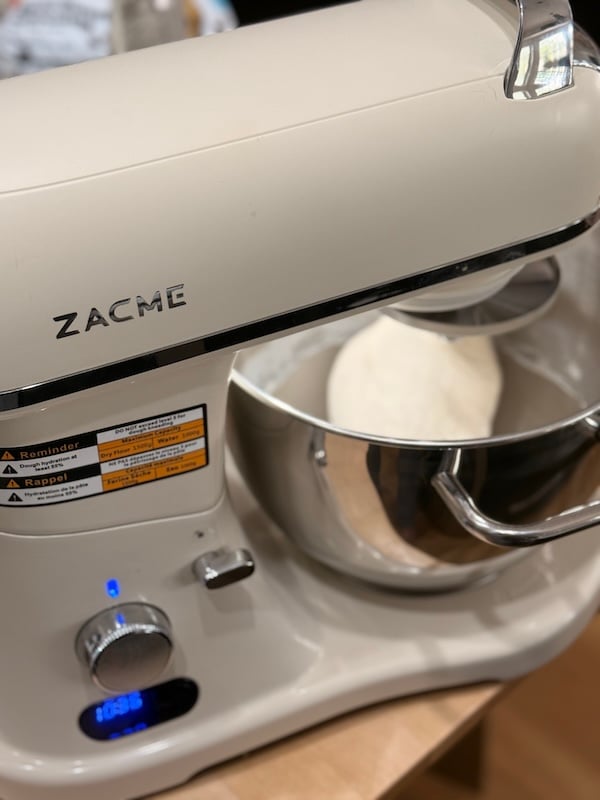
The Zacme is such a good value for the money. It performs right alongside mixers that cost hundreds of dollars more, like the Ooni Halo Pro, yet it regularly goes on sale for about $385 ($115 off).
It’s not perfect (I’ll get to that below), but I honestly think Zacme has created one of the best-value stand mixers on the market for sourdough bakers.
Read my in-depth review of the Zacme Stand Mixer here: Is the Zacme Stand Mixer Worth It? A Sourdough Baker’s Honest Review
Zacme Stand Mixer Pros
- Exceptionally quiet — easily the quietest stand mixer I have ever tried.
- One of the most stable tilt-head stand mixers I’ve tested. It doesn’t rock or walk across the counter. The only time I’ve seen even a bit of movement is when I’m mixing very stiff doughs, such as bagel dough, or especially large batches. Keeping it at speed 1 prevents that movement for me.
- It has a built-in timer with a pause function, which is really convenient. If you need to scrape down the bowl, add inclusions, or step away for a minute, the timer keeps track of your total mixing time.
- Interior bowl light — a small but helpful feature that makes it easier to monitor the dough while mixing.
- Automatic cooling fan that kicks on almost immediately to help keep the motor cool and prevent overheating. Unlike some mixers that wait until the motor starts heating up, the Zacme starts cooling right away.
- Large 8.4-quart stainless steel bowl — comfortably fits up to three standard artisan loaves, though many bakers report mixing 4 or even 5 at a time, for what it’s worth. They also make a 7-quart version, which is sufficient for smaller batches, although several bakers have said they later wished they had chosen the larger version.
- Sturdy included attachments: The attachments don’t feel cheap or flimsy. Each has a guard at the top that helps prevent dough from climbing, so you don’t have to keep stopping the mixer to push it back down.
- Powerful 800W DC motor — this mixer has excellent torque and handles even stiff doughs well.
- 3 optional attachment (sold separately), including a pasta roller, meat grinder, and slicer/shredder. This makes the Zacme much more versatile than the pricier Ooni Halo Pro, which doesn’t currently offer any optional attachments.
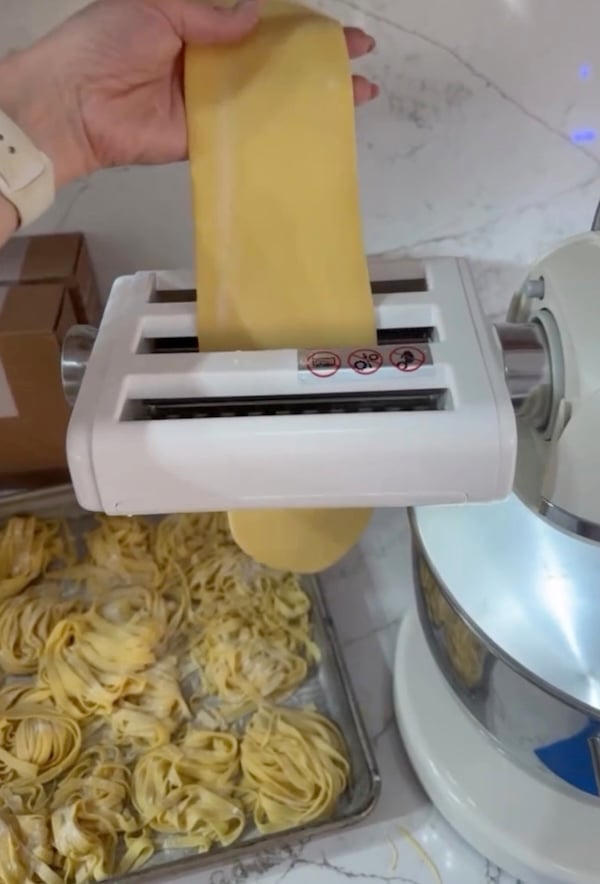
- Zacme has reportedly been very responsive when customers encounter issues, which is reassuring for a newer brand.
- Outstanding value. It performs alongside mixers that cost hundreds of dollars more and, in my opinion, significantly outperforms the KitchenAid Bowl-Lift. Its retail price is right at $500, and it regularly goes on flash sale for around $385.
Zacme Stand Mixer Cons
- The bowl can be stubborn to remove after long mixing periods. Heat and friction can make the seal super tight. Sometimes you really have to brace the mixer while twisting the bowl loose — or wait for it to cool before removing the bowl. Several bakers have suggested wiping the base with oil to solve this problem.
- The attachments may need a quick height adjustment before first use; mine did.
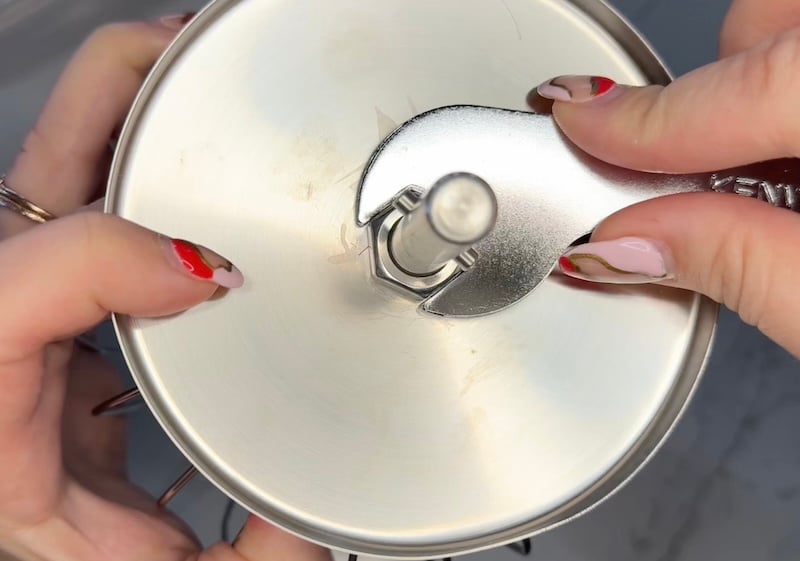
- The included flat beater doesn’t scrape the sides of the bowl — I recommend buying the silicone flex-edge beater separately so it reaches the bowl’s edge.
- The attachment guards have a ledge that can catch flour and other dry ingredients. A smoother design might have prevented this.
- Large footprint – helpful for stability, but the mixer takes up considerable counter or cabinet space and is heavy to lift and move.
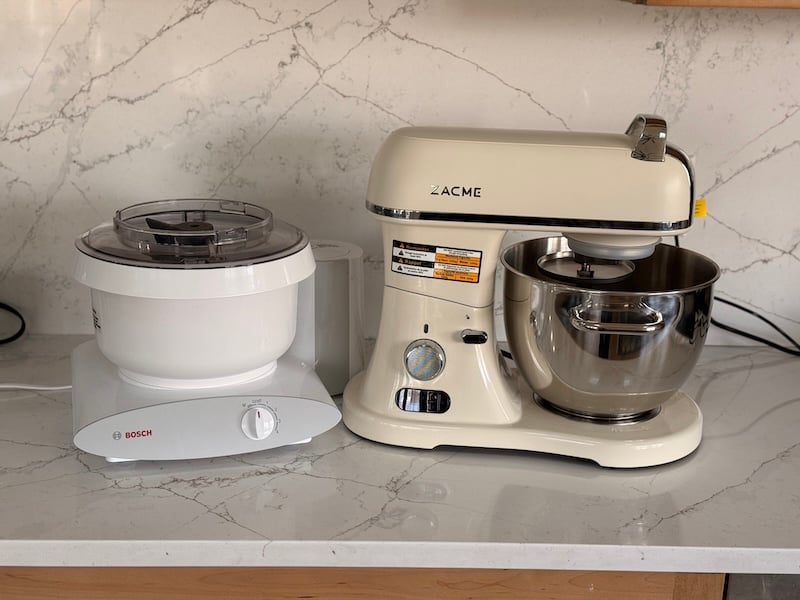
- There are typos in the instruction manual and even one on the mixer itself. That’s usually a huge red flag for me, but in this case, it’s something I can overlook.
- Zacme is a relatively new brand, so it doesn’t yet have the decades-long track record of Bosch or Ankarsrum.
Other Bakers’ Thoughts on the Zacme
Praise for the Zacme is pretty consistent. Bakers rave about how quiet it is, how stable it feels, and how well it stacks up to their other mixers.
“I have had [Kitchen Aid] and didn’t care for it. Bought a Bosch it’s good but not like I expected. […] I bought a Zacme and fell in love… it went on sale again so I bought another one.” — Jess L.
“Just got mine and love it! So much quieter and powerful than the [Kitchen Aid] for thicker dough.” — Brittney S.
“My old Kitchen Aid couldn’t stand up to the 8.4 qt Zacme. It would overheat with my cinnamon roll dough. I only use it now for small batches, small frostings, etc. The larger kitchen Aid was so expensive too, so Zacme was my choice. I love it!” — Peg W.
Several bakers also commented on the thoughtful details, saying those features made baking more enjoyable:
“This is an amazing mixer! So stable and the light over the mixing bowl provides a great view!” — Maryse F.
“So many features to like: the light, the handle, the built-in timer, the pause feature, the MASSIVE bowl, suction cup feet, the accessories. […] I think it may be better than my Ankarsrum.” — Marian M.
Of course, not every review was positive. The most common complaint was the screeching noise on some units. Zacme was reportedly very responsive, and many owners resolved the issue by applying a little oil to the silicone gasket:
“Unfortunately, no I would not recommend it. I had really high hopes for it and although it did properly mix the dough… it makes an awful screeching noise.” — Victoria M.
If you want to browse through feedback from over 100 Zacme owners, here’s the Facebook post where I asked for honest reviews.
Zacme Stand Mixer Final Thoughts
I did not expect the Zacme to become one of my favorite stand mixers when I first unboxed it, but more than six months later, that’s exactly what happened.
I still think the Ooni Halo Pro is the more powerful machine, and if money isn’t a factor and you primarily need a mixer for dough, it’s an excellent option.

But for most home sourdough bakers, unless you specifically need every ounce of power the Ooni offers, I think the Zacme is the smarter purchase.
Compared to the Ooni mixer, the Zacme is hundreds of dollars less — and less than half as much when it goes on flash sale. It is also more versatile and can handle a single loaf without the dough riding up the hook. It mixes dough as thoroughly as the Ooni — it just takes a few more minutes.
👉 Featured Expert Reviews
I reached out to some experienced, well-respected bakers and microbakery owners to get their take on these mixers. Here’s what they shared.
Adelina Roberts | Breadstalker

Adelina is the queen of the open crumb sourdough loaf. If you’ve seen those stunning, airy loaves all over Instagram, there’s a good chance they’re hers. She had some really insightful things to share about the Ooni.
Follow her on Instagram at @breadstalker_ or check out her website.
Ooni Halo Pro
The Ooni stands out from other spiral mixers with its additional attachments for batters, like a paddle attachment and a whisk. Unlike most spiral mixers, the bowl is removable along with the spiral attachment and the bar, which makes it very convenient for cleaning. It’s a heavy and sturdy mixer but still easily movable, unlike most other spiral mixers that weigh 80lbs, and once you place them on the counter, you can’t really move them without help. The Ooni also looks beautiful and has a slick design.
The most important benefit of having a spiral mixer like the Ooni is that it mixes dough to perfection while maintaining excellent extensibility in the dough—which is very important, particularly for open crumb sourdough.
In comparison to KitchenAid mixers and others of that kind that mix the dough too tight and elastic, the secret to successfully developed dough is in the extensibility, which the Ooni does effortlessly. Another important thing is that the mixer does not overheat the dough even during long mixing.
Adelina’s verdict: If you are serious about improving your baking skills, you need a spiral mixer.
Daniel Leader | Bread Alone Bakery

Daniel Leader is a legendary baker, author, and founder of Bread Alone Bakery. He’s been baking professionally for decades and studied his craft from bakers in France and Italy. At home, he uses a KitchenAid Series 5 and the Ankarsrum. Check out his website and Instagram page.
Daniel’s take: They all can work well, but you have to adapt the mixer to your product—it’s not one size fits all. He uses different mixers depending on what he’s making and his fermentation plan. Each machine has its own nuance, and understanding that is the most important piece.
On technique: He adjusts his mixing based on his fermentation plan. If he’s using a small amount of starter—like 4%—he might mix in the KitchenAid for just 4 minutes, then give it folds over a period of hours. There’s flexibility, and he acknowledges the KitchenAid is hard to get a windowpane upfront.
Key insight: As a general rule, you can hydrate dough a lot higher and a lot easier in the Ankarsrum (especially with the dough roller) versus the KitchenAid. But with the KitchenAid, if you’re not maxing out capacity, you can do a bassinage to get it soft enough.
Daniel’s verdict: All of this equipment is good equipment, and he doesn’t think any of them is better than the other. Each machine has its own strengths, and the key is understanding how to work with them.
Joselyn | A Friend In Knead

Joselyn is a microbaker and sourdough educator who uses a KitchenAid and Bosch Universal Plus a lot in her baking business. Follow her on Instagram or check out her website.
KitchenAid Bowl-Lift
Pros: Great mixer for beginner bakers – the bowl is easy to fit into the base, and the settings are simple. The stainless steel bowl is easy to clean and dishwasher safe. It also doesn’t heat up your dough.
Cons: It flips breakers with low-hydration doughs. The kneading arm doesn’t reach the bottom of the bowl, so you have to manually scrape to make sure everything gets incorporated.
Joselyn’s verdict: Best for beginners, but limited capacity and power for serious baking.
Bosch Universal Plus
Pros: The larger, stronger motor handles bigger batches of dough easily. The attachments reach the bottom of the bowl, so no manual scraping is needed. It handles low-hydration doughs well.
Cons: The plastic bowl is hand-wash only and warps if you put it in the dishwasher – disappointing for such an expensive machine. It’s hard to fit the bowl down into the drive. It can start to smell like the engine is smoking with larger batches. The dough heats up quickly. It still only holds 3-4 loaves, so it’s not great for bulk baking.
Joselyn’s verdict: Better for intermediate bakers who need more power but aren’t doing bulk production.
Hannah | Crusty Cravings by Hannah

Hannah runs a sourdough microbakery and has put the Bosch through its paces with all kinds of doughs. Follow her on Instagram or check out her links.
Bosch Universal Plus
Pros: Hannah absolutely loves it for cinnamon rolls, bagels, pizza dough, english muffins, soft sandwich bread, and any enriched dough. The Bosch has a powerful motor that can handle kneading these doughs properly to fully develop the gluten, even with multiple batches.
Cons: The gluten development just isn’t quite there for high hydration sourdough— due to the speed at which this motor turns, the dough tends to overheat and turn into a soupy mess if you aren’t careful. A fermentolyse, mixing with cold water, and taking rest breaks is often necessary and she doesn’t have time for that. Hannah often uses the Bosch for smaller batches of high hydration sourdough and mixes for a short period to incorporate ingredients. She then uses stretch and folds to strengthen the dough.
Hannah’s verdict: Great for enriched doughs and lower hydration recipes, but not her go-to for artisan sourdough bread.
Noelle | H3art of the Home

Noelle is a baker and the croissant queen in my eyes—she’s extensively tested both the KitchenAid Professional 600 and the Bosch mixer. Check out her website or follow her on Instagram.
KitchenAid Professional 600
Pros: The KitchenAid excels in user-friendliness for everyday home baking. The open bowl design makes it incredibly easy to add ingredients, scrape down sides, and remove finished dough without any hassle. Its durability is impressive—hers has survived 18 years of regular use and even a fall off the counter, which proves its solid construction quality (although she has had to start tightening the head since an increase in professional use). For single batches and general mixing tasks, it performs reliably and gets the job done.
Cons: The KitchenAid has notable limitations when pushed harder. It struggles significantly with double batches, indicating it’s reached its capacity threshold for heavier doughs. The mixer’s tendency to “walk” across the counter during operation is a serious safety concern—hers actually fell off the counter. This requires constant supervision, especially when making dense doughs like pizza dough. The noise level is quite high during operation. Additionally, the attachments require hand-washing only. Running them through the dishwasher strips their coating, which adds extra cleanup time after each use.
Noelle’s verdict: Great for everyday single-batch baking, but struggles with heavy or double batches.
Bosch Universal Plus
Pros: The Bosch is a powerhouse designed for serious baking. Its heavy bottom base with effective suction cups keeps it completely stable during operation, eliminating any walking or safety concerns. It handles larger quantities of dough with ease, maintaining its strength even with heavy loads. The convenient top opening allows you to add ingredients while mixing without stopping the machine. The overall power and capacity make it ideal for anyone doing frequent or large-batch baking.
Cons: The Bosch’s design creates significant usability frustrations. The center post in the bowl makes dough removal awkward and difficult—you have to work around it to extract your dough. The plastic bowl is disappointing at this price point, especially knowing stainless steel costs extra. The plastic components in the attachments feel cheap and have already proven fragile, with one piece breaking. The dough texture differs from hand-kneading or KitchenAid results, and the mixing quality suffers near the center pole where attachments can’t reach properly. Perhaps most concerning, the base heats up during operation, which warms your dough, potentially affecting fermentation and final texture in temperature-sensitive recipes.
Noelle’s verdict: Powerful and stable for large batches, but the design frustrations and dough heating issues are real concerns.
Parker | Basil & Bloom

Parker is a sourdough microbaker and educator who has used his Ankarsrum for years and really put it through its paces. He has also recently gotten his hands on the 7-quart Zacme mixer. Follow him on Instagram and check out his links, including his really awesome sourdough courses (code TSG5 gets you $5 off).
Ankarsrum Original
Pros: While it’s far from a “set-it-and-forget-it” machine, the Ankarsrum (or “Ank,” as it’s known in his home) makes up for its hands-on mixing time with power and efficiency. It’s really a bread baker’s mixer—it can mix all kinds of dough, has a larger capacity than most, and even though its kneading action takes a bit longer to fully develop the dough, once you get the hang of it you’ll see it mixes beautifully, and does so more effectively and quietly than its competition. The Ank is a well-tested and long-lasting machine that excels at everything he’s thrown at it.
Cons: It requires more hands-on attention during mixing, and Parker admits he still experiments with which attachment works best for which doughs even after years of use.
Parker’s verdict: If you’re the kind of bread baker who likes to be hands-on and watch your dough transform, you’ll find plenty to love about the Ankarsrum.
ZACME 7-QUART
Pros: Just over a month in, Parker has been extremely impressed with the Zacme’s mixing capabilities. It mixes sourdough thoroughly without excessively heating the dough. He’s found it especially useful as a mixer that goes well beyond bread: the paddle attachment is putting in work every week mixing the Khorasan scald for the Desert Gold Khorasan loaves he takes to the farmers market, and it does that job far better than the Danish dough whisk he was using before. Every attachment is stainless steel, so it all goes straight into the dishwasher.
Cons: Parker mentioned no cons for this mixer!
Parker’s verdict: If you want a strong mixer but you want to mix more than just bread dough, the Zacme is a great choice.
Hayley | Muscle Momma Sourdough

Hayley is a good friend of mine and is a recipe developer who focuses on high-protein sourdough recipes. Follow her on Instagram and visit her website.
KitchenAid Bowl-Lift
Pros: Overall, it works great for normal baking.
Cons: When it comes to bread, it takes around 25–30+ minutes of mixing (not including breaks!) to achieve a proper windowpane. From what she’s seen, other stand mixers reach that point much faster.
Hayley’s verdict: If someone were buying a stand mixer specifically for bread, she probably wouldn’t recommend a KitchenAid.
My Favorite Stand Mixer
It’s no secret I’ve been working on this review for months. I keep getting messages, comments, and emails asking me the same question: What’s your favorite stand mixer?
I can find reasons to love and recommend several of these machines. I’m not trying to dodge the question, but it really is a tough one.
For pure dough-mixing performance, the Ooni Halo Pro is still the most powerful machine I tested, and I love it. But the mixer I reach for most often now — and the one I recommend to most home bakers — is the Zacme. It’s what lives in my stand mixer cabinet.
The Zacme performs right alongside mixers that cost hundreds of dollars more, but its price is within reach for far more bakers. It’s whisper-quiet, has handled everything I’ve thrown at it, and its optional attachments make it more versatile than the Ooni. For most people, that combination of power, price, and versatility is tough to beat.
And I can’t leave out the Ankarsrum, which is right up there with the best of them, especially when it comes to quality. My only qualm is how much adjusting it requires during mixing. That learning curve is why I tend to reach for more user-friendly mixers.
So, in sum: Zacme for most bakers, Ooni if you want maximum power for dough, and Ankarsrum if you want versatility and a decades-long track record.
Conclusion
I know these stand mixers cost a lot of money. I also know that getting out a stand mixer, using it, and cleaning it can feel like a whole production. That’s exactly why I spent months testing these machines — because I wanted to find the ones that are actually worth the investment.
For most home bakers, the Zacme is a slam dunk. It is powerful, whisper-quiet, more versatile than you’d expect at the price, and the best value of any mixer I tested. It’s what lives in my stand mixer cabinet and what I reach for regularly.
The Ooni is still my pick if you want maximum power for doughs and don’t mind paying for it. It’s fast, effective, and free of the annoying quirks that make me wonder if I should’ve mixed by hand.
If you want ultimate versatility and plan to keep your mixer for decades, the Ankarsrum may be the smarter investment.
If you’re making larger batches, the Bosch is probably your better bet.
The only one I truly can’t recommend? The KitchenAid Bowl-Lift for serious bread baking. Save your money or put it toward one of the other four. If you already own one, incorporating resting periods can help make it work.
If you have any of these mixers, I’d love to hear your thoughts in the comments! What do you love (or hate) about yours?
And if you’re still on the fence about which one to buy, drop your questions below. I’m happy to help you figure out which mixer makes the most sense for your baking style and budget.
Related:




Now that Ooni has come out with its Halo Core, will you be doing a review of that model sometime in the future? I’m interested in it because I mainly prepare a loaf at a time, and seems like the Ooni Halo Pro may be overkill. So now I have it narrowed down to the Ooni Halo Core or Zacme. Would love to see a review from you.
Yes! Testing it now. So far, I’m ‘meh’ about it – the Zacme 8.4 quart is better IMO for less money but I need to test out the Halo Core more before I conclude my opinion.
I Would like to know if you or your friends / network have experiences on Wilfa Probaker Nxt? It is supposedly as good as Ooni in mixing bread dough but more versatile for cakes and pastries. It would be awesome if you could review it or write “user experiences” from it
I haven’t seen much on that mixer!
Such a helpful article! I’m in need of a new mixer as my 15 yo KA is dying, making an awful noise and smell and leaking lubricant. I have 5 kids and make all our bread products from scratch (bagels, sandwich bread, and artisan loaves are the most common). I’m between the Zacme and the Ooni. I think my KA would survive for a while longer if I’m only using it for things like whipping cream or egg whites so I really just need something for double batches of bread doughs. Which of those mixers would you recommend?
If you have the funds, you primarily make at least double batches, and also plan to mainly mix doughs, the Ooni really is the perfect fit. However, the Zacme would be worth considering more if you wanted better flexibility with the other attachments (Ooni’s other attachments aren’t as good) and also want to mix smaller batches (like a single loaf or even a half batch). The Ooni Halo Pro isn’t awesome with small batches as the dough tends to climb the hook. So, value for money, I pretty much always lean toward the Zacme, but based on what you said, your profile is perfect for that Ooni.
Great reviews..thank you ! I am just getting started making bread and quickly realized my silly shoulders don’t like to knead..thus looking for a mixer. Besides great quality and performance I want one that has durability, track record and company service/help behind it. I probably won’t make more than 1 – 2 loafs at a time. Kinda leaning towards the Ankarsrum but wondering if this is overkill.
I wouldn’t say the Ank is overkill – it’s definitely one of the larger bowls, so it’s more than you need. But it checks all of the boxes you have listed here.
Hi. I just recently starting baking bread again after many years. No kids at home so just two of us. I expect to bake just a couple of loaves a week. I want a quality mixer that will last and is reliable but that can handle smaller batches of dough. I’d prefer to not have one with a plastic bowl. I’d really appreciate your thoughts and recommendations. ..thanks for all you do ! Glad I found you.
Def the 8.4-quart Zacme! The only con is its size. It is a larger, heavier mixer. But if you have a spot for it, you’ll be really happy with that one.
Any not high end mixers you recommend?
Here are reviews of mixers under $200 – https://thatsourdoughgal.com/best-budget-stand-mixer-for-sourdough/
The best value for money IMO is the Zacme 8.4-quart covered in this article! Beneath that, I’d call out the NutriMill Artiste – it’s a great mixer that’s quite simple but gets the job done. During a good sale, you can snag that one for around $200 (my code is TSG20 for $20 off).