The Best Grain Mill for Home Bakers: What 200+ Bakers Actually Think
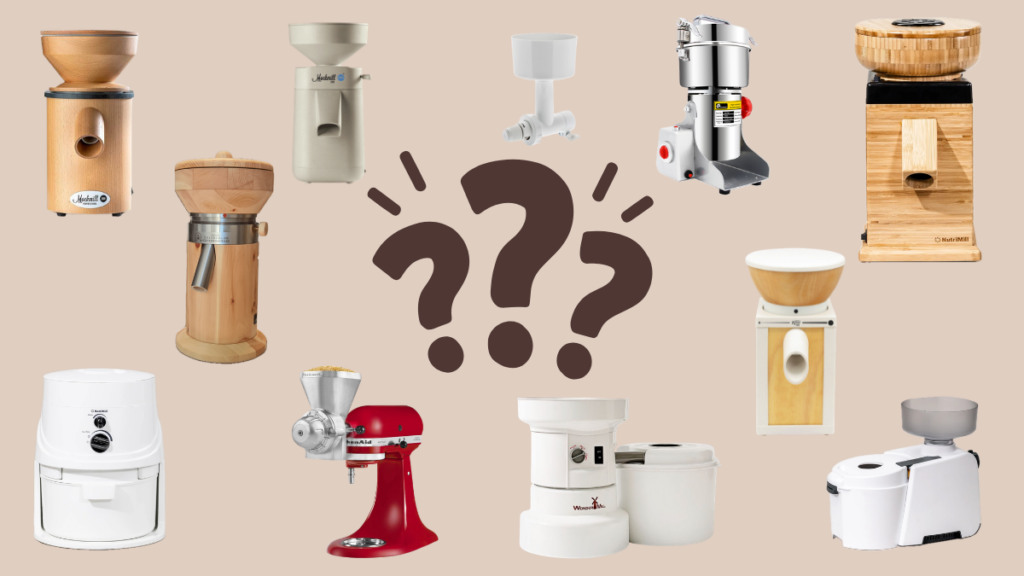
I’m not ready to dive headfirst into FMF (freshly milled flour) just yet — but I’m mentally gearing up, and I figured the best place to start was asking you. So I put a question out to my Facebook friends: what grain mill do you have, and what do you honestly think of it?
The response was overwhelming. Over 200 bakers shared very useful info, and this post pulls it all together in one place. In all, I cover 20 different grain mills and milling options.
Update 10/5/26: I have a grain mill now (thank you, Pleasant Hill Grains, for sending me the KoMo Classic!), and I fear this is a full-blown obsession. It is SO fun and delicious!! I’ve added a few updates throughout the post with this yellow background.
This is not just the specs and product descriptions you can find online — this is real-world feedback with details like whether the lid is annoying to take off or whether a mill attachment will burn up your KitchenAid.
With the high number of products covered here, I suggest using the table of contents to jump to the ones you’re most interested in.
Disclaimer: Some of the products I recommend in this post are affiliate links – if you choose to purchase after clicking one of my links, I may earn a small commission, which helps fund this website, recipe development, and monthly giveaways. I sincerely appreciate your support.
Just Tell Me What to Buy
If you don’t want to read the whole thing, here’s the summary:
Best overall for most home bakers: Mockmill 200 ($470) or KoMo Classic ($619). Both are stone mills with adjustable grind settings, look great on a counter, and have passionate long-term fans. The Mockmill is less expensive; the KoMo is slightly faster, quieter, and comes with a 12-year warranty. One drawback is that you have to pre-order one and may wait several months to receive it. Based on the feedback I received, you can’t go wrong with either one (and at those prices, I sure hope so…).
Update: After using the KoMo Classic, I can report this is a high-quality, very user-friendly choice. I am very happy with it!
Best if you want fine flour fast and don’t mind a few quirks: NutriMill Classic ($329). Multiple bakers who own both an impact mill and a stone mill said the Classic makes the finest flour of anything they’ve tried. It’s loud and plastic, and you’ll probably want to store it in a cabinet, but it works great. NutriMill also has awesome customer service.
Note: you can get $20 off grain mills from NutriMill with code TSG20.
Update: NutriMill is updating their Classic grain mill—I don’t have a release date to share yet. In the meantime, they’re running great discounts on the current version of the Classic.
Best budget entry point to see if FMF is for you: NutriMill Impact ($249) or, when available, a refurbished NutriMill Classic from NutriMill’s own website. If you have a Vitamix with the Dry Grains Container, it’s worth trying as well. These aren’t ideal if you’re diving headfirst into FMF, but they’re a big step up from the lower-cost KitchenAid attachment — more on that below.
Best if longevity and warranty are your deciding factors: Any KoMo model or the Mockmill Lino/Professional models. For personal use, all carry a 12-year warranty, and multiple bakers reported owning their mills for 20–30 years.
Don’t buy: The KitchenAid grain mill attachment. 32 bakers mentioned it. About 27 had the same story: slow, heats up your mixer, doesn’t grind fine enough. A few people said it works for very occasional small batches, but the community consensus is that it’s more likely to put you off FMF than get you into it.
Impact Mills vs. Stone Mills: What’s the Difference?
Before we get into specific mills, it helps to understand the two main categories because this decision guides which mills you’ll look at.
- Impact mills (WonderMill, NutriMill Classic) use high-speed stainless steel milling heads in an impact chamber to pulverize grain into flour. They’re fast, generally less expensive than stone mills, self-cleaning, and produce very fine flour. The trade-off: they’re loud and, while they can produce coarser flour, they can’t make true cracked grain.
- Stone mills (Mockmill, KoMo, NutriMill Harvest) grind grain between two stones, the same way grain has been milled for centuries. They’re more versatile — you can dial from powdery fine all the way to cracked grain — but they cost more, have a steeper learning curve, and are generally slower.
The 5 Questions to Ask Before You Buy
Several bakers who have owned multiple mills said these are the important questions to ask yourself before you invest in a grain mill:
- How much will you actually use it? This kept coming up. Freshly milled flour is wonderful, but it’s more work than buying flour, and it requires adjusting recipes. If you’re not confident you’ll use it regularly, starting with a less expensive option makes sense. Sleep on it and be honest with yourself, because it’s definitely an investment.
- Will it live on your counter? If yes, aesthetics matter more than you’d think. The NutriMill Classic and WonderMill are functional but plastic, so most people tuck them away. Stone mills — especially the KoMo and Mockmill Lino — are beautiful enough to leave out on display.
- Do you need coarse grinds? If you want cracked grain, grits, coarse cornmeal, or cream-of-wheat-style cereal, you’ll want a stone mill. Impact mills can make coarser flour, but they can’t produce the same genuinely coarse textures.
- How much flour do you need to mill at once? For adding just 10–30% FMF to your normal recipes, almost any mill works. But if you plan to use mostly FMF or run a cottage bakery, pay close attention to milling speed, capacity, and how long the mill can run continuously.
- What’s actually in stock? I was honestly surprised to hear that it can be tricky to get your hands on certain grain mills. Availability changes frequently, and some popular models go in and out of stock or require pre-ordering with a wait of several months. If you need a mill right away, check current availability before getting your heart set on a particular model.
Now that we’ve laid the groundwork, let’s get into individual grain mills and what the sourdough community had to say about each.
In this guide, we’ll be covering WonderMill, NutriMill (both the Classic and Harvest), 5 Mockmill options, 6 KoMo options, the KitchenAid attachment, and several other milling options, including the Vitamix Dry Grains Container and Salzburg’s MT-12.
WonderMill ($329.95)
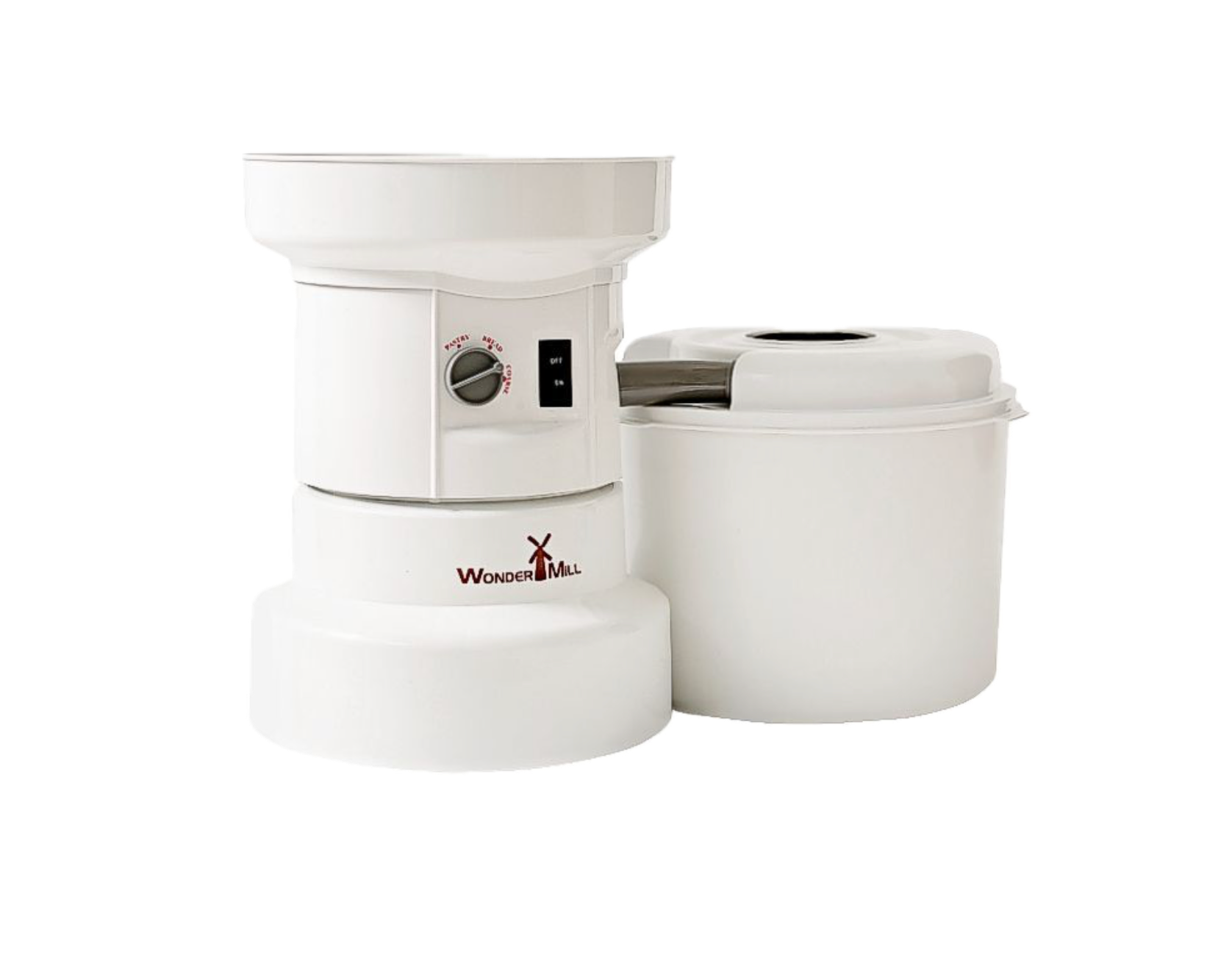
The WonderMill is an impact mill that has one of the most loyal fan bases of any mill in the community. Multiple bakers mentioned owning theirs for 20+ years.
What bakers love:
- Flour is fully contained as it mills — no dust escaping into the kitchen
- Extremely fast: mills 12 cups of flour in about 3 minutes
- Simple: flip a switch, pour in your grain, done
- Consistent, fine flour — many people said they’ve never needed to run grain through twice
- Lightweight and easy to store
- Great value for the price
The details worth knowing:
- Has three settings: pastry, bread, coarse — though the coarse setting still produces flour, not cracked grain.
- Bakers gave conflicting reports about stopping the WonderMill mid-grind. WonderMill says the current model can be turned off while milling if needed, though the owner’s manual provides a specific procedure for stopping and restarting it before the hopper is empty.
- The lid needs to snap onto the bowl correctly — one baker warned that if it doesn’t, flour goes everywhere.
- One baker actually switched from a WonderMill to the NutriMill Classic because she found the NutriMill “less finicky to operate.”
- Another baker switched from a Mockmill to a WonderMill because she felt the impact mill got her finer flour than the stone mill did.
Longevity data point: At least four community members mentioned owning theirs for 20+ years.
Availability note: The WonderMill has been difficult to find in stock. At the time of this writing, several retailers are either out of stock or taking pre-orders for incoming inventory.
NutriMill Classic ($329)
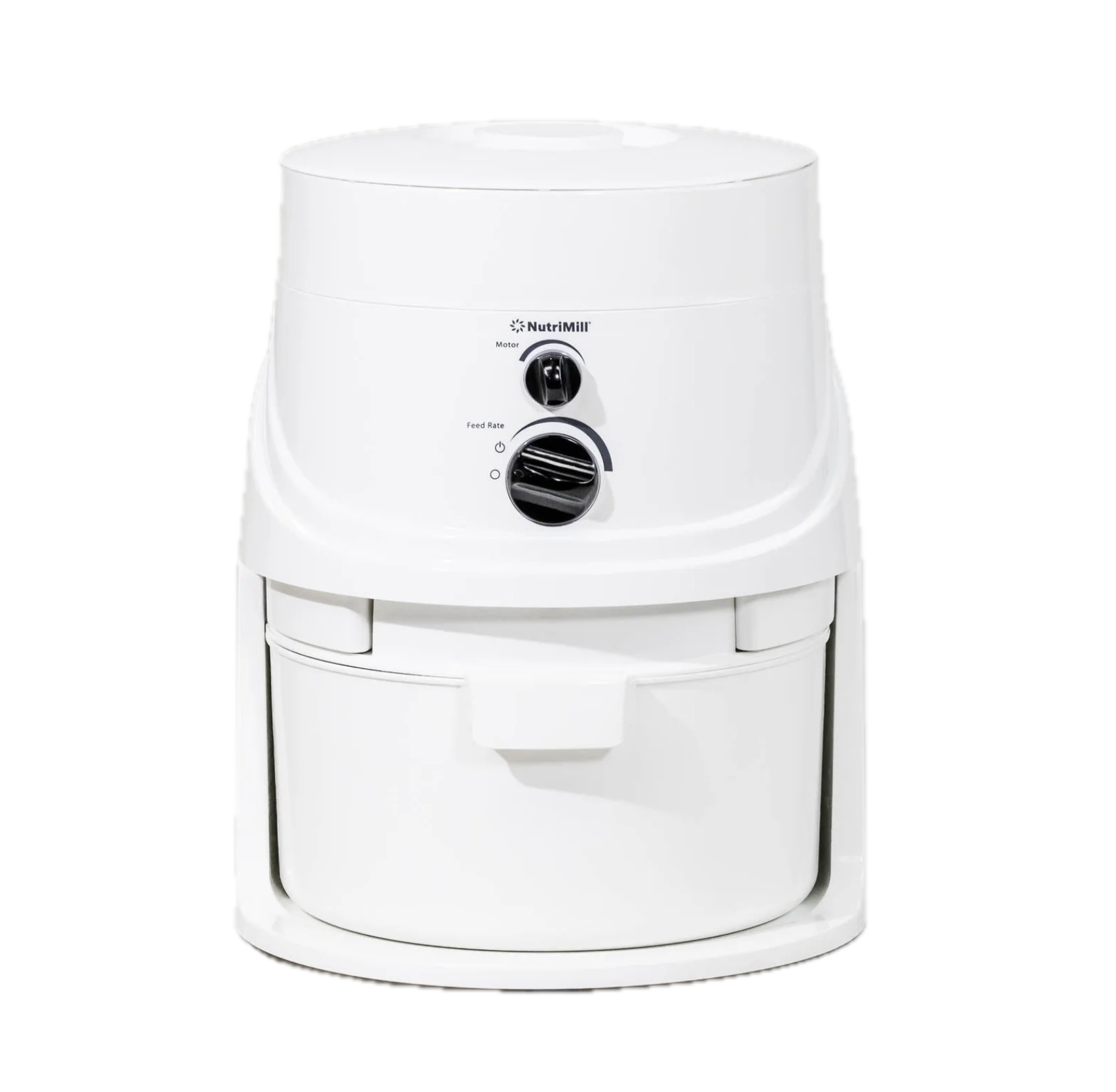
The NutriMill Classic, another impact mill, is a super popular option — it came up more than 35 times in the comments, and the reviews are remarkably consistent. It’s loud, it’s not pretty, but it flat-out works — and at least a dozen people have owned theirs for a decade or more.
Note: you can get $20 off NutriMill grain mills with code TSG20.
Update: NutriMill is updating their Classic grain mill—I don’t have a release date to share yet. In the meantime, they’re running great discounts on the current version of the Classic.
One baker who owns both the NutriMill Classic and the Mockmill 200 said if she could only keep one, she’d keep the Classic — specifically for flour fineness.
What bakers love:
- Widely regarded as producing the finest flour of any mill in this roundup
- Very fast: mills 500g (~4 cups) in about a minute
- Large capacity (up to 20 cups of flour)
- Flour stays contained — minimal mess
- Self-cleaning milling heads
- Amazing customer service (one baker said they replaced her 8-year-old mill)
The details worth knowing:
- The flour bin lid is a pain point — multiple bakers specifically flagged that removing the lid is awkward and can be messy. One baker said she “HATES the process of emptying the flour bin.”
- It’s loud. Several people said they mill outside or in a garage. One baker described it as sounding “like a jet taking off.”
- It’s not pretty with its plastic construction, though I understand that’s subjective. Most bakers said they store it rather than leave it on the counter.
- Creates some static electricity, which can cause flour to cling.
- Can make coarser flour but can’t produce cracked grain or other very coarse textures.
Who it’s perfect for: High-volume bakers who prioritize flour fineness and speed over aesthetics and don’t need cracked grain or other very coarse textures. If you’re going to tuck it away in a cabinet and pull it out when you need it, this is probably the mill for you.
“It’s larger and more plain than the expensive ones (kinda like me), but it is practical, gets the job done, and gives me what I want…(like my hubby).” —Kim Kammeraad
Budget tip: NutriMill sells certified refurbished Classic mills directly on its website at a lower price. They’re inspected by NutriMill technicians, but warranty coverage varies by the type of refurbished mill, so check the listing before you buy.
NutriMill Harvest ($499)
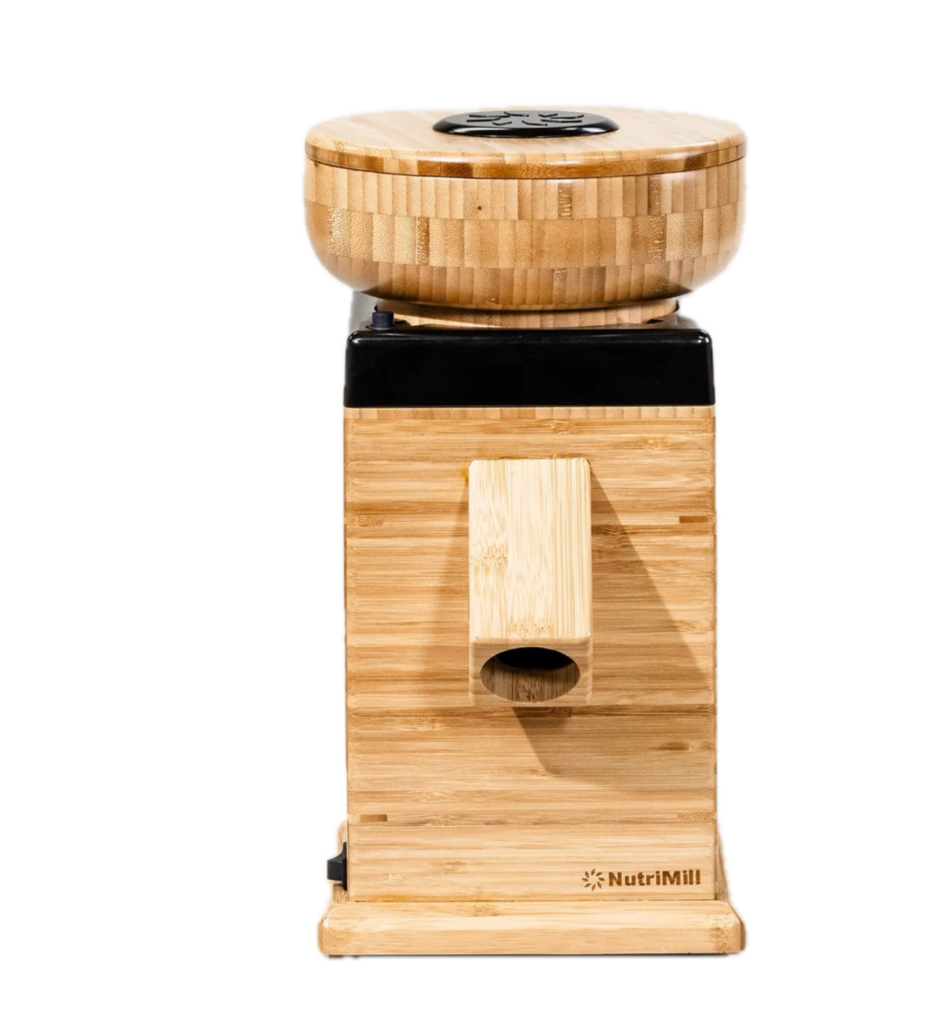
The Harvest is NutriMill’s entry into the stone mill category, and it’s the most polarizing mill in the roundup. Some people love it, while others switched away from it specifically to the Classic. The adjustment dial is the central issue. It’s also worth noting that it’s frequently sold out.
Note: you can get $20 off NutriMill grain mills with code TSG20.
What bakers love:
- Beautiful enough to leave on the counter, with a bamboo housing
- Can adjust the grind while it’s running
The details worth knowing:
The adjustment dial controls flour texture: turn it clockwise for finer flour and counterclockwise for coarser flour. NutriMill recommends turning the mill on before adding grain. If you hear the stones rubbing at the finest setting, turn the dial slightly counterclockwise. Let the hopper empty before turning the machine off, and move the dial to the coarsest setting if grain is stuck between the stones.
Several problems bakers reported:
- The dial doesn’t hold its position — where the stones touch changes from session to session, so you can’t set it and leave it
- One baker specifically noted this is a significant problem if you have arthritis
- One baker reported that re-milling to get finer flour can glaze the stones, making the mill work harder and run hotter
- One baker wore out the motor with heavy use
- Some bakers struggle to get it fine enough for bread
That said, Nancy B. gets hers “powdery fine” and mills small amounts at a time to manage heat. April S. uses the Harvest specifically for coarser grinds and the Classic for everything else.
Mockmill ($380–$890 depending on model)
Mockmill was the most mentioned brand in the entire thread — nearly 45 times — and the enthusiasm for their stone mills is off the charts! It was founded by Wolfgang Mock, who also co-founded KoMo.
The Mockmill line has more options than any other brand, from an entry-level $380 model to an $890 professional unit.
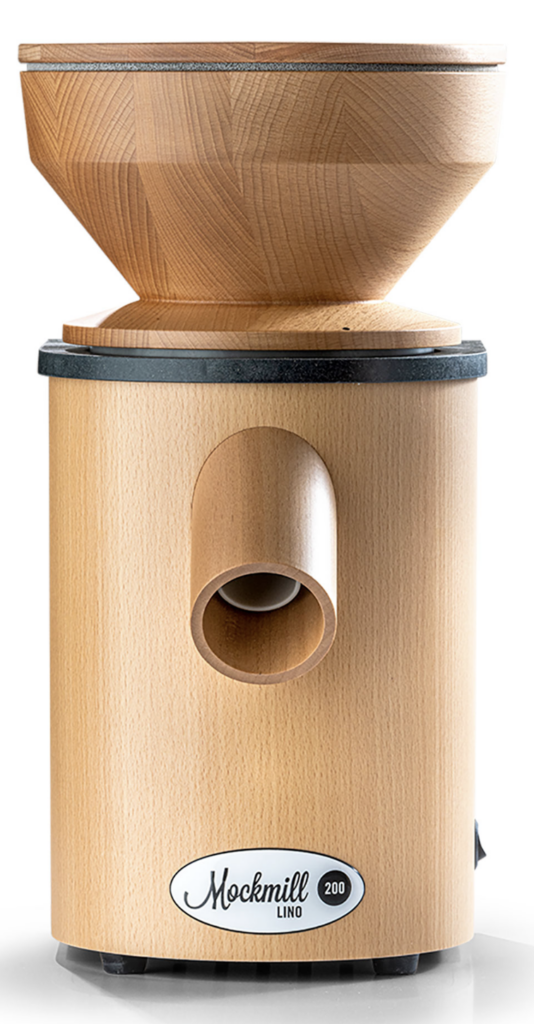
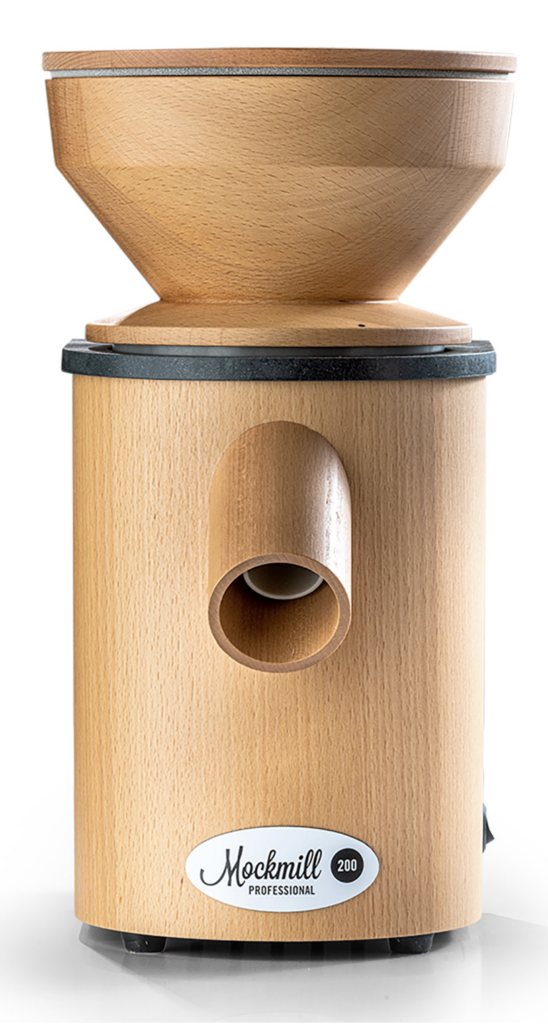
Here’s a quick comparison of their different mills:
| Name | Price | Flour Output | Warranty | Housing Material |
|---|---|---|---|---|
| Mockmill 100 | $380 | ~100g/min | 6 years | Terluran® GP-35 (a plastic material) |
| Mockmill 200 | $470 | ~200g/min | 6 years | Terluran® GP-35 (a plastic material) |
| Mockmill Lino 100 | $680 | ~100g/min | 2 years commercial; 12 years personal | Wood and HI-MACS® – The Natural Acrylic Stone™ |
| Mockmill Lino 200 | $775 | ~200g/min | 2 years commercial; 12 years personal | Wood and HI-MACS® – The Natural Acrylic Stone™ |
| Mockmill Professional 200 | $890 | ~200g/min; can mill for hours | 2 years commercial; 12 years personal | Wood and HI-MACS® – The Natural Acrylic Stone™ |
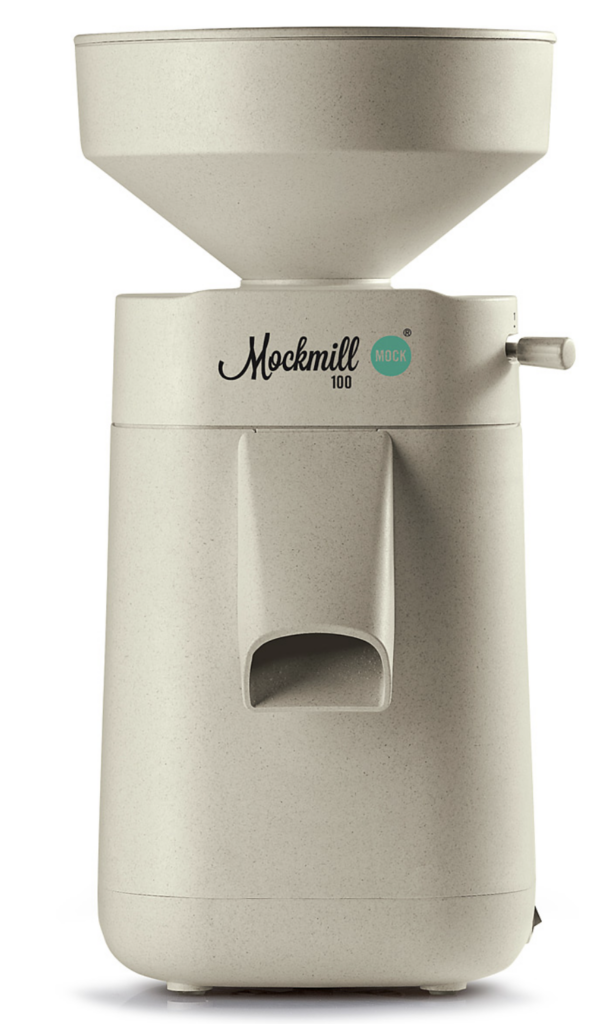
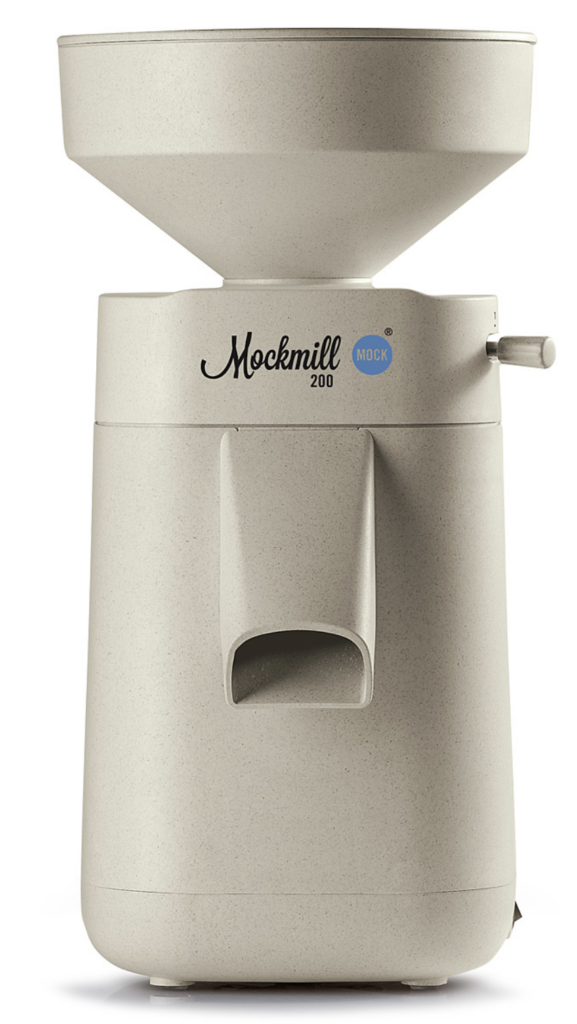
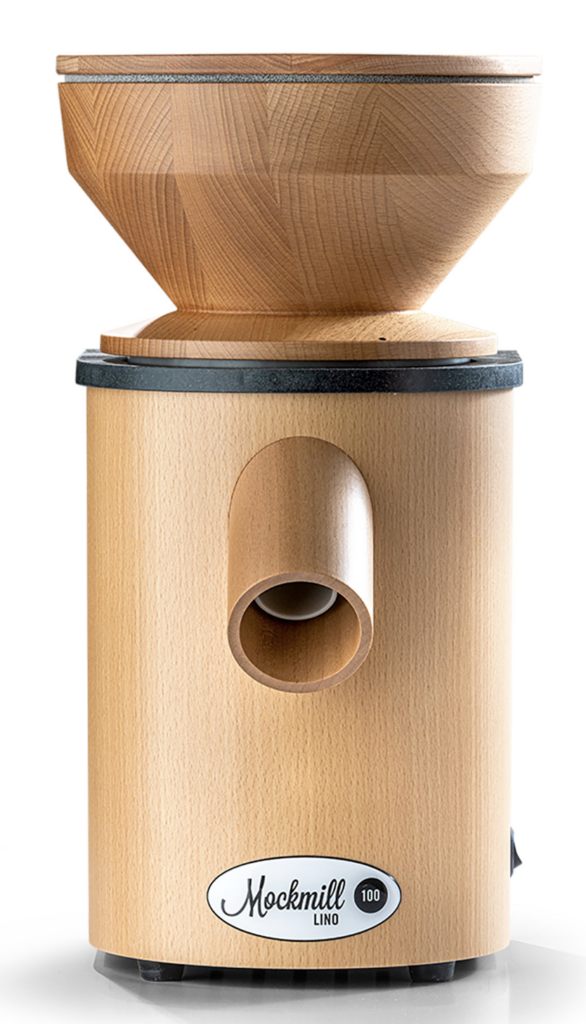
What bakers love across all models:
- Continuously adjustable grind from very fine flour to coarse cracked grain — this versatility is a major differentiator compared with impact mills
- Compact footprint
- Stone grinding with corundum-ceramic stones
- Can handle corn, rye, spelt, kamut, and most grains
The details worth knowing:
- There is a learning curve to finding your preferred grind setting
- One baker received a model with a cracked cabinet
- Cleaning note: one baker called it “impossible to clean inside” after years of use. Others noted that the stones themselves can be cleaned by running rice through the mill on a coarse setting.
- Replacement stones are available if they eventually wear out
- Multiple bakers who started with the Mockmill 100 mentioned they’d upgrade to the 200 given the choice
- One baker strongly recommended investing in the Lino models — her more detailed thoughts are below:
“While the Lino line is really straightforward, the lower-priced 200 is not as intuitive. There is a learning curve regarding adjustments as well as taking apart to clean & then getting it back together with the lower-priced mill. The Lino series is straightforward: unscrew the top & then just screw it back on; no levers or plastic pieces to worry about.” —Linda Ann Stoakes-Melin
One outlier: Rebecca L. switched from a Mockmill to a WonderMill because she felt the impact mill gave her finer flour.
KoMo ($359–$1,224)
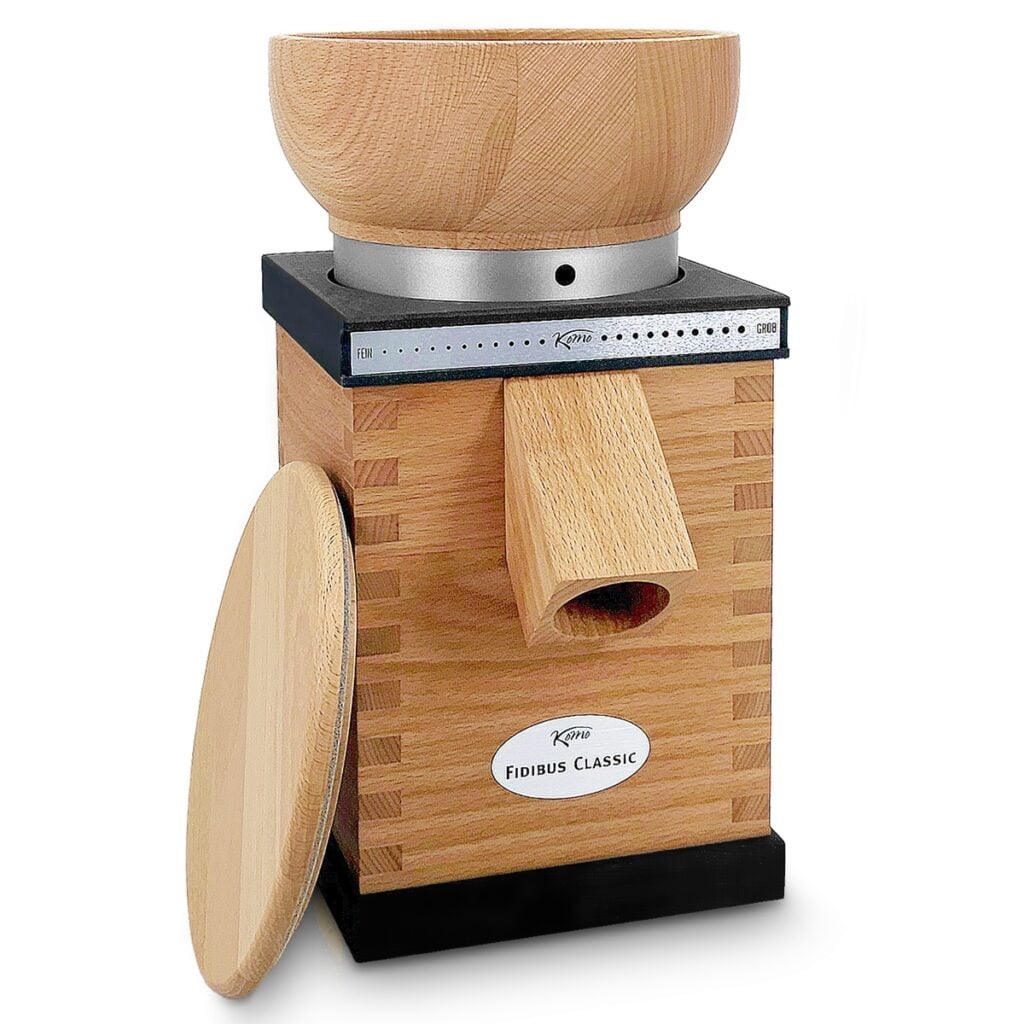
KoMo and Mockmill, both stone mill brands, are tied to the same person — Wolfgang Mock. KoMo is actually a mashup of its two founders’ last names: “Ko” for Peter Koidl and “Mo” for Wolfgang Mock.
KoMo came up roughly 30 times in the comments. Everyone seems to love this brand, but there were a ton of warnings about wait times. At the time of this writing, all six KoMo models in this comparison are out of stock. You can pre-order them, but wait times can be several months.
Now, there are a lot of KoMo models (including a Jumbo mill for about $3,000), but I narrowed it down to the most popular options that bakers actually shared their thoughts on.
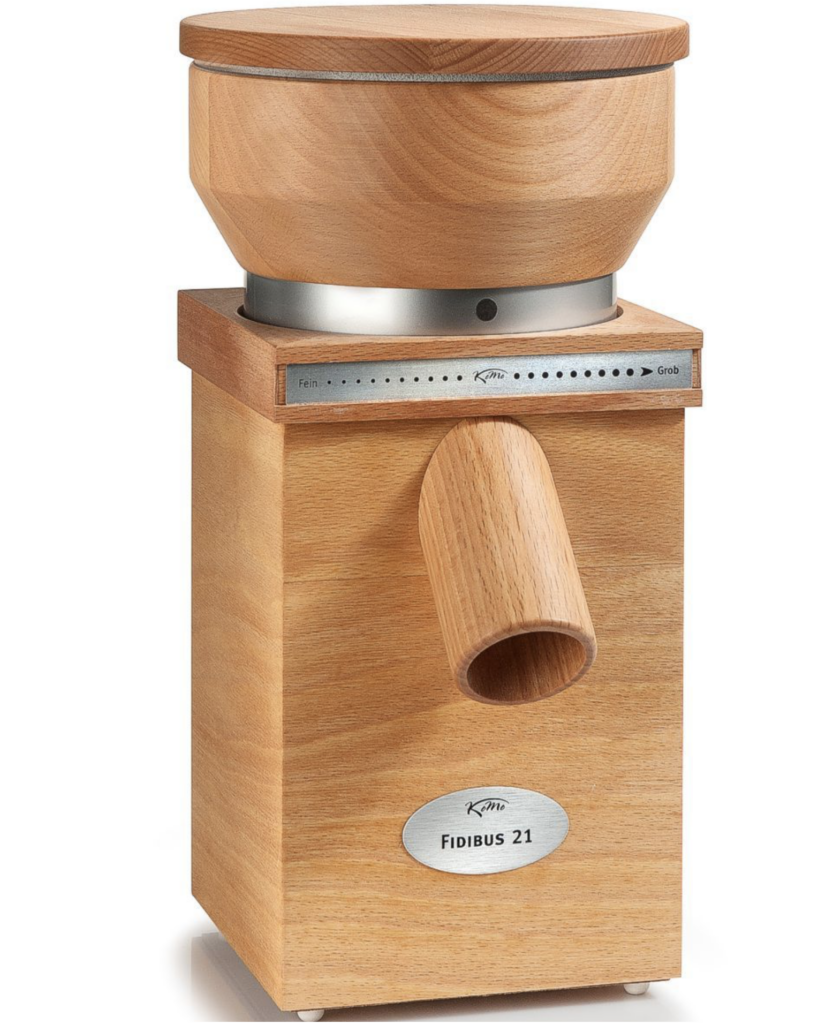
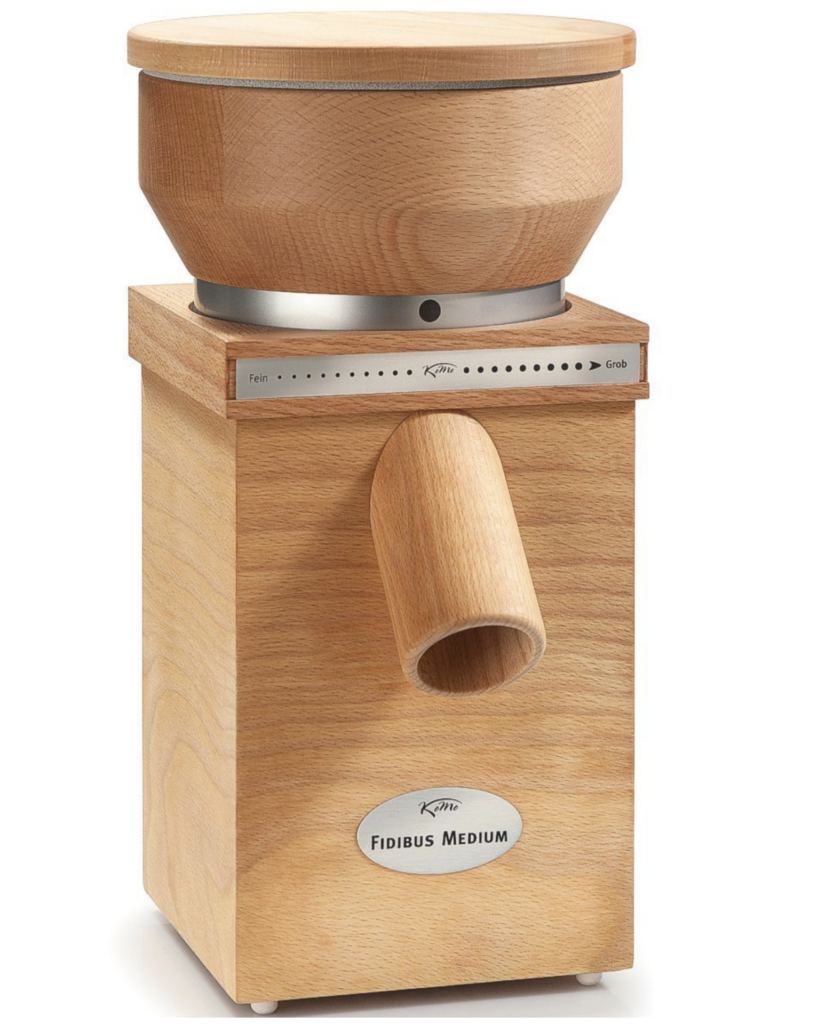
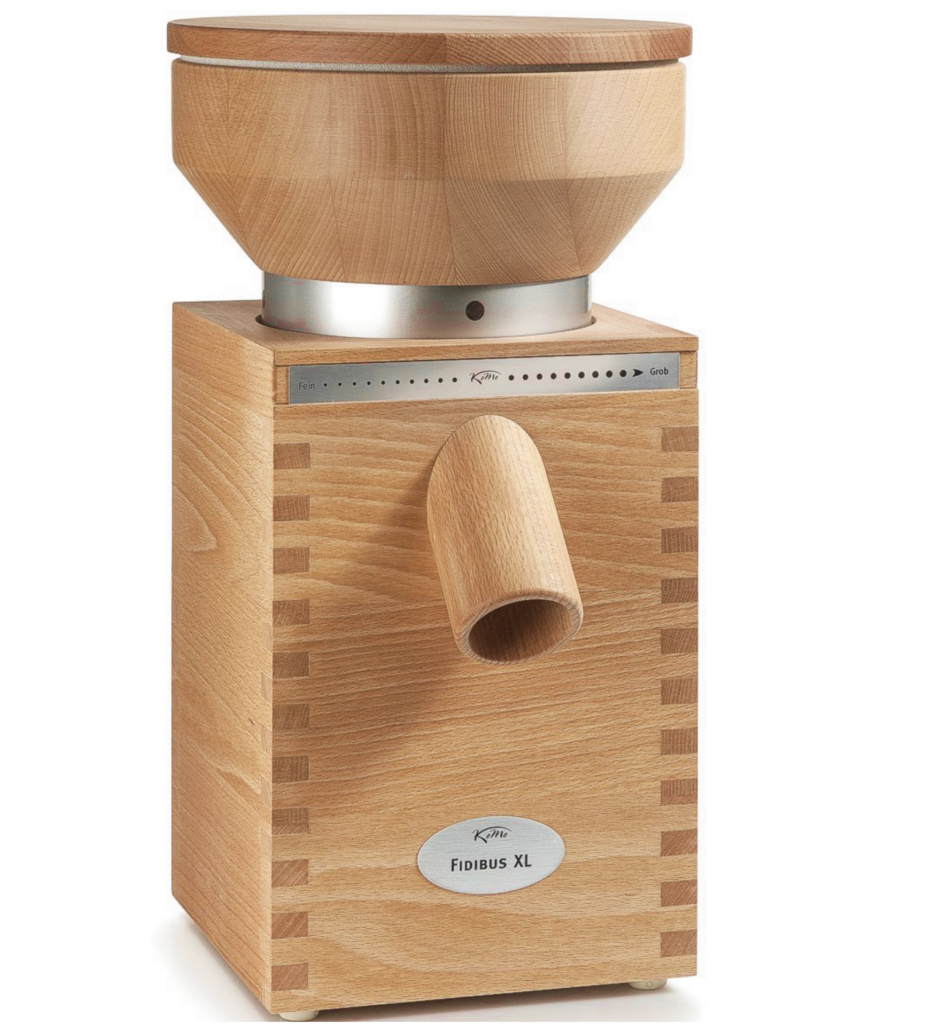
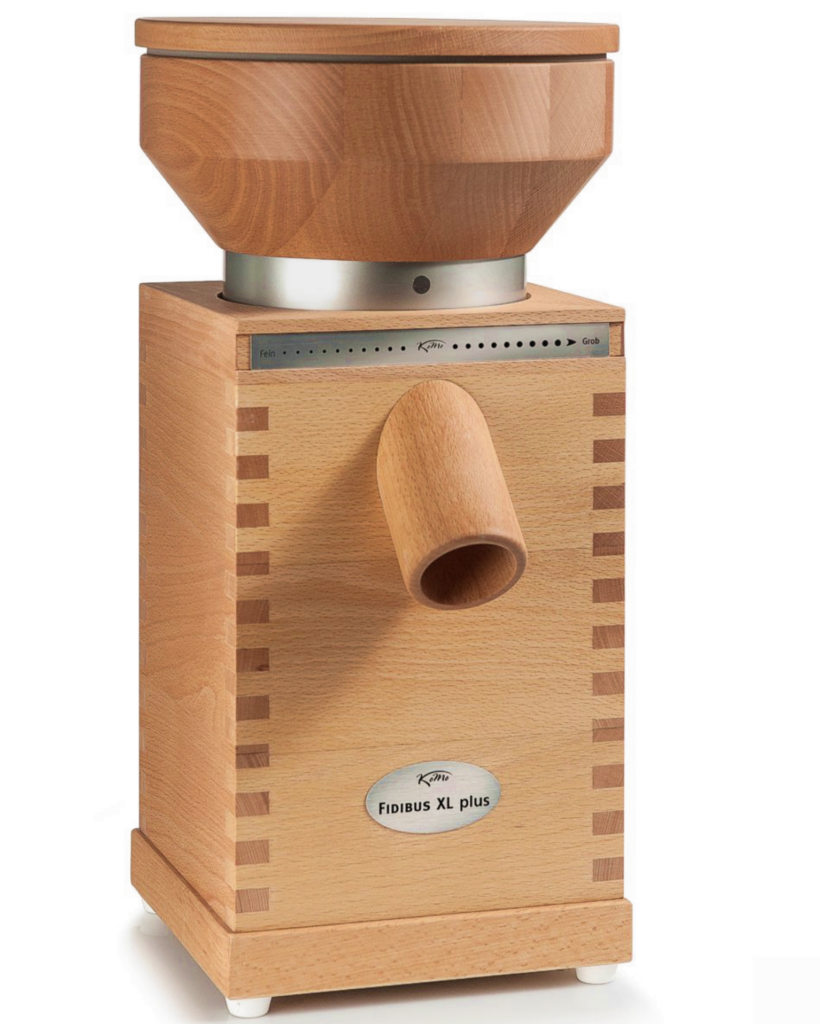
| Name | Price | Flour Output | Warranty | Housing Material |
|---|---|---|---|---|
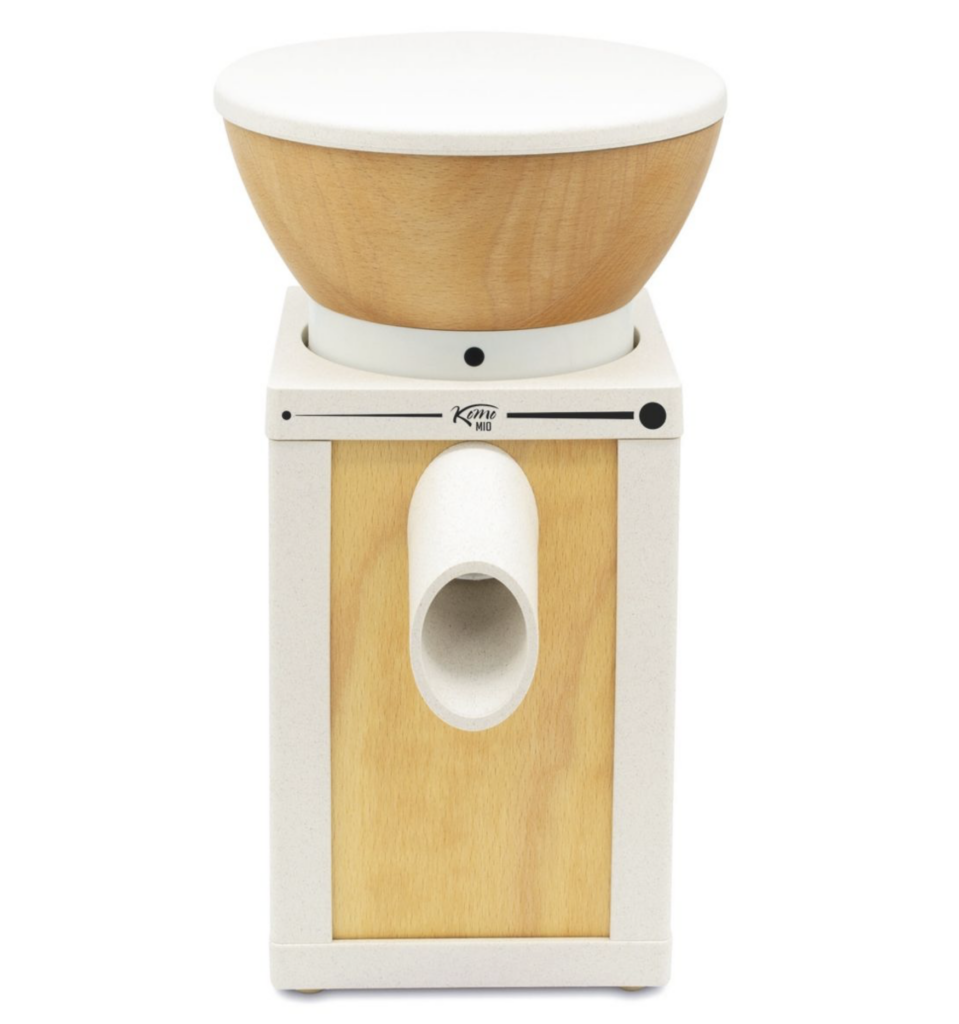
| KoMo Mio | $359 | ~230g/min | 12 years | Beechwood veneer with Arboblend® bioplastic trim |
| KoMo Fidibus 21 | $487 | ~160g/min | 12 years | Beechwood veneer |
| KoMo Fidibus Medium | $542 | ~230g/min | 12 years | Beechwood veneer |
| KoMo Fidibus Classic | $619 | ~230g/min | 12 years | Solid beechwood (or walnut for $195 more) |
| KoMo Fidibus XL | $799 | ~340g/min | 12 years | Solid beechwood |
| KoMo Fidibus XL Plus | $1,224 | ~300g/min; can mill continuously for hours | 2 years commercial, 12 years personal | Solid beechwood |
Out of these models, the KoMo Mio was the community pick for getting into stone milling without spending a fortune.
For everyday home bakers, the most mentioned models were the Fidibus 21, Medium, and Classic. Of those, the Classic is the only one with solid wood construction, making it the most expensive.
Update: Pleasant Hill Grains sent me a gently used KoMo Classic that I’ve been playing around with, and it is fantastic. It’s very high-quality, extremely user-friendly, and it mills super fine flour. Highly recommend!

Finally, the XL and XL Plus were recommended for heavy use and microbakeries. The XL Plus can mill continuously for hours, similar to the Mockmill Professional 200.
What bakers love:
- Several bakers said KoMo produces some of the finest flour they’ve gotten from a stone mill
- Quieter than most mills
- One of the prettiest mills, making it great for leaving out on your counter
- Stepless grind adjustment from fine flour to cracked grain — one baker especially appreciated the much wider range compared with the KitchenAid attachment
- Low flour dust compared to other stone mills
- All six models in this comparison carry a 12-year warranty for home use — a big differentiator from the entry-level Mockmills, which carry 6-year warranties
- Customer service through Pleasant Hill Grain is frequently praised: one baker had her mill stop working, called the retailer, walked through troubleshooting, got a new switch shipped free, and fixed it herself
- Several health-focused bakers said they prefer stone milling because they believe the lower milling temperatures help preserve nutrients.
The details worth knowing:
- Wait times are the main complaint. Multiple bakers said they’re on waitlists, and I couldn’t find any models that are actually in stock at the time of this writing.
- Premium price, especially on the higher-end models
Who chose KoMo over other options: Allison M. owns both a NutriMill Harvest and a KoMo Medium and prefers the KoMo for fineness, grind time, and hopper capacity. Lacey W. switched from the KitchenAid (KA) attachment to a KoMo XL for her microbakery and said the difference in fineness alone eliminated the gluten-tearing issues she had with the coarser KA flour.
KitchenAid Grain Mill Attachment ($179.99)
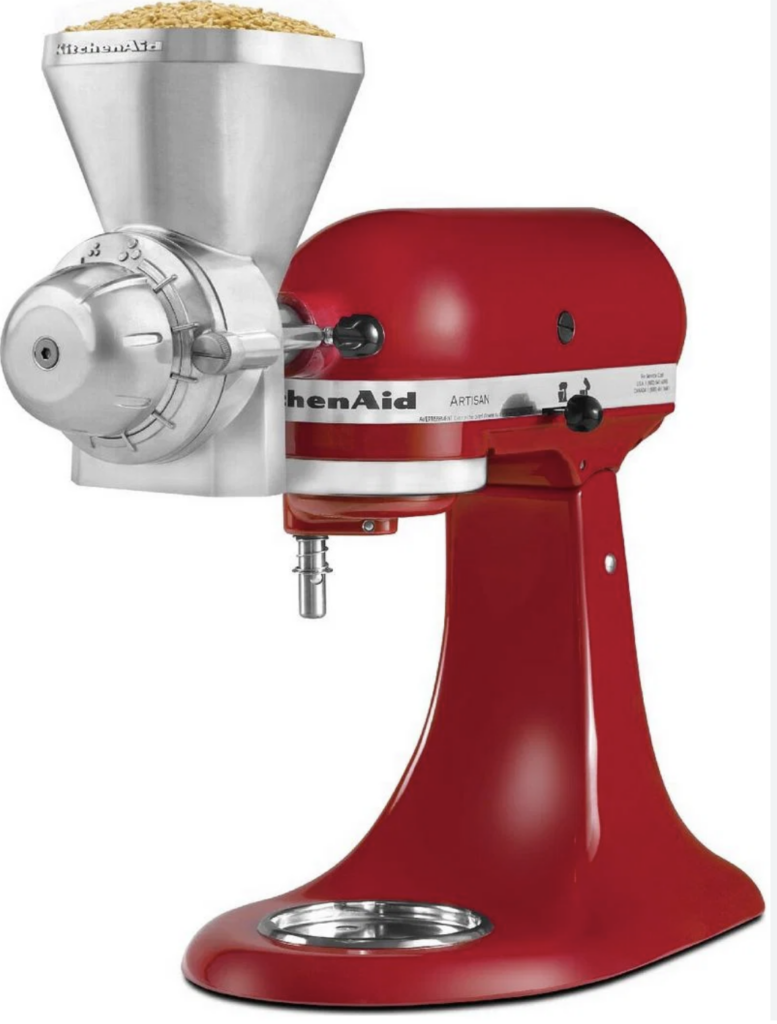
The community verdict on the KitchenAid grain mill attachment (often on sale at Amazon for $129.99) is nearly unanimous. Of the 32 bakers who mentioned it, 27 gave overwhelmingly negative feedback, while 5 were neutral or said it works for very limited use.
What bakers reported:
- Speed: Extremely slow. One baker said it took 40 minutes to mill 200g. Another said the same 300g that takes a NutriBullet 30 seconds took the KA attachment half an hour. One baker made me laugh out loud: “It took more time to mill about 2 pounds than to deliver my son 38 years ago.”
- Motor heat: This is the big one. Multiple bakers said it caused their KitchenAid motor to overheat, and several said they damaged or nearly burned up their mixer. KitchenAid itself warns not to grind more than 10 cups of flour at a time and recommends letting the mixer cool for at least 45 minutes afterward.
- Flour fineness: Multiple bakers said they ran grain through 2–3 times and it was still too coarse for bread. One baker’s test batch with her niece ended in a failed loaf. KitchenAid notes that even at the finest setting, the flour is closer in texture to fine cornmeal than store-bought white flour.
- Mess: Several bakers said flour went everywhere despite their best efforts.
- Durability: One baker’s attachment broke outright; KitchenAid replaced it; she immediately sold the new one.
Bakers who think it’s decent:
- Those who add only about 10–15% FMF to a recipe and are OK with a coarser texture
- People who can’t budget for a dedicated mill right now
- Those who mainly want to mill corn; one baker noted it works decently for that
The bottom line from the community: If budget is the real constraint, the KitchenAid attachment is better than nothing. But if you’re serious about FMF baking and want to actually enjoy the process, it’s likely to frustrate you more than encourage you. As Mary P. put it: “That might cause them to give up.”
Other Honorable Mentions
There were a few other grain mill options that came up less often. While these aren’t necessarily the most popular choices, I thought they were worth mentioning.
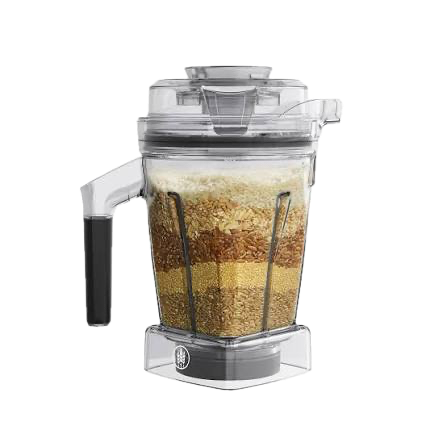
Vitamix Dry Grains Container
About 7 bakers use the Vitamix Dry Grains Container for small amounts of freshly milled flour, typically adding no more than 30% FMF to recipes. It’s fast for small batches and, if you already own one, costs nothing to try. The containers currently sell for $149.95–$169.95, depending on the model.
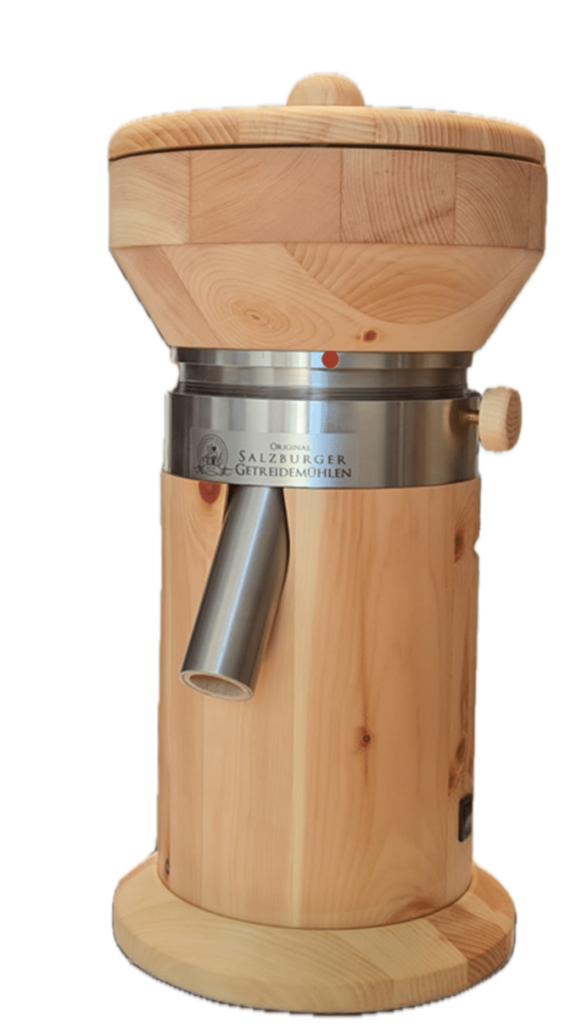
Salzburg MT-12
Two bakers mentioned the Salzburg MT-12, an Austrian stone mill, both enthusiastically. The plastic-free-contact versions range from $1,374–$1,714 and use natural granite stones, with wood, granite, and stainless steel in the grain and flour contact path. Both bakers specifically chose it because they wanted to avoid plastic contact with their grain and flour. Premium in every sense.
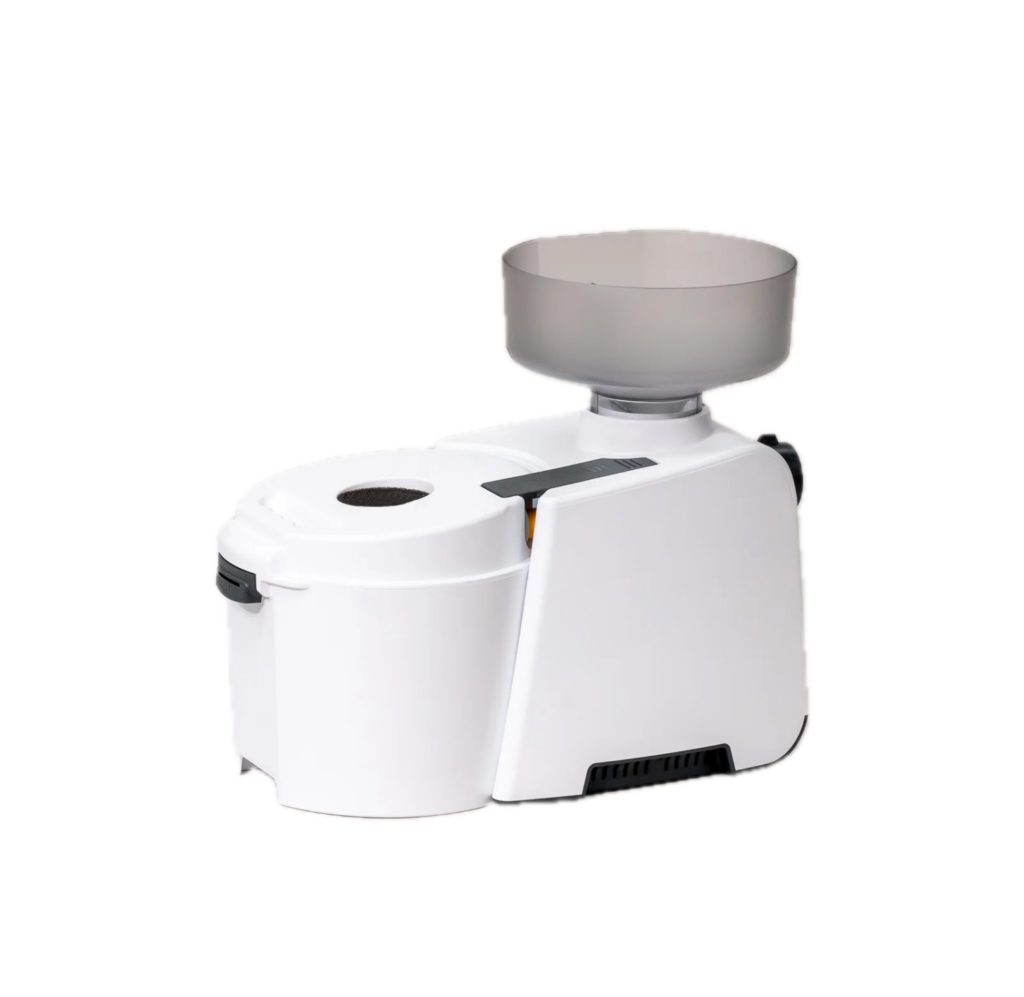
NutriMill Impact
At $249, the Impact is NutriMill’s budget entry point and has less capacity than the Classic. (Note: you can get $20 off with code TSG20). One baker noted it struggled slightly with Kamut (Khorasan wheat). It’s worth considering if you want to try FMF without a large commitment.
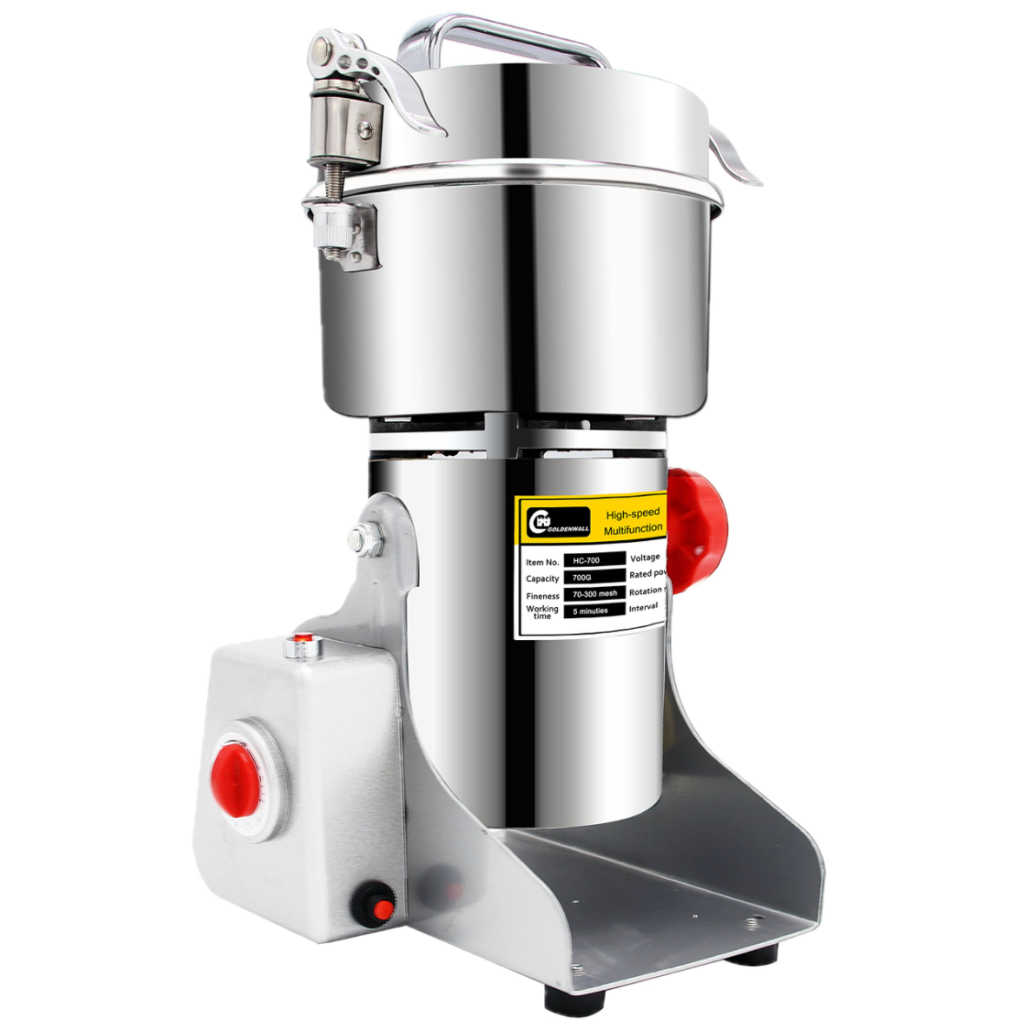
CGOLDENWALL HC-700
The CGOLDENWALL HC-700 retails for about $95. One baker mentioned it as a low-cost option to test whether FMF is for you. That baker reported that it akes about 30 minutes to mill enough for two loaves and gets warm during use.
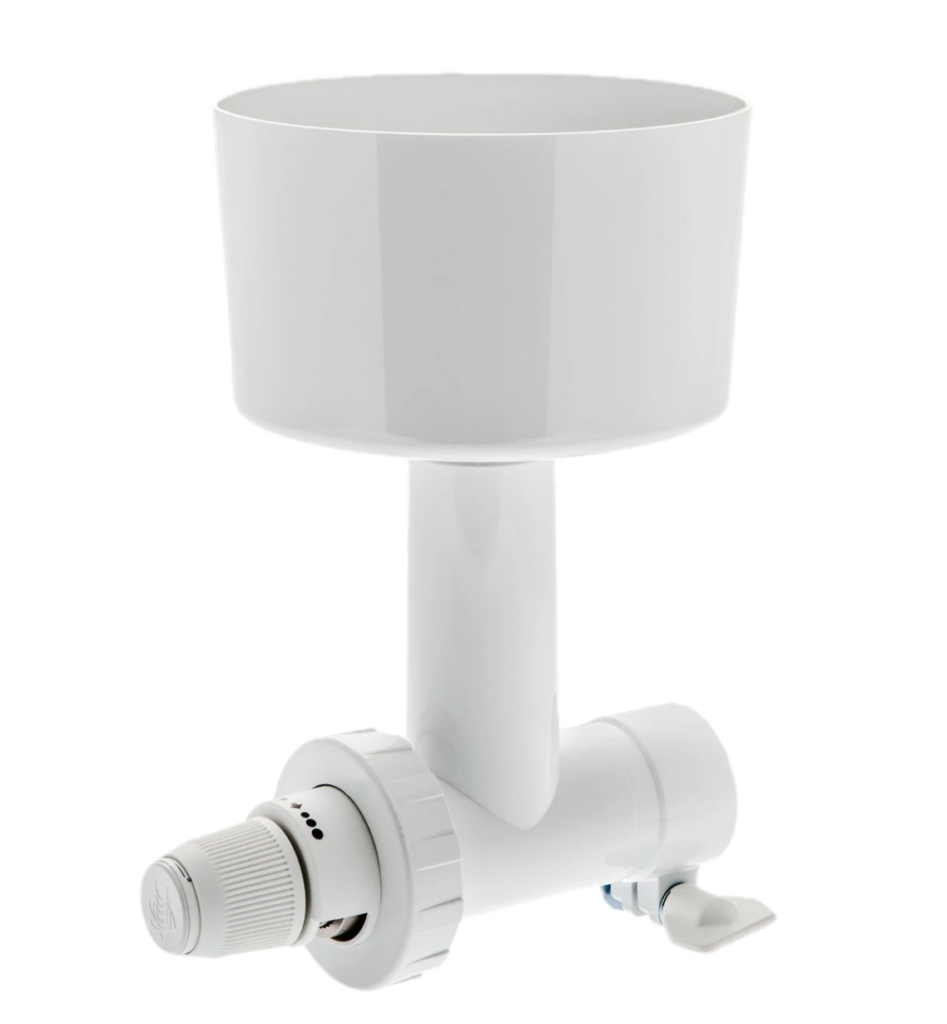
Ankarsrum Grain Mill Attachment
I only received one direct response about the Ankarsrum Grain Mill Attachment, and that baker likes it. The $199.95 attachment is constructed largely of plastic with stainless-steel burrs. In a few Facebook groups, though, I saw recurring complaints similar to those about the KitchenAid attachment: users said it’s slow, often requires two passes, heats the flour, and doesn’t grind finely enough for breadmaking. On the other hand, it gets high praise for grinding coffee beans.
Refurbished and Used Mills
Multiple bakers mentioned this as an underrated option. The WonderMill and NutriMill both hold value well on the secondary market. One baker found a KoMo Fidibus 21 at a thrift store for $90 in like-new condition (I’m jealous). NutriMill sells certified refurbished Classic mills on its website at a discount. Open-box units have the same warranty as new, while used units have a one-year refurbished warranty, so check the individual listing before buying.
Resources the Community Kept Mentioning
These resources came up repeatedly in comments, which probably means they’re worth your time:
Education
- Bread Beckers: Sue Becker’s podcast, online store, and a free 3-hour YouTube class on FMF came up repeatedly; multiple bakers called the class essential viewing. The company also carries the WonderMill and operates grain co-op drops in many states.
- Sue Becker’s book, Home-Ground Flour
- Lovely Bell Bakes: YouTube channel
- Grains in Small Places: YouTube channel
Grain Sources
- Grand Teton Ancient Grains — family-owned, glyphosate-free, frequently recommended
Update: I bought a slew of wheat berries from Grand Teton Ancient Grains and am SUPER happy with them so far! I highly recommend the hard white wheat for bread and soft white wheat for muffins, pancakes, quick breads, etc.
- Living Sky Grains (Montana) — particularly praised for ancient grains
- Barton Springs Mill — beloved for quality
- Azure Standard — widely available, co-op pricing
- Bread Beckers co-op drops — available in many states, recommended for high-quality grain at good prices
Praised for Good Service
- Pleasant Hill Grain — came up multiple times for both customer service and wide selection
Update: One more shout-out for good measure—Pleasant Hill Grain sent me a KoMo Classic, and I am so grateful. They are an amazing company with fantastic customer service.
My First Foray Into Freshly Milled Flour
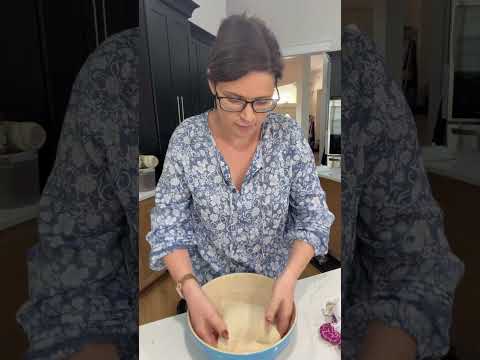
Update: This whole section is new—I wanted to drop my first videos about freshly milled flour here. I am having so much fun and can’t wait to continue practicing and sharing what I learn.
Here’s my first time using the KoMo Classic grain mill:

And this is my first attempt at adding some freshly milled flour to my bread—I swapped 20% of the bread flour for hard white wheat:
Conclusion
We covered a lot, but there was so much good information in that Facebook thread that I wanted to get it organized into one place.
I hope this guide helps you narrow down which mill is best for you — I’ve personally landed on the KoMo Classic for its solid wood construction, 12-year warranty, speed, and the quiet operation so many owners praised.
Have a grain mill I didn’t cover, or want to share your own experience? Drop it in the comments!
Other sourdough product reviews you might like:




Very informative. I’ve had a Retsel mill since 1980. It’s big, heavy and not exactly lovely but it mills slow so the flour is hardly warmed. It will never wear out. It’s still being made in McCallum ID.
Thank you for sharing!!
I have the NutriMill Impact, which I did not order from NutriMill due to it always being out of stock. I tried for several months and finally found a supplier that had it. It was what was in my budget. I’m fairly satisfied with it, with the exception of the flour bin. I find it very difficult to open, as well as if the seal is not exact, it will not mill. I find it difficult to make sure I did it correctly until it does not mill. It can look and feel correct. I did have a meltdown over that issue with the last use. Hopefully, that won’t happen to me again! I would have done more research if cost was not an issue. Overall, once I get my issue mastered, I think it will be fine for my investment. As an older person, I would recommend a pricier model if you can manage it because it takes a little muscle to open the bin. Maybe I need to contact them to see if there is an easier way or if I am doing something wrong.
Ooh, good intel. Let us know if you do contact them and what they say about it.
This excellent! Thank you so much. I like you including the opinions of the group a lot. I think that it says a lot about you and why your business continues to thrive.
I am flour-curious and would love to learn more about the milling process especially about the variety of things that I could do like making cereals and lots of other things. This has helped me make an informed decision and I am excited.
Awesome, thanks Leslie!! And I agree, I think the collective opinion is more useful than just one person. Thanks for the kind words.
I cannot LIVE without my flour mill. When my husband had serious health issues due to his diabetes and embarked on reversing his diabetes with diet and exercise, bread was something we could no longer eat. We had not eaten bread in 10 YEARS when our pastor’s wife educated us on fresh milled flour. He can eat all the fresh-milled bread he wants with zero impact on his blood sugar. (Just goes to show what they have done to the flour you buy on the shelves.) Toast tastes so good after all these years!!! Started with the WonderMill which did a great job, but was SO loud, a total pain to clean, and required lots of storage space. Waited months for the Komo Classic and I seriously take it with us into our storm shelter if a tornado warning sounds. We prefer sourdough and are still struggling to find to the perfect fresh-milled recipe. Hope you dive into it soon!!!
Whoa, that is awesome. I need to do this for my mother-in-law, who has type 1 diabetes. I didn’t know this!
Good morning,
My wife bought me the Wondermill back in June since I was using FMF grinding it with the Kitchenaid grinder. It’s been quite an adventure to say the least but the flavor can’t be beat! And, with using the Wondermill and living in Monticello Fl. The Bread Beckers store is only 4 hours away in north Atlanta where they are the new owners of the Wondermill!! Bonus! Any who! It been a blast! I think you’ll love this part of the journey.
Nice!!! Thanks for sharing!
This was truly so helpful — I have been on the fence about FMF and you have helped me make up my mind (not for me – LOL).
Thank you for all of the research and compiling this — honesty, very greatly appreciated!
Thank you!! So glad it helped!
Thanks for taking the time to put all this info in a nice neat article! I was still researching and leaning towards the Mockmill 200 when I stumbled upon your article. Thanks to the info here I just preordered the KoMo Classic. The beauty, warranty, and performance are worth the $150 more I’m paying. I’m already a sourdough einkorn baker, but so looking forward to FMF baking!
YAY! I am so glad you found this helpful, Shannon!