
Same-Day Sourdough Wonder Bread Copycat Recipe By Hand (No Stand Mixer)
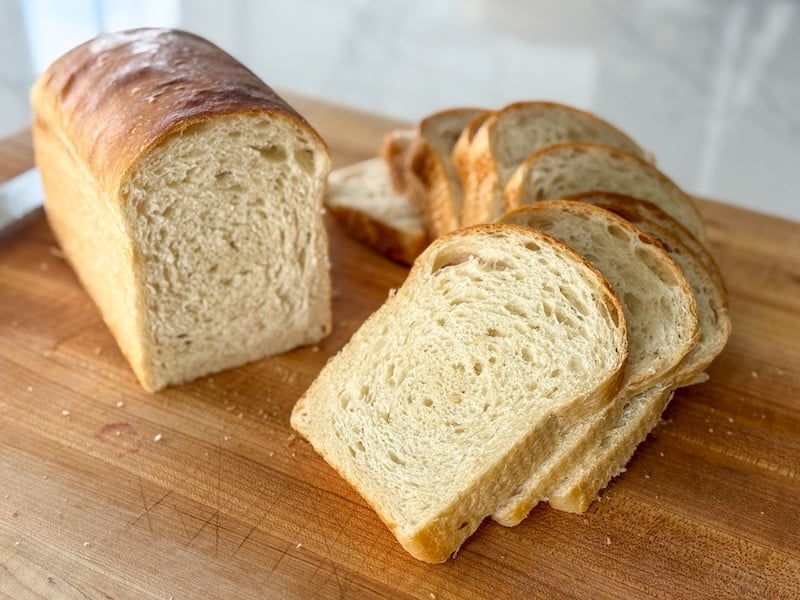
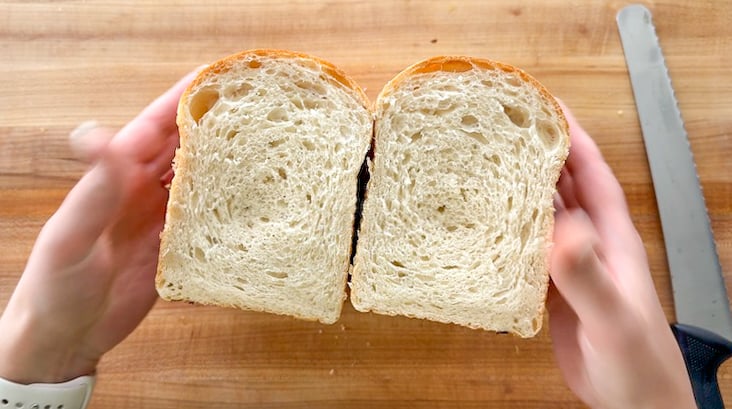
Want to make the super soft sourdough sandwich bread, but you don’t have a stand mixer? Or perhaps you’ve tried to make it in yours and the texture never seemed right.
You can totally make this recipe by hand, and you won’t break your back (or arms) doing it – promise. In fact, if you’ve made artisan sourdough bread, the process is pretty much the same! A little upfront kneading followed by spaced-out stretch and folds.
Note: This article is dedicated to walking you through the hand mixing instructions in detail. So, I’ve spared you all the additional details, including FAQs, substitutions, etc. To get that information, please reference the original recipe post, which is filled to the brim with that info! If you prefer the original, 2-day recipe and want to mix by hand, use the same exact method explained here.
Disclaimer: Some of the products I recommend in this post are affiliate links – if you choose to purchase after clicking one of my links, I may earn a small commission, which helps fund this website, recipe development, and monthly giveaways. I sincerely appreciate your support.
Baker’s Timeline
This timeline is so simple! But here’s a quick glance to help you schedule your bakes:
| The Evening Before (7-8pm) | Feed your starter |
| In the Morning (8am) | Make your tangzhong & mix your dough |
| 8:45am | Stretch & fold |
| 9:15am | Stretch & fold |
| 9:45am | Stretch & fold |
| Mid-day (12-1pm) | Shape your dough |
| Evening (6-7pm) | Bake your bread |
How to Make Same-Day Sourdough Wonder Bread by Hand
Step 1: Make the sweet starter.
The stiff sweet starter is the secret to reducing sourness.
In a small jar, combine 30g sourdough starter, 30g sugar (or honey), 60g water, and 120g bread flour.
Mix until it comes together, then turn it out and knead it briefly until it forms a smooth ball.
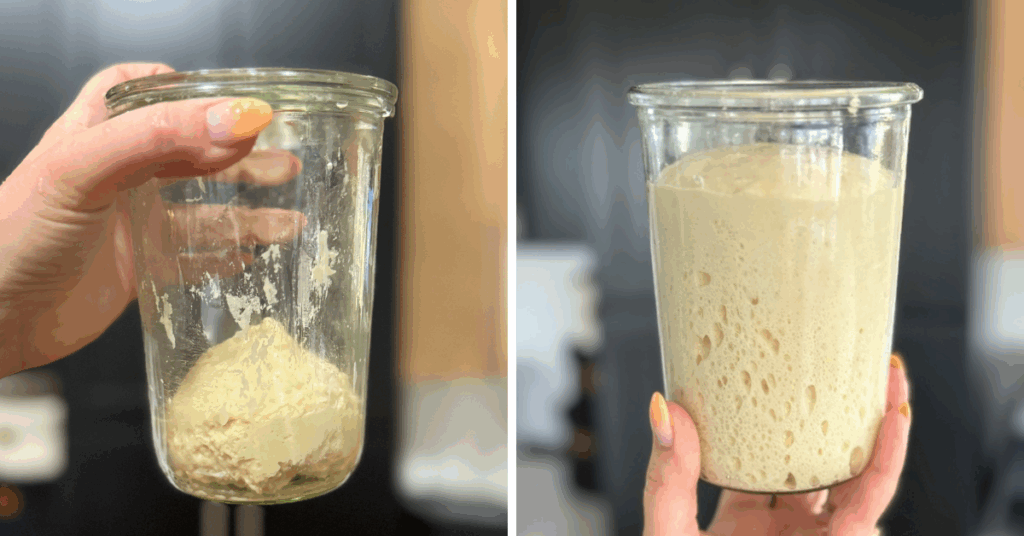
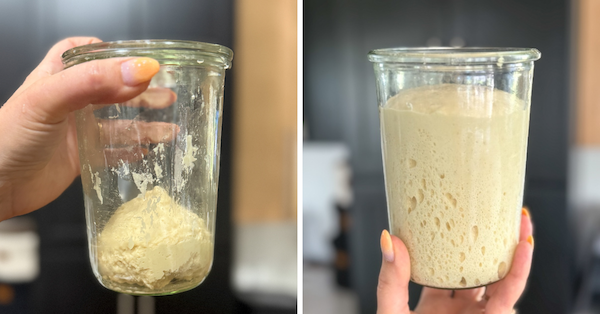
Place it back in the jar, cover loosely, and let it ferment at room temperature overnight. By morning, it should have tripled in size and smell sweet and yeasty. If it hasn’t, put it in a warm place to speed things along.
Step 2: Make the tangzhong.
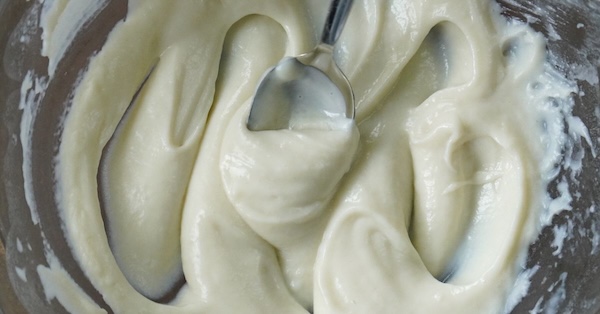
In a microwave-safe bowl, whisk together 35g bread flour and 175g milk until completely smooth.
Microwave in 30-second intervals, stirring vigorously with a whisk between each round. For me, this usually takes 3-5 rounds.
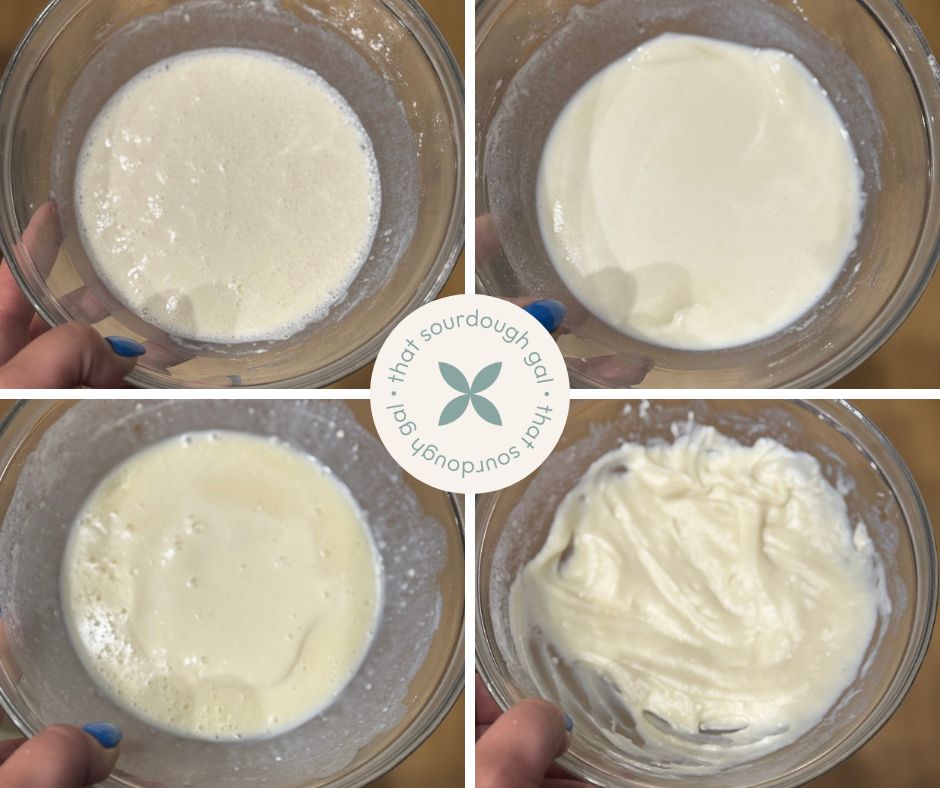
You’re looking for it to thicken to a gel-like consistency and reach 150°F (65°C).
If you prefer, you can make this on the stovetop over medium heat, whisking constantly. Don’t walk away, or it will overcook!
The tangzhong can be made up to 2 days ahead. If you make it on the morning of, wait about 30 minutes for it to cool down. If it’s still hot, it could kill the microbes in your sourdough starter.
Read more about tangzhong: Tangzhong: The 3-Minute Secret to Softer Sourdough
Step 3: Mix the dough.
Once the tangzhong has cooled down, add all of the dough ingredients into a large glass mixing bowl:
- All of the stiff sweet starter
- All of the tangzhong, cooled down
- 195 g cool water
- 40 g sugar
- 45 g avocado oil
- 515 g high-protein bread flour
- 12 g salt
Mix them together with a Danish dough whisk (if you have one); then, switch to your hands. Squeeze and knead the dough to incorporate all the ingredients.

I like switching to slap and folds as it’s less of an arm workout and brings the dough together much more quickly.
After a couple of minutes, put the dough back in the bowl and cover for 30 minutes.
Step 4: Stretch and Folds
After the 30-minute rest, it’s time to strengthen the dough with stretch and folds. You’ll do several rounds, each spaced about 30 minutes apart.
How to do stretch and folds: Wet your hands, grab one side of the dough, stretch it up and fold it over to the opposite side. Rotate the bowl 90 degrees and repeat. Continue until you’ve folded all four sides. You can also tack on some extra kneading or slap and folds! The dough should feel noticeably stronger after each round.
First round: Your dough will be shaggy. Do your stretch and folds, cover, and rest for 30 minutes.
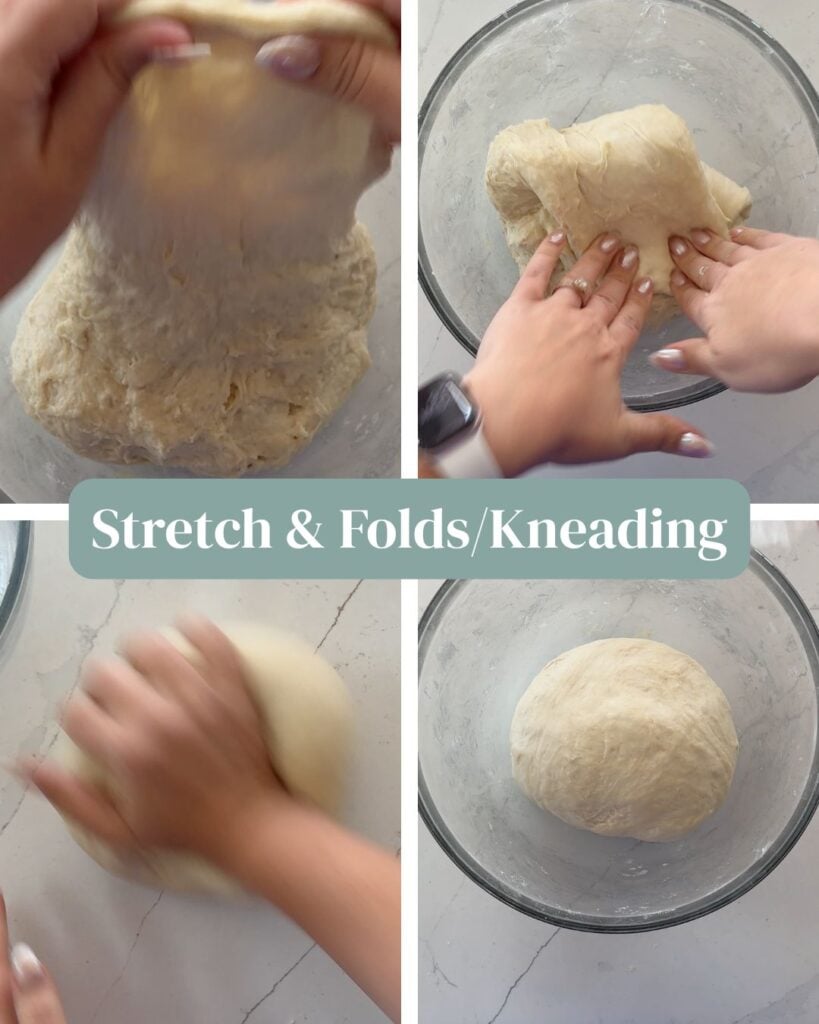
Second round: The dough should already feel more cohesive. Stretch and fold again, cover, and rest for 30 minutes.

Third round: The dough should be getting quite smooth and strong. After this round, test for a windowpane – stretch a small piece of dough thin enough to see light pass through it without tearing.
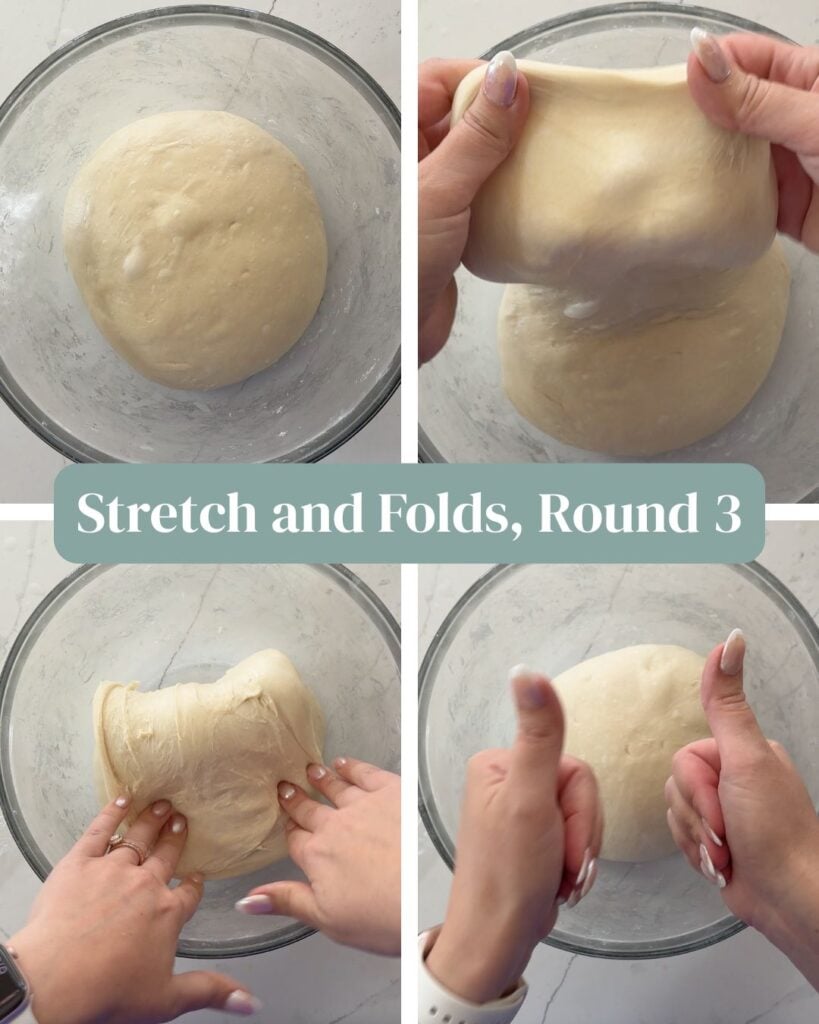
When to stop: Most doughs will be ready after 3 rounds, but some may need a 4th. You’re done when the dough passes the windowpane test and feels smooth and elastic. If your dough still feels weak or shaggy, do one more round and test again.
Step 5: First Rise
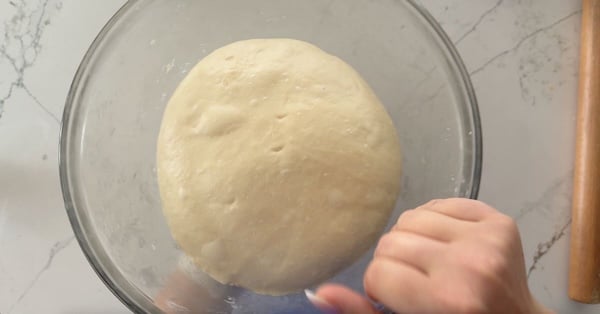
Put your dough in a very warm place – ideally, between 80-90°F (26.5-32°C) for about 3-5 hours.
Here are some options:
- Brod & Taylor proofing box (affiliate link) – I set mine to 85°F (30°C)
- Oven with the light on
- Oven with a cup of boiling water in the corner (if the light doesn’t produce any warmth)
- Preheat your oven for a couple of minutes; then, turn it off
- Warming mat
- A warm spot in your home – perhaps a sunny area, near a heater, or in an area that doesn’t get good A/C
- The garage
- Outside on a warm day (make sure to cover your bowl with plastic wrap so bugs don’t fly in)
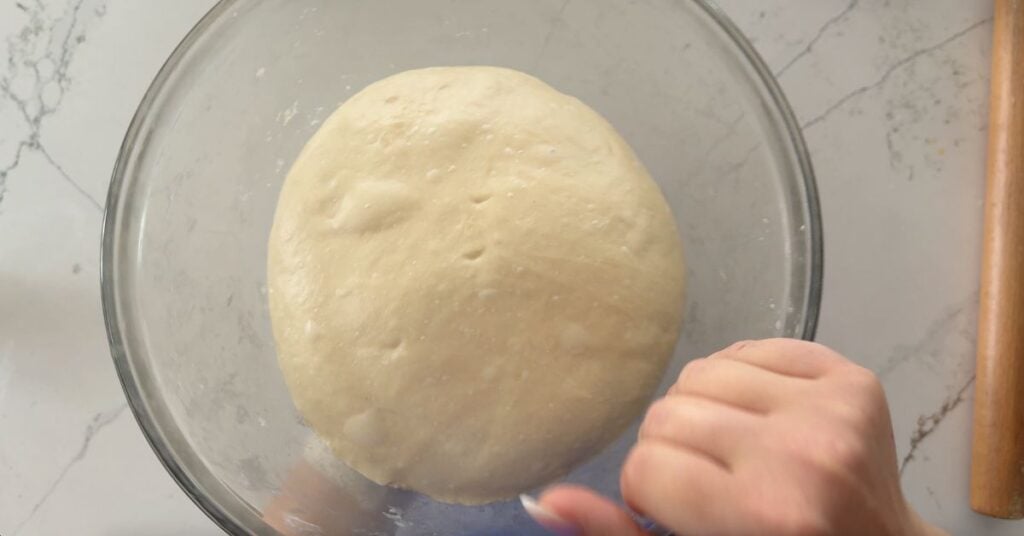
The dough should rise by around 30% and have bubbles forming around the sides and bottom of the bowl. If you poke the surface, it should feel aerated and pillowy.
Step 6: Shape.
Once the dough has shown signs of fermentation, it’s time to shape it and place it in the loaf pan.
I like to lightly flour my surface with bread flour, but that’s optional.
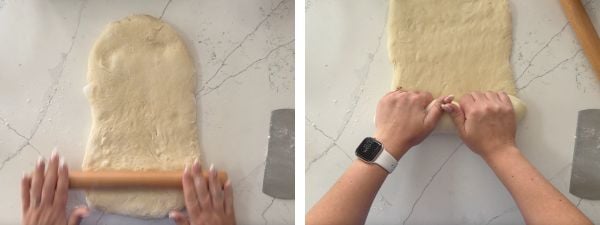
Turn out your dough and stretch it into a rectangular shape, being careful not to tear the dough. Use a rolling pin to smooth out the dough, pop big bubbles, and stretch the dough into a long rectangle that’s slightly narrower than your loaf pan.
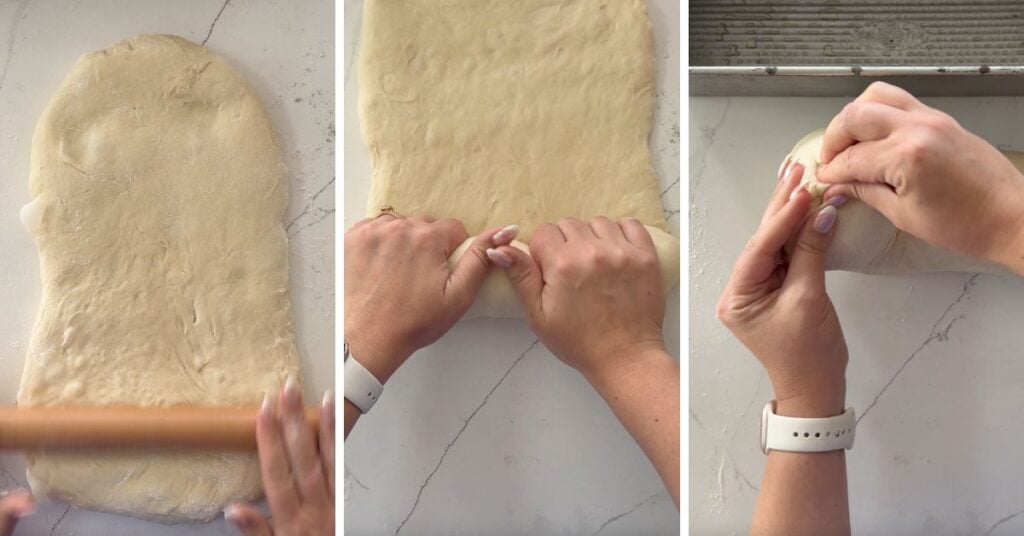
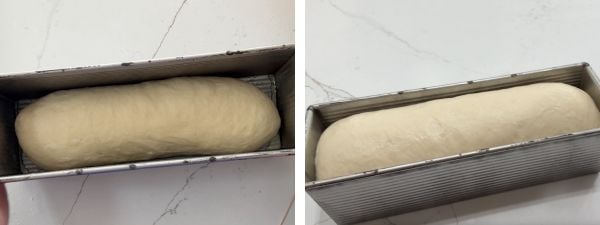
Then, roll up the dough into a log, doing it as tightly as you can to prevent any gaps. Pinch the seams on the edges and place in a lightly oiled loaf pan.
If you notice any bubbles on the surface, pop them with a toothpick! If you don’t, they will continue growing and may potentially burn in the oven later on.
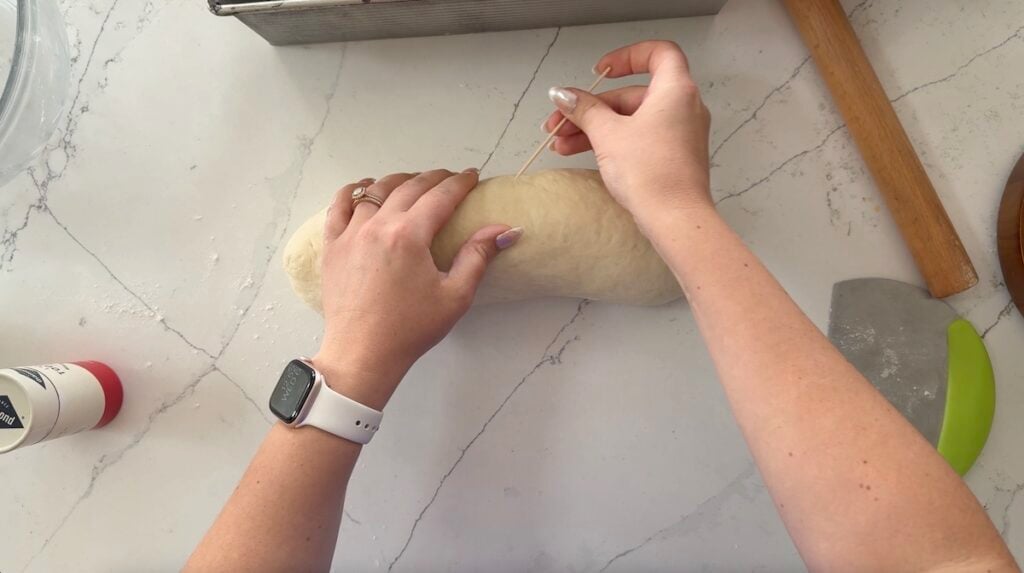
If your loaf pan is nonstick, you don’t need to oil it if you don’t want to.
Step 7: Second rise & bake!
Cover with plastic wrap and let the dough rise for another 3-5 hours in a warm spot, or until it is even with or slightly higher than the edge of the loaf pan.
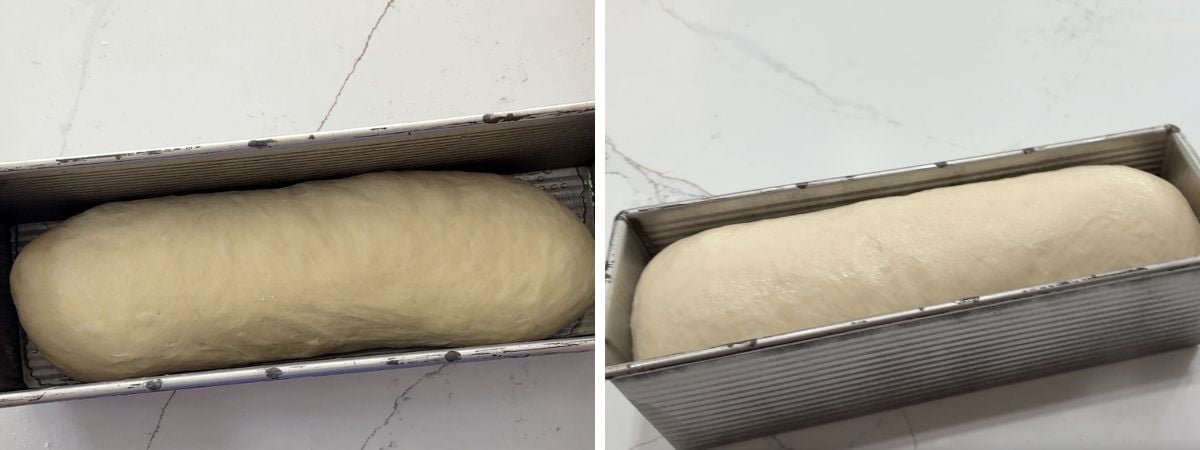
Then, preheat your oven to 350°F (175°C).
Bake, uncovered, until the internal temperature reaches 200-205°F (93-96°C). If the top of the loaf is getting too dark, cover with foil.
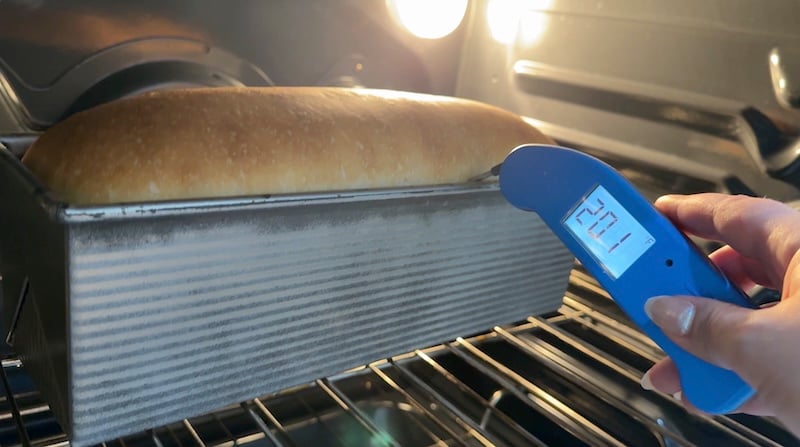
Here are bake times for different-sized loaves:
- Mini loaf pan: 25-30 minutes
- Regular loaf pan (around 8.5×4.5): 30-35 minutes
- Sandwich bread loaf pan (around 13×4): 40-45 minutes
Once done, immediately brush the top of the loaf with butter. I take a stick of butter and just glide it across the top!
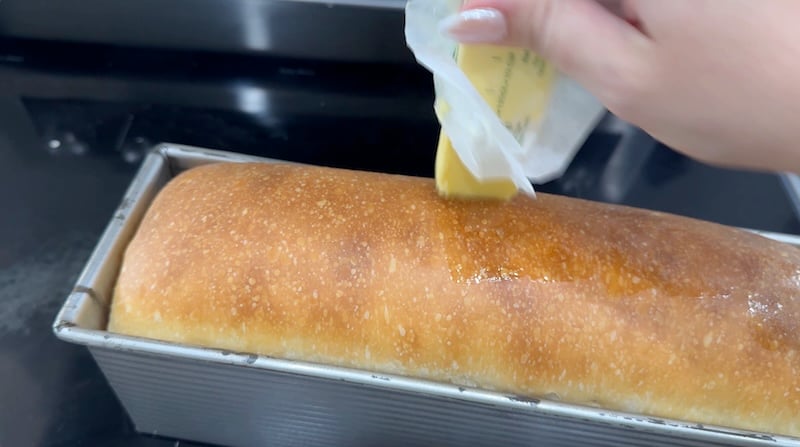
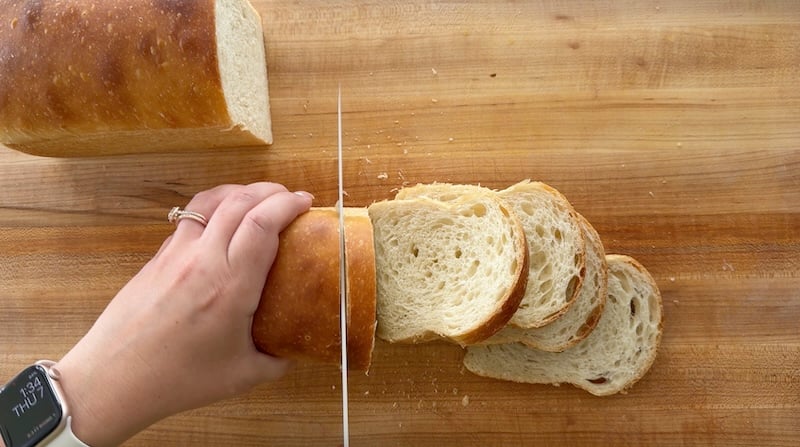
Let it cool for a few minutes; then, turn it out onto a cooling rack. Let it cool for about an hour before slicing!
Loaf Pan Size Calculator
Not using a 13×4 loaf pan like me? Use this calculator to get a revised ingredient list for different loaf pan sizes.
Same-Day Sourdough Wonder Bread Copycat Recipe by Hand
Equipment
- 3/4 L Weck jar for the stiff sweet starter
- Tovolo spatula for mixing your starter
- 2-quart bowl for first rise
- 13×4 long loaf pan USA Pan is my favorite
- Long bread bag code THATSOURDOUGHGAL for 15% off
Ingredients
Stiff Sweet Starter
- 30 g sourdough starter (ideally, fed within the last 24 hours)
- 30 g sugar (or honey)
- 60 g water
- 120 g bread flour
Tangzhong
- 35 g bread flour
- 175 g whole milk
Main Dough
- All of the stiff sweet starter (from above)
- All of the tangzhong (from above)
- 195 g cool water
- 40 g sugar
- 45 g avocado oil
- 515 g high-protein bread flour (see Notes)
- 12 g salt
- 1 tbsp butter (for buttering the baked loaf)
Instructions
- Before you begin: This recipe is written for a 13×4 loaf pan. If you are using a different size, use the calculator above this recipe card for a revised ingredient list. Additionally, a ton of ingredient substitutions have been tested. Please see the substitutions section in the original Wonder Bread post for tips!
The Night Before
- Make the stiff sweet starter: In a small jar, mix 30 g sourdough starter, 30 g sugar, 60 g water, and 120 g bread flour until it forms a ball. Knead outside of the jar to fully incorporate the ingredients. Cover loosely and let ferment at room temperature until morning.

Bake Day
- Make the tangzhong: Mix 35 g bread flour and 175 g whole milk in a microwave-safe bowl. Microwave in 20-30-second intervals, stirring between each, until thickened and reaches 150°F (65°C), or about 4-5 rounds total. Let rest on the counter for about 30 minutes, or until the mixture has cooled below 100°F (38°C). Note: you could make this the night before and refrigerate overnight.
- Mix the dough: In a large glass mixing bowl, combine All of the stiff sweet starter, All of the tangzhong, 195 g cool water, 40 g sugar, 45 g avocado oil, 515 g high-protein bread flour, and 12 g salt. Mix with a Danish dough whisk (if you have one); then, switch to your hands. Squeeze and knead the dough to incorporate all ingredients. Switch to slap and folds for a couple of minutes to bring the dough together more quickly. Put the dough back in the bowl and cover for 30 minutes.

- Strengthen the dough: Do 3-4 rounds of stretch and folds, each spaced 30 minutes apart, until the dough is smooth and has a strong windowpane (you can stretch it thin enough to see light through without tearing).
- Bulk fermentation: Let dough rise in a warm place (~85°F/29°C) until risen by about 30% and small bubbles appear around the sides of the bowl (about 3-5 hours total – bulk fermentation began when we first mixed our dough!).
- Shape the dough: Spritz your loaf pan with a nonstick oil spray. Dump dough onto work surface (use a light dusting of flour to prevent sticking, if needed). Using a rolling pin, roll dough into rectangle slightly narrower than pan width (about 10" wide by 14" long). Try to pop large bubbles as you roll. Roll up the dough tightly, turning the ends in slightly as you roll to minimize an end seam. Place your dough log seam-side down in loaf pan. Use a toothpick to pop any bubbles on the surface of the dough.
- Second rise: Cover with plastic wrap and let rise in your warm spot (~85°F/29°C) until very puffy and the dough is even with the height of the pan rim (approximately 3-5 hours).
- Bake: Preheat oven to 350°F (175°C). Bake uncovered 40-45 minutes until internal temperature reaches 200-205°F (93-96°C). (See Notes for different loaf pan size baking times.) If the top of the loaf is getting too dark, cover with foil.
- Finish: Once done, immediately brush hot loaf with 1 tbsp butter. Cool in pan 5-10 minutes, then turn out onto rack. Cool completely before slicing (1-2 hours).


Video

Notes
- Bread flour: Ballerina Farms (14% protein), Central Milling High Mountain (13.5% protein) or King Arthur unbleached (12.7% protein) – no adjustments needed
- All-purpose: Costco AP flour – add ~25g extra flour to main dough
- Canadian options: Arva Mills Daisy flour or Boreal Organic All Purpose (Costco) work perfectly (thanks to follower Amanda Steele for this tip)
- Mini loaf pan: 25-30 minutes
- Regular loaf pan (around 8.5×4.5): 30-35 minutes
- Sandwich bread loaf pan (around 13×4): 40-45 minutes
Conclusion
If you try this hand-mixed version of the sourdough Wonder Bread copycat recipe, please let me know how it went in the comment section! I’d especially love to hear if you found the hand mixing easier or harder than expected.
I love seeing your photos and hearing about any changes you made.
Happy baking!
Other soft bread recipes you might like:



I absolutely love this recipe and it was so easy to follow. It’s so delicious 😋
Stunning loaf! So glad you enjoyed it!
So yummy and easy recipe to follow. Only thing was I dont have a rolling pin so I tried my best hand to stretch the shape and push down. Also used olive oil since thats what I had, but you do not taste it at all! came out so delicious!!!
Thanks for sharing Noely!
Hi!
I’ve made this recipe and it’s great, but it’s super hard to knead the dough or slap and fold because I don’t have a granite countertop and a silicone mat doesn’t stick down. Do you know of something that could help?
I’d appreciate it a lot. Thanks!
You can do it in a bowl if you prefer!
I’ll try that next time. Thanks! 🙂
What is the ideal loaf pan size to use for sandwiches or toast? Do you prefer aluminum, glass, etc? Thank you!
I use the 13×4 Pullman loaf pan! https://shop.thatsourdoughgal.com/amzn/pullman-loaf-pan
Can you leave two reviews? I hope so! You can tell you test these recipes tried and true. I got the USA pan and I absolutely love it. My bread came out wonderfully. Thank you again!
Thanks so much Krystal, so glad you enjoyed the recipe!
It didn’t post my pictures before
This is my go to weekly bread recipe, but I’m curious how you store this loaf?
You can store it in an airtight container or a glass cake stand. I’ve also used plastic bags before but I know it’s not ideal.
We non longer have kids at home, and go through a loaf quite slowly. I sliced the whole loaf, put baking paper between each slice and then froze in a snaplock bag. It’s amazing. I just pull out the number of slices I need. Super fresh, even to make sandwiches with after being frozen.
Delicious! I used a stand mixer instead of mixing by hand. The dough was beautiful! It rose nicely. Very light and soft. Good flavor. This ranks up there with another bread I make. Will have to make this again with a long ferment.
Beautiful!
Lovely bread. Light, fluffy and soft. I used a stand mixer and the dough was beautiful! This is a top contender to another soft sourdough loaf bread I make. I will make again with a long ferment.
I can hands down say that this bread makes the absolute best turkey sandwich!! My husband always looks forward to turkey sandwiches at Thanksgiving time! This year I cooked a turkey early and made this bread for him….. I have the happiest husband on the planet right now!! Thank you so much for this recipe! If you are on the fence about making this bread…. JUMP!!
Love that, thanks for sharing Michelle!
I love this recipe but usually use my KA. I thought maybe if I could do it by hand I could make double batches and save some time.
This after the 3rd stretch and folds and will probably have to do at least 2 more. I am going back to my mixer!
Yes, a mixer always speeds things up a bit for sure!
I just wanted to share my final product. I would never have been able to do this without you Rebekah! The step by step pics and videos are so helpful!
I just grabbed that ball of dough and worked it like it was my enemy lol! The finished product was just as it should have been and it rose perfectly. I maybe could have rolled it just a bit tighter.
Thanks again!
PS I am still going back to my KA lol!
Beautiful!! Thanks for sharing the final product!
Can I proof this to rise and bake it the next day?
If you want to do that cadence, I suggest using the original recipe instead of this same-day variation. https://thatsourdoughgal.com/sourdough-wonderbread-copycat-recipe/
My favorite recipe! My son absolutely loves this bread and I make it weekly. Thank you for the time and attention you put into your recipes!! The absolute best!
You’re so welcome! So glad you enjoyed it!
I absolutely love these wonderbread recipes! Question, why does this same day one have a higher amount of oil than the original recipe? For the 9×4 pan, the same day has 32g oil as opposed to 18 from the original.
I tested altering some of the ingredient amounts and found I preferred a little more oil. I could have changed that in the original recipe, but then my YouTube video would be inconsistent with the updated recipe. And so many enjoy it as is. So I just left it. But you can make that adjustment on the other recipe if you want!
I made this bread today and it turned out great. I do have a question – it has a rather tangy taste to it and I was a bit surprised by that. Should this bread be tangy? Or is there something I may have done or used that produced this taste?
TIA I absolutely love all of your recipes!
No this bread should not be tangy. I’d have to think any tangy flavors are either due to the acidity of the starter or the particular flour used if it has any kind of whole grain still in it.
I was so pleased with how my loaf turned out. It was so soft and looked just like white bread. I let it cool overnight before slicing it. Then when I went to use it to make sandwiches the texture had changed. Could you help me understand why? It’s almost like it got more dense I guess you’d say.
That sounds fairly normal. It’ll be the squishiest when it comes right out of the oven. After it fully cools, it’ll set up more.
I so love this recipe. Never used a tagzhong believe either. The taste and texture is amazing. But someone tell me why my loaf sinks when I put it in the oven
Hey!! It’s just overproofed. Shorten the fermentation time a little for next time!
I’m trying this recipe tomorrow and so excited! 2 questions:
I need a little longer for the bulk proof because I’m usually at work at that time. Can I let it proof in a cooler place, like on the counter around 70-73° instead of somewhere that’s 80°?
Can I store this in beeswax on the counter?
Yes you can and yes!
Can your substitute an Almond milk for the whole milk in the tangzong?
Yes
I started with 2 stretch and folds and then switched to my kitchen aid after that until the dough was well developed. I just wasn’t seeing the right results after the 2nd stretch and fold. Dough was super tight and very lumpy. I also struggled with the slap and folds. It’s currently doing its second rise. Also I made the starter the night before but had to put it in the microwave after boiling water in it for a couple hours before it was truly ready.