
Guinness Cheddar Artisan Sourdough Bread Recipe
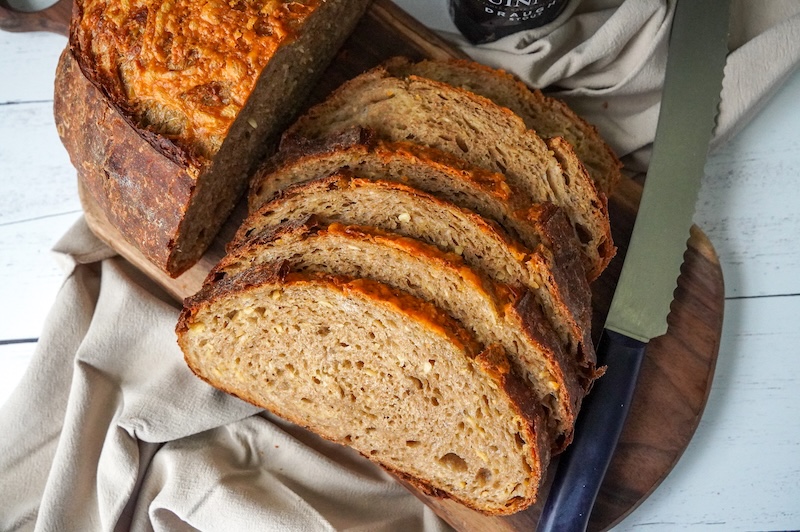
My hubby’s a huge Guinness fan, so when I told him Guinness cheddar sourdough was on the recipe testing list, his ears immediately perked up. We actually visited the Guinness Factory during our Ireland honeymoon – absolutely amazing and totally worth the trip! – so he was especially excited about this one.


This loaf turned out better than I ever could’ve imagined.
My husband said it’s his favorite loaf of bread I’ve ever made! If you’re into bold flavors and want to try something a little different, this one’s definitely worth the bake.
“This was amazing! This loaf was the first loaf EVER that every person in my house ate it! All of my kids and husband…it was gone in 2 days which is unheard of in my house! My 9 year old doesn’t like traditional sourdough loaves and this is her favorite flavor now!” –Recipe tester from Belleville, IL
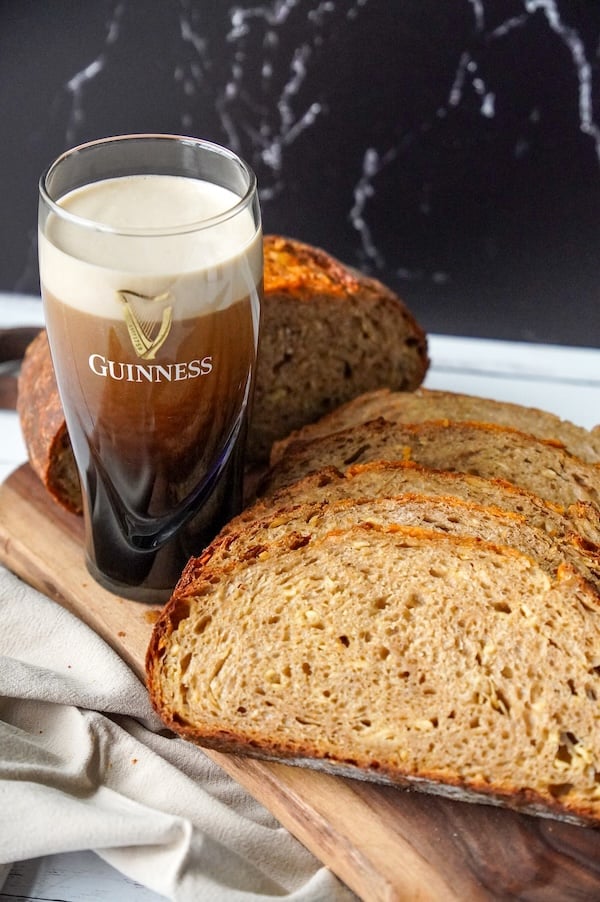
Why You’ll Love This Guinness Cheddar Artisan Sourdough Bread
- It’s rich, bold, and cheesy in all the right ways. The malty depth from the Guinness and the sharp bite from the cheddar make this loaf anything but boring.
- Flavor and texture are both next level. You get a crackly crust, pockets of cheese, and that signature sourdough tang all in one loaf.
- It’s surprisingly easy for a high-reward loaf. It looks fancy, smells incredible, and feels impressive—but the steps are totally doable, and I’d say it’s a perfect inclusion loaf for beginners. (The Italian Herbs & Cheese loaf is also great for beginners!)
- It makes your kitchen smell unreal. Warm bread, toasted cheese, and a hint of beer… Honestly, worth it for the smell alone.
- Tested by over two dozen recipe testers across the world: 26 bakers tested this recipe, and it received an average rating of 4.73 out of 5. The bakers who won’t make it again didn’t like the bold flavors: “the flavor was just too strong for our liking” said one tester from Boiling Springs, SC.
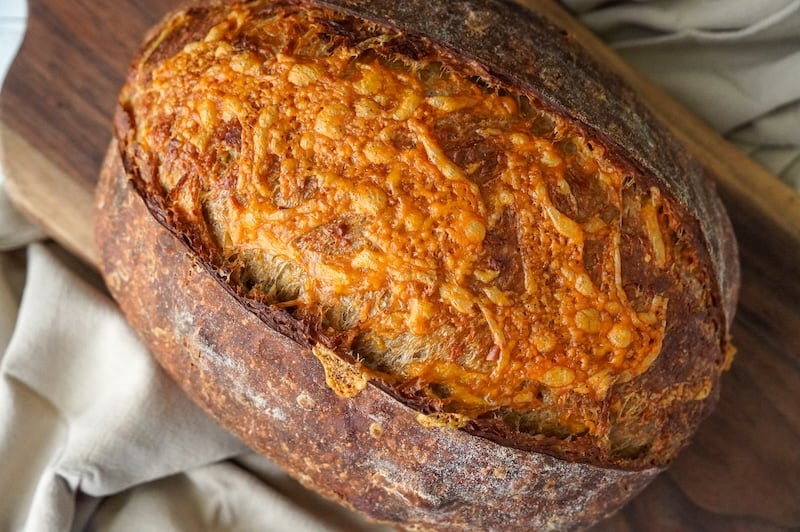
“My husband says it’s one of his favorites.” –Recipe tester from East Liverpool, OH
Guinness Cheddar Artisan Sourdough Bread Timeline
This is a sample baking timeline.
Since fermentation can take quite a bit longer for this loaf, the earlier you start on Day 2, the better.
| DAY 1 | |
| 8:00 PM (before bed) | Feed your starter |
| DAY 2 | |
| 7:00 AM | Mix the dough (this starts the bulk fermentation) |
| 8:00 AM | Add salt + more Guinness |
| 8:30 AM | Stretch & fold #1 + add cheese |
| 9:00 AM | Stretch & fold #2 |
| 9:30 AM | Coil fold |
| 9:30 AM to ~5:00 PM | Finish bulk fermentation |
| 5:00 PM | Pre-shape |
| 5:20 PM | Final shape + cold proof |
| DAY 3 | |
| 8 AM (or when you’re ready to bake) | Preheat oven to 450°F (230°C) |
| 8:30 AM | Score and bake |
“Even my husband liked it and he normally doesn’t go for whole wheat bread. We always have Guinness on hand. Also, who doesn’t love cheese?” –Recipe tester from Spring, TX
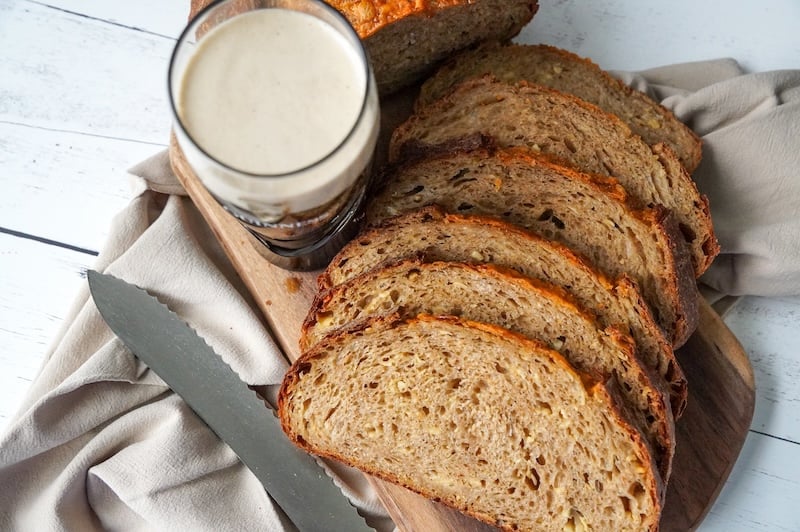
Ingredients in Guinness Cheddar Artisan Sourdough Bread
- Guinness beer: Adds a rich, malty flavor and subtle bitterness that balances beautifully with the sharp cheddar. Cold from the fridge is totally fine—just know it’ll slow down fermentation a bit.
- Sourdough starter: Make sure it’s active, bubbly, and ready to go.
- Bread flour: I used King Arthur Unbleached Bread Flour—strong and reliable with good protein for gluten development.
- Whole wheat flour: I used Cairnspring Whole Grain Expresso Bread Flour, which has 14–15% protein and adds depth and heartiness to the loaf.
Want a plain loaf with some whole wheat? Check out 20% Whole Wheat Artisan Sourdough Bread Recipe
- Sea salt: Helps bring out the flavor in the dough and controls fermentation. I like fine sea salt.
- Cheddar cheese: I went with Kerrygold Dubliner Irish cheese for its sharpness and to stick to the Irish theme. You could sub in Cabot or Tillamook, but I don’t recommend cheap store-brand cheddar—it can get rubbery. I did some deep cheese testing for my jalapeño cheddar loaf, and trust me: the brand makes a difference.
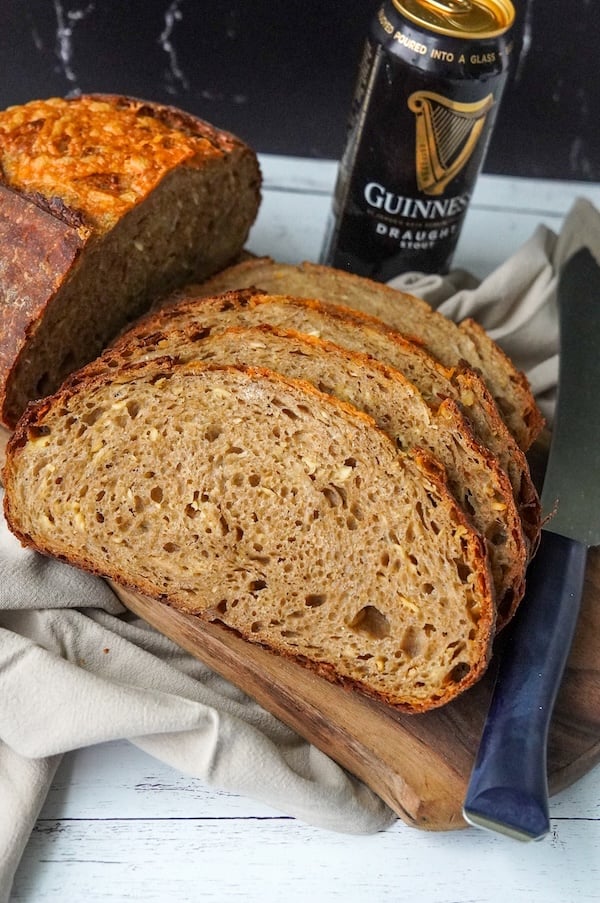
Step-by-Step Instructions for Guinness Cheddar Artisan Sourdough Bread
Step 1: Feed Your Starter (The Night Before)
The night before baking, mix:
- 13 g sourdough starter
- 65 g flour
- 65 g water
Stir it all together until there’s no dry flour left, then loosely cover the jar and leave it out at room temp overnight. By morning, it should be at its peak and ready to bake with.
You’ll need 120 g for this recipe. Save the rest to keep your starter going!
Step 2: Mix the Dough (Morning)
This dough takes a long time to ferment thanks to the cold beer, so start early—around 7 or 8 AM. We’ll also do a fermentolyse, which is just waiting to add the salt so fermentation can get a head start.
In a mixing bowl, whisk together:
- 350 g cold Guinness beer
- 120 g active sourdough starter
Then, once mostly dissolved, add:
- 300 g bread flour
- 200 g whole wheat flour
Mix by hand or with a Danish dough whisk until no dry bits remain (about 3–4 minutes).
The dough will be shaggy at this point—totally normal.
Cover the bowl with a damp towel or plastic wrap and let it rest on the counter for 1 hour.
Step 3: Add in Salt (and more beer)
After the hour rest, add:
- 10 g sea salt
- 30–50 g more Guinness
Dimple that into the dough—literally poke it in with your fingertips—and then squish and squeeze the dough until the salt and beer are fully absorbed.

If the dough feels stiff, add more beer. Once it’s all mixed in, switch to slap and folds:
Grab the dough in your hands, slap the bottom edge down onto your countertop (or the inside of your bowl if you’re not up for a mess), fold it over onto itself, and repeat for 1–2 minutes until the dough starts to come together in a smoother, stronger ball.
Cover and let it rest for 30 minutes.
Step 4: Add the Cheese
Shred 200 g of cheddar cheese. Sprinkle about a fourth of the cheese on top of the dough.
Wet your hands (so the dough doesn’t stick), grab the top edge of the dough, stretch it up, and fold it over to the center. Rotate the bowl and repeat on all four sides until all the cheese and folded in.
Cover and let rest 30 minutes.
If you want to save a small handful of cheese for the top of the loaf during baking, go for it!

Step 5: Stretch and Folds/Coil Folds
After the cheese has been added and the dough has rested, we’ll do about two more rounds of dough strengthening.
I did one set of stretch and folds, rested for 30 minutes, and finished with coil folds.
To do a coil fold, slide both hands under the dough, lift it up, and let it fold under itself as you set it down. Do this from both sides. It’s gentler and perfect for dough that’s now full of cheese.
Cover and we’ll finish the bulk fermentation.
Check out my sourdough inclusions cheat sheet if you want add-in ideas.
Step 6: Bulk Fermentation
Cover the bowl and let the dough sit at room temperature until it’s visibly fermented. You’re looking for a dough that’s puffy, jiggly, and has bubbles on the surface and along the sides of the bowl.
My dough took 10 hours to finish bulk fermentation in a kitchen that stayed around 73°F (22°C).
Check it periodically. If it still feels dense or isn’t bubbly, it’s not ready. Here’s what my dough looked like when the bulk fermentation was done:

Step 6: Pre-shape the Dough
Lightly mist your counter with water (or flour it) and gently turn the dough out of the bowl.
Use your bench scraper to tuck and pull the dough into a round shape. You want to create surface tension by dragging the dough gently against the counter.
Once it looks smooth and tight, let it rest for 20 minutes, uncovered.

Step 7: Final Shape + Cold Proof (overnight)
Use a bench scraper to gently scoop up the dough and flip it over.
Pick it up with your hands and fold it like a book—once for a batard or twice for a boule. This book fold shaping method is called the Caddy clasp (after Wayne Caddy).
Set it into a floured banneton (rice flour works best) seam side up and pinch the seam together.

Cover it with a flour sack towel or plastic wrap and refrigerate overnight for 8 to 24 hours.
This cold proof boosts flavor (the sourdough tang makes the cheddar really pop) and makes the dough easier to score in the morning.
Step 9: Score and Bake
Preheat your oven to 450°F (230°C) with a Dutch oven inside for at least 30 minutes (I like convection).
Flip the cold dough onto parchment or a bread sling and score the top with a sharp lame.
Place into the Dutch oven, cover, and bake for 25 minutes.
Remove the lid and sprinkle some cheese on top, if desired. Bake uncovered for 10 more minutes to get color on the crust.
Then, lower the oven temperature to 375°F (190°C). Cover the loaf loosely with foil and bake for another 10–15 minutes, or until the internal temp reaches 205–210°F (96–99°C).
Let the loaf cool on a wire rack for at least 1 hour before slicing to avoid a gummy center.

“The malty taste is AMAZING!” –Recipe tester from Melbourne, Australia
Ingredient Substitutions
- Guinness: Several recipe testers tried different, similar beers with success: Guinness Extra Stout, Black & Tan, Coopers Extra Stout, Speights Old Dark Ale (New Zealand), Mondschii Stout, and a local Irish stout. One tester used zero-alcohol Guinness and said the dough smelled like “college kids puke,” for what it’s worth!
- Kerrygold Dubliner cheese: Again, several recipe testers couldn’t find this Kerrygold cheese, but you can sub any sharp cheddar in a pinch. A couple good options include Boars Head Irish cheddar or Tillamook sharp cheddar.
- Whole wheat flour: any whole wheat flour should work fine in this recipe. If you don’t like whole wheat, you can use all bread flour, but you won’t need as much liquid. Start with 300g of beer in the initial mix and add 20-30g more when adding the salt.
Tips for Success
This recipe is super simple and is so beginner-friendly, but there are a few things to note:
- This loaf takes longer to bake through than normal loaves. One recipe tester noted that she didn’t bake it long enough and ended up with a gummy interior. Another had to bake for 9 minutes longer than I did. Definitely use a thermometer to ensure the internal temperature is 205–210°F (96–99°C). Tent with foil to prevent burning.
- Be flexible with the amount of beer you add. The amount of liquid your flour can absorb will determine how much beer you add to the dough. The texture I show in the video clips is what we’re after – not firm but also not soupy. One tester had to add more flour after the fermentolyse, but I’d rather you start with less beer and keep adding more until the texture is right (instead of overcorrecting).
- Consider other final shaping methods: I like the caddy clasp because it’s simple, but if your dough is acting looser than mine, it might need more help to retain a good shape. One tester found the caddy clasp didn’t create enough tension. In that case, pivot to a traditional Tartine final shaping method.
- Try mellower cheese if you don’t like sharp flavors. A couple of recipe testers thought the flavor profile was too strong. Swapping the Irish cheese for a mild cheddar will tone that down.
“I couldn’t wait till the bread was cold… had to cut it when it was warm. It’s so delicious, crispy outside, soft and moist inside. ❤️💐” –Recipe tester from Germany
Guinness Cheddar Sourdough Bread
Equipment
- Oval Dutch oven ($15 off with code REBEKAH15)
- Oval banneton (5% off with code TSG5) | Size I'm Using: Oval – Spiral MD
Ingredients
Initial Dough Mix
- 350 g Guinness beer (cold is fine)
- 120 g active sourdough starter
- 300 g bread flour (King Arthur unbleached, 12.7% protein)
- 200 g whole wheat flour (Cairnspring whole grain expresso bread flour, 14-15% protein)
Added Later
- 10 g sea salt
- 30-50 g Guinness beer (cold is fine)
- 200 g cheddar cheese shredded | (Kerrygold Dubliner Irish Cheese)
Instructions
Feed Your Starter
- To make this bread, you need 120g total of active sourdough starter. If you want to make this dough in the morning, I suggest feeding your starter before bed: 13g starter, 65g flour, 65g water. This will give you a little more than you need.
Mix the Dough
- This dough takes longer than usual to bulk ferment, so I suggest starting in the morning. In a bowl, whisk together 350 g Guinness beer and 120 g active sourdough starter. Then, add 300 g bread flour and 200 g whole wheat flour. Mix with a Danish dough whisk or your hands until no dry flour bits remain (about 3-4 minutes). Cover with plastic wrap or a damp kitchen towel and let rest 1 hour.Tip: This process of delaying the salt is called a fermentolyse. It gives the fermentation a jumpstart, which is helpful since we're using cold beer, which slows it down.
- Dimple in 10 g sea salt and 30-50 g Guinness beer, squeezing the salt and liquid into the dough. Start with the lower amount of beer – we can add more after mixing if needed. After 1-2 minutes of squeezing the dough, switch to slap and folds, which brings the dough together really quickly.If the dough still feels stiff, add the remaining amount of beer, squeezing it into the dough and then switching to slap and folds to fully incorporate. Cover and rest 30 minutes.

Stretch and Folds
- Shred 200 g cheddar cheese. Add a quarter of the cheese at a time during the stretch and folds, layering them evenly as you perform each fold to ensure even distribution. Cover and let rest 30 minutes.Optional tip: Feel free to reserve a small amount of the cheese for topping the loaf tomorrow!
- Perform another set of stretch and folds. Cover and let rest 30 minutes. Then, perform a final round – I prefer coil folds for the last round as it's gentler on the dough.
Bulk Fermentation
- Cover the dough and let it ferment at room temperature until it is puffy, jiggly, and has visible bubbles on the surface and sides. The exact amount of time this takes will vary. The temperature of your environment is the biggest factor. For reference, it took my dough about 10 hours – my dough ended up at 74°F (23°C), and my kitchen was 72.5°F (22.5°C).
Shaping & Cold Retard
- Mist your work surface with water (or lightly flour it if you prefer). Gently turn the dough out of the bowl. Using a push and pull motion, shape the dough ball into a round shape. We want the surface to be taut. Let rest, uncovered, for about 20 minutes, or just until the dough relaxes a bit.
- Flip the dough and use the caddy clasp final shaping technique to fold it into a boule or batard.
- Cold proof overnight. Place the shaped dough into a floured banneton, cover with a flour sack towel or plastic wrap, and refrigerate overnight (8-24 hours). This enhances flavor, digestibility, and makes the dough easier to score before baking.
Score & Bake
- Preheat your oven to 450°F (230°C) with a Dutch oven inside for at least 30 minutes. (I use convection.) When ready to bake, carefully transfer the cold dough onto parchment paper or a bread sling, score the top with a bread lame, and place it into the preheated Dutch oven. Cover and bake for 25 minutes, then uncover and top with additional shredded cheese, if desired.Bake for another 10 minutes. Then, lower the oven temperature to 375°F, cover the bread with foil, and bake another 10-15 minutes, or until the internal temperature reaches 205-210°F (96-99°C).
Video

Conclusion
This loaf was a hit in our house—my husband loved it, and judging by the comments on my Facebook post, I’m not the only one with a cheddar-and-beer-loving crowd.
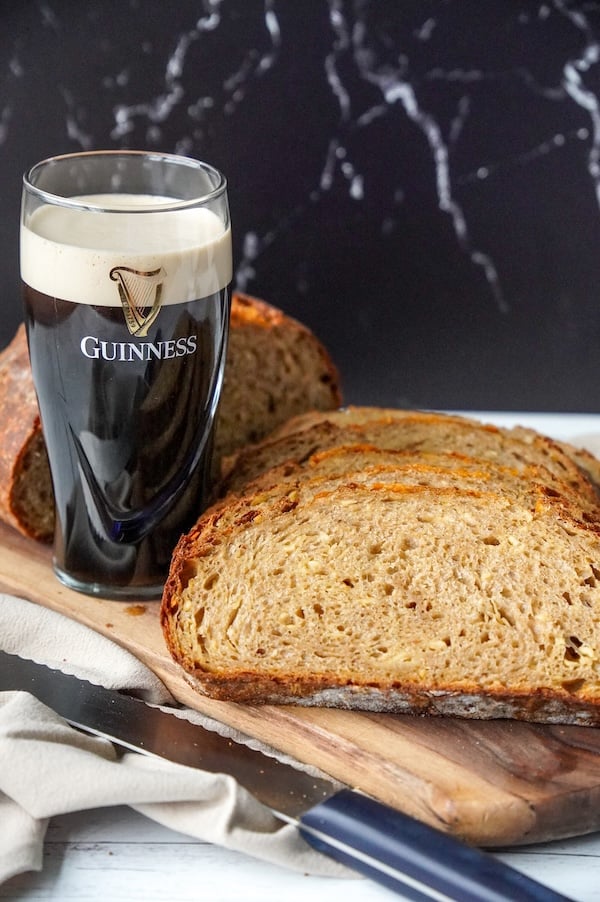
If you’re looking for a fun, flavorful twist on your usual sourdough routine, give this one a go.
Another inclusion idea to try: The Best Jalapeño Cheddar Artisan Sourdough Bread Recipe



I’m sorry but this is my least favorite loaf of bread. It did not taste good at all to me.