
Sourdough Breakfast Pockets (Sausage, Egg & Cheese)
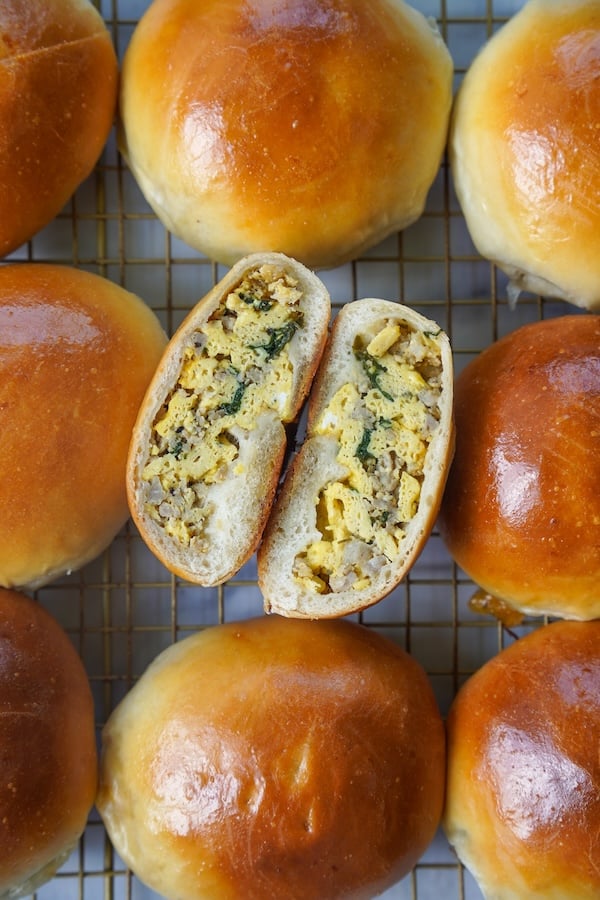
These entirely self-contained sourdough breakfast pockets are a fun twist on bierocks (also called runzas). Instead of the traditional cabbage and beef mixture, we swap in a sausage, egg, and cheese scramble.
The dough is fully fermented (which we love) and has a slightly sweet edge that reminds me of Hawaiian rolls.
You can riff on the filling with veggies — red bell pepper and spinach are my favorites — and choose breakfast sausage, chorizo, or vegan chorizo. The filling is flexible, so you can make these breakfast pockets your own!
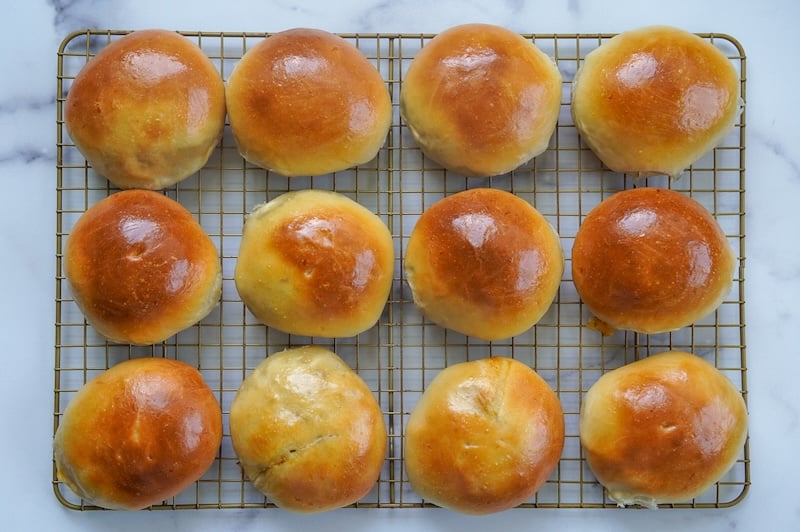
Let me show you how to make these!
Disclosure: Some of the links to products I recommend in this post are affiliate links — if you choose to purchase through one of my links, I may earn a small commission, which helps fund this website, recipe development, and monthly giveaways. I sincerely appreciate your support.
Why You’ll Love These Sourdough Breakfast Pockets
- All-in-one breakfast sandwich: Your breakfast scramble is fully contained within the dough, making these easy to grab and go!
- Freezer-friendly: These are practically made for the freezer. They thaw and reheat beautifully, so you can skip the freezer aisle and save that money.
- Built on a tester-approved base: More than 230 home bakers rated the original sourdough bierocks 4.67 out of 5, and this version uses the same tester-approved dough. Only the filling changed.
And, as a sidebar, here’s a sampling of what those recipe testers said:
“I absolutely love recipes like this that I can fill my freezer with.” —Recipe tester from Northern Nevada
“It was so easy and gave fantastic results. I love making stuffed rolls, but have never tried them with sourdough; huge difference from yeast rolls.” —Recipe tester from Star, Idaho
“Such a versatile dough. The options are endless for ingredients!” —Recipe tester from Camden, Arkansas
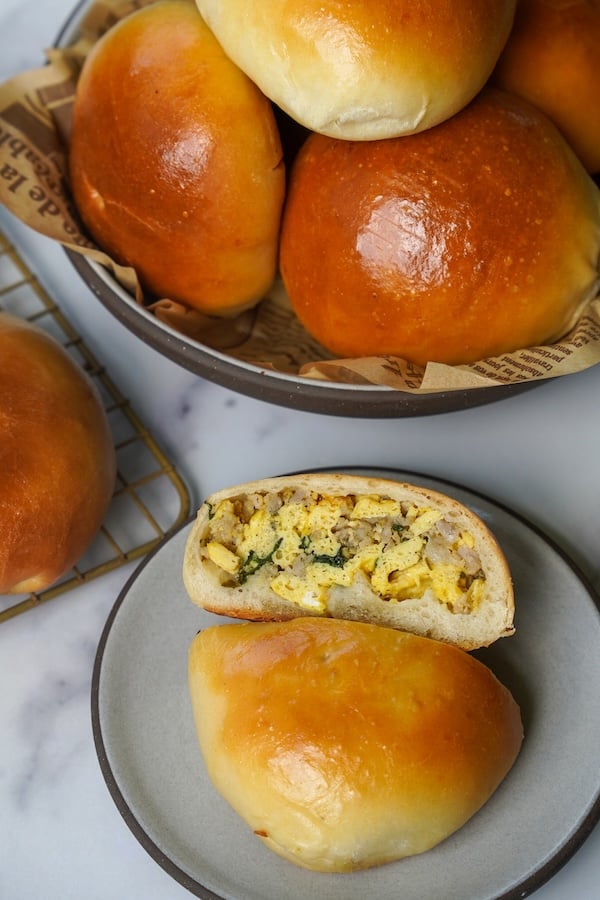
- Fermentation that works around your schedule: I love mixing the dough before bed — when I wake up, I pop it in the fridge until I’m ready to cook the filling and shape and fill the pockets. Prefer daytime? Mix in the morning, head to work, and finish in the evening.
- Extremely versatile: Choose your favorite sausage, add the veggies and greens you like, and swap the cheddar for another cheese. Think of this recipe as a template and make the filling your own!
My Recipe Testing Process
The dough was the easy part. It’s the same dough that more than 230 bakers put through my full testing process for the original sourdough bierocks recipe.
It was that dang filling that took four rounds of testing to nail down.
Round 1: Delicious, but a pale blob
My first filling was sausage, hash browns, goat cheese, and eggs. It tasted great, honestly. But it looked unappetizing — no color, no contrast, just a pale scramble tucked inside pale dough.
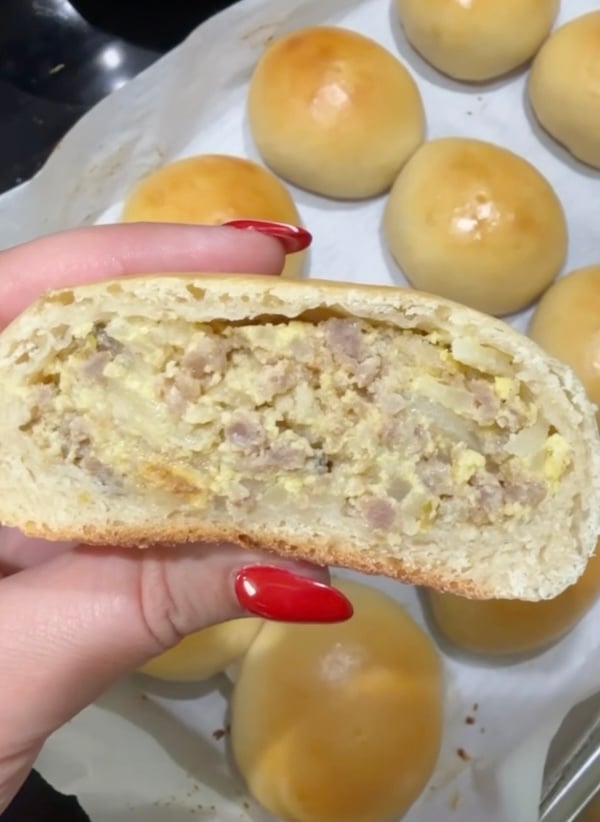
I also started second-guessing the hash browns. The dough is already the carb here. Did I really need to wrap bread around potatoes?
So I did what I do whenever I’m stuck — I took the question to my Facebook community and asked what was missing.
Y’all did not hold back. Hundreds of comments later, three suggestions came up again and again:
- Peppers: By a landslide, with red bell pepper the clear favorite.
- Something green: Chives, green onions, parsley, and spinach, in roughly that order of enthusiasm.
- Ditch the goat cheese for cheddar: So many people suggested this that I knew it had to be in the final recipe.
Thanks to my Facebook crew, I knew the adjustments I needed to make, but in true That Sourdough Gal fashion, I had a squirrel moment. I wanted to try something totally different first.
Round 2: The “actual sandwich” experiment
Before I got to the veggies, I got sidetracked. My father-in-law suggested making the inside a real sandwich instead of a scramble — so I cooked egg rounds in my silicone egg molds, made sausage patties, cut cheese slices, and tried to stack all three inside the dough.
It failed in four different ways:
- It took way more time than I anticipated.
- It required silicone egg molds, which most people don’t own.
- Wrapping soft dough around a rigid stack was a shaping nightmare.
- They were a mess after baking — the dough cracked, and the filling leaked out of the bottom. No good.
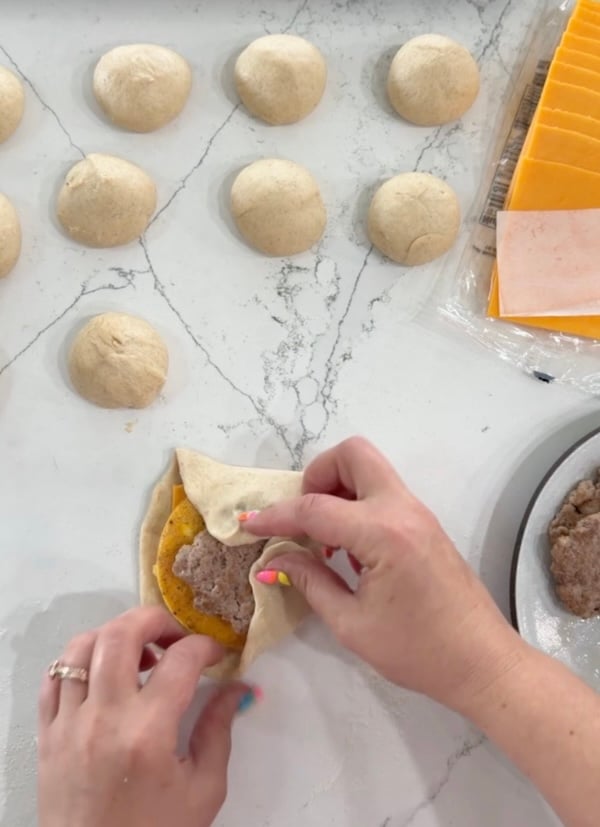
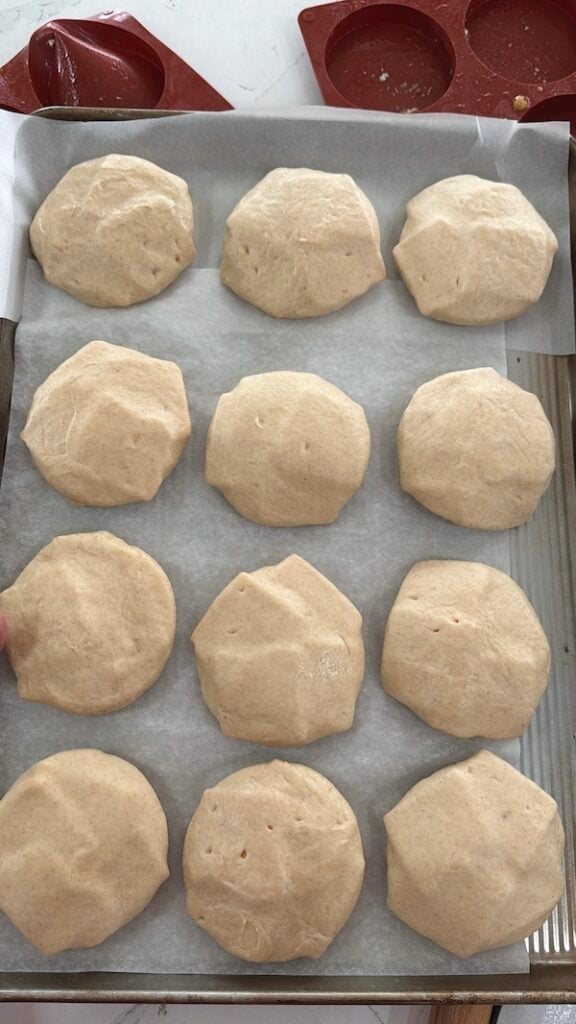

Great idea in theory. But back to the scramble.
Round 3: So close — and then, the gummy line
Scrambled filling, veggies in, hash browns out. Much better, and much prettier. But when I cut one open, there was a gummy line right where the filling met the dough.

All I can say is UGH!
Two things were happening at once. I’d pulled them from the oven a little early (scheduling snafu), and I used chorizo, which renders a lot of grease. That grease was soaking straight into the dough.
I asked for feedback on my Stories, and blotting the excess grease was the No. 1 suggestion — I concur!
Round 4: The fix
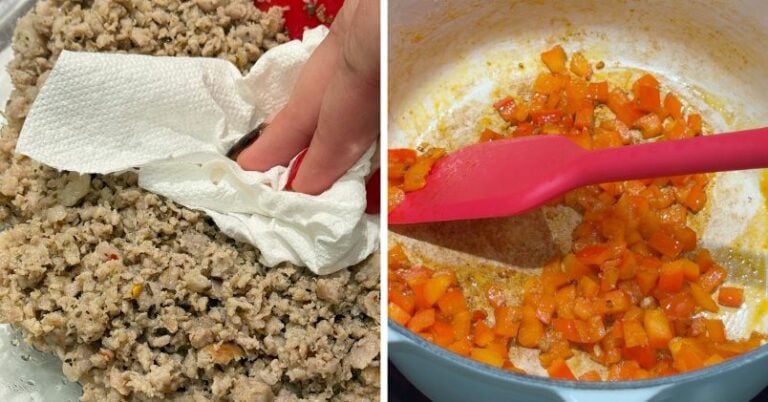
I blotted the excess grease off the sausage with a paper towel before mixing the filling, and I baked them until they were a deeper golden brown instead of pulling them at the first hint of color.
Perfect.

Lesson learned: blot that excess grease!
Baker’s Timeline
This is the same-day timeline, with the optional cold proof explained afterward. Times are flexible and depend on your kitchen temperature.
Same-Day Timeline | |
| Night before | Feed your starter |
| 8 AM | Mix dough; bulk ferment until doubled, about 7–8 hours at 80°F (26.5°C) |
| Around 2:30–3:30 PM | Make filling; let cool to room temperature |
| Around 3–4 PM | Divide, shape, and fill. Cover and proof up to 2 hours at 80–85°F (26.5–30°C). |
| Around 5–6 PM | Bake |
And if you prefer to let your dough rise overnight (my personal preference), here’s a flipped timeline:
Overnight Fermentation Timeline | |
| Morning | Feed your starter |
| 9 PM | Mix dough; bulk ferment until doubled, about 10–12 hours at 73°F (23°C) |
| 7 AM | Make filling; let cool to room temperature. Divide, shape, and fill. Cover and proof up to 2 hours at 80–85°F (26.5–30°C). |
| Around 9:30–10 AM | Bake |
Optional cold proof: After the bulk rise in either timeline (and before shaping), you can refrigerate the dough 12–36 hours for a deeper sourdough flavor and a longer fermentation that may make the dough easier to digest for some people. It does not need to come back to room temperature before shaping and filling.
Equipment You’ll Need
- Scale: Essential for accurate measurements!
- Stand mixer with a dough hook (or your hands): Either works great — use what you’ve got.
- Bench scraper: Perfect for dividing the dough and shaping.
- Large skillet or Dutch oven: The sausage, veggies, and eggs all cook in the same pan.
- Parchment paper or a Silpat: Prevents you from scrubbing any egg wash, escaped cheese, or grease off the sheet tray.
- Half sheet tray (or two quarter sheet trays): All 12 rolls fit on one half sheet.
- Half sheet tray cover: For the second proof. A fantastic alternative to plastic wrap!
- Pastry brush: For the egg wash.
- Cooling rack: Lets the bottoms breathe so they don’t get soggy.
Sourdough Breakfast Pocket Ingredients
For the dough:
- Sourdough starter: Healthy and ideally fed within the last 24 hours. If you already have 150g of active starter, you can skip the feeding step.
- Whole milk: Makes a softer, richer crumb than water would.
- Sugar: Gives the rolls their slight sweetness and similarity to Hawaiian rolls. It also helps the tops brown up beautifully.
- Unsalted butter: Softened. Enriches the dough, and can I just say that enriched dough has the BEST smell on earth?
- Egg: Adds richness and a little extra structure.
- All-purpose flour: No bread flour needed here — we want soft, tender rolls that aren’t chewy, so the lower protein content of all-purpose flour is ideal.
- Sea salt: I use Redmond Real Salt (15% off with code TSG15), but any salt works.
For the filling:
- Ground sausage: Breakfast sausage, chorizo, or vegan chorizo all work. Use the rendered fat to sauté the veggies, so don’t drain the pan completely.
- Eggs: Scrambled just until set and glossy.
- Heavy cream or whole milk: Just a splash for the scrambled eggs.
- Spices (optional): I used smoked paprika, garlic powder, and onion powder; they’re what I always reach for. Season the eggs however you’d season a normal scramble.
- Shredded cheddar: Folded in off the heat so it melts into the filling without separating and becoming oily in the pan.
- Diced veggies (optional): Red bell pepper, onion, mushroom, or jalapeño work great here. Red bell pepper is my favorite, and it was overwhelmingly what my Facebook community voted for.
- Greens (optional): Spinach or kale, stirred in off the heat until just wilted.
For the egg wash:
- Egg: Gives the tops a glossy, deep-golden finish.
- Whole milk or heavy cream: Helps create a golden finish, thins the egg wash so it brushes on evenly, and keeps it from cooking into scrambled-egg-like patches on the rolls.
Ingredient Substitutions
- Sausage: If your protein of choice doesn’t render much fat, add a little oil before sautéing the veggies.
- Heavy cream or whole milk: For the scrambled eggs, it’s okay to omit entirely.
- Cheddar: Swap in whatever cheese you love. I used goat cheese in my first test, which was delicious, but you could also try Gruyère, which melts beautifully.
- Veggies and greens: Entirely up to you — but read the Veggies note at the end of the recipe card first. The more you add, the more filling you’ll have. If you don’t want leftovers, cut back on the eggs or sausage to offset the added volume.
Breakfast Pocket Filling Ideas from My Community
If you need some inspiration for riffing on this recipe, my Facebook community’s got your back.
- Make it Tex-Mex: Chorizo, Hatch chiles or other green chiles, jalapeño, pepper jack, and cilantro.
“Ohhh a hatch chile and Monterey Jack, egg and sausage version would be delicious.” —Angela L.
- Make it Greek: “Egg, spinach, feta, sun-dried tomatoes. I make an omelet like that.” —Kelly C.
- Add bacon: It came up constantly, usually alongside cheddar and peppers. I worry about the bacon losing its crispiness in there, so keep that in mind before adding it.
- Season the outside: A few bakers brush on the egg wash, then add something to the tops — everything bagel seasoning was popular, as was paprika.
“I always add paprika and garlic powder to the tops and brush it on with the egg wash.” —Jane P.
Some tips from the community:
- Seed the tomatoes before you add them: “You could even do diced tomatoes, but remove the seeds so you don’t have the extra moisture problem.” —Jana C.
- Try Potatoes O’Brien: Several people made a good case for keeping potatoes, just in a better form than shredded hash browns, which I tried and didn’t love. Use Potatoes O’Brien, which already include peppers and onions, or brown the potatoes separately first so they hold their texture instead of going to mush in the eggs.
Storing and Reheating
In the fridge: Store baked rolls in an airtight container for up to 4 days.
In the freezer: These freeze wonderfully for up to 6 months. Wrap each roll individually in plastic wrap and place them in a freezer-safe zip-top bag.
To reheat: Let a roll thaw overnight in the fridge or on the counter for no more than 2 hours. Warm in the microwave in 30-second intervals until heated through. A toaster oven or air fryer also works well.
“I absolutely love recipes like this that I can fill my freezer with.” —Recipe tester from Northern Nevada, who tested the original sourdough bierocks recipe.
Troubleshooting Tips
FAQs
Yes. Plan on about 10–15 minutes of kneading by hand. You’re looking for a soft, smooth dough that’s slightly tacky but doesn’t stick to your hands. Don’t worry too much about achieving a windowpane.
Because the filling is cooked sausage, egg, and cheese sitting in a warm environment. Two hours — one hour if the temperature is above 90°F (32°C) — is the limit for food safety.
Yes, if you already have 150g of active starter ready to go, you can skip that step. I include it for beginner bakers who need guidance on preparing their starter. Otherwise, feed your starter however you normally do and proceed with mixing the dough.
This question came up during recipe testing for the original bierocks recipe, which this variation is based on. Lin Landrum, a community member with a background in microbiology and food science and over 35 years of baking experience, offered helpful context: food safety is based on both time and temperature, not temperature alone, and a short room-temperature proof is standard practice across many filled dough products, including pepperoni rolls, kolaches, and stuffed breads. Keep the proof to no more than 2 hours — or 1 hour if the temperature is above 90°F (32°C) — and bake the rolls immediately afterward. As always, evaluate your own comfort level and make the choice that’s right for you.
I personally love serving these breakfast pockets with sour cream and some hot sauce. But really, anything you’d normally serve with scrambled eggs works well here!
If you like the idea of a “sourdough meal,” you might like these recipes:
- Sourdough Bierocks (Runzas) Recipe (just like this recipe, but with the traditional beef-and-cabbage filling)
- Thin-Crust Sourdough Pizza Recipe (3 Timeline Options)
- Mediterranean Veggie Sourdough Sandwich – Panera Copycat
- Detroit-Style Sourdough Pizza Recipe

Sourdough Breakfast Pockets
Equipment
- Stand mixer with a dough hook
- Large skillet
- Parchment paper or a Silpat
- Half sheet pan or two quarter sheet trays
- Half sheet pan cover — for the second proof.
Ingredients
Feed Your Starter
- 14 g sourdough starter
- 70 g water
- 70 g bread flour
Main Dough
- 185 g whole milk
- 50 g sugar
- 150 g active sourdough starter from above
- 28 g unsalted butter (softened)
- 1 egg
- 425 g all-purpose flour
- 10 g salt
Filling (Sausage, Egg, and Cheese)
- 1 lb ground sausage — breakfast sausage, chorizo, or vegan chorizo
- 10 eggs
- 15 g heavy cream or whole milk
- 1 tsp smoked paprika (optional)
- 1/2 tsp garlic powder (optional)
- 1/2 tsp onion powder (optional)
- salt and pepper to taste
- 114 g shredded cheddar cheese
- 100–150 g diced veggies of your choice optional; red bell pepper, onion, mushroom, or jalapeño (*See Notes)
- 50 g greens of your choice optional; spinach or kale
Egg Wash
- 1 egg
- 1 tsp whole milk or heavy cream
Before You Begin

Instructions
- Feed your starter: The night before, combine 14 g sourdough starter and 70 g water. Then, add 70 g bread flour and stir until smooth. Cover loosely and let ferment overnight (10–12 hours). If you already have 150 g of active starter ready to go, you can skip this step.
- Mix the dough: In the morning, combine 185 g whole milk, 50 g sugar, 150 g active sourdough starter, 28 g unsalted butter (softened), 1 egg, 425 g all-purpose flour, and 10 g salt in a large mixing bowl or the bowl of a stand mixer. Knead until a soft, smooth dough forms, about 10–15 minutes by hand or 7–12 minutes in a stand mixer on a low speed (typically Speed 1 or 2). Your finished dough should be slightly tacky but should not stick to your hands or work surface.
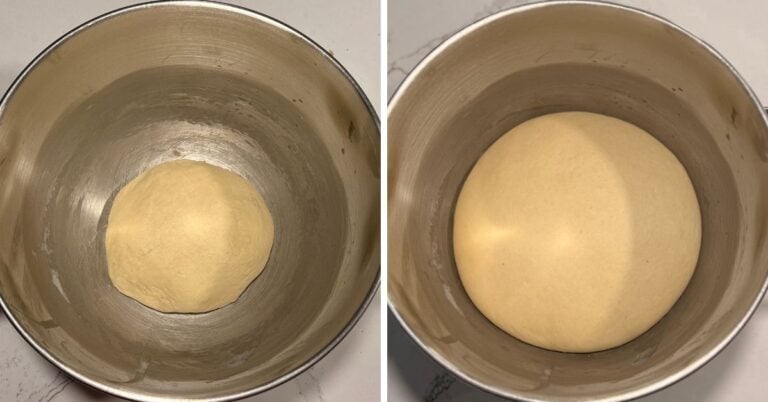
- Bulk fermentation: Place the dough ball in a greased bowl, turning it to coat all sides. Cover and let rise until doubled in size. As a guideline, this takes about 7–8 hours at 80°F (26.5°C) or 10–12 hours at 73°F (23°C).

- Optional cold proof: For deeper sourdough flavor and a longer fermentation, refrigerate the risen dough for 12–36 hours. It does not need to return to room temperature before shaping.
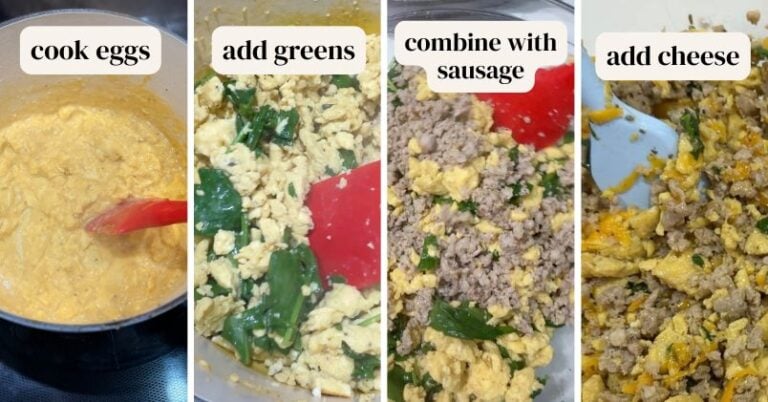
- Prepare the filling: Brown 1 lb ground sausage in a skillet over medium heat. Once browned, transfer the sausage to a medium mixing bowl and blot away any excess grease with a paper towel. Sauté 100–150 g diced veggies of your choice (optional) in the remaining sausage grease (add extra oil if needed) until softened and lightly browned, about 5 minutes.
- In a mixing bowl, whisk together 10 eggs, 15 g heavy cream, 1 tsp smoked paprika, 1/2 tsp garlic powder, 1/2 tsp onion powder, and salt and pepper to taste. Pour into the skillet and stir continuously until just set and glossy. Add more salt and pepper, if needed. Remove from the heat and stir in 50 g greens of your choice (optional) until wilted, about 2 minutes. Transfer the egg mixture to the mixing bowl with the sausage and toss to combine. Finally, fold in 114 g shredded cheddar cheese. Let the mixture cool slightly before filling the dough.
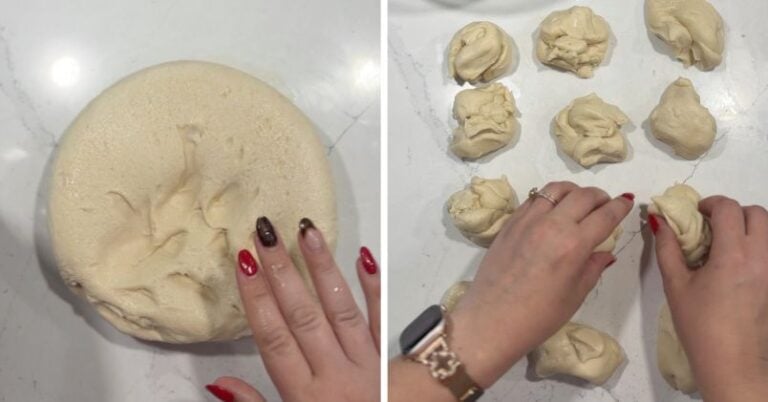
- Shape the dough: Line a half sheet tray with parchment paper or a Silpat. Turn the dough out onto your work surface and give it a quick knead. Divide into 12 pieces, about 70 g each. For the following steps, you shouldn't need bench flour, but if your dough is very sticky, use a light dusting as needed.
- Form each piece into a ball by pinching the bottom seam closed, then rolling it against the counter under your palm until smooth. Cover the dough balls as you work so they don't dry out.

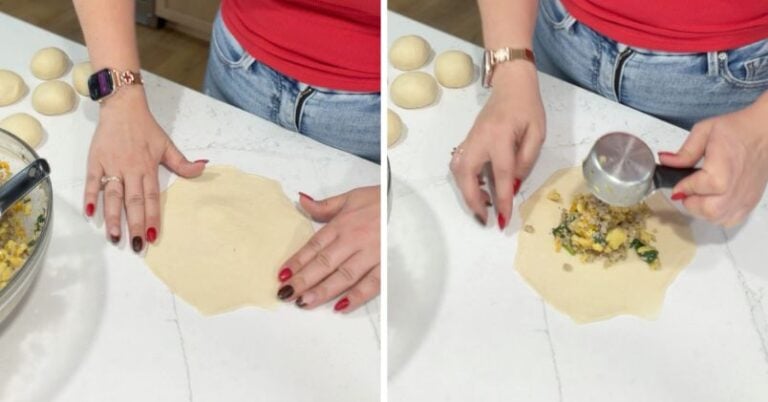
- Working with one dough ball at a time, flatten it into a 5-inch circle. Press the outer edge thinner than the center — this will widen the circle to about 6.5 inches. Scoop a heaping 1/3 cup of filling and place it in the center.
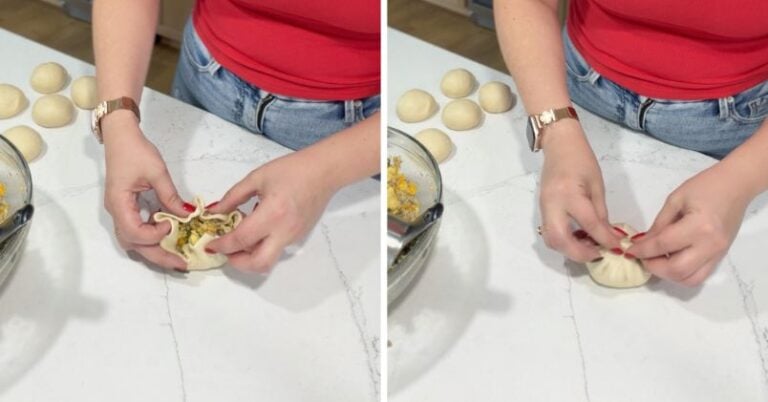
- Gather the edges of the dough up and around the filling, pinching them together at the top to seal. Place the filled pocket seam-side down on your prepared pan. Repeat with the remaining dough and filling.
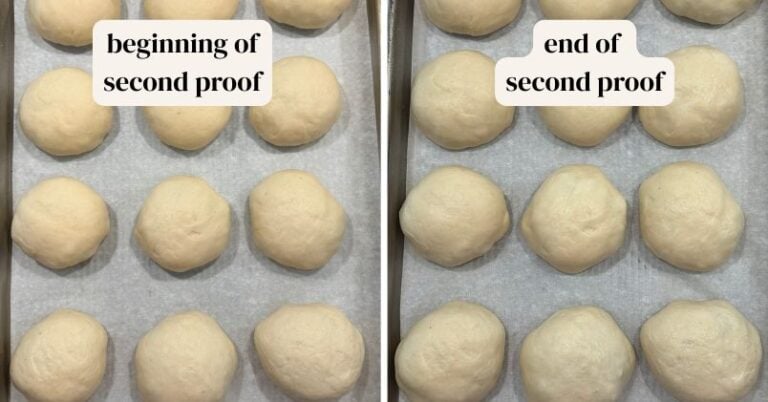
- Second proof: Cover and let rise in a warm spot for up to 2 hours, ideally at 80–85°F (26.5–30°C). Do not proof longer than 2 hours for food safety. You may not notice much visual change, but this proofing time still helps create softer rolls.
- Preheat oven and make egg wash: Toward the end of the second proof, preheat your oven to 375°F (190°C). In a small bowl, whisk together 1 egg with 1 tsp whole milk or heavy cream.
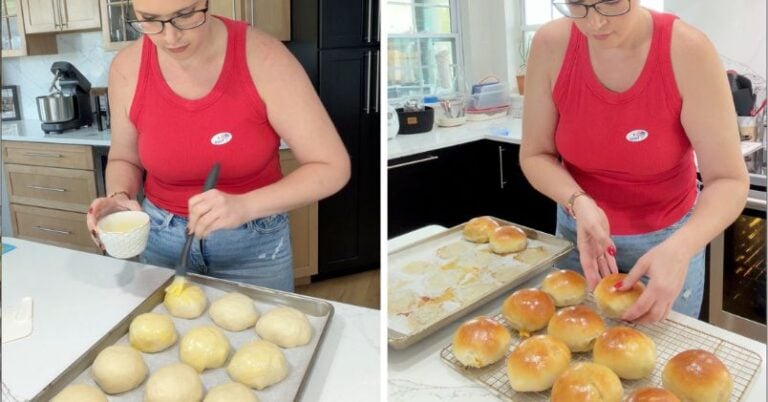
- Brush the tops with the egg wash. Add a small slash to each with a paring knife to prevent large air pockets in the rolls. Bake for 30–40 minutes, rotating the pan halfway through. They're done when the tops are deep golden brown. Let cool on a wire rack.
- Store in an airtight container in the fridge for up to 4 days or the freezer for up to 6 months.

Notes
Conclusion
These are the sourdough breakfast pockets I want in my freezer at all times. And thanks to all of my recipe testing, I’ve got about three dozen of ’em. 😂
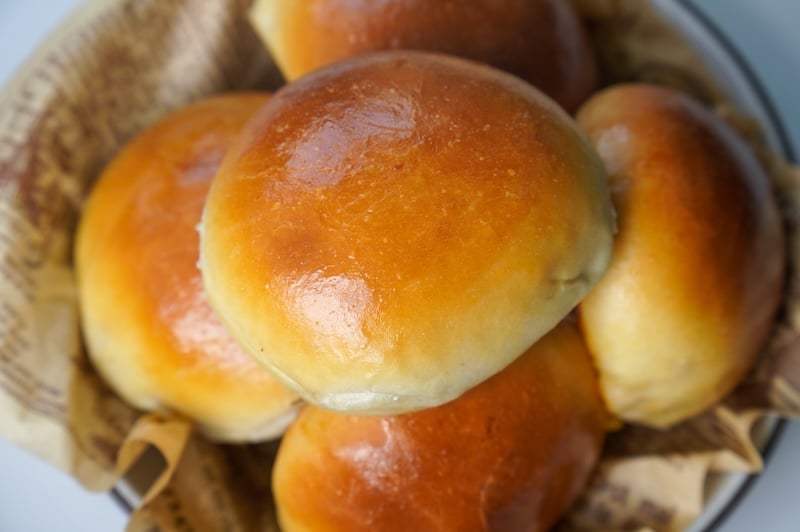
If you make these, I’d love to see them. Drop a photo in the comments or tag me on Instagram @thatsourdoughgal.
Other sourdough breakfast recipes you might like:


Can you do the first fermentation in a proofing box?
Yes
These look and sound delicious! Do you freeze them after baking? And what is the best way to reheat them? Thanks for all the work you do to bring us these amazing recipes!
Yes I freeze after baking! I microwave in 20-second intervals. You can also thaw them in the fridge overnight!
If you’re not a fan of sweet bread can you omit or add less sugar to the dough without it affecting the recipe?
I haven’t tested that on this specific recipe, but in general, yes, it should be just fine!
We’re going to the mountains in a few weeks with all the kids and grandkids. I will be preparing these rolls ahead of time and freezing. How do I thaw and reheat them?
Thank you,
Brenda
Storing and Reheating
In the fridge: Store baked rolls in an airtight container for up to 4 days.
In the freezer: These freeze wonderfully for up to 6 months. Wrap each roll individually in plastic wrap and place them in a freezer-safe zip-top bag.
To reheat: Let a roll thaw overnight in the fridge or on the counter for no more than 2 hours. Warm in the microwave in 30-second intervals until heated through. A toaster oven or air fryer also works well.
These were so much fun to make! Your directions are perfectly clear and so easy to follow. My grand daughter wants to bring these into the office for her staff and I have a feeling I will be making these every month!
Thank you so much for sharing!! Those look so good!!
Can you explain the slash you make “in each one” when doing the egg wash? About how big and where? Yours look perfectly intact, do you make a little slash on the side? Thank you, excited to try this recipe!
It was almost like those little pie slashes – tiny, just enough to pierce the dough so air could escape. I did right in the center of the top, just like you would a pie.
I have been searching for a kolache recipe for months. This one is 10/10! I left my dough in the refrigerator for over 48 hours, and they turned out so good! Can’t wait to play with other filling variations in my next batch. I will definitely double the batch and work on my freezer stash – my teens devoured these in no time!
Ahh so glad!!
Great variation on the Bierocks/Runzas! My future self will be happy to have some easy freezer meals
I’ve made this recipe twice now, sooo delicious. I like to sprinkle bagle seasoning on top before baking. I’d like to know if anyone has used this dough recipe to use with any other stuffing??
Yes a ton of people have! I’m not sure if you’ve seen it but this variation is based on the original bierocks recipe if you want to try that version: https://thatsourdoughgal.com/sourdough-bierocks-runzas-recipe
I made it for the first time and it was so good! Definitely be making it again with different fillings . Can I put it in the fridge after shaping and filling and bake it when I’m ready? Can I substitute with brown sugar?
Yes, you can put it in the fridge after shaping and filling, but you still need the second proof somewhere – up to 2 hours in a warm spot. That’ll help soften up the crumb so the dough doesn’t taste dense. And brown sugar should be OK to sub!
Made these today & they were a hit, my family loved them. I’m saving this recipe to use again. Delicious!!
Yay, so glad you all enjoyed them!
We love this recipe as well as just the dough. I use this dough to make all kinds of pockets for my husband and son a quick lunch, they only get 20 minutes. My husband’s favorite is ham, swiss and steamed broccoli. My son loves the pepperoni “pizza.” I even made an apple cinnamon caramel pocket. I premake all types and freeze them for use. Your pocket dough is awesome!
Thanks, love it!!
OMG! You knocked it out of the park with this one, girl! Even my daughter likes these and she barely eats eggs at all! They are so delicious! Thanks so much for the recipe sharing and all of the amazing sourdough content! 🥰
AH yay! We are obsessed with these too!
Rebekah,
These were amazing. My first batch I made sausage and egg, 2nd batch the filling was egg, ham and cheese. The dough is so easy to make. One of my favorite recipes!! Thank you!
YAY! So glad these turned out great for you!