
Tangzhong: The 3-Minute Secret to Softer Sourdough
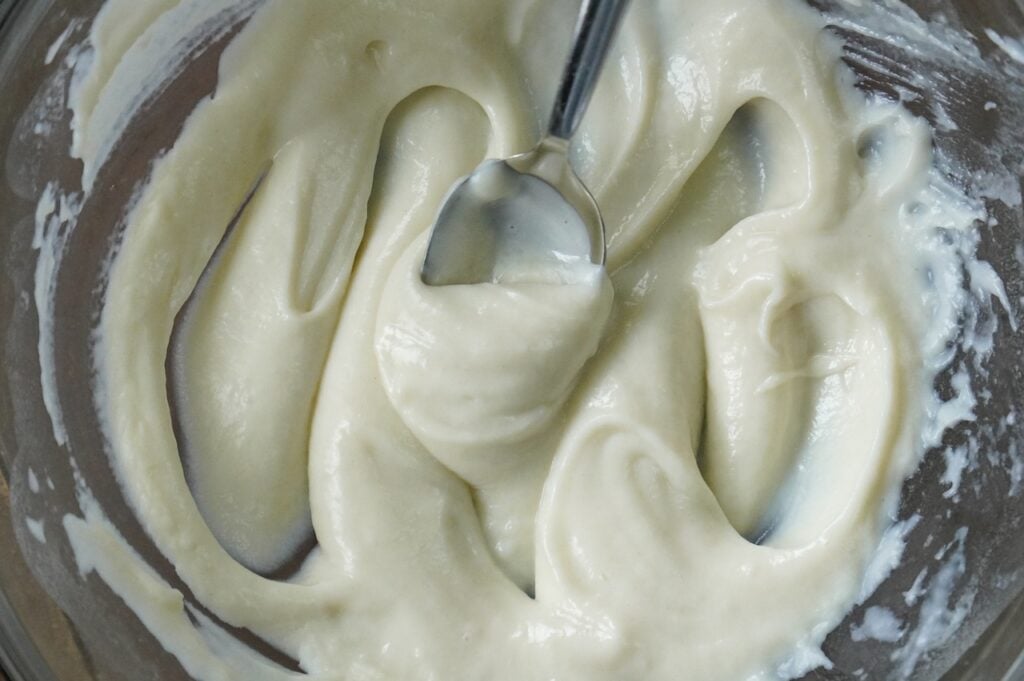
What if I told you the secret to super soft sourdough is hiding in a 3-minute flour-and-liquid paste?
This paste is called a tangzhong. My friend Sam and I couldn’t get our sourdough hot dog buns soft like store-bought versions until we added a tangzhong; it’s also what makes my Wonderbread copycat recipe work.

I’ll show you exactly what the tangzhong method is, the easiest way to make it, and how to add it to any sourdough recipe you already love. Plus, you’ll get my tested sourdough tangzhong recipe collection to get started.
Ready to say goodbye to stale bread?!
What Is Tangzhong + Why It Works
Tangzhong is an Asian baking technique where you pre-cook a small portion of flour and liquid (usually water or milk) into a paste before adding it to your dough. This method started in Japanese baking and really took off when Taiwanese author Yvonne Chen shared it in her cookbook.
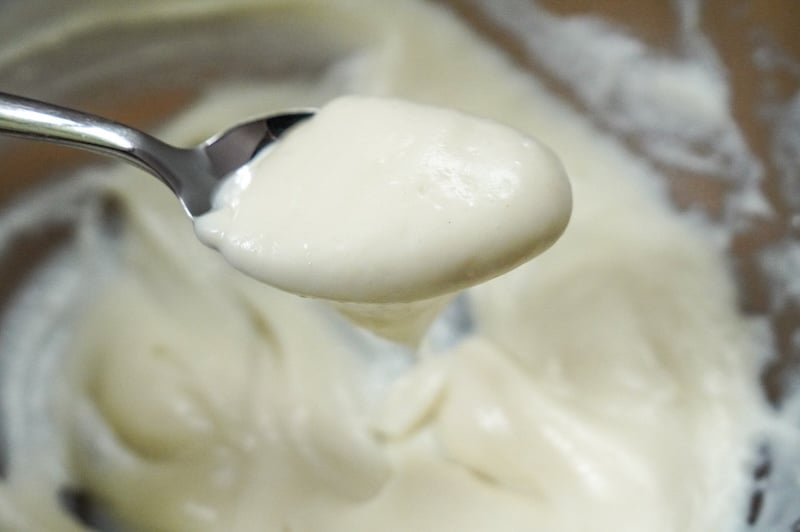
Here’s the magic: when you heat flour to at least 140°F/60°C [I prefer about 145-150°F (63-65°C)], the starches go through a permanent change called pre-gelatinization—they break down and turn into a gel.
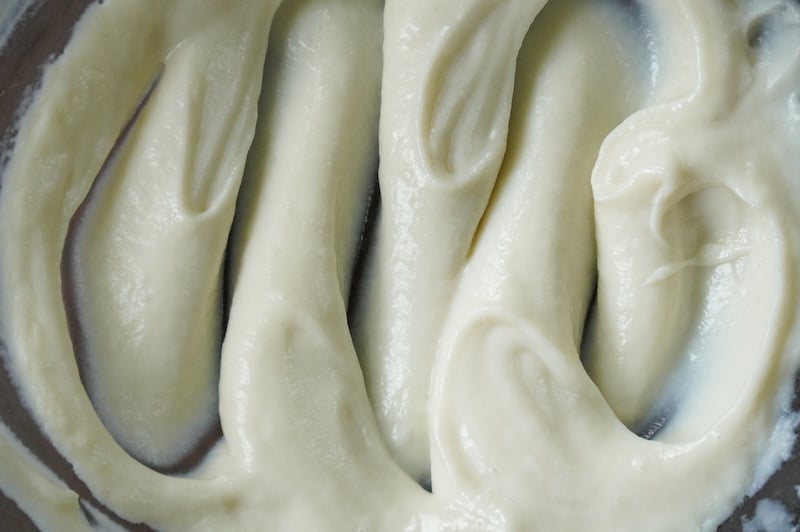
A 2019 study published in LWT – Food Science and Technology found that this pre-cooked starch holds onto way more moisture throughout the bread, creating tiny water reservoirs that keep your bread tender for days.
You’re essentially tricking your dough into holding more water without becoming a sticky mess. If you’ve seen those super fluffy, viral milk breads on social media, this is the magic behind them.
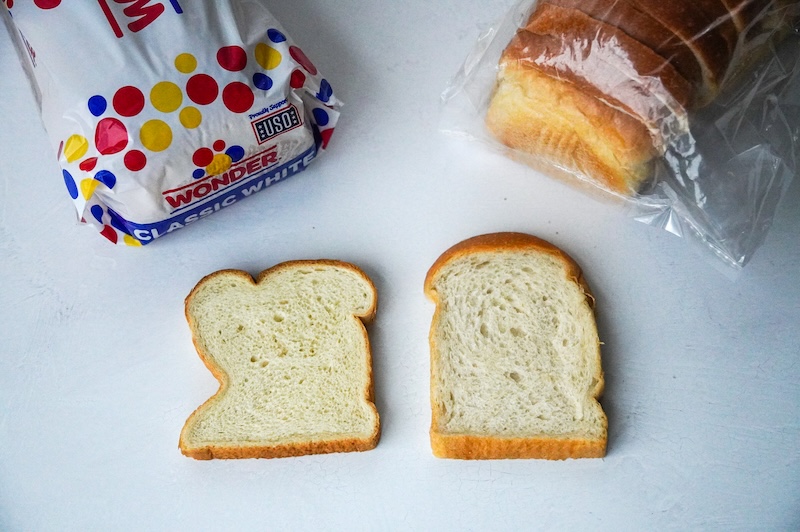
Here’s a quick example of a loaf I made where I didn’t heat the tangzhong enough (it’s harder and denser) vs a loaf where the tangzhong was perfect (it’s squishy and soft):

Benefits for Sourdough Home Bakers
I do a lot of recipe development aimed at recreating storebought favorites.
But mass-produced bread contains ingredients like glyceryl monostearate, various gums, and methyl cellulose to stay soft and prevent staleness. I can’t exactly recreate that at home (nor would I want to)!
A 2016 study published in The Journal of Texture Studies found that tangzhong completely replaced the need for those food additives. And I can confirm that it makes all the difference – I finally got results that mimicked what you can buy at the supermarket.

That same study reported the following benefits:
- Dough is easier to handle (increased cohesion, elasticity, and viscosity)
- Much softer bread texture
- Less gumminess and chewiness
These benefits show up consistently across research on tangzhong, from improved dough handling to enhanced texture and shelf life.
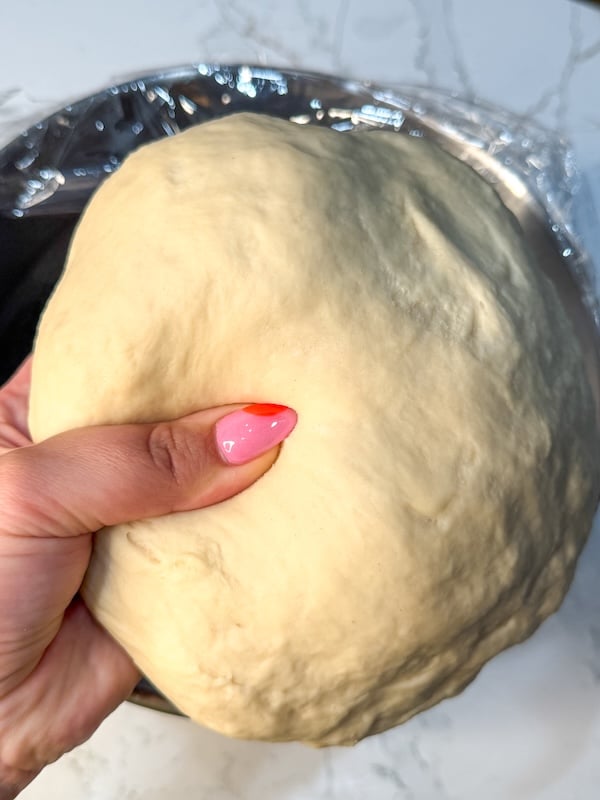
What’s really interesting is that big companies might be trying to figure out how to use tangzhong commercially.
One study I read (it was an undergraduate project out of California State Polytechnic University, Pomona) even mentioned developing a powdered version of pre-gelatinized starch for easier use in large-scale production.
Tangzhong vs. Yudane: What’s the Difference?
Both tangzhong (also called yukone) and yudane use the same principle—pre-cooking flour with hot liquid to gelatinize starches—but they work a bit differently.
Tangzhong uses a 1:5 ratio of flour to liquid (by weight) that you cook on the stovetop or microwave until it becomes a thick, pudding-like paste.
Yudane is simpler: you use a 1:1 ratio and just pour boiling water directly over the flour, then stir until combined.
I personally prefer the tangzhong method, as it ensures that all the flour in the mixture pre-gelatinizes. But you can experiment with both to find which one you prefer. It’s really the same concept.
How to Make a Tangzhong: Step-by-Step
Making a tangzhong takes about 3 minutes if you make it in the microwave. You can also do it on the stovetop, but it takes a little longer and requires you to be present the whole time (or it’ll burn).
Step 1: Mix Flour and Liquid
Take about 5% to 10% of the total flour in your recipe (by weight) and mix it with 5 times that amount of liquid—that’s a 1:5 ratio by weight.
For example:
- 35g flour → 175g liquid
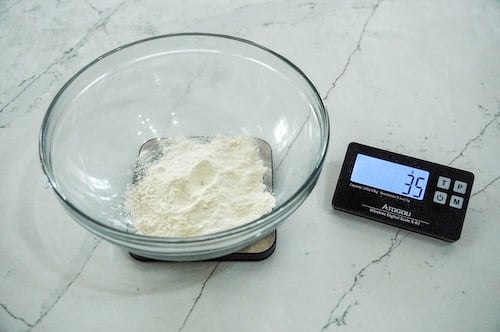
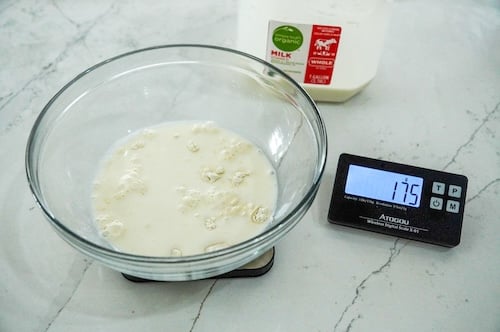
Your liquid can be water, regular milk, or even nut milk. All of them work just fine. I personally prefer whole milk.
Step 2: Cook Until Thickened
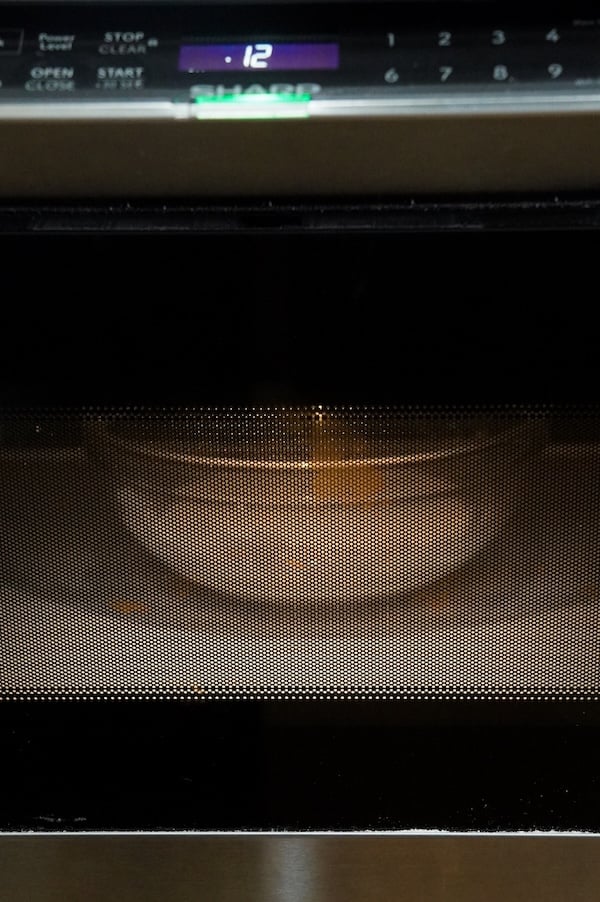
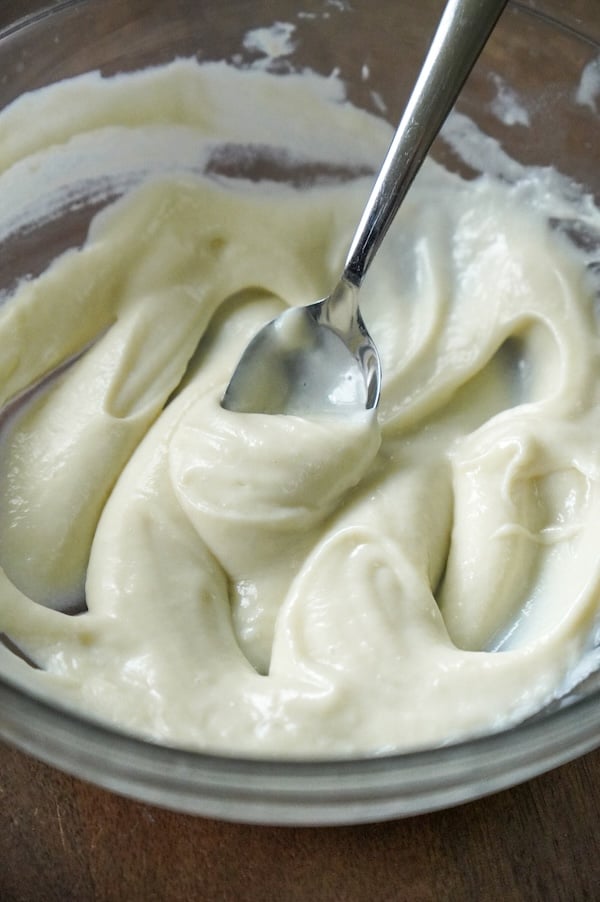
Microwave Method: Microwave for 30 seconds, stir really well, then repeat—cooking in 30-second intervals and mixing in between—until it thickens into a smooth, pudding-like paste. Usually, 4 to 6 rounds will do the trick. You’re aiming for about 145-150°F (63-65°C).
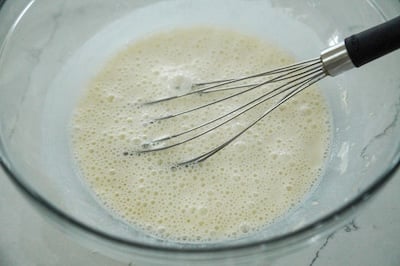
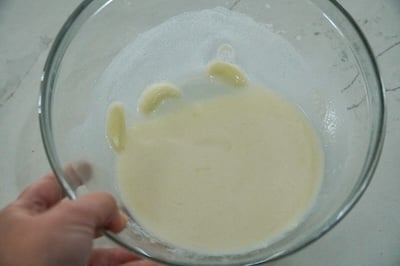
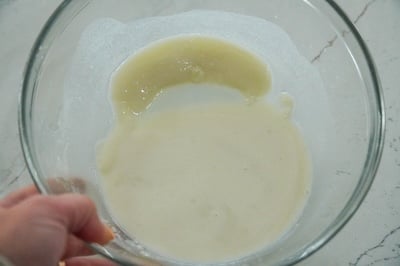
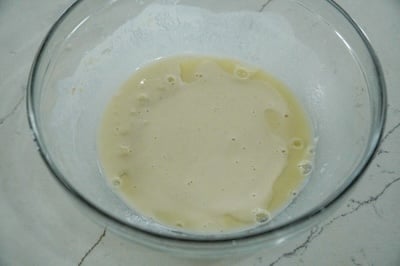
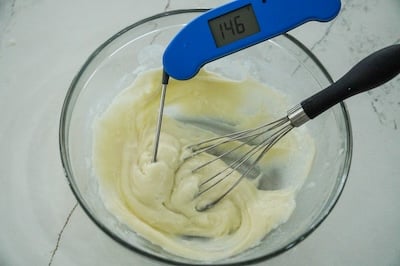
Stovetop Method: Stir constantly over medium heat until it thickens and hits 145-150°F (63-65°C). Do not walk away – it takes a little while for the mixture to heat up, but once it does, it gels up really fast and is quick to burn.

Step 3: Let It Cool
Transfer the tangzhong to a bowl and let it cool completely before adding it to your dough. Hot tangzhong can accidentally kill the yeast in your sourdough starter, so be patient.
How to Adapt Your Sourdough Recipe to Include Tangzhong
To add tangzhong to a recipe you already love, borrow a portion of the flour and liquid from that recipe. You’ll use 5–10% of the total flour to make your tangzhong, and cook it with 5x that amount of liquid (1:5 ratio by weight).
So, for example, if your recipe calls for:
- 500g bread flour
- 350g water
You’d use 25g flour + 125g water to make the tangzhong (that’s 5% of the flour).
The remaining 475g of flour and 225g of water go into the dough as usual. This keeps your recipe’s hydration the same.
However, a tangzhong allows your dough to absorb more liquid. It’ll likely need more liquid to reach the right texture. That’s the dance we do as recipe testers – trying out different hydration levels to get to a winning recipe.
Start with your usual amount of liquid, then add a little more until you reach your desired consistency.
A Few Extra Tangzhong Tips
- Don’t overcook it: You’re aiming for a smooth, pudding-like paste around 145-150°F (63-65°C). If it gets too thick, it can make your bread dense.
- Don’t undercook it: In the same vein, a tangzhong that doesn’t reach the right temperature will be too watery, and your dough will end up sticky and unmanageable. I’ve done this (oops) and added a lot more flour during mixing to compensate – my final loaf ended up very dense.
- Cool it fully: Hot tangzhong can kill your starter. Let it cool to room temperature before mixing it into your dough. I sometimes toss it in the fridge for 10–15 minutes to speed things up. You can also make it up to 2 days in advance and store it in the fridge until you’re ready to mix your dough.
- Be flexible with your hydration: Tangzhong lets your dough hold more water, so if your dough feels a little stiff, don’t be afraid to add a splash more liquid during mixing.
Tangzhong Sourdough Recipes to Try
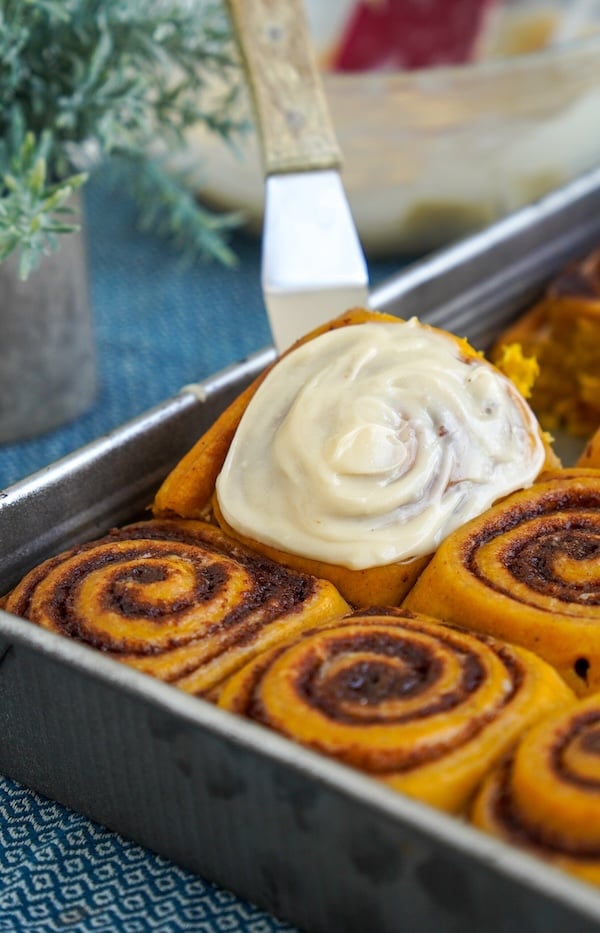
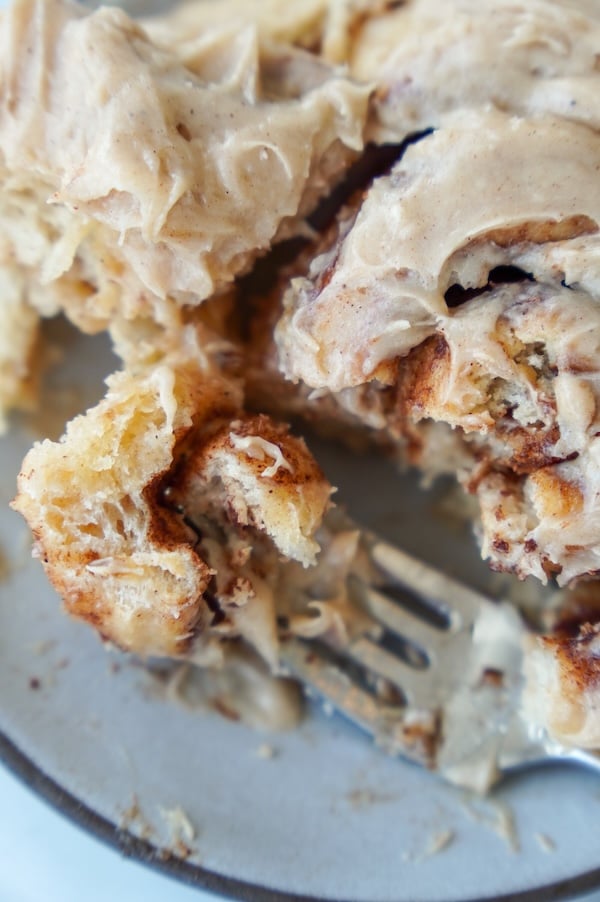
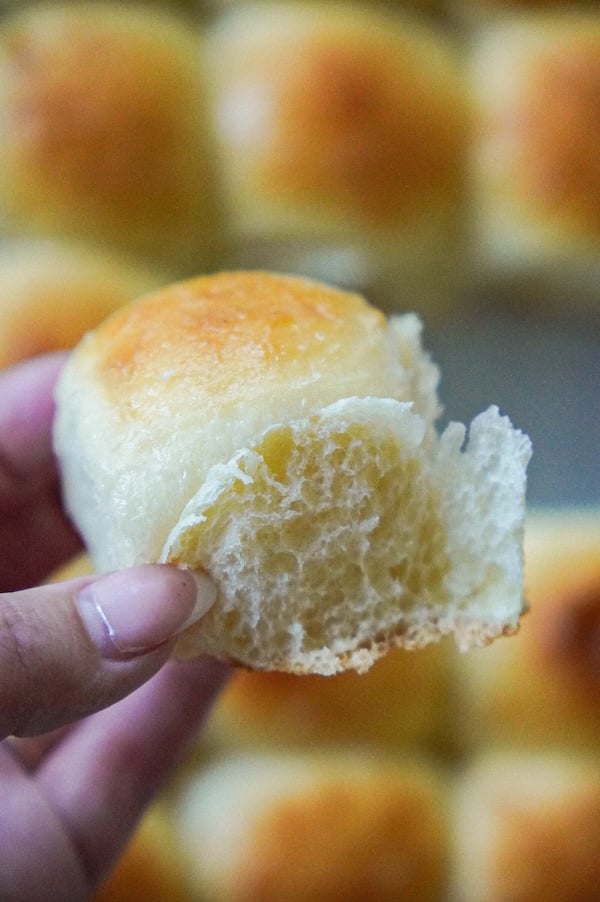
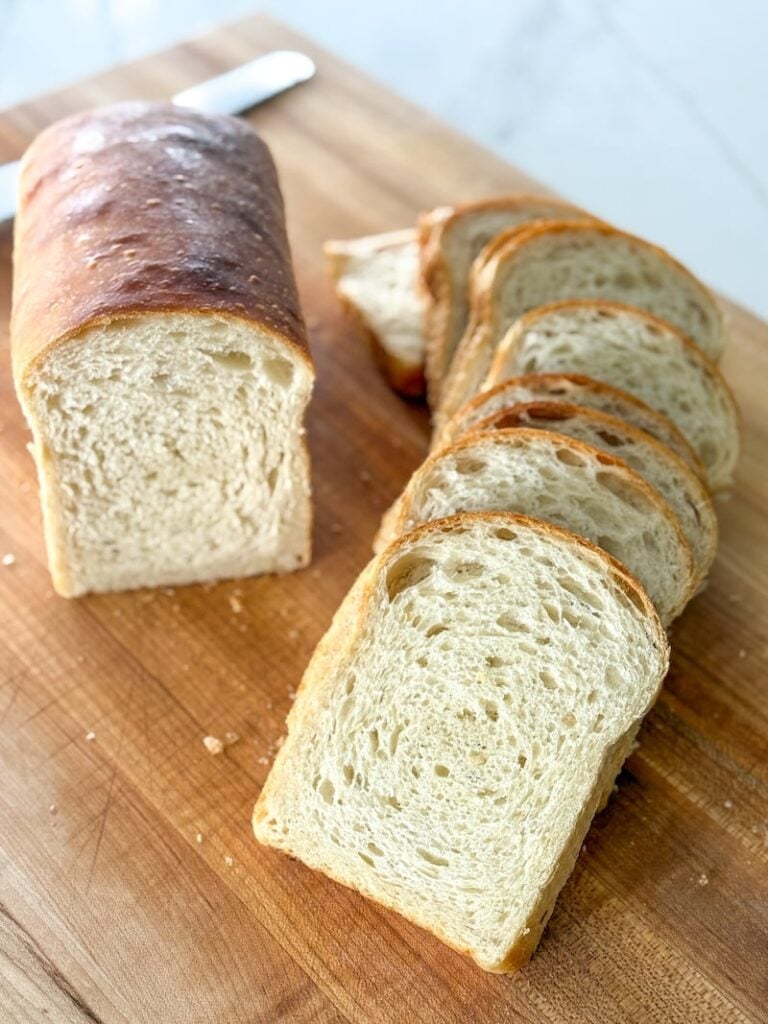
I’ve developed several recipes that use a tangzhong, and I think they’re some of the best recipes on my website.
The most viral of the bunch of the sourdough Wonderbread copycat recipe, which delivers super soft, squishy sandwich bread. But I love them all equally!
Frequently Asked Questions
Yes! You can make your tangzhong up to 2 days in advance. Store it in an airtight container in the fridge until you’re ready to use it.
You can make a tangzhong on the stovetop. Stir constantly over medium heat until it thickens into a smooth paste and hits about 145-150°F (63-65°C). Don’t walk away or the mixture may burn (I’ve totally done that!).
Tangzhong is super versatile and can be added to almost any bread recipe. I’ve personally used it in enriched doughs that I want to be super soft—like sourdough dinner rolls, burger buns, hot cross buns, and my soft “Wonderbread” copycat loaf. Baked goods that are supposed to be crusty and chewy, like baguettes, English muffins, or bagels, aren’t well-suited for a tangzhong.
Use 5% to 10% of the total flour weight in your recipe for the tangzhong. If it’s your first time, you could start with 5% and see how you like the outcome, then adjust up or down next time. Remember to keep the 1:5 flour-to-liquid ratio for the tangzhong itself.
No, you do not have to use milk for the tangzhong. Milk has some properties that can give the crumb a slightly more tender texture and a richer flavor. But water works just fine, and so do non-dairy options like almond milk, oat milk, soy milk, etc.
Add the cooled tangzhong paste when you mix your dough.
Your sourdough’s rise times depend mostly on your starter strength, dough temperature, and recipe specifics. Tangzhong doesn’t drastically speed up or slow down fermentation in my experience.
No, it’s just a small portion of pre-cooked flour and liquid. It doesn’t mess with the fermentation or gut health benefits of sourdough.
If your tangzhong is overcooked, it has probably lost too much moisture. Overcooked tangzhong can lead to dense bread that’s not as soft as it could be. I find that using a thermometer to ensure the mixture reaches 145-150°F (63-65°C) makes the process foolproof.
Microwave Tangzhong
Equipment
Ingredients
- 25 g bread flour or all-purpose flour
- 125 g liquid water, milk, or nut milk
Instructions
- Combine 25 g bread flour and 125 g liquid in a microwave-safe bowl. Microwave in 30-second intervals, stirring between each, until thickened and reaches 145-150°F (63-65°C). For me, it usually takes 3-5 rounds to finish. Cover and refrigerate until morning.
- Let cool to room temperature before adding to your dough. Hot tangzhong can kill your sourdough starter!
Video

Notes
Conclusion
I hope this post helped demystify the whole tangzhong thing and showed you why I’m such a fan. It’s a simple technique that can seriously level up your sourdough bakes—especially if you’re going for soft and squishy.
Don’t be afraid to give it a try—the tang gang is always accepting new members.

Other articles with sourdough tips:


Does this prevent retrogradation of the starches?
Thanks for teaching about the tangzhong method. I’ve made the original copycat wonder bread but I have also used in my sweet roll recipe using yeast. The dough is so soft and the rolls stay soft for linger time! Now I’m going to try this method in my country white yeast bread.
If you change a recipe to add tangzhong, do you aim to keep the tangzhong dough as the same consistency as the original dough or slightly firmer?
Same consistency
How much water roux do I make for a 6 cup flour bread recipe.
For a 6 cup flour bread recipe, here’s how to calculate your tangzhong (water roux):
First, convert to weight:
6 cups flour ≈ 720g (assuming ~120g per cup)
Then calculate your tangzhong using the 1:5 ratio:
5% of flour (standard):
36g flour + 180g liquid
10% of flour (maximum):
72g flour + 360g liquid
I’d recommend starting with the 5% version (36g flour + 180g liquid) since it’s the most common amount used in your recipes like the Wonder Bread copycat.
After making the tangzhong, you’ll subtract those amounts from your original recipe. So if you’re using 36g flour and 180g liquid for the tangzhong, you’ll reduce the main dough by those same amounts to maintain the same overall hydration.
To me it seems natural to cool down the tangzhong with your cold milk and water for it all to reach the right temperature before adding the sourdough starter. Does this mess up the benefits of using tangzhong? Does the tangzhong have to cool down by it self?
I haven’t given that any thought. I don’t think it would mess anything up since we’re mixing all of those together anyway when we mix the dough, so I suppose it’d be fine.
Brilliant! It’s worth noting that with sourdough in particular, the temperature of the dough has a big impact on the proofing process. So, if you usually mix with cold water/milk, you might get different results by choosing to cool the tangzhong with your dough’s liquid–the temperature of the mixed dough will be warmer after the temperature exchange. It won’t ruin the loaf by any means, but it’s something to keep in mind 🙂
Do you have gluten free as well as regular flour sourdough tips & recipes?
I have trouble with the whole timing, as recipes are so different. Thanks
I don’t have any gluten free recipes at this time, sorry!!
I’ve been experimenting with incorporating tangzhong into all my breads after learning about it in this post and I am very happy with the results. This loaf is my Sicilian Sesame Bread with toasted white sesame seeds inside and black sesame on the crust. With the tangzhong the dough was much easier to work with and it allowed me to bump the hydration up a bit. This was the most oven spring I ever had and the crumb was very soft. It did take a little longer to bake as the internal temperature was only 185F after my normal baking.
Looks beautiful! Thanks for sharing!
So how do we use it in our sourdough bread recipes? Do we need to adjust the ingredients at all?
Yes that is explained earlier up in the article!
LOVE LOVE LOVE your recipes – thankyou for sharing. I have had NO luck with sourdough artisan loaves so decided to try your same day sourdough wonder bread copycat recipe. WOW it worked I can believe it. Thank you. Just a question: how do I make this recipe less sour? The rise and texture were perfect just a little acidic for me. Look forward to hearing back (if you have time).
The same-day version of that recipe is the least sour I can get – it has all the tricks, including the sweet stiff starter and a fast timeline. I’m sorry I don’t have any additional advice here other than you could do back-to-back-to-back feedings of the sweet stiff starter. Most people wouldn’t want to go through that effort, but doing a stiff feed with some sugar or honey multiple times will cut down on the sour flavors in the bread.
Wondering if you’ve tried this method for your cinnamon rolls and how it went. Not sure how to go about that but I’d like to give it a try.
Yes, my cinnamon roll recipe calls for a tangzhong! I have a full YouTube tutorial to help if you want to try it. It’s way easier than it sounds.