The Best Sourdough Bannetons (And What to Skip)
Why Bannetons Are So Useful for Sourdough Baking
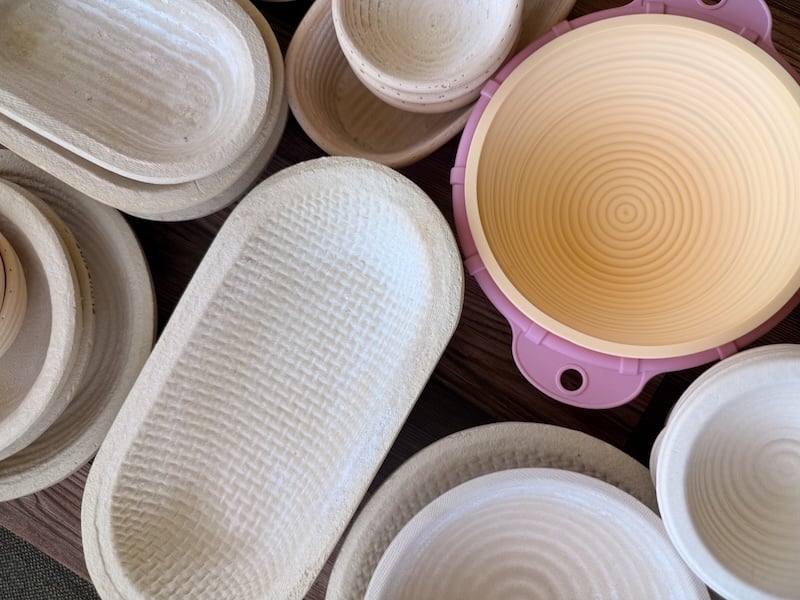
A banneton is basically a basket that holds your bread dough during the second proof, or the final rise before baking.
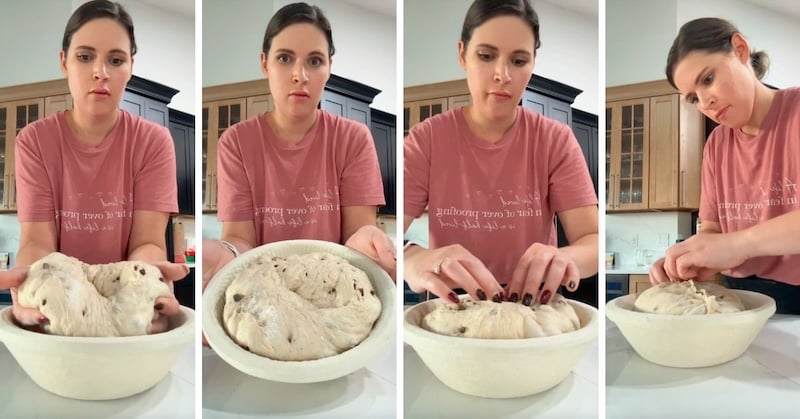
You might also hear them called brotforms (that’s the German name) or simply proofing baskets.
The most important task of the banneton is to help your dough hold its shape before baking.
A good banneton can also:
- Allow airflow around the dough
- Absorb surface moisture, which leads to a crackly crust
- Create a slightly dry outer skin that’s easier to score
Without a banneton, our dough would lack shape, causing it to spread and flatten out instead of rising up.
Banneton Materials and How They Affect Your Dough
After trying a ton of bannetons, I can say that each performs a little differently.
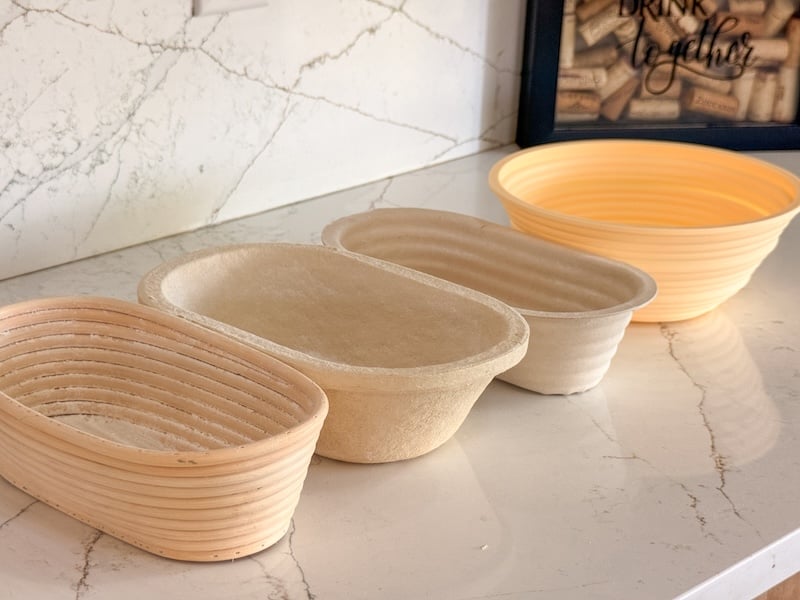
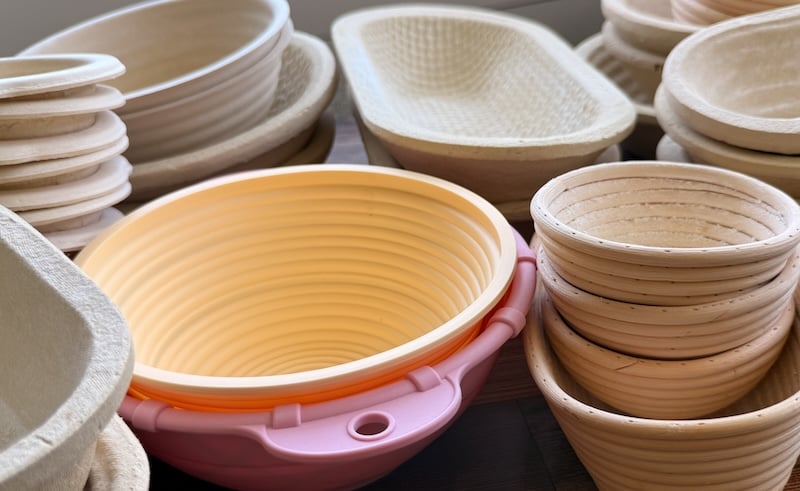
The most common types of bannetons include:
- Wood pulp
- Rattan (or coil)
- Sugarcane pulp and bamboo fiber
- Silicone


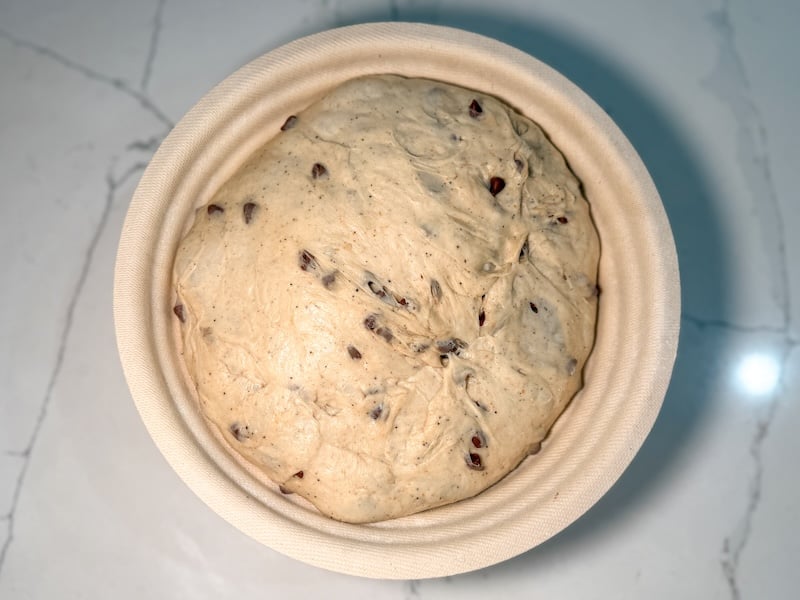
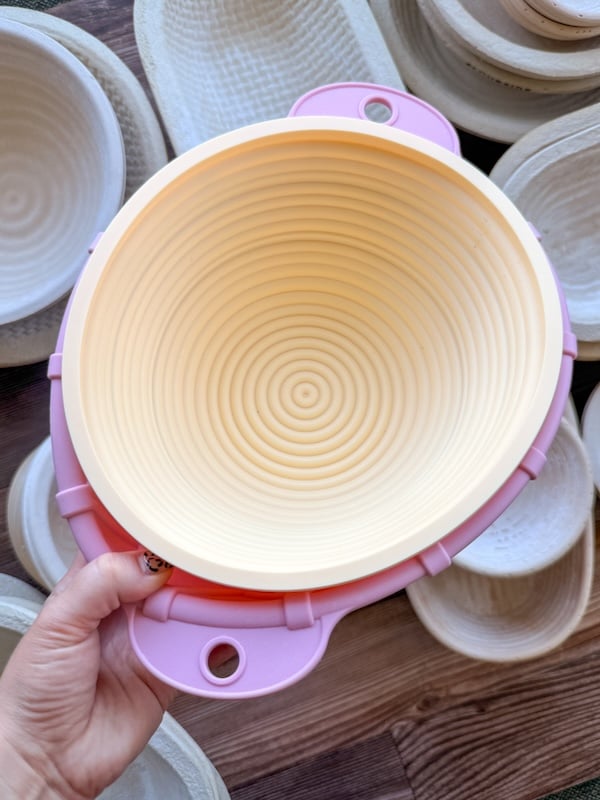
Wood Pulp Bannetons
Wood pulp bannetons are traditionally made in Germany, and many different sourdough brands sell them. They’re molded from pressed spruce wood fibers into thick, sturdy baskets.
I LOVE this style of banneton — this is the type I’ve used the longest out of any style in this article.

Pros
- Excellent moisture absorption
- Helps create a crisp crust
- Durable and sturdy
- Holds dough shape very well
- Great for high-hydration dough
- Designed to be eco-friendly and chemical-free

Cons
- Bulkier than other options
- Takes longer to dry after use
- Inclusion loaves can stain them
- On the pricey side
Some popular brands that sell wood pulp bannetons include:
- Flourside
- Bulka
- Rosehill Sourdough
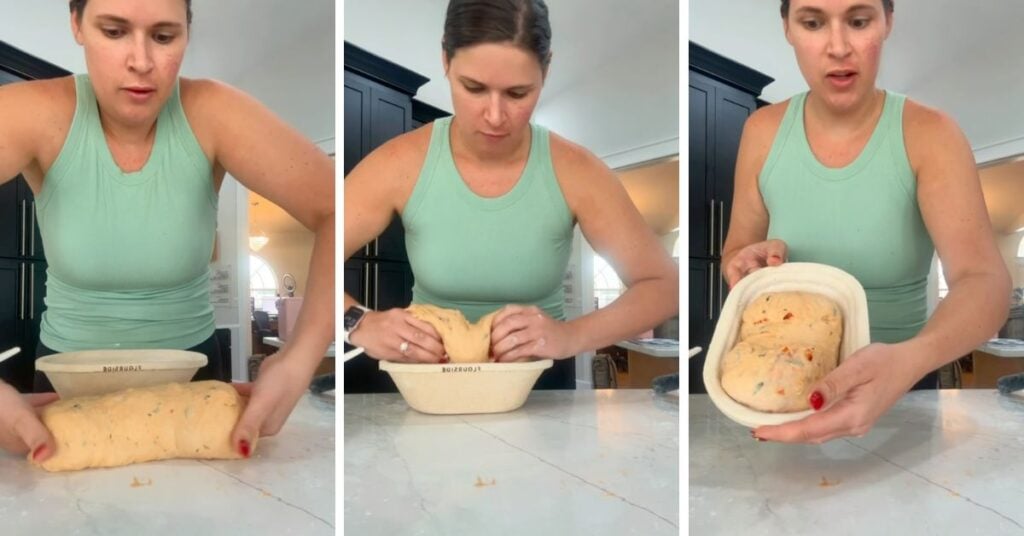
Wood pulp performs really well. It’s a solid, high-end option if you bake sourdough often. The price is typically the biggest dealbreaker, and the fact that inclusion loaves can stain them is a huge con.
Rattan (Coil) Bannetons

Pros
Cons
Silicone Bannetons
Silicone bannetons are a love/hate situation — more hate than love. 😂
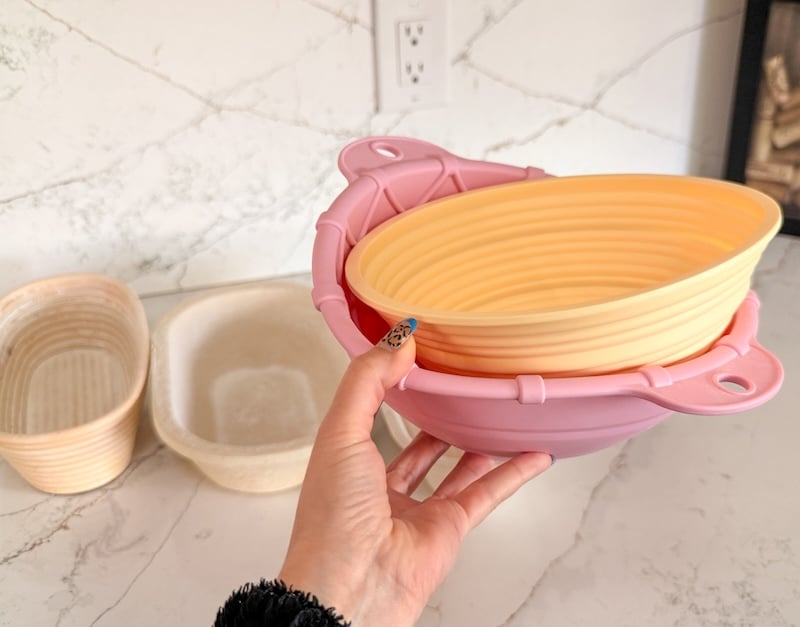
They’re convenient in some situations, but overall, they’re my least favorite because they trap moisture. If you don’t line them with a a flour sack towel, you’ll end up with a puddle of condensation in the bottom.
That said, they’re great for messy inclusion loaves that might leak or stain. As an example, I wouldn’t want to put blueberry-lemon dough in my nice wood pulp bannetons — it could stain them purple. With a silicone banneton, you can just throw it in the dishwasher.
Pros
- Most affordable
- Easiest to clean
- Great for messy inclusion loaves
- Flexible
- Mold-resistant
Cons
- Do not absorb moisture
- Can leave the dough surface wet, making it harder to score
- Not ideal for crust development
Sugarcane and Bamboo Bannetons (My Current Favorite)
I thought no banneton could compete with my beloved wood pulp, but I keep reaching for the sugarcane-and-bamboo blend! The ones I have and love are from Brod & Taylor.
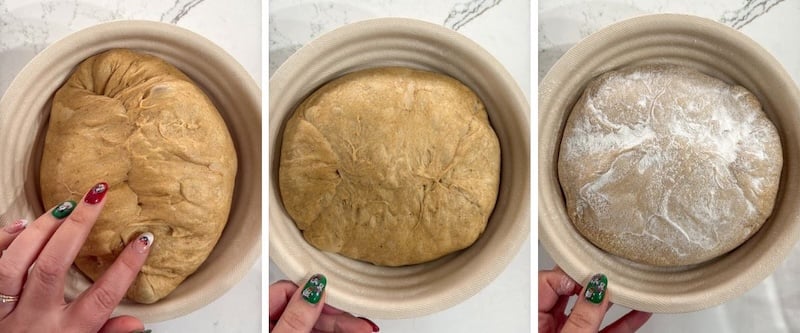
They’re made from a blend of upcycled sugarcane pulp and renewable bamboo fiber, which behaves very similarly to wood pulp, but they’re lighter, easier to store, and much more affordable.
Pros
- Absorbs moisture well
- Lightweight
- Easy to store
- Nonstick surface
- Dries quickly
- Easy to clean and maintain
- Great value for the price
Cons
- Fewer brands available
- Fewer size options
- Durability is a concern — they’re more fragile than the sturdy wood pulp bannetons
Right now, Brod & Taylor is the main brand producing these. I’ve seen a couple of Amazon brands offering similar versions, but they aren’t as well-made.

I especially love the shape of the Brod & Taylor boule banneton.
The standard 8.5-9″ wood pulp boule banneton is just a little too wide and shallow for my liking. The Brod & Taylor ones seem to encourage the dough to rise upward instead of outward, so the final loaf ends up taller and more rounded.
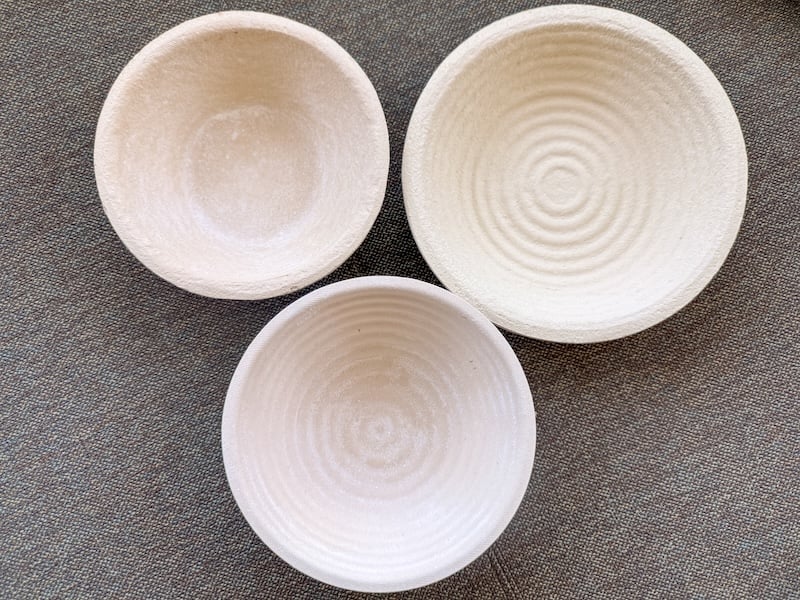
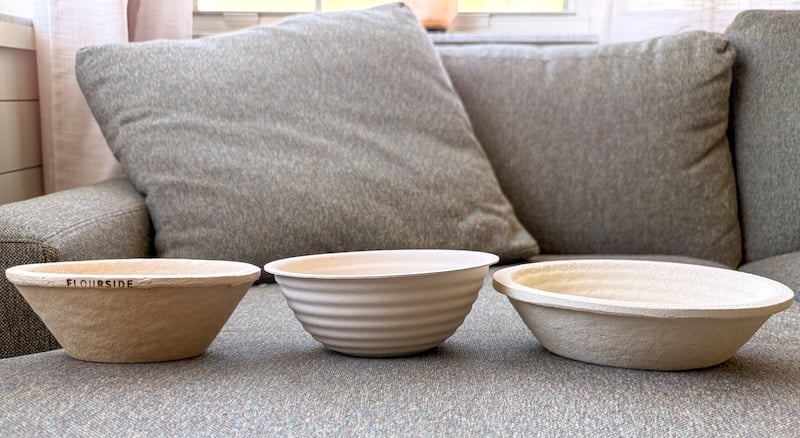
Another detail I appreciate is that they stack together really well, so they take up almost no space in the cabinet.
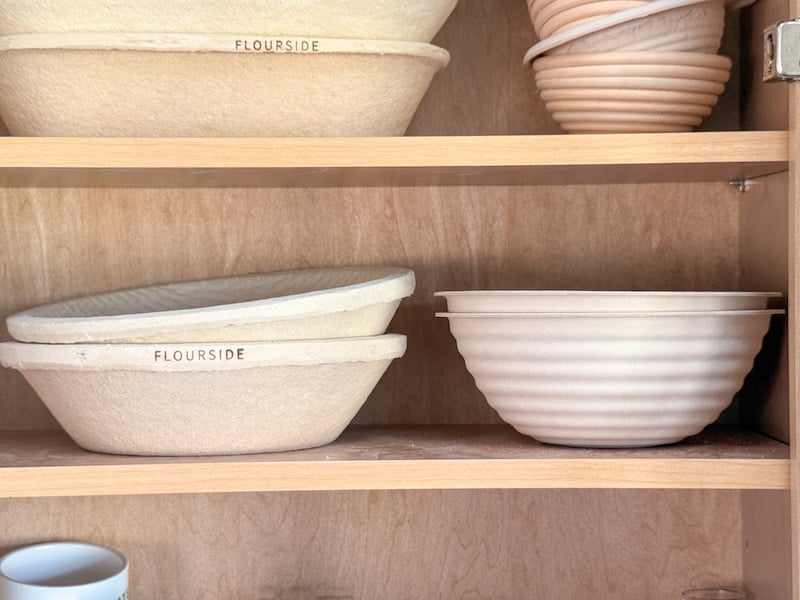
Price-wise, they’re also a really good value for how well they perform.
Banneton Comparison Table
| Type | Moisture Absorption | Ease of Cleaning | Shape Support | Price | My Take |
| Wood Pulp | Excellent | Good | Excellent | $32-$40 each | Fantastic with minor reservations |
| Rattan | Moderate | Difficult | Excellent | $13 each | Ehh — it’s OK, but we can do better |
| Silicone | Poor | Excellent | Good | $6-7 each | Least favorite |
| Sugarcane & Bamboo | Excellent | Good | Excellent | $16 each | Current favorite |
Banneton Shapes: Boule vs. Batard
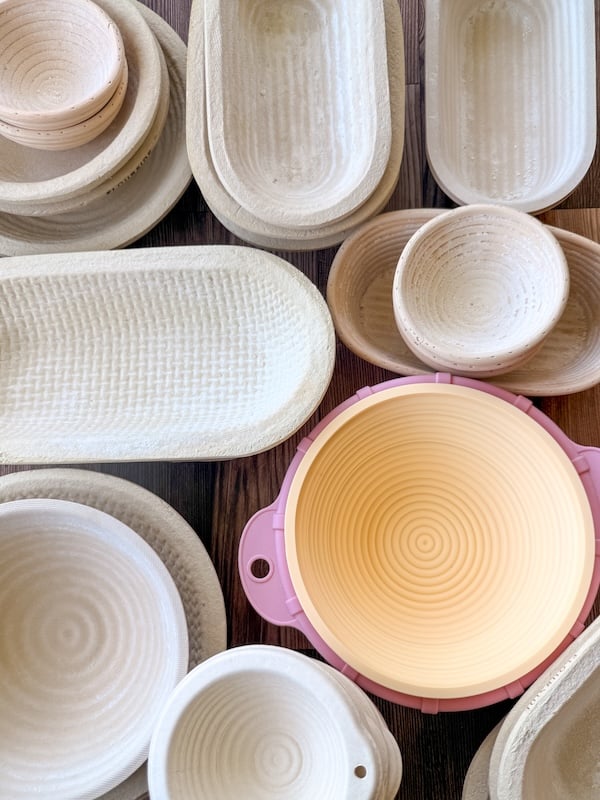
Bannetons come in a few common shapes, with round (boule) and oval (batard) being the most popular.
The choice mostly comes down to the loaf shape you prefer, but your baking vessel matters too. Having one of each can be handy so you can switch things up. However, there are a couple of considerations before you buy.
Swirl Loaves
Shape matters for a swirled loaf.
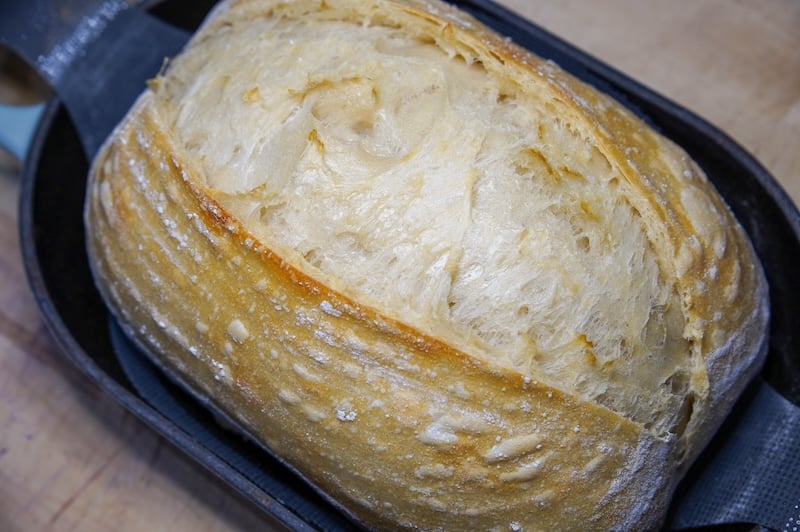
My viral cinnamon swirl loaf (and other swirl breads, like the apple crisp loaf) are shaped into an oval (batard) — this ensures a perfect swirl and makes it easy to cut against it with confidence.


A round swirl loaf is possible, but I haven’t landed on a reliable shaping technique or a way to mark the swirl so you know where to cut.
Baking Vessel Shape
Another big consideration is your baking vessel. If you use an oval Dutch oven, you’ll want a batard-shaped loaf to match. The same idea applies to baking shells and other covered bakers.
Brod & Taylor makes great baking shells, but they come either round or oval, so you do have to make a decision there. I prefer the round as it’s large enough to fit both shapes (round and oval).
But if you bought the oval shell, you wouldn’t want to shape your loaf into a boule.

Banneton Size Guide
For most standard sourdough recipes (around 500 g of flour or roughly 900-1000 g final dough weight), an 8-inch round or 10-inch oval banneton works great.
These size recommendations are flexible, so don’t panic if your dough weight is slightly above a brand’s listed range — it’ll most likely be just fine.
| Specific product example | Banneton size | Dough weight |
|---|---|---|
| Grandtobuy Mini Boules | 5″ diameter | About 300 g |
| Bulka Small Oval | 9.1″ x 4.7″ | 480–600 g |
| Brod & Taylor Batard | 10″ x 5″ | 700–850 g (I often go up to 1 kg) |
| Bulka Oval 750g Groove | 11.4″ x 5.3″ | 750–900 g (I often go up to 1 kg) |
| Brod & Taylor Boule | 8.5″ diameter | 850–1 kg |
| Flourside: Oval – Smooth (MD) | 9.25″ x 5.75″ | 700–1 kg |
| Flourside: Oval – Spiral (LG) | 11″ x 5″ | 700–1 kg |
| Flourside: Round – Weave (LG) | 8.5″ diameter | 1 kg–1.4 kg |
Note: I use the mini bannetons in this recipe: The Best Sourdough Bread Bowls (Same-Day or Long-Fermented)
Banneton Alternatives
You can definitely make sourdough bread without a banneton! One popular option is to simply use a loaf pan instead — it doubles as your banneton and your baking vessel.
Get my recipe: Easy Loaf Pan Sourdough Bread Recipe (No Dutch Oven Needed!)
Another hack is to use a bowl lined with a floured tea towel (you may not even need to flour it). The bowl supports the dough while it proofs, and the towel helps wick away some moisture.

You could also use a stainless steel colander lined with a tea towel. The holes help create airflow similar to what you get with some banneton styles.
Read more: Budget Sourdough: 20+ Tool Swaps for Amazing Bread
My Favorite Bannetons
Here’s a quick look at the bannetons I personally love and use most often.
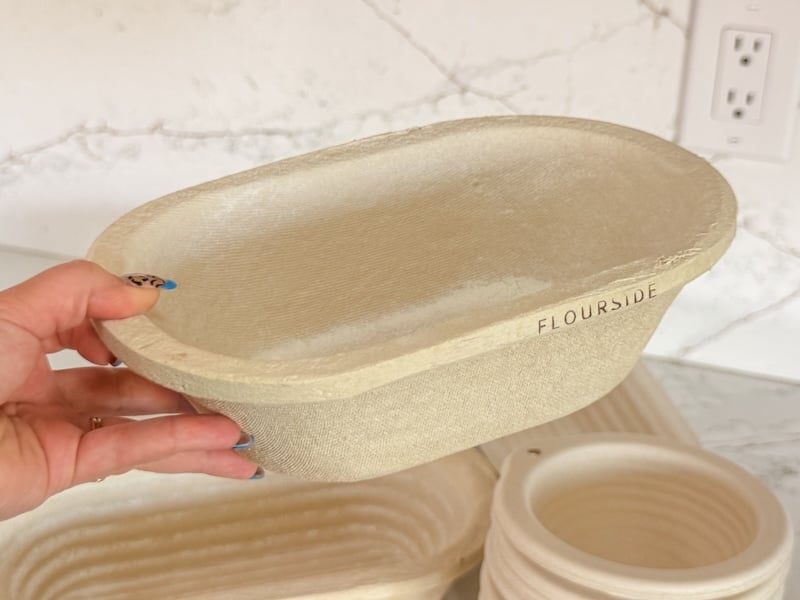
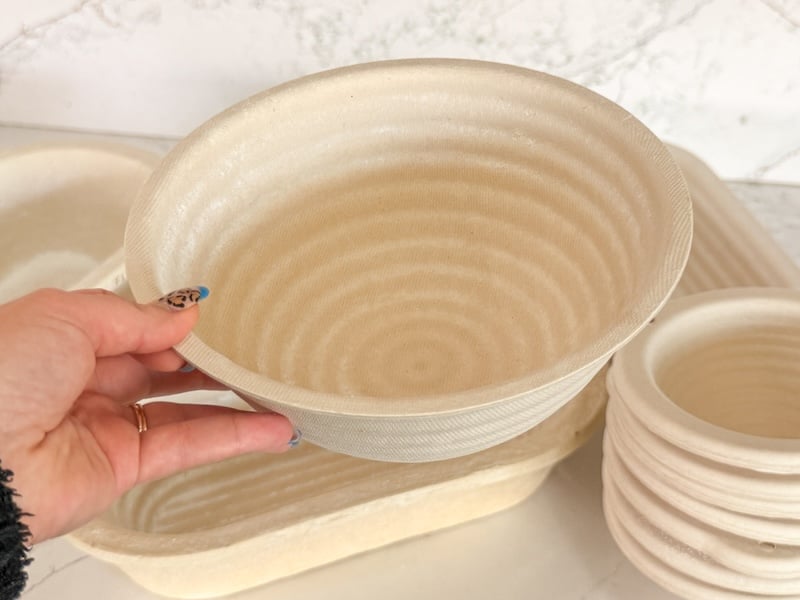
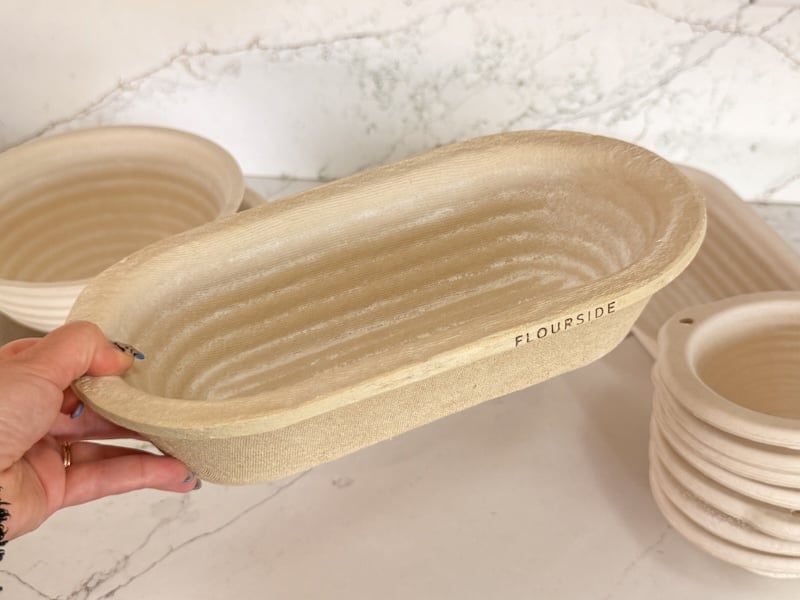
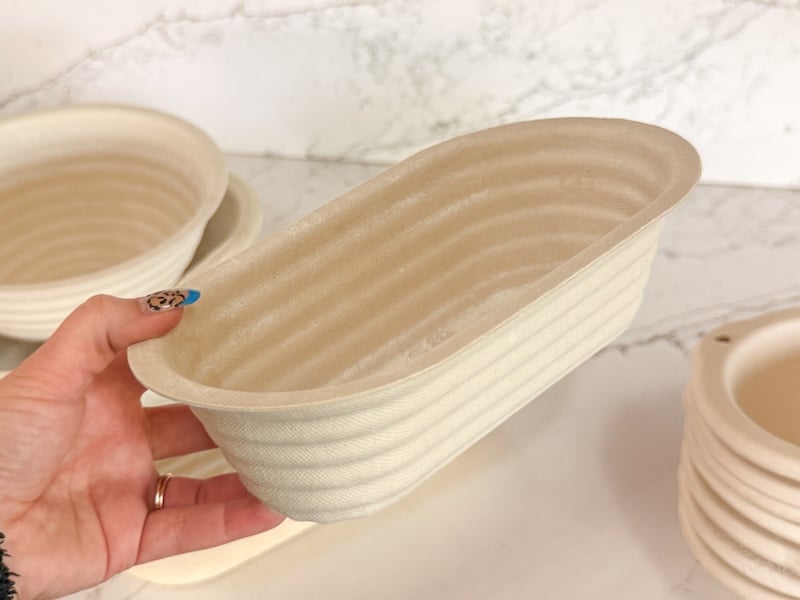
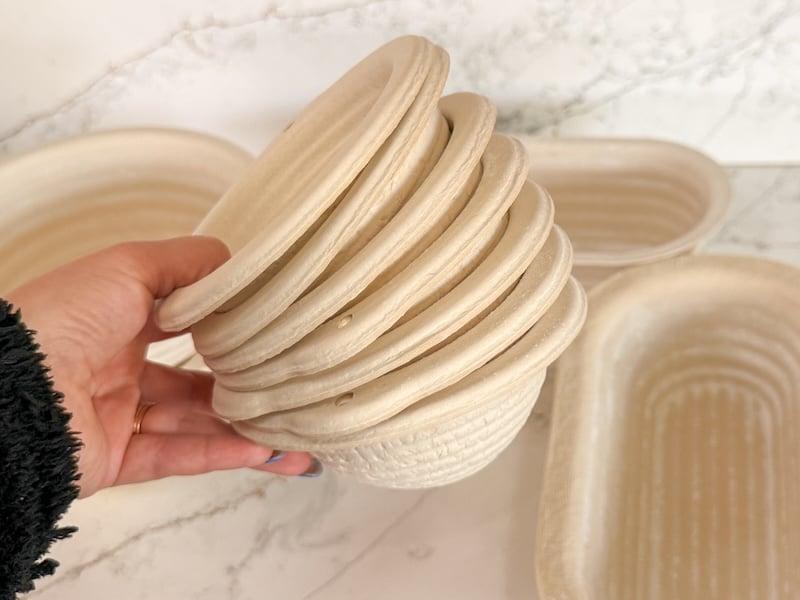
- Flourside: Oval – Smooth (MD) — perfect for oval artisan loaves (Select this style in the drop-down and use code TSG5 for 5% off)
- Brod & Taylor Boule — the best size and shape for boules IMO! I prefer its middle-of-the-road width and height compared to the popular wood pulp sizes, which are either a smidge too small or a smidge too wide (in my opinion).
- Flourside: Oval – Spiral (LG) — perfect for longer oval loaves; mimics a sandwich shape, but it’s still artisan (Select this style in the drop-down and use code TSG5 for 5% off)
- Bulka sells the same banneton — it’s called ‘Bulka Oval 750g Groove’
- Brod & Taylor Batard — it’s on the smaller side compared to my wood pulp oval picks, but it still fits a standard-sized loaf
- Grandtobuy 5″ mini rounds — perfect for soup bowls and mini loaves around 300g
Banneton FAQs
If you’re only buying one banneton, I’d actually go for the Flourside: Oval – Smooth (MD). It’s a versatile medium size that works perfectly for standard artisan loaves, it’s durable, and loaves fit in both oval and round Dutch ovens. This gives you more flexibility with whatever baking vessel you already own. 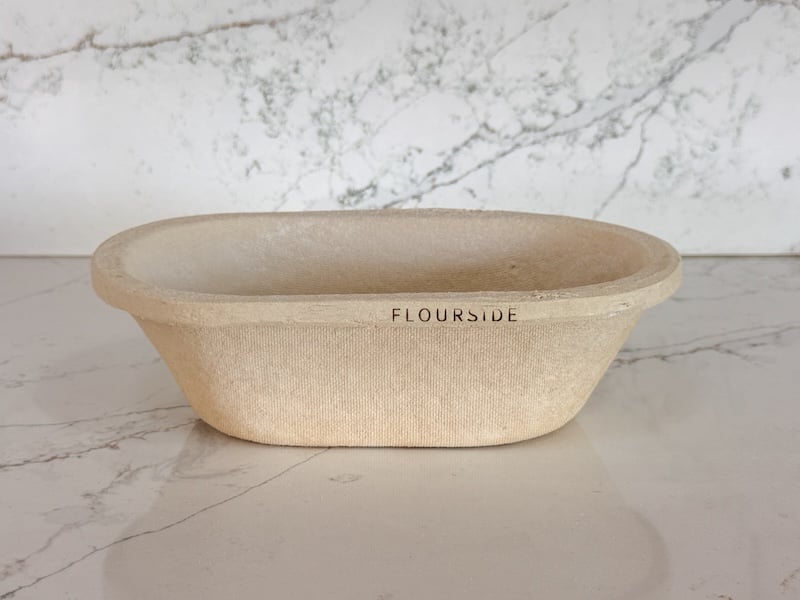
You do not need to use the liner that comes with your banneton. I prefer to flour my bannetons with rice flour, which prevents sticking like a champ. To season a banneton (kind of like seasoning a cast iron skillet), you can mist it with water and dust thoroughly with rice flour. Repeat a few times, and you’re good to go!
Yes, I recommend flouring your banneton to prevent sticking. I prefer a light dusting of rice flour because it doesn’t absorb into the dough.
Do not bake your sourdough bread in a banneton. Bannetons are for proofing only, not baking, unless your particular banneton — typically a silicone one — says otherwise.
To prevent dough from sticking to your banneton, dust the banneton well with rice flour. Also, make sure the banneton dries out completely between uses.
Silicone bannetons are typically the only ones that can be washed with soap and water. For bannetons made of natural materials, brush off the excess flour, let the basket dry completely, and store it in a dry place. If needed, place it in a 225°F (110°C) oven for up to 45 minutes to dry it thoroughly.
If any kind of wooden banneton stays moist after use, it’ll eventually harbor mold. To ensure it’s dry, place in a 225°F (110°C) oven for 45 minutes.
If you need bannetons in bulk for a microbakery or classes, Brod & Taylor is a good option. They sell a pack of 50 for $649, which works out to about $13 per banneton.
A banneton gives you better shape control, better moisture absorption, and a more efficient setup overall. If you want an oval loaf, a bowl won’t work. Bannetons also absorb moisture from the dough surface more efficiently than a towel, which helps develop a better crust. Plus, you don’t need to launder any towels when using a well-floured banneton.
In my opinion, a wood pulp banneton is the best choice for high-hydration dough because it absorbs surface moisture extremely well. The Flourside Oval Smooth (MD) is a great option.
For 900g loaves, I’d recommend the Flourside: Oval – Smooth (MD) or the Brod & Taylor Batard. The Brod & Taylor Batard is officially listed up to 850g, but I often use it for doughs up to 1 kg. If you want a longer oval loaf, the Bulka Oval 750g Groove is a great option. If you want a round loaf, go with the Brod & Taylor Boule.
After each bake, I make sure my banneton dries out fully. You can let it dry on the counter or place it in a 225°F (110°C) oven for up to 45 minutes if needed. Every few bakes, I use a cleaning brush to swipe out any excess flour.
If an inclusion stains your wood pulp banneton, don’t worry — staining is pretty normal (most of mine have at least one). Don’t try to clean it with water or any cleaning solution. The main goal is simply to keep the banneton dry and mold-free, so place it in a 225°F oven for 45 minutes to dry it thoroughly.
I don’t use the liners, but if you do, I recommend looking at the brand’s care and use guidelines. In general, I’d wash on delicate with a fragrance-free detergent and either dry on delicate or air dry.
For inclusion loaves that might stain or leak, I line my banneton with a flour sack towel. You can dust the towel with rice flour to prevent sticking, but I’ve tried it without and had no issues — so it’s really up to you.
I’ve never thrown away any of my bannetons. If treated well, wood pulp bannetons can last a lifetime.
I love covering my banneton with a bowl cover. My favorites are from Doe a Deer and Just One Designs. For either store, use code THATSOURDOUGHGAL for 15% off.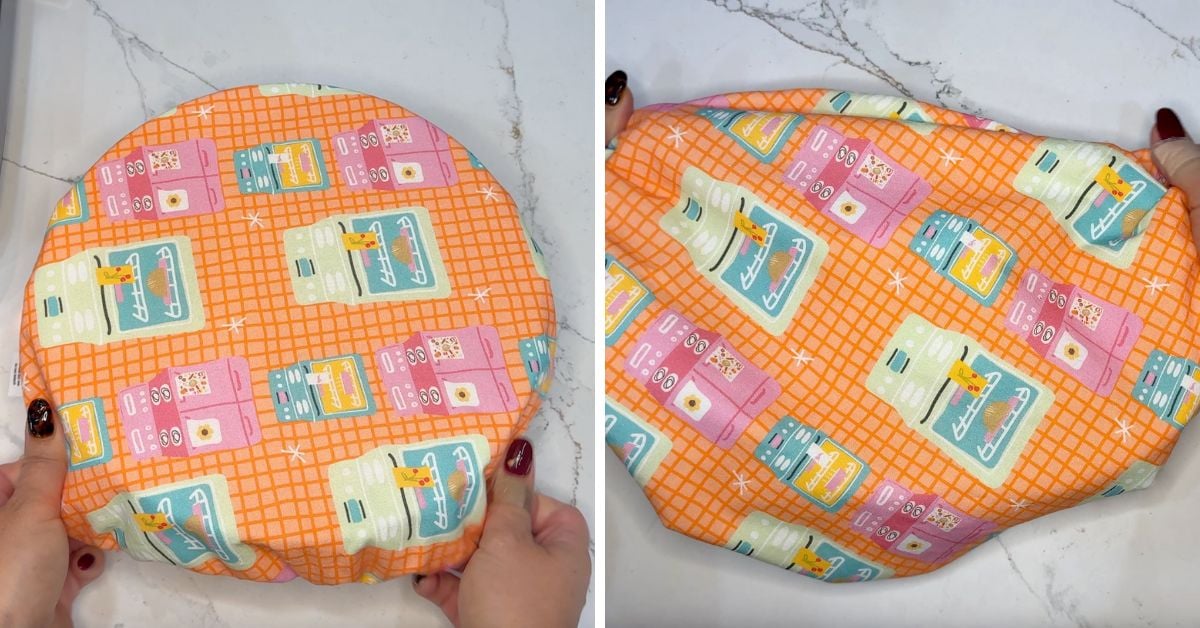
If your banneton is too large, your loaf can end up flat. The banneton is what gives your dough its shape during proofing, so the size needs to match your dough’s weight. Refer to the size guide earlier in this post for help choosing the right one.
Unfortunately, a banneton with mold spots cannot be saved. Every major banneton manufacturer recommends discarding any banneton that has developed mold.
In terms of the actual banneton, the difference is minimal. Flourside, Bulka, and Rosehill Sourdough all appear to sell virtually identical German-made wood pulp bannetons. I own bannetons from each brand, and aside from the logo, you genuinely can’t tell them apart.
The real differences are price and packaging. For example, Bulka packages its bannetons in individual boxes for added protection during shipping, which helps explain the higher price. Whether that matters to you comes down to personal preference.

Final Thoughts
If you’re just starting out and want something budget-friendly, I’d go straight for the Brod & Taylor sugarcane/bamboo bannetons. They’re only a couple of dollars more than the popular rattan-style options, and they perform significantly better.
If you’re ready to splurge, wood pulp is a fantastic choice, and the Flourside: Oval – Smooth (MD) is my top recommendation. Just know that inclusion loaves can stain them, and they are a bit bulkier to store.
If you bake inclusion loaves that leak or stain, you might consider keeping a silicone banneton on hand and lining it with a tea towel.
Mini bannetons are also worth having on hand — they’re perfect for sourdough bread bowls or smaller individual loaves.
What’s your favorite banneton? Let me know in the comments below!
Other tool reviews:


Thank you so much for this article! I have been waiting to order until you shared your thoughts. Just placed my Brod & Taylor boule and Amazon mini banneton orders using your links.
Thank you so much for the support!
Great article and everything was explained so thoroughly! I’m still reading and getting myself prepared to enter the Sourdough world. Thank you so much for all of the great information in your articles and video stories. 🙂
Aw thanks, I’m so glad it’s helping!
Thank you for this!! I am having a hard time with the sugarcane bannetons drying out the surface of my dough too much! when I flip them out on to my parchment, the top edges are hard and almost have a crust. Do you have any solutions to help with this?
I haven’t experienced that!
I experienced this too. I just thought maybe I didn’t cover them right, but I know I did. Hmmm?
I love the Brod & Taylor bannetons hands down. I like how they keep the shape of the dough without them spreading. I do bake on a baking steel with a baking shell and I have found it is the best decision I’ve made when it comes to baking bread! Thank you for all of your recommendations throughout my sourdough journey 🫶🏼
Love that setup!! Beautiful dough. Thanks so much for sharing and the kind words, it means so much.
Fantastic writeup and love the breakdown!
Thank you!!
I bought a set of three bannetons with liners after seeing a review online. They were pricey French ones and took a long time in shipping ! Why? Because they were shipped directly from China. Oy Vey
Oh for heaven’s sakes
This article was great! Thanks for all the information. I’ve recently discovered KneadAce bannetons which are made out of fabric rope (I guess) and are machine washable. I was hoping to get your opinion on those. I like the batard shape with its narrow bottom and tall sides. They are also collapsible for storage.
I have never seen that!
Thank you for all the work & time spent creating this valuable information for others.
Your insights to bread baking have answered so many questions. I thank you over & over (in my head) as I read the examples & experience you share. Eva
I bought the Bulka oval and round with the weave pattern simply because I liked the pattern. Do you have recipes that produce a loaf large enough to use these?
Any recipe can work, just scale it up so it’s within the banneton’s dough weight range! You can use AI to do it if math isn’t your strong suit
Thank you for this it is a big help. I am going to be 75 on Mother’s day and I have developed this spring with hand arthritis. Mother’s Day and my bday land on the same day this year. I am asking for the wood pulp bannetons and the Brod n Taylor baking shell (round). Also a t-shirt from your Mom’s store! I started sourdough as a challenge while my husband went through cancer treatment. I really love it and your videos. I have forgotten what sling you recommended to help your bread from burning on the bottom.
Aww happy birthday!! I love that!! Great requests, those are all awesome products. And these days, I’m finding parchment paper is my go-to. But you can find bread slings all over the place. Good Leaven Co. makes good ones (affiliate): https://www.goodleavenco.com/THATSOURDOUGHGAL
I have read this helpful article before and received the Bulka Batard and Brod & Taylor Boule as a gift. They both are great. I also bought a silicone one for messy inclusions and it didn’t keep the shape very well near the top. I think I can fold it over once and make that work. I also received the baking steel and baking shell. I am wondering if you might do an educational video/article on using that. I contacted Brod & Taylor for more help, and they referred me to Mario. That wasn’t very helpful. Does the timing change for baking when using one of your recipes? Does where it is located in your oven make a difference?
The timing and temps are exactly the same as when you use a Dutch oven! No adjustments needed at all. I put it on the middle rack. Here is a video I did about it: https://www.instagram.com/reels/DPv6mgBDmsw/
So many choices and so overwhelming when you just don’t know what to use but THANKS to you and all your helpful advice, I know what I want now. Appreciate you!
So glad it helped!!